Fuel Storage for Preppers: How to Safely Stockpile Gasoline, Diesel, and Propane for Long-Term Emergencies
When the grid fails and supply chains collapse, fuel becomes survival currency. Here's how to store it safely and legally.
When the grid goes down, fuel becomes one of the most critical — and most overlooked — components of any serious emergency preparedness plan. Generators stop working without gasoline. Diesel trucks don't bug out without diesel. Propane grills and heaters become useless without a full tank. Yet most preppers focus heavily on emergency food storage and water while leaving their fuel supply to chance.
That's a dangerous oversight. According to the U.S. Energy Information Administration, the average American household would exhaust its accessible fuel supply within 72 hours of a major grid disruption — exactly when you need it most. Whether you're an urban apartment dweller, a suburban homeowner, or a rural off grid homesteader, understanding how to safely store fuel for the long term could be the difference between riding out a crisis and being stranded when SHTF.
This guide covers the three most practical fuels for preppers — gasoline, diesel, and propane — including the containers, stabilizers, rotation schedules, and legal limits you need to know before you start stockpiling. And if you're already running a generator, be sure to check out our guide on Grid-Down Power: How to Choose and Use a Backup Generator for Home Emergencies to make sure your power setup is ready to match your fuel supply.
Why Fuel Storage Is a Core Part of Any SHTF Preparedness Strategy
Think about what fuel powers in an emergency: your generator, your vehicle, your heating system, your cooking appliances, and potentially your water pump. Without it, even the most well-stocked survival gear collection becomes significantly less useful. A chainsaw with no gas can't clear a fallen tree blocking your driveway after a storm. A propane heater with an empty tank won't keep your family warm during a winter power outage.
The challenge is that fuel storage comes with real risks — fire hazards, vapor accumulation, chemical degradation — and those risks are heightened in confined spaces like apartments or suburban garages. That's why doing it right matters as much as doing it at all.
How to Safely Store Gasoline for Long-Term Emergency Preparedness
Choosing the Right Gasoline Storage Containers
The container you use is your first line of defense against spills, vapor leaks, and degradation. Always use containers specifically rated for gasoline storage — never repurpose water jugs, oil containers, or any vessel not designed for flammable liquids.
For most preppers, the No-Spill 5 gallon gas can fuel storage container is a solid entry-level option. These cans feature a patented no-spill valve system that reduces fume exposure and accidental spills — a critical safety advantage when you're filling and rotating stock in a garage or storage shed.
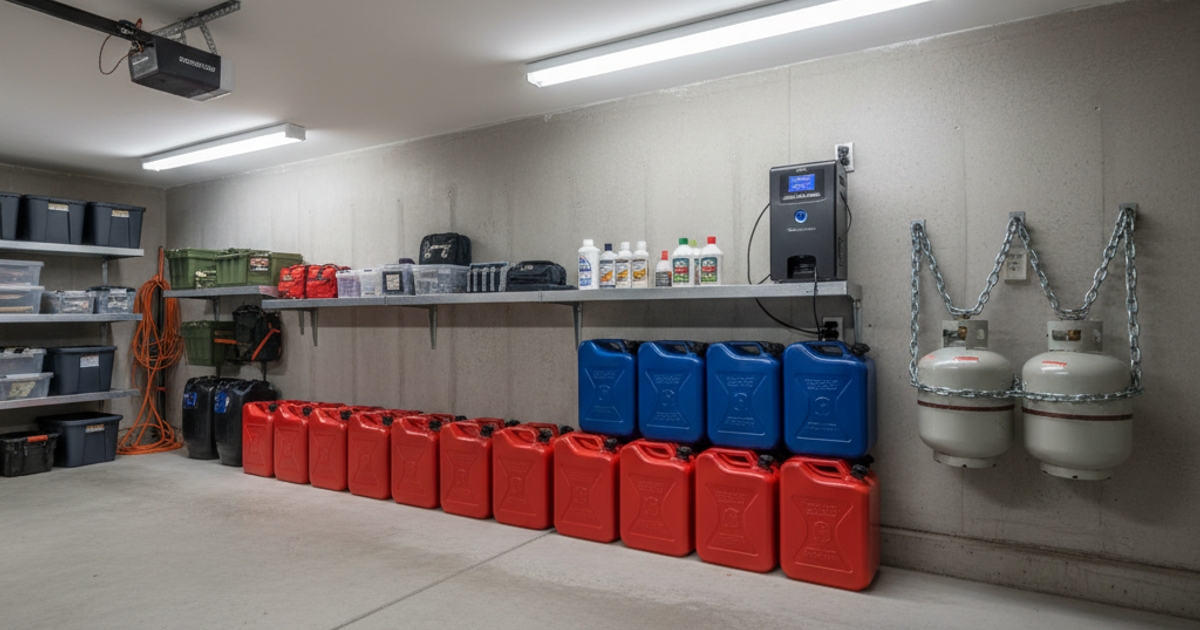
For more serious stockpiling, consider military-grade options. The Scepter Military fuel can NATO jerry can is built to the same standards used by military forces around the world. These cans are UV-resistant, stackable, and designed to prevent pressure buildup — making them ideal for longer-term outdoor storage and vehicle transport during a bug-out scenario.
Using Fuel Stabilizers to Extend Gasoline Shelf Life
Untreated gasoline begins to degrade in as little as 30 days. Modern ethanol-blended fuels (E10 or E15) are even more volatile, absorbing moisture and breaking down faster than pure gasoline. After 60–90 days, untreated gas can cause engine deposits, varnish buildup, and starting failures — exactly what you don't want when you need your generator running during a crisis.
The most widely used solution is STA-BIL fuel stabilizer for gasoline storage. Added at the correct ratio (typically 1 oz per 2.5 gallons), STA-BIL can extend gasoline shelf life up to 24 months. It's available at most hardware and auto parts stores, and it should be a non-negotiable addition to every can you fill.
For preppers planning truly long-term storage — think 2 to 5 years — PRI-G (for gasoline) and PRI-D (for diesel) fuel stabilizers are considered the gold standard among serious preppers and fuel storage professionals. Unlike many stabilizers that simply slow degradation, PRI products are formulated to actually restore already-degraded fuel, making them particularly valuable for rotating older stock back into service.
Gasoline Storage Safety Rules Everyone Must Follow
- Store away from heat sources and ignition points — at least 50 feet from water heaters, furnaces, or any open flame.
- Keep containers in a well-ventilated area — gasoline vapors are heavier than air and accumulate at ground level. A detached shed or outdoor storage cabinet is preferable to an attached garage.
- Never store gasoline indoors in an apartment or multi-unit building — this is both dangerous and typically prohibited by fire codes.
- Label all containers with the fill date and stabilizer added.
- Rotate stock every 12 months if using standard stabilizer, or per manufacturer guidelines if using PRI products.
Legal Limits on Residential Gasoline Storage
Most local fire codes limit residential gasoline storage to 25 gallons in approved containers. Some jurisdictions allow up to 60 gallons with specific storage conditions. Always check your local fire code before building out your fuel stockpile — violations can result in fines, and more importantly, improper storage can void your homeowner's insurance in the event of a fire.
Diesel Storage for Preppers: Longer Shelf Life, Different Challenges
Diesel fuel is inherently more stable than gasoline, with an untreated shelf life of 6 to 12 months under normal conditions. With proper treatment and cool, dark storage, diesel can remain viable for 2 to 5 years. This makes it a preferred choice for many preppers who run trucks, tractors, or diesel generators.
The primary threats to long-term diesel storage are microbial growth (diesel bug — bacteria and fungi that thrive in fuel-water interfaces) and oxidation. Using PRI-D stabilizer addresses both issues and is highly recommended for any diesel stored beyond 6 months.
Diesel storage containers follow the same safety principles as gasoline containers, though many preppers opt for larger quantities given its greater stability. Rural preppers with significant land often store diesel in above-ground 250 to 500-gallon tanks — a legitimate and often legally permissible option with proper permits. Suburban preppers typically work within the same 25–60 gallon limits as gasoline storage.
Propane Storage: The Most Forgiving Fuel for Long-Term Preppers
Propane is the most storage-friendly fuel available to preppers. Unlike gasoline or diesel, propane doesn't degrade over time. A properly sealed propane cylinder can hold its charge for decades. This makes propane an ideal primary or backup fuel for cooking, heating, and lighting in virtually any emergency preparedness scenario.
The standard BluRhino 20 lb refillable propane cylinder holds approximately 4.7 gallons of propane — enough to fuel a standard grill for 25+ hours of cooking. For preppers, maintaining 3 to 5 full 20-lb cylinders provides substantial cooking and heating fuel for a meaningful SHTF scenario, and these tanks can be refilled at most hardware stores, grocery stores, and propane dealers.
Propane Storage Safety and Legal Limits
- Store propane cylinders outdoors or in well-ventilated areas — never in basements, enclosed garages, or living spaces.
- Keep cylinders upright and away from direct sunlight and heat sources.
- Most residential fire codes limit indoor-adjacent propane storage to two 20-lb cylinders. Additional cylinders should be stored in an outdoor, shaded location.
- Inspect cylinders regularly for rust, dents, and valve integrity. Tanks more than 12 years old require recertification before refilling.
- Urban and apartment preppers: Even a single 1-lb camping propane canister stored with your survival kit or bug out bag provides meaningful emergency cooking capability.
Fuel Rotation: The Practice That Keeps Your Stockpile Viable
The most common mistake preppers make with fuel storage isn't how they store it — it's that they forget to rotate it. Stored fuel that never gets used eventually becomes a liability rather than an asset.
- Label every container with the fill date when you add stabilizer.
- Use oldest stock first — cycle stored gasoline and diesel into your vehicles or generator regularly.
- Refill immediately after drawing down your stock to maintain your target reserve level.
- Inspect containers semi-annually for cracks, corrosion, or compromised seals.
A good rule of thumb: treat your fuel stockpile like your emergency food storage. First in, first out. Refresh continuously rather than storing and forgetting.
Fuel Storage for Urban and Apartment Preppers
If you live in an apartment or dense urban area, large-scale fuel storage simply isn't practical or legal. But that doesn't mean you're out of options. Focus on propane camping canisters stored on a balcony or in an outdoor storage unit. Keep your vehicle's gas tank above half at all times — in a genuine emergency, that's meaningful range. And consider building your preparedness around fuels with lower storage risk, like propane, while relying on your vehicle's existing tank for gasoline needs during a short-term crisis.
Urban preppers should also think carefully about escape routes and evacuation planning — knowing how to get out of the city efficiently means your available fuel goes further when it matters most.
Recommended Survival Gear for Fuel Storage
Building a functional fuel storage system doesn't require a massive investment. At minimum, every prepper should have: several high-quality approved storage cans (No-Spill or NATO jerry cans), a supply of both STA-BIL and PRI-G/PRI-D stabilizers, at least two to three full 20-lb propane cylinders, and a clear rotation log. Visit our Recommended Survival Gear & Equipment page for a broader look at essential preparedness supplies across all categories.
What You'll Need
- EPA-approved fuel storage containers (5-gallon jerry cans for gasoline, diesel drums, propane tanks)
- Fuel stabilizer additives (PRI-G for gasoline, PRI-D for diesel)
- Siphon pump or fuel transfer pump
- Fire extinguishers (Class B rated)
- Ground straps and bonding wires
- Lockable storage shed or ventilated outbuilding
- Spill containment pans
- Labels and permanent markers for dating containers
- Personal protective equipment (gloves, safety glasses)
Step-by-Step Instructions
Step 1: Choose Appropriate Storage Containers for Each Fuel Type
Select only approved containers designed specifically for fuel storage—metal or high-density polyethylene (HDPE) cans with proper venting for gasoline, heavy-duty drums for diesel, and DOT-certified cylinders for propane. Never use milk jugs, water bottles, or unapproved containers as they can degrade and leak. For gasoline, limit individual containers to 5 gallons for safety and portability. Ensure all containers are properly labeled with fuel type and storage date.
Step 2: Select a Safe Storage Location Away from Living Spaces
Store fuel in a detached shed, garage, or outdoor structure at least 50 feet from your home and any ignition sources. The location must have adequate ventilation to prevent vapor accumulation and should be on level ground to prevent tipping. Keep fuel out of direct sunlight and away from areas where temperatures exceed 80°F, as heat accelerates degradation. Ensure the storage area is secured with locks to prevent unauthorized access and complies with local fire codes.
Step 3: Add Fuel Stabilizers to Extend Storage Life
Immediately after filling containers, add the manufacturer-recommended amount of fuel stabilizer to prevent oxidation and degradation. For gasoline, quality stabilizers can extend shelf life from 3-6 months to 1-3 years when stored properly. Diesel naturally stores longer (6-12 months) but benefits from stabilizers that prevent algae growth and water contamination. Gently agitate or roll containers to ensure thorough mixing of the stabilizer throughout the fuel.
Step 4: Implement a Rotation System with Clear Dating
Mark each container with the fill date and expected expiration date using permanent marker or adhesive labels. Create a first-in, first-out (FIFO) rotation schedule where you use the oldest fuel first and replace it with fresh stock. Set calendar reminders every 6 months to check fuel condition and rotate stock before it degrades. Use rotated fuel in vehicles, generators, or equipment rather than letting it expire in storage.
Step 5: Establish Proper Grounding and Ventilation Procedures
Always ground metal containers when transferring fuel to prevent static electricity buildup that could cause sparks and ignition. Ensure your storage area has passive ventilation such as vents near the roof and floor to allow heavier-than-air fuel vapors to escape. Never store fuel in basements or enclosed spaces without proper ventilation. Maintain clear space around containers to allow air circulation and prevent heat buildup.
Step 6: Install Safety Equipment and Emergency Response Tools
Place at least one Class B fire extinguisher rated for flammable liquids within easy reach of your fuel storage area. Keep spill containment materials such as absorbent pads, sand, or kitty litter nearby for immediate response to leaks. Post emergency contact numbers and "No Smoking" signs prominently in the storage area. Conduct monthly inspections of containers for leaks, rust, or damage, and replace compromised containers immediately.
Step 7: Maintain Detailed Inventory Records and Test Fuel Quality
Keep a written log of all fuel stored, including purchase dates, quantities, stabilizer additions, and rotation dates. Periodically test small samples of stored gasoline and diesel for water contamination, sediment, or off-odors that indicate degradation. If fuel appears cloudy, has separated layers, or smells like varnish, it should be properly disposed of rather than used in engines. Plan to maintain a minimum 3-month supply while keeping total storage within legal limits for your area.
Frequently Asked Questions
How long can I store gasoline for emergency preparedness?
Untreated gasoline begins degrading within 30 days and is generally considered unusable after 3–6 months. With a quality fuel stabilizer like STA-BIL, you can safely extend gasoline storage to 12–24 months. For the longest possible shelf life — up to 5 years — use PRI-G stabilizer and store in sealed, airtight containers in a cool, dark location. Always label containers with the fill date and rotate stock regularly.
How much gasoline can I legally store at home?
Most residential fire codes in the United States permit storage of up to 25 gallons of gasoline in approved containers at a single-family home. Some jurisdictions allow up to 60 gallons under specific conditions. Apartment dwellers are typically prohibited from storing gasoline indoors entirely. Always verify your local fire code before stockpiling fuel — violations can result in fines and may affect your homeowner's insurance coverage.
Is propane a good long-term fuel storage option for preppers?
Yes — propane is one of the best long-term fuel options available to preppers of all living situations. Unlike gasoline or diesel, propane does not degrade over time in a properly sealed cylinder. A 20-lb cylinder stored correctly can remain fully viable for decades. Propane is widely available, can be stored in relatively small quantities even in urban environments, and powers a wide range of survival gear including grills, camp stoves, portable heaters, and lanterns. It's an excellent complement to gasoline or diesel for any comprehensive emergency preparedness plan.
Affiliate Disclosure: SHTF Plan participates in the Amazon Services LLC Associates Program. Some links are affiliate links — we may earn a small commission at no extra cost to you.