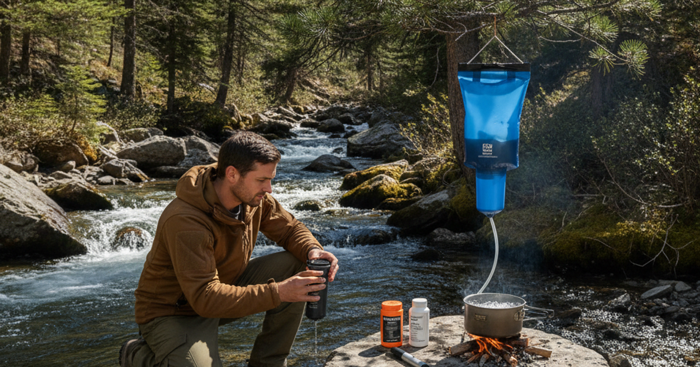
DIY Water Filtration: 5 Methods Using Household Items
Learn how to purify water in emergency situations using common materials you already have at home.

Introduction
In emergency situations where clean water is unavailable, knowing how to purify water using common household items can be lifesaving. These methods help remove contaminants, kill pathogens, and make water safe for drinking. Drawing from guidelines by the CDC, EPA, and other credible sources, this article outlines five practical DIY techniques. Always combine filtration with disinfection for best results, as filtration alone may not eliminate all microbes.
Method 1: Boiling Water
Boiling is one of the simplest and most effective ways to kill bacteria, viruses, and parasites in water. It's recommended by the CDC and EPA for emergency disinfection.
- If the water is cloudy, filter it first through a clean cloth or coffee filter to remove particles.
- Bring the water to a rolling boil for at least 1 minute (3 minutes at elevations above 6,500 feet).
- Let it cool naturally, then store in clean containers with tight covers.
- To improve taste, aerate by pouring between containers or add a pinch of salt.
Method 2: Household Bleach Disinfection
Use unscented household bleach (5-9% sodium hypochlorite) to disinfect clear water, killing most germs.
- Filter cloudy water through cloth or let settle, then use clear water.
- Add 8 drops (1/8 teaspoon) of bleach per gallon of water (double for cloudy/cold water).
- Stir well and let stand for 30 minutes. It should have a slight chlorine odor; if not, repeat and wait another 15 minutes.
- Store in sanitized containers. Avoid using if bleach is expired or scented.
Method 3: Solar Disinfection (SODIS)
Expose water to sunlight in clear plastic bottles to kill pathogens using UV radiation and heat.
- Fill clear PET bottles (up to 2 liters) with filtered water, leaving airspace.
- Shake to oxygenate, then place horizontally on a dark surface or roof in direct sun.
- Leave for 6 hours on sunny days or 2 days if cloudy (water should reach 50°C/122°F).
- Cool and store. Not effective for chemically contaminated water.
Method 4: Cloth or Coffee Filter Filtration
For removing sediments and particles, use clean cloth or coffee filters as a basic pre-filter before disinfection.
- Fold a clean cloth or use a coffee filter over a container mouth.
- Pour water through slowly to trap dirt and debris.
- Repeat if needed for clarity.
- Always follow with boiling or bleach, as this doesn't kill microbes.
Method 5: DIY Layered Bottle Filter
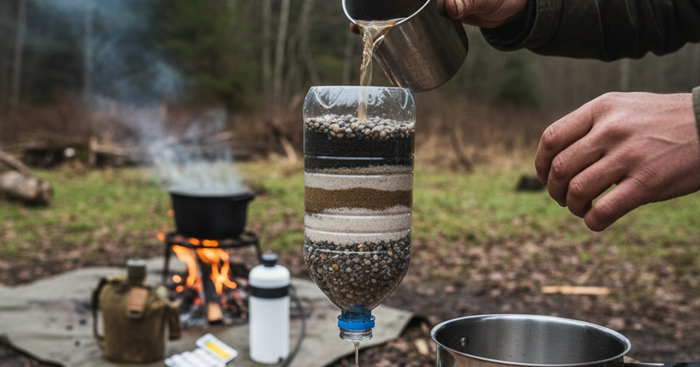
Create a multi-layer filter using a plastic bottle, sand, gravel, and charcoal to remove impurities.
- Cut the bottom off a 2-liter bottle and invert it (neck down).
- Layer from bottom (neck): cotton ball/cloth, activated charcoal (crushed if possible), sand, gravel.
- Pour water through; collect filtered water below.
- Disinfect the output with boiling or bleach, as it mainly removes physical contaminants.
Benefits and Precautions
Benefits
- Uses readily available items, no special equipment needed.
- Effective for emergencies when commercial filters are unavailable.
- Low-cost and quick to implement.
Precautions
- These methods don't remove chemicals or heavy metals; source water wisely.
- Test treated water if possible; boil when in doubt.
- Store purified water in clean containers to avoid recontamination.
What You'll Need
Tools
- Large pot or metal container (for boiling)
- Heat source (stove, camp stove, or open fire)
- Scissors or knife (for cutting plastic bottles)
- Measuring dropper or medicine dropper (for bleach dosing)
- Clean collection containers with lids
Supplies
- Unscented household bleach (5–9% sodium hypochlorite)
- Clean cloth or bandana (for pre-filtering)
- Coffee filters
- Clear 2-liter PET plastic bottles
- Activated charcoal (crushed)
- Clean coarse sand
- Small gravel or pebbles
- Cotton balls
Step-by-Step Instructions
Step 1: Assess and Collect Your Water Source
Identify the safest available water source, prioritizing running water over stagnant water when possible. Avoid sources near industrial sites, flooded roads, or chemical runoff, as these may contain contaminants that household methods cannot remove. Collect water in a clean container, keeping it covered to prevent further contamination while you prepare your filtration setup.
Step 2: Pre-Filter the Water to Remove Visible Sediment
Before applying any disinfection method, pour the collected water through a clean cloth, bandana, or coffee filter placed over a second container. This removes larger particles such as dirt, debris, and sediment that would otherwise reduce the effectiveness of disinfection. Repeat the pre-filtering step if the water remains visibly cloudy or murky after the first pass.
Step 3: Build a DIY Layered Bottle Filter for Deeper Filtration
Cut the bottom off a clean 2-liter plastic bottle and invert it so the neck faces downward over a collection container. Layer the filter media from the neck upward in this order: a cotton ball or piece of cloth, crushed activated charcoal, fine sand, and coarse gravel. Slowly pour pre-filtered water into the top and allow it to drip through all layers into the container below, which will remove finer particles and improve taste and odor.
Step 4: Disinfect the Filtered Water Using Boiling or Bleach
Choose your disinfection method based on available resources. For boiling, bring the filtered water to a full rolling boil for at least 1 minute (3 minutes above 6,500 feet elevation) then allow it to cool before storing. For bleach disinfection, add 8 drops of unscented bleach per gallon of clear water, stir thoroughly, and let it stand for at least 30 minutes before use — the water should carry a faint chlorine smell when ready.
Step 5: Apply Solar Disinfection as a Backup Option
If you have no heat source or bleach available and the sky is clear, use the SODIS method as an alternative. Fill clear PET plastic bottles with pre-filtered water, shake them to introduce oxygen, and place them horizontally on a dark or reflective surface in direct sunlight for a minimum of 6 hours. On overcast days or if water is slightly turbid, extend exposure to 2 full days to ensure adequate pathogen kill.
Step 6: Verify the Water Is Safe Before Drinking
After disinfection, check that boiled water has cooled fully and that bleach-treated water carries a mild chlorine odor — if there is no odor after 30 minutes, add another dose of bleach and wait an additional 15 minutes. For SODIS-treated water, confirm the bottles received uninterrupted direct sunlight for the full required duration. When in doubt, apply a second round of disinfection; it is always safer to over-treat than to risk illness from untreated water.
Step 7: Store Purified Water Safely to Prevent Recontamination
Transfer treated water into clean, sanitized containers with tight-fitting lids immediately after purification. Label each container with the date and method used, and store in a cool, dark location away from direct sunlight or chemical fumes. Use purified water within 24–48 hours when possible, and re-treat any stored water that has been left open or exposed to unsanitary conditions before drinking.
Recommended Products
While these methods use household items, consider these Amazon products for enhanced preparedness (affiliate links; earnings support content):
- Unscented Bleach: Clorox Concentrated Germicidal Bleach. Buy on Amazon
- Activated Charcoal: Viva Doria Virgin Activated Charcoal Powder. Buy on Amazon
- Coffee Filters: Amazon Basics Basket Coffee Filters. Buy on Amazon
- Water Bottles for SODIS: Nalgene BPA Free Tritan Wide Mouth Water Bottle. Buy on Amazon
Conclusion
These DIY methods empower you to purify water in emergencies using everyday items. Practice them in advance to ensure familiarity, and always prioritize safety by combining techniques for thorough purification.
References
- Emergency Disinfection of Drinking Water | US EPA - https://www.epa.gov/ground-water-and-drinking-water/emergency-disinfection-drinking-water
- How to Make Water Safe in an Emergency - CDC - https://www.cdc.gov/water-emergency/about/index.html
- Household Water Treatment - CDC - https://www.cdc.gov/global-water-sanitation-hygiene/about/about-household-water-treatment.html
- Making Water Safe – Student Instructions - CDC - https://www.cdc.gov/museum/pdf/cdcm-pha-stem-making-water-safe-instructions.pdf