Boiling, Filtering, and Chemicals: How to Choose the Right Water Purification Method for Every Survival Scenario
Not all water purification methods work the same way. Learn which technique is best for every emergency scenario before your life depends on it.
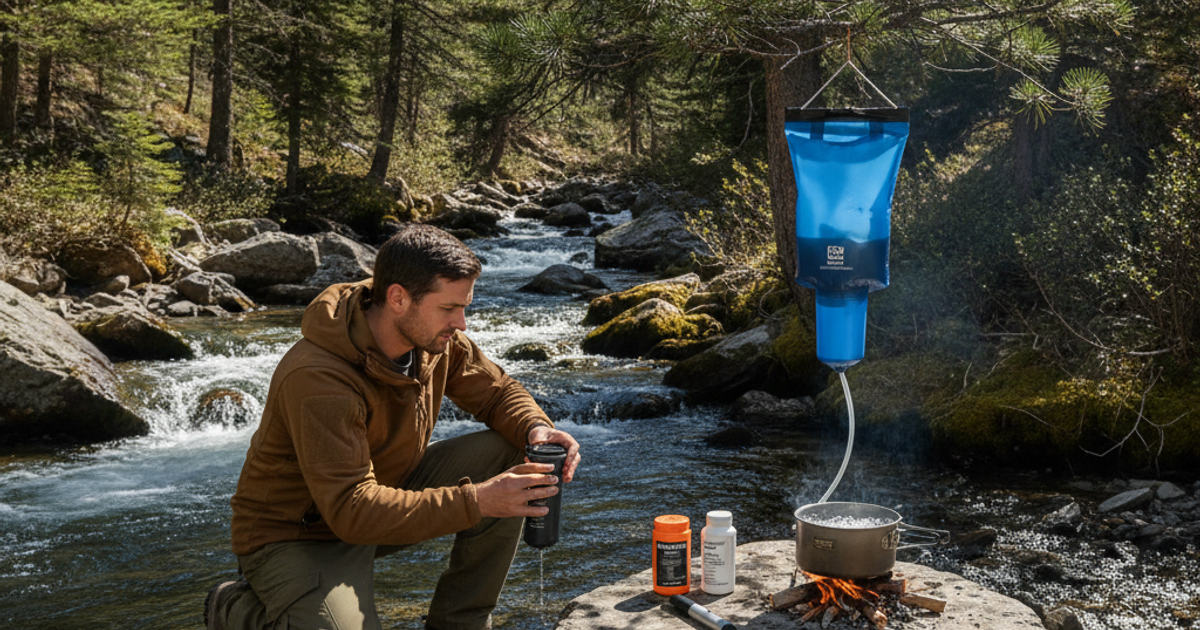
Water is the single most critical resource in any survival scenario. The human body begins to deteriorate within 72 hours without it — and contaminated water can kill you just as surely as no water at all. Whether you're sheltering in place in a city apartment, bugging out from the suburbs, or managing a rural homestead when the grid goes down, knowing how to purify water from any source isn't optional. It's a core survival skill every prepper needs to master.
The challenge isn't just finding water — it's making it safe. Municipal water systems can fail during earthquakes, floods, cyberattacks, or infrastructure collapse. Rural wells can become contaminated. Streams and rivers carry bacteria, protozoa, viruses, and chemical runoff. According to the World Health Organization, contaminated water causes over 500,000 diarrheal deaths annually worldwide — and that's under normal conditions. In a SHTF scenario where medical care is unavailable, a waterborne illness like giardia, cholera, or cryptosporidium becomes a life-threatening emergency.
This guide breaks down every major water purification method — boiling, filtration, chemical treatment, and UV purification — and tells you exactly when to use each one. For more on sourcing water before you purify it, check out The Urban Prepper's Guide to Rooftop and Balcony Rainwater Harvesting and Emergency Water Storage: How Much You Actually Need and How to Store It Safely.
What You'll Need
Tools
- Sawyer MINI water filtration system
- MSR MiniWorks EX microfilter pump
- SteriPen Aqua UV water purifier
- Metal pot or stainless steel container (for boiling)
- Grayl GeoPress water purifier bottle
Supplies
- Aquatabs water purification tablets
- Potable Aqua iodine water purification tablets
- Unscented household bleach (sodium hypochlorite 6–8.25%)
- Pre-filter material (bandana, coffee filter, or fine cloth)
Understanding What You're Fighting: Contaminants in Untreated Water
Before choosing a purification method, you need to understand what's actually in the water you're treating. Waterborne threats fall into four main categories:
- Bacteria — E. coli, Salmonella, Cholera (0.2–10 microns)
- Protozoa — Giardia, Cryptosporidium (1–300 microns)
- Viruses — Hepatitis A, Norovirus, Rotavirus (0.02–0.3 microns — too small for most filters)
- Chemical and heavy metal contamination — pesticides, lead, industrial runoff
No single purification method eliminates all four threat categories. This is why serious preppers layer their methods — and why understanding the limitations of each technique is just as important as knowing how to use it.
Boiling: The Most Reliable Low-Tech Water Purification Method
Boiling is the gold standard for killing biological contaminants and requires no specialized survival gear. Heat destroys bacteria, protozoa, and viruses effectively. The CDC recommends bringing water to a rolling boil for at least one minute — or three minutes at elevations above 6,500 feet, where water boils at a lower temperature.
When to use it: Boiling is ideal when you have access to a heat source and time. It works in any setting — urban apartments with a camp stove, suburban kitchens during a power outage (with a gas range or outdoor grill), or rural homesteads with a wood-burning stove.
Limitations: Boiling does not remove chemical contaminants, heavy metals, sediment, or fuel residue. If your water source is near industrial areas or has visible cloudiness, pre-filter before boiling, and consider adding a chemical or activated carbon stage afterward. Boiling also requires fuel — a finite resource in a long-term SHTF scenario.
Filtration: The Workhorse of Field Water Purification
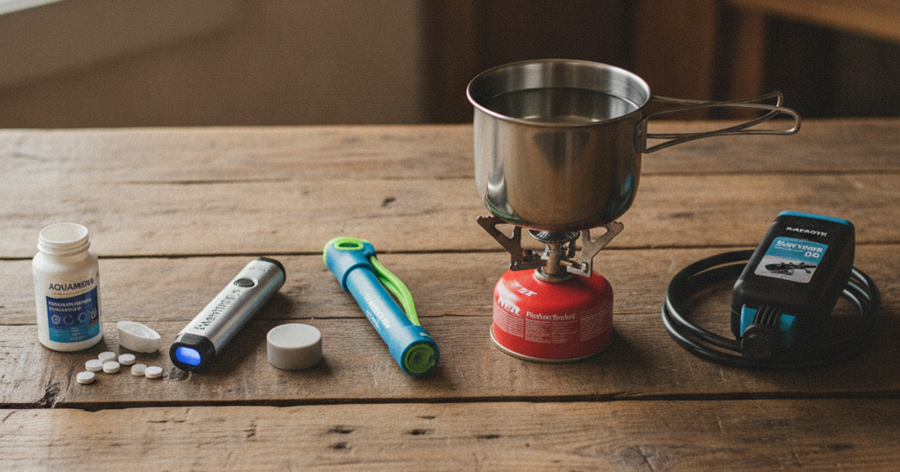
Mechanical filtration physically removes contaminants by forcing water through a porous medium small enough to trap particles. Quality varies enormously by product, and understanding what a filter does — and doesn't — remove is critical.
The Sawyer MINI water filtration system is one of the most popular choices among preppers and with good reason — it filters down to 0.1 microns, removing 99.99999% of bacteria and 99.9999% of protozoa, and is rated for up to 100,000 gallons of use. It weighs just 2 ounces, making it perfect for a bug out bag or everyday carry kit.
For ultralight urban survival use, the LifeStraw personal water filter straw lets you drink directly from a water source and filters 1,000 liters before replacement. It's compact, affordable, and a smart addition to any apartment prepper's emergency kit or vehicle emergency bag.
If you want higher flow rates and field-cleanable performance, the Katadyn BeFree water filtration system is worth considering. Its EZ-Clean hollow fiber membrane is built for rapid hydration on the move and works with a soft flask that collapses for easy packing.
For a pump-style filter that's field-serviceable and works in murky, difficult water conditions, the MSR MiniWorks EX microfilter pump has earned a strong reputation among serious outdoorsmen and preppers alike. Its carbon-ceramic filter can be cleaned in the field and is replaceable when exhausted.
Critical limitation of all mechanical filters: Standard filters do not remove viruses. In North American wilderness settings, viral contamination is relatively rare. But in post-disaster urban survival situations — where sewage systems have failed — viral contamination becomes a serious risk. In those scenarios, combine filtration with chemical treatment or UV purification.
Chemical Treatment: Lightweight and Long-Shelf-Life Water Purification
Chemical purification is the most weight-efficient and shelf-stable method available. A single bottle of tablets can treat hundreds of liters of water and takes up almost no space in a survival kit.
Chlorine tablets are the most widely recommended option. Aquatabs water purification tablets are used by UNICEF and relief organizations worldwide and are highly effective against bacteria and viruses. Each tablet treats one liter of water in 30 minutes — or longer in cold or turbid conditions.
Iodine tablets are another proven option. Potable Aqua iodine water purification tablets have been used by military forces for decades and are effective against bacteria and most viruses. However, iodine is less effective against Cryptosporidium and should not be used by pregnant women or individuals with thyroid conditions for extended periods.
Unscented household bleach (sodium hypochlorite 6–8.25%) is a viable improvised option. The EPA recommends adding 8 drops per gallon of clear water, or 16 drops for cloudy water. Wait 30 minutes before drinking.
Limitations: Chemical treatment does not remove sediment, heavy metals, or chemical contamination. Always pre-filter visibly turbid water through a cloth or coffee filter before chemical treatment — particles in the water protect microorganisms from the chemical agent.
UV Purification: High-Tech Water Safety for Preppers
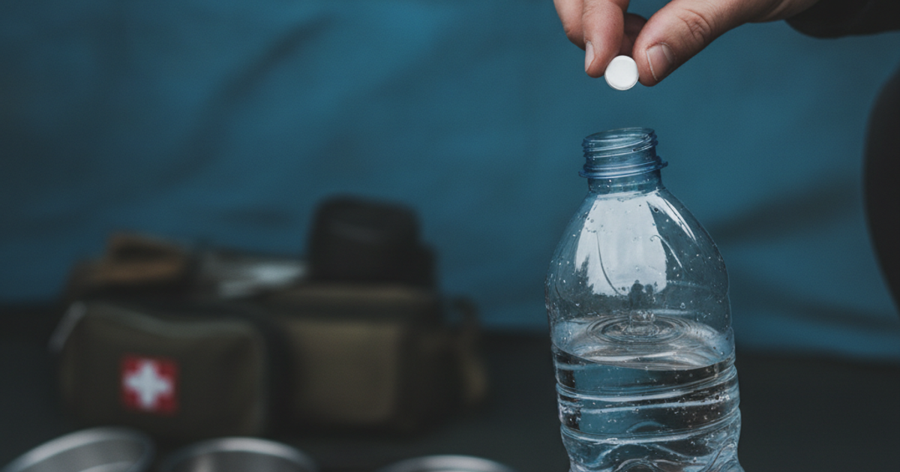
Ultraviolet purification uses UV-C light to damage the DNA of microorganisms, rendering them unable to reproduce. UV treatment is fast — typically 60–90 seconds per liter — and effective against bacteria, protozoa, and viruses, including Cryptosporidium, which is resistant to chlorine.
The SteriPen Aqua UV water purifier is a compact, battery-powered device that treats 1 liter in about 48 seconds. It's an excellent addition to any off grid water purification system and works particularly well when combined with a pre-filter for turbid water.
Limitations: UV purifiers require batteries or a charging source — a critical dependency in a grid-down situation. They are also ineffective in cloudy or turbid water, because particles shield microorganisms from UV light. Always pre-filter before using UV treatment. A UV purifier is best used as part of a layered system, not as a standalone solution in emergency preparedness planning.
The All-in-One Option: Purifier Bottles
For preppers who want simplicity and comprehensive protection in a single package, purifier bottles combine filtration and chemical or electrochemical treatment in one device. The Grayl GeoPress water purifier bottle is one of the most capable options on the market — it removes viruses, bacteria, protozoa, chemicals, and heavy metals in a single press action, making it ideal for both wilderness survival and disaster scenarios where water quality is completely unknown.
Step-by-Step Instructions
Step 1: Assess Your Water Source and Identify Likely Contaminants
Before treating water, evaluate where it came from. Moving streams in remote wilderness areas primarily carry biological threats (bacteria and protozoa), while urban water sources post-disaster may harbor viruses and chemical contamination. Floodwater and water near agricultural or industrial areas requires the most aggressive multi-stage treatment. This assessment determines which purification method — or combination of methods — you'll need.
Step 2: Pre-Filter Visible Sediment and Debris
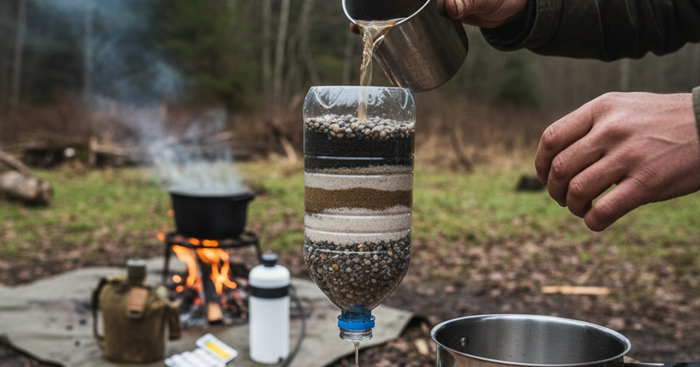
Pour or scoop water through a bandana, coffee filter, or tightly woven cloth into a collection container to remove large particles, sediment, and organic matter. This step is not optional — it dramatically improves the effectiveness of every downstream purification method. Turbid water with suspended particles reduces the efficiency of chemical treatment, UV exposure, and clogs fine-pore filters prematurely.
Step 3: Apply Primary Purification Based on Your Scenario
Choose your primary method based on resources available. If you have fuel, boil water at a rolling boil for one minute (three minutes above 6,500 feet). If you have a quality filter like the Sawyer MINI or MSR MiniWorks EX, pump or squeeze water through it. If you're relying on chemical treatment, follow tablet dosage instructions precisely — typically one tablet per liter, with a 30-minute contact time in clear water and 60 minutes in cold or cloudy water.
Step 4: Apply Secondary Treatment When Viral Risk Is High
In post-disaster urban environments or areas with compromised sewage infrastructure, add a secondary treatment stage after filtration. Add a chlorine tablet (Aquatabs) or use a UV purifier (SteriPen) after filtering to address viral contamination that mechanical filters cannot remove. This two-stage approach — filter then disinfect — provides the highest level of protection outside of a full purifier bottle like the Grayl GeoPress.
Step 5: Verify Contact Time Before Drinking
Chemical treatments require adequate contact time to be effective. Set a timer and wait the full recommended period — do not cut this short. In cold water (below 40°F/4°C), double the contact time for chemical treatments, as cold temperatures significantly reduce the effectiveness of chlorine and iodine. Shake or stir the water after adding tablets to ensure even distribution of the disinfectant.
Step 6: Store Purified Water in Clean, Sealed Containers
Purified water can be recontaminated if stored improperly. Use food-grade containers with tight-fitting lids, and avoid touching the inside of lids or container openings with unwashed hands. Label containers with the purification date. For long-term storage, the Water Storage Containers guide provides detailed guidance on container selection and rotation schedules.
Step 7: Backflush and Maintain Filters Regularly
Hollow fiber filters like the Sawyer MINI will slow or clog with use. Backflush with the included syringe after each use and whenever flow rate decreases noticeably. Pump filters like the MSR MiniWorks EX should be field-cleaned according to manufacturer instructions. A clogged filter reduces flow and may create false confidence — never assume a filter is working properly if it hasn't been maintained.
Step 8: Rotate and Replenish Chemical Supplies on a Schedule
Chemical tablets have shelf lives — typically 4–5 years for chlorine tablets and up to 4 years for iodine tablets when stored in sealed, cool, dry conditions. Check expiration dates when building your emergency preparedness stockpile and rotate stock annually. Keep a minimum of two purification methods stocked at all times so that equipment failure or supply depletion doesn't leave you without options.
Choosing the Right Method for Your Situation
There is no single "best" water purification method — the right choice depends on your environment, available resources, and the nature of the threat. Use this quick reference:
- Urban apartment, short-term outage: Chemical tablets + pre-filtering. Low cost, no equipment required.
- Suburban bug-in, extended outage: Gravity filter or purifier bottle for daily use; boiling as backup.
- Bug out bag / on the move: Sawyer MINI or LifeStraw for lightweight filtration; chemical tablets as backup.
- Rural homestead, off-grid long term: High-capacity pump filter + UV purifier + stored chemical treatments as a layered system.
- International travel or unknown water quality: Grayl GeoPress or SteriPen + filter for full-spectrum protection including viruses and chemicals.
For preppers thinking about their complete survival gear ecosystem beyond water, visit our Recommended Survival Gear & Equipment page for a curated selection of tools and supplies for every scenario.
Frequently Asked Questions
What is the safest way to purify water in a survival emergency?
The safest approach in any survival emergency is a layered method: pre-filter to remove sediment, then apply mechanical filtration to remove bacteria and protozoa, followed by chemical or UV treatment to neutralize viruses. This combination addresses the full spectrum of biological threats. If you can only use one method, boiling is the most universally reliable because it kills bacteria, protozoa, and viruses without requiring any specialized equipment or supplies.
How long do water purification tablets last in storage?
Most chlorine-based tablets like Aquatabs have a shelf life of 4–5 years when stored sealed in a cool, dry location away from direct sunlight. Iodine tablets like Potable Aqua typically last 4 years sealed, but degrade quickly once opened — use within 12 months of opening the bottle. Always check expiration dates when stocking your emergency preparedness supplies and replace expired tablets promptly.
Can a water filter remove viruses?
Most standard mechanical water filters — including popular options like the Sawyer MINI and LifeStraw — do not remove viruses because viruses are smaller than the filter's pore size (typically 0.1–0.2 microns). Viruses range from 0.02 to 0.3 microns and pass through hollow fiber filters. To address viral contamination, use a UV purifier like the SteriPen, add a chemical disinfectant like Aquatabs after filtering, or use an all-in-one purifier bottle like the Grayl GeoPress that combines filtration with chemical purification capable of removing viruses.
Affiliate Disclosure: SHTFPlan.net participates in the Amazon Services LLC Associates Program. Some links are affiliate links — we may earn a small commission at no extra cost to you.