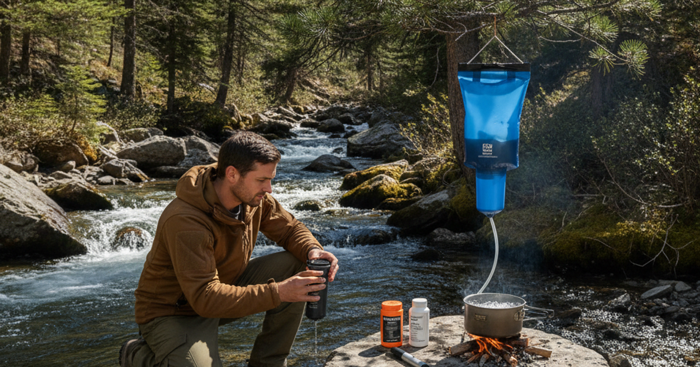
Making Any Water Safe to Drink: How to Purify Every Water Source When SHTF
When the grid fails, clean water becomes your most urgent survival need. Here's how to purify water from any source using proven methods.
Water is the single most critical survival resource you will ever need to secure. You can survive weeks without food, but three days without water will kill you — and in a high-stress, high-exertion disaster scenario, dehydration can incapacitate you even faster. Yet despite water being this fundamental, it remains one of the most dangerously underestimated aspects of emergency preparedness.
When the grid goes down, municipal water treatment stops. Pipes lose pressure. Wells lose power. Rivers, lakes, and ponds that looked clean enough to drink from yesterday are now vectors for cholera, giardia, cryptosporidium, and a dozen other pathogens that will put you on your knees within 24 hours. According to the World Health Organization, contaminated water causes more than 500,000 diarrheal deaths globally each year — and that's during normal times. In a true SHTF scenario, waterborne illness becomes one of the leading threats to survival.
Whether you're an urban apartment dweller, a suburban homeowner, or a rural prepper with land and a well, understanding every method of water purification — and when to use each one — could be the difference between life and death.
Why Tap Water Disappears Faster Than You Think in a Grid-Down Scenario
Most people assume that if the power goes out, water will still flow. That assumption is dangerous. Municipal water systems rely on electric pumps to maintain pressure and push water through treatment facilities. When those pumps stop, water towers drain within hours. The EPA estimates that most municipal water systems have only 24 to 48 hours of reserve pressure after a grid failure. After that, taps go dry.
For urban and suburban residents especially, this is a critical vulnerability. Rural preppers with gravity-fed wells or rainwater systems have more time, but they're not immune — bacterial contamination, flooding, and chemical runoff can compromise any water source. For a deeper dive into how to build a long-term water collection system from scratch, check out our guide on DIY Rainwater Harvesting: Build a Low-Cost Collection System for Off-Grid Water Security.
The bottom line: every prepper, regardless of location, needs multiple methods of water purification ready to deploy the moment normal supply chains fail.
How to Purify Water by Boiling: The Oldest and Most Reliable Method
Boiling water is the gold standard of emergency purification — it requires no special equipment, no chemicals, and works against virtually every biological threat. The CDC confirms that bringing water to a rolling boil for one full minute (three minutes at elevations above 6,500 feet) kills bacteria, viruses, and protozoa including giardia and cryptosporidium.
For urban survivors, this means having a reliable heat source that doesn't depend on the grid. A propane camp stove, a butane burner, or even an improvised rocket stove can serve this purpose. Rural and suburban preppers have more options — wood stoves, outdoor fire pits, and open campfires. If you need to master fire-starting when your normal ignition methods fail, our guide on Fire Starting Without Matches: How to Choose and Master Every Ignition Method for Survival covers everything from ferro rods to bow drills.
Limitations of boiling:
- Does not remove chemical contaminants, heavy metals, or sediment
- Requires a heat source and fuel — both finite resources
- Time-consuming at scale — purifying water for a family of four daily adds up quickly
- Not practical in a mobile bug-out situation
Always pre-filter visibly dirty water through a cloth, bandana, or coffee filter before boiling to remove sediment and improve taste.
Mechanical Filtration: The Best Everyday Carry Water Purification Tool
Mechanical filters work by forcing water through a physical medium — typically hollow fiber membranes or ceramic elements — that physically blocks pathogens. These are the workhorses of modern survival gear and should be in every bug out bag and survival kit.
For lightweight, portable filtration, the Sawyer MINI water filtration system is one of the best values in preparedness. It filters up to 100,000 gallons, removes 99.99999% of bacteria and 99.9999% of protozoa, weighs just 2 ounces, and can be attached directly to a standard water bottle or hydration pack. It's small enough to forget it's in your pocket — and critical enough that you never should.
For a quick-deploy solution when you need to drink directly from a stream, river, or even a puddle, the LifeStraw personal water filter straw is an essential piece of urban survival and backcountry kit. It filters up to 1,000 gallons and requires no pumping, batteries, or chemical prep — you simply insert it in water and drink. Every member of your family should have one.
If you're building a more serious, long-term off grid water solution — particularly for a group or homestead — consider the Katadyn Pocket water microfilter. It's a pump-style ceramic filter rated for up to 13,000 gallons, built to military specifications, and designed to handle the most sediment-heavy backcountry water sources. It's an investment, but it's a filter that can last a lifetime with proper maintenance.
What mechanical filters do NOT remove:
- Viruses (most standard filters — always check specifications)
- Dissolved chemicals and heavy metals
- Radiation byproducts
In most North American backcountry and disaster scenarios, viruses in water are less common than in developing nations. However, in an extended SHTF collapse where sewage systems fail, viral contamination becomes a very real risk. For sanitation context, see our guide on Grid-Down Sanitation: How to Manage Waste and Stay Healthy When the Sewers Stop Working.
Chemical Treatment: Lightweight Emergency Purification That Kills What Filters Miss
Chemical purification is the lightest, cheapest, most packable water treatment method available. It fills a critical gap — killing viruses that mechanical filters often miss — and should be considered a complement to filtration, not a replacement for it.
Iodine Tablets
Potable Aqua water purification iodine tablets are a field-proven staple of military and emergency kits worldwide. Drop two tablets into a liter of water, wait 30 minutes (longer in cold water), and you have water safe to drink. They're inexpensive, weigh almost nothing, and a single bottle treats up to 25 liters. Keep a bottle in every bug out bag, survival kit, and vehicle emergency kit.
Important limitations:
- Iodine does not reliably kill cryptosporidium — pre-filter and boil if crypto is suspected
- Not suitable for pregnant women, people with thyroid conditions, or long-term use
- Leaves a distinctive taste — neutralizer tablets or vitamin C powder can reduce this
Chlorine Dioxide Tablets
Chlorine dioxide tablets (brands like Katadyn Micropur) are a superior alternative to iodine in many scenarios. They kill bacteria, viruses, and cryptosporidium — but require a four-hour wait time in clear water and longer in cold or turbid conditions. For long-term emergency preparedness, stock both iodine and chlorine dioxide tablets to cover different scenarios.
Unscented Liquid Bleach
Standard household bleach (sodium hypochlorite, 6–8.25%) can purify water in a pinch. The CDC recommends 8 drops per gallon of clear water (16 drops if cloudy), followed by a 30-minute wait. This is a critical skill for urban survivors who may have limited access to specialty gear but a pantry full of cleaning supplies.
UV Purification: Fast, Chemical-Free, and Highly Effective
Ultraviolet light purification is one of the most underrated methods in the prepper toolkit. UV light destroys the DNA of microorganisms — including bacteria, viruses, and protozoa — rendering them unable to reproduce or cause illness. It works in about 90 seconds per liter and leaves no taste or chemical residue in the water.
The SteriPen Adventurer UV water purifier is one of the most respected tools in this category. Compact enough for a jacket pocket, it treats one liter in 90 seconds and is NSF-certified to meet EPA drinking water standards. It's an excellent primary or backup option for anyone building a layered water purification strategy.
UV purification limitations:
- Requires batteries or a charge — plan for this in a grid-down scenario
- Does not remove sediment, chemicals, or heavy metals
- Effectiveness is significantly reduced in turbid (cloudy) water — always pre-filter first
- Mechanical failure is always possible — never rely on a single method
Building a Layered Water Purification Strategy for Any Environment
The most dangerous mistake in emergency preparedness is relying on a single water treatment method. Seasoned preppers use a layered approach — multiple complementary methods that cover each other's weaknesses.
A practical layered system for most households looks like this:
- Pre-filtration: Remove sediment with a cloth, bandana, or improvised sand/gravel/charcoal filter
- Mechanical filtration: Remove bacteria and protozoa with a quality filter (Sawyer MINI, LifeStraw, or Katadyn)
- Chemical or UV treatment: Kill viruses with iodine tablets, chlorine dioxide, or a SteriPen
- Storage: Store treated water in clean, sealed containers — food-grade HDPE or stainless steel
This sequence handles the full spectrum of biological threats from virtually any freshwater source. For apartment and urban dwellers, this layered kit fits into a backpack. For suburban and rural preppers, it can be scaled up to household-level capacity with gravity-fed filter housings and large storage tanks. You can find our full recommended water treatment products at the SHTF Plan Recommended Survival Gear & Equipment page.
And don't overlook emergency water storage as the foundation of your plan. Our dedicated guide on Emergency Water Storage: How Much You Actually Need and How to Store It Safely covers everything from storage containers to rotation schedules.
Water Sources You Can Actually Use in a Grid-Down Emergency
Knowing how to purify water means nothing if you can't find it. Here are viable sources by environment:
Urban and Suburban Sources
- Water heater tanks: Most hold 40–80 gallons of relatively clean water — drain from the bottom spigot
- Toilet tanks (not bowls): Clean water unless chemical tablets are in use
- Swimming pools and hot tubs: Heavily chlorinated — filter and let stand before secondary treatment
- Rainwater collection: Rooftop collection is viable in most areas; legality varies by state
- Parks, fountains, and retention ponds: Treat as contaminated — full purification required
Rural and Wilderness Sources
- Streams and rivers: Moving water is generally safer than stagnant — still requires full treatment
- Springs: Often the cleanest natural source, but test before assuming safety
- Wells: Unaffected by grid failure if hand-pump equipped; can be contaminated by flooding
- Rainwater: Excellent source; collect from clean surfaces away from trees
- Morning dew: Can be collected from vegetation with a cloth — small yield but pure
What You'll Need
- Multiple filtration cloths or bandanas
- Food-grade container or clean bucket
- Metal pot for boiling
- Unscented household bleach (5-6% sodium hypochlorite)
- Potassium permanganate crystals or iodine tablets
- Fine sand, gravel, and activated charcoal
- Coffee filters or paper towels
Step-by-Step Instructions
Step 1: Assess and Collect Water from the Cleanest Available Source
Identify the cleanest water source available, prioritizing flowing water over stagnant pools. Look for clear water away from industrial areas, agricultural runoff, or obvious contamination. Collect water upstream from any animal activity or human settlement. If only murky water is available, let it settle in a container for several hours so sediment drops to the bottom before proceeding.
Step 2: Pre-Filter to Remove Large Debris and Sediment
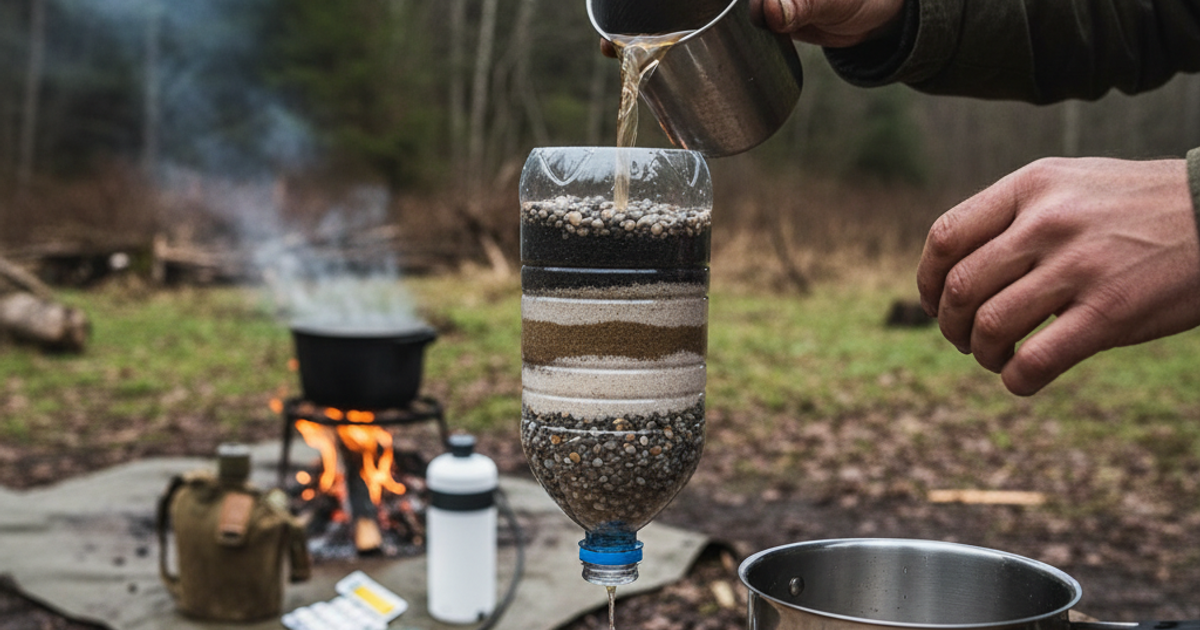
Pour the collected water through multiple layers of clean cloth, bandanas, or coffee filters to remove visible particles, insects, and larger contaminants. For very dirty water, create a basic gravity filter by layering a container with gravel on the bottom, sand in the middle, and cloth on top. This pre-filtration step significantly improves the effectiveness of subsequent purification methods. Repeat the filtering process if water still appears cloudy after the first pass.
Step 3: Boil Water for a Full Rolling Boil
Transfer the pre-filtered water to a metal pot and bring it to a vigorous, rolling boil. Maintain the boil for at least one full minute at lower elevations, or three minutes if you're above 6,500 feet. This kills bacteria, viruses, and parasites that cause waterborne illnesses. Allow the water to cool naturally before drinking, and consider aerating it by pouring between containers to improve the flat taste.
Step 4: Apply Chemical Disinfection as a Backup Method
If boiling isn't possible, use chemical disinfection with unscented household bleach at a ratio of 2 drops per quart of clear water or 4 drops per quart of cloudy water. Alternatively, use potassium permanganate (enough to turn water light pink) or iodine tablets following package directions. Mix thoroughly and let the treated water stand for at least 30 minutes before drinking. The water should have a slight chlorine smell; if not, repeat the dose and wait another 15 minutes.
Step 5: Construct a DIY Biosand Filter for Long-Term Use
Build a multi-layer filtration system using a food-grade bucket with a small hole drilled near the bottom. Layer from bottom to top: small gravel, coarse sand, fine sand, and crushed activated charcoal if available. Pour water slowly into the top and collect filtered water from the bottom outlet. This biological filter improves over time as beneficial bacteria colonize the sand layer, removing pathogens and improving water quality with continued use.
Step 6: Test and Taste Before Full Consumption
Before drinking large quantities, test the purified water by taking small sips and waiting several hours to monitor for adverse reactions. Check for any unusual odors, colors, or tastes that might indicate incomplete purification. If multiple purification methods are available, combine them for maximum safety—filter first, then boil or chemically treat. Keep purified water in clean, covered containers and consume within 24 hours when possible.
Step 7: Establish a Continuous Purification System
Set up multiple containers at different stages: collection, settling, filtering, treating, and storage to maintain a constant supply of safe water. Rotate through your purification methods to avoid depleting any single resource like fuel or chemicals. Clean and maintain all filtration equipment daily by rinsing sand filters and sanitizing containers. Mark containers with dates and treatment methods used to track water safety and prevent confusion in high-stress situations.
Frequently Asked Questions
How long does boiled water stay safe to drink?
Properly boiled water stored in a clean, sealed container will remain safe to drink for up to six months, assuming no contamination during storage. Use food-grade containers with tight-fitting lids, store in a cool dark location, and label with the purification date. If the container is opened and used, consume within a few days or re-purify before drinking.
What is the best water filter to put in a bug out bag?
For most preppers, the Sawyer MINI or LifeStraw represent the best combination of weight, performance, and cost for a bug out bag. They're lightweight, highly effective against bacteria and protozoa, and require no batteries or chemicals. For broader virus protection in a collapse scenario, pair either filter with iodine tablets or chlorine dioxide tablets. If budget allows, consider adding a SteriPen UV purifier as a fast, chemical-free backup.
Can you drink rainwater without purifying it?
Rainwater is generally one of the cleanest natural water sources available, but it is not automatically safe to drink without treatment. As rain falls, it picks up pollutants, bird droppings, bacteria, and particulates from the atmosphere and collection surfaces. In most grid-down scenarios, running rainwater through a mechanical filter and following with UV or chemical treatment is the recommended protocol before consumption. During a nuclear or chemical event, rainwater can carry fallout and contaminants — avoid collection in those scenarios until the immediate threat has passed.
Affiliate Disclosure: SHTF Plan participates in the Amazon Services LLC Associates Program. Some links are affiliate links — we may earn a small commission at no extra cost to you.