Emergency Water Storage: How Much You Actually Need and How to Store It Safely
Most preppers underestimate their water needs. Learn exactly how much to store, which containers are safe, and how to keep your supply fresh long-term.
Emergency Water Storage: How Much You Actually Need and How to Store It Safely
Water is the single most critical resource in any emergency scenario. You can survive weeks without food, but dehydration can kill you in as little as three days — and under physical stress or extreme heat, that window narrows dramatically. Despite this, water storage remains one of the most overlooked aspects of emergency preparedness. Most households aren't even close to being adequately stocked. If a major grid failure, natural disaster, or supply chain disruption hit tomorrow, how long would your water supply last?
This guide breaks down exactly how much water you need, what containers to store it in, how to preserve it long-term, and how to build a practical rotation system that keeps your supply fresh and reliable.
How Much Water Do You Actually Need?
FEMA and the CDC both recommend a minimum of one gallon of water per person per day for drinking and basic sanitation. That's the absolute floor — not a comfortable baseline. In reality, you should plan for significantly more. When you factor in cooking, hygiene, and the physical demands of a crisis situation, two to three gallons per person per day is a more realistic target.
Consider a family of four preparing for a two-week emergency. At the bare minimum (one gallon/day), that's 56 gallons. At a more realistic two gallons per day, you're looking at 112 gallons. If you have pets, elderly family members, infants, or live in a hot climate, add more. This math is sobering — and it explains why so many people are dangerously underprepared after even minor regional disasters.
Don't forget to account for water needed to:
- Rehydrate freeze-dried or dehydrated food stores
- Wound cleaning and first aid
- Flushing toilets if municipal systems fail
- Watering a garden if a crisis extends for months
Choosing the Right Water Storage Containers
Not all containers are created equal. Choosing the wrong storage vessel can introduce contaminants, leach chemicals into your water, or degrade faster than you expect. Always use food-grade, BPA-free containers that are specifically rated for long-term water storage.
Large Barrel Solutions (55-Gallon)
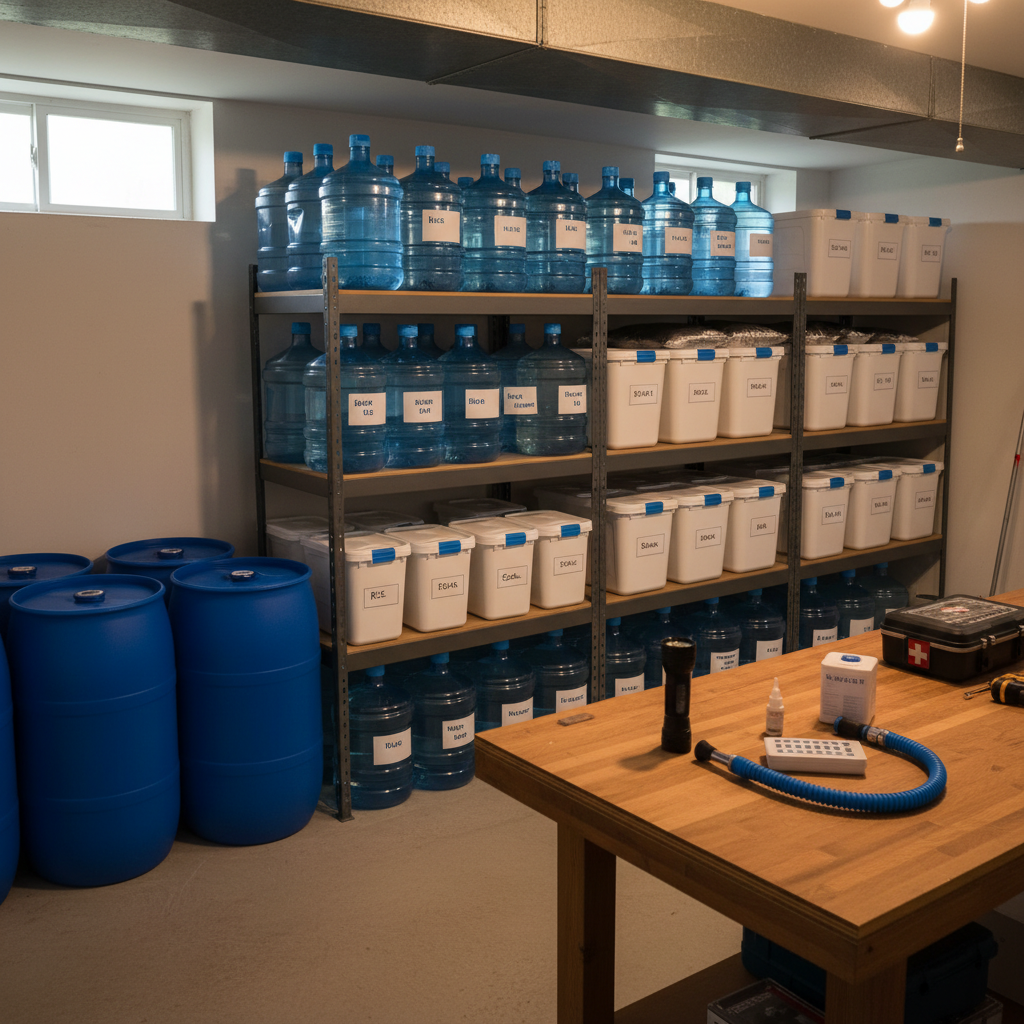
For serious preppers, 55-gallon drums are the backbone of a proper water storage system. The Augason Farms Water Storage Barrel (55-Gallon Blue BPA-Free) is a popular choice that checks all the right boxes: it's made from food-grade polyethylene, it's BPA-free, and its distinctive blue color helps block light that can encourage algae growth. A single barrel covers a family of two for about two weeks at the FEMA minimum — or one week at the more practical two-gallon-per-day rate.
One important consideration: a full 55-gallon barrel weighs approximately 460 pounds and cannot be moved once filled. Choose your storage location carefully before filling. A cool, dark basement or interior room away from direct sunlight is ideal. These barrels also require a pump for practical access — more on that in a moment.
The WaterBOB: Fast Deployment for Crisis Situations
If a hurricane, ice storm, or other disaster is bearing down and you need to rapidly expand your water supply, the WaterBOB Emergency Water Storage Bladder (100 Gallon) is one of the smartest investments a prepper can make. It's a large food-grade plastic bladder that fits inside a standard bathtub and fills directly from the tap, holding up to 100 gallons of clean drinking water. It keeps water fresher than an open tub and prevents contamination from soap residue, dirt, and bacteria. Every serious prepper should have at least one stored in a closet ready to deploy on short notice.
Portable and Modular Containers
Not everyone has the space or setup for large barrels, and even those who do benefit from having portable options for evacuation scenarios. Two containers stand out in this category.
The Scepter Military-Style Water Container (5-Gallon BPA-Free) is the same design used by military forces around the world. It's nearly indestructible, features a tight-sealing cap to prevent leaks and contamination, and is sized so most adults can carry a full container without much difficulty. These stack efficiently and are excellent for bug-out bags or vehicle kits.
For home storage with easy portability, the Reliance Products Aqua-Tainer 7-Gallon Water Container offers a bit more volume with a built-in spigot for easy dispensing. The recessed handle and stackable design make these practical for organized storage in closets, garages, or under shelving units. Many preppers build their water storage around a combination of these smaller containers and larger barrels.
Essential Accessories: The Barrel Pump
A 55-gallon barrel full of water does you no good if you can't access it. You will not be tipping that barrel. You need a dedicated hand pump, and the WaterBasics Emergency 55-Gallon Barrel Hand Pump is purpose-built for exactly this task. It inserts directly into the bung of a standard water barrel and lets you extract water cleanly and efficiently without any electricity required. This is a non-negotiable addition if you're investing in barrel storage.
Water Preservation: Making Your Supply Last
Tap water stored in clean, sealed food-grade containers will generally stay safe for six to twelve months. However, several factors can shorten that window: temperature fluctuations, light exposure, and improperly sealed containers. To extend shelf life and ensure safety, use a water preserver or purification tablets.
Aquatabs Water Purification Tablets (100-Pack) are one of the most trusted and widely used water purification solutions in the world — they're used by UNICEF, the Red Cross, and militaries globally. Each tablet treats one liter of water and eliminates bacteria, viruses, and other pathogens. Keep several packs in your storage kit both as a preservation aid and as a purification method if your stored water runs out and you need to treat collected rainwater or stream water.
Building a Water Rotation System
Stored water isn't a "set it and forget it" resource. You need a systematic rotation plan to ensure your supply stays fresh and usable when you actually need it.
- Label every container with the fill date using a permanent marker or waterproof label.
- Set a rotation schedule. Smaller containers (5-7 gallon) should be rotated every six months. Properly sealed barrels with water preserver can go 12 months or longer.
- Use a first-in, first-out system. Place newer containers at the back and pull from the front, just like a grocery store rotates stock.
- Don't waste rotated water. Use it to water your garden, flush toilets during the rotation period, or run through a filter before drinking if it's borderline fresh.
- Inspect containers regularly for cracks, cloudiness, or unusual odors. Any of these are signs to replace the container and its contents immediately.
Storage Location Best Practices
Where you store water matters almost as much as how. Follow these guidelines to maximize shelf life and safety:
- Keep containers away from direct sunlight — UV light degrades plastic and encourages microbial growth.
- Avoid storing near gasoline, pesticides, or cleaning products — plastic containers can absorb vapors from these chemicals over time.
- Maintain a consistent, cool temperature — ideally between 50°F and 70°F. Avoid garages in climates with extreme temperature swings.
- Elevate barrels off concrete floors using pallets or a wooden platform — direct concrete contact can leach chemicals and trap moisture that degrades the container exterior.
What You'll Need
Tools
- Hand barrel pump (for accessing 55-gallon drums)
- Permanent marker or waterproof labels (for dating containers)
- Bung wrench (for opening and sealing barrel caps)
- Food-grade hose or siphon (for filling large barrels from a tap)
- Wooden pallet or platform (for elevating barrels off concrete)
Supplies
- 55-gallon food-grade, BPA-free water storage barrels
- 5-gallon or 7-gallon portable water containers
- WaterBOB bathtub bladder (for rapid emergency filling)
- Water purification tablets (e.g., Aquatabs)
- Liquid water preserver concentrate
- Unscented household bleach (as a backup purification option)
Step-by-Step Instructions
Step 1: Calculate your household's total water storage target
Multiply the number of people in your household by two gallons per day, then multiply that by the number of days you want to be prepared for — a minimum of 14 days is strongly recommended. Add extra volume for pets, infants, elderly members, and anyone with a medical condition that increases hydration needs. Write this number down — it's your storage goal and everything else is built around it.
Step 2: Select and position your large barrel storage before filling
Choose your storage location first, because a full 55-gallon barrel cannot be moved — it will weigh close to 460 pounds. Identify a cool, dark interior space such as a basement or climate-controlled room, away from sunlight, chemicals, and extreme temperature swings. Place a wooden pallet or platform in that spot now, before the barrel arrives, to keep the container elevated off concrete.
Step 3: Clean and sanitize all containers before first use
Even brand-new food-grade containers should be sanitized before filling.