When the Soap Runs Out: How to Make Lye Soap, Disinfectants, and Cleaning Supplies for Long-Term Survival
Hygiene failures kill more people in a prolonged crisis than violence does. Learn to render fat, make lye soap, mix bleach solutions, and stockpile the raw materials that keep your family clean.
In the first ten weeks of the COVID-19 supply shock, U.S. sales of hand sanitizer jumped over 600% and disinfecting wipes vanished from shelves nationwide. That was a minor disruption — trucks were still rolling. Now imagine a grid-down event, a currency collapse, or a months-long logistics failure. Soap is not a luxury item. The CDC estimates that proper handwashing reduces diarrheal illness by roughly 30% and respiratory infections by about 20%. In a scenario where antibiotics are scarce and there's no functioning hospital, a bar of soap may be the single highest-value survival item in your house.
The good news: soap is one of the oldest manufactured products in human history, and you can make it with three ingredients — fat, lye, and water. Whether you live on 40 acres or in a fourth-floor walk-up, this is a skill worth owning before you need it.
Why Soap and Sanitation Fail First in a Long-Term Emergency
Most preppers stockpile calories, ammo, and water filters, then discover three months in that they're out of dish soap, laundry detergent, and bleach. Sanitation failures kill. In post-earthquake Haiti, cholera killed roughly 10,000 people — a disease spread almost entirely by contaminated hands, water, and surfaces.
Commercial bleach is a particular trap. Sodium hypochlorite degrades at roughly 20% potency loss per year at room temperature, and faster in heat. That gallon of bleach you bought three years ago may be nearly worthless as a disinfectant. Pool shock (calcium hypochlorite) in granular form, by contrast, stores for a decade or more and can be mixed as needed — a fact that also makes it invaluable for emergency water purification.
What You'll Need
Tools
- Stainless steel soap making pot
- Digital kitchen scale (0.1g resolution)
- Instant-read digital thermometer
- Silicone loaf soap mold
- Immersion (stick) blender, safety goggles, chemical-resistant gloves
Supplies
- 100% pure lye (sodium hydroxide)
- Coconut oil
- Olive oil (1 gallon)
- Distilled water, calcium hypochlorite (pool shock), white vinegar, washing soda
Understanding Lye: The Ingredient You Can't Skip
There is no such thing as soap without lye. Even "lye-free" melt-and-pour bases were made with lye — the saponification reaction converts every molecule of sodium hydroxide into soap and glycerin. Properly made and cured soap contains zero free lye.
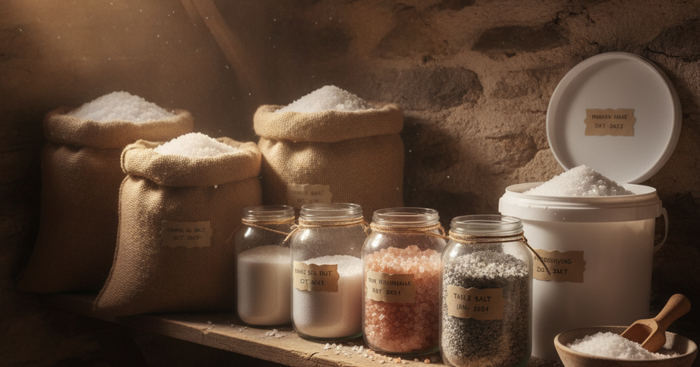
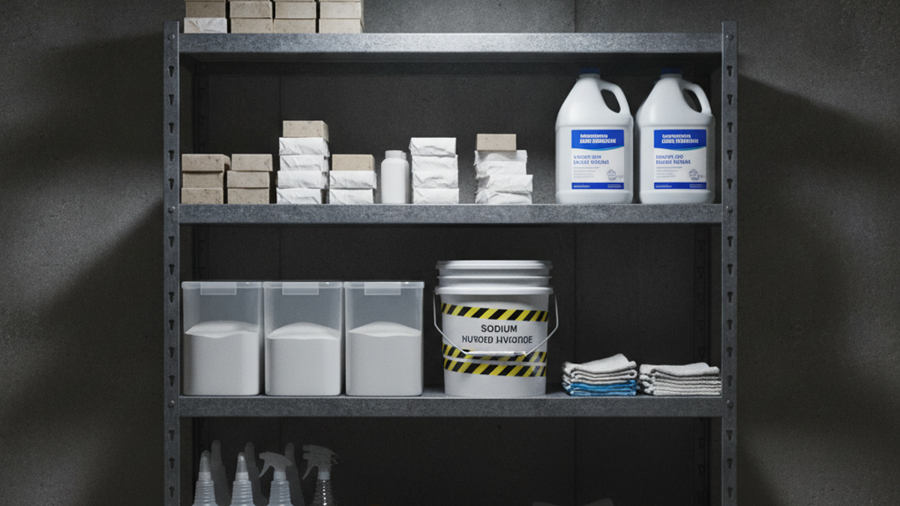
For bar soap you need sodium hydroxide (NaOH). For liquid soap you need potassium hydroxide (KOH). Buy food-grade or soap-grade Comstock 100% Pure Lye and store it in the original HDPE container inside a sealed bucket — lye is hygroscopic and will absorb atmospheric moisture until it turns into a useless caustic sludge. Kept dry, it lasts essentially forever.
A useful backdoor for stockpilers: certain crystal drain openers are 100% sodium hydroxide with no additives. A jug of Roebic Crystal Drain Cleaner (100% lye) does double duty — it clears a clogged drain today and makes soap tomorrow. Always verify the label reads 100% sodium hydroxide with no aluminum flakes or fragrance.
Rural option: You can leach potassium hydroxide from hardwood ash by dripping rainwater through it. Wood-ash lye is unpredictable in strength and produces soft, gel-like soap, but it works. Apartment dwellers should simply stockpile 5–10 pounds of commercial lye — it's compact, cheap, and shelf-stable, which fits neatly into an apartment prepping stockpile strategy.
Choosing Fats and Oils for Survival Soap
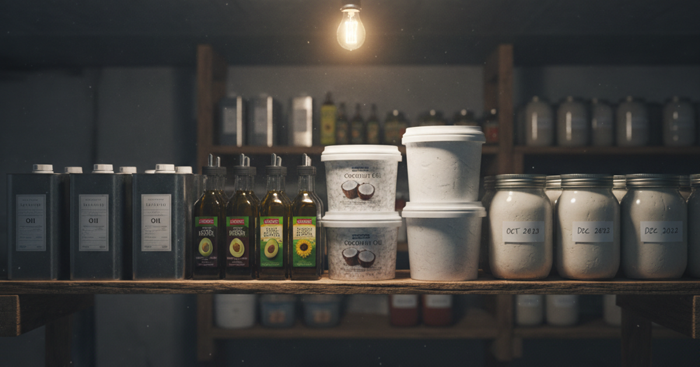
Coconut oil produces hard bars with explosive lather and is the only common oil that lathers in salt water — critical for coastal or well-water situations. NOW Foods coconut oil stores well and is a solid base ingredient. Olive oil makes a mild, long-lasting bar; buying Pomona olive oil by the gallon is far cheaper per batch than grocery bottles.
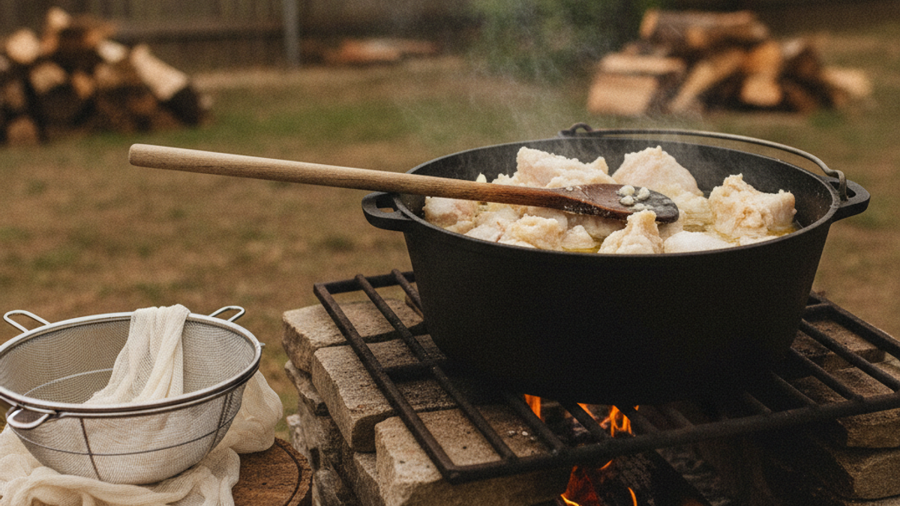
In a true SHTF scenario, rendered animal fat becomes your primary source. Beef tallow and lard both make excellent, hard, long-curing bars — another argument for learning butchering and fat rendering. Bacon grease saved in a jar is soap waiting to happen.
Step-by-Step Instructions
Step 1: Gear up and set up a safe workspace
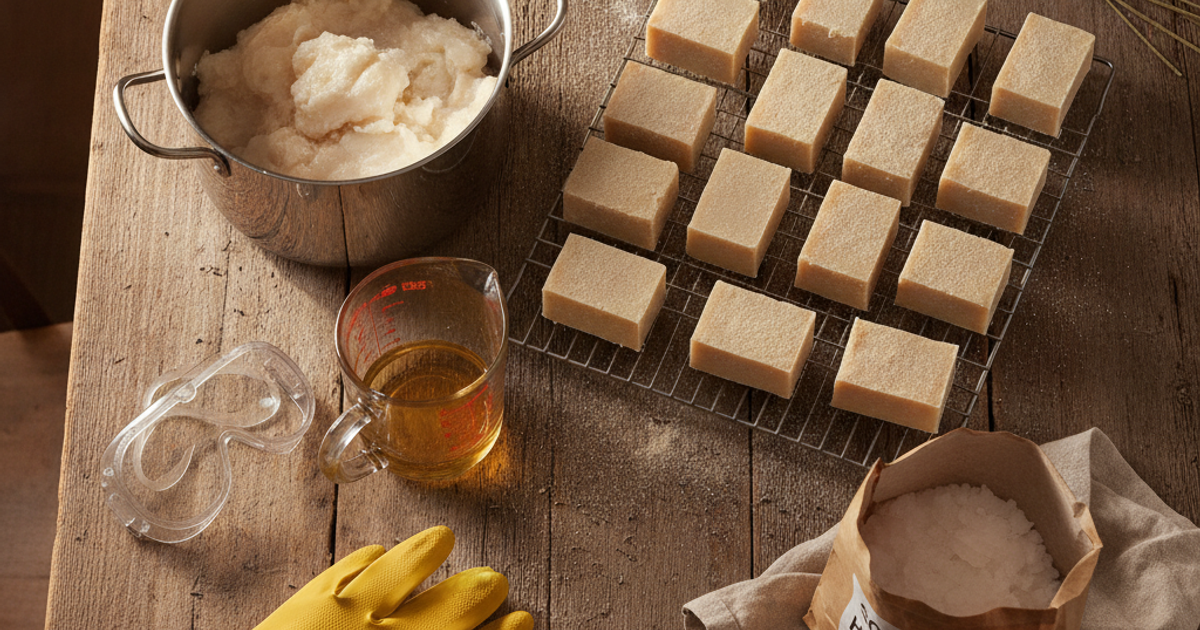
Wear goggles, long sleeves, and chemical-resistant gloves. Work in a ventilated space — an open window with a fan, or outdoors. Keep children and pets out, and set a bottle of white vinegar nearby (it neutralizes minor lye splashes on surfaces; flush skin with cold running water for 15 minutes).
Step 2: Weigh all ingredients by mass, never volume
Soap making is chemistry, not cooking. Use a 0.1g digital scale. A reliable beginner recipe: 20 oz olive oil, 10 oz coconut oil, 4.2 oz lye, 11 oz distilled water. Run any new recipe through a printed lye calculation chart with a 5% superfat margin so excess oil buffers any measurement error.
Step 3: Mix lye into water — always in that order
Slowly pour the lye into the water while stirring. Never reverse it; adding water to lye can cause a violent eruption. The solution will spike to roughly 200°F and release fumes. Let it cool to 100–110°F.
Step 4: Melt and combine your oils
Warm the oils in a stainless steel pot until they reach about 100–110°F. Never use aluminum — lye reacts with it violently and produces hydrogen gas. Verify temperatures with a digital instant-read thermometer; matching temps within 10°F prevents separation.
Step 5: Blend the mixture to trace
Pour the lye solution into the oils and blend with an immersion blender in short bursts. Within 3–10 minutes the mixture thickens to "trace" — drizzled soap leaves a visible trail on the surface. Add any essential oils, oatmeal, or activated charcoal at this point and stir briefly.
Step 6: Pour, insulate, and unmold
Pour into a silicone loaf mold, cover with cardboard, and wrap in a towel for 24 hours to hold heat through the gel phase. Unmold after 24–48 hours and slice into bars while still firm-but-soft.
Step 7: Cure bars for four to six weeks
Stand bars upright on a rack with airflow on all sides. Curing drives off water, hardening the bar and completing saponification. A properly cured bar lasts three times longer in the shower — and stores indefinitely in a cool, dry place.
Step 8: Test pH before use
Touch a wet bar to your tongue — a "zap" like a 9-volt battery means free lye remains and the batch needs more cure time or should be rebatched. pH strips should read 8–10.
How to Make Disinfectants and Cleaning Supplies Without a Store
- Chlorine disinfectant: Dissolve 1 heaping teaspoon of 68% calcium hypochlorite pool shock in 2 gallons of water for a concentrated stock, then dilute for surfaces. One pound treats thousands of gallons.
- Vinegar all-purpose cleaner: 1:1 white vinegar and water cuts grease and mineral scale. It is not a hospital-grade disinfectant — use chlorine for anything involving bodily fluids.
- Scouring powder: Baking soda plus a little grated soap.
- Laundry soap: 1 cup grated homemade soap, 1 cup washing soda, 1 cup borax. Use 1–2 tablespoons per load. Pair this with the techniques in our guide to off-grid laundry and hygiene.
- Sanitizing rinse: Unscented bleach at 1 tablespoon per gallon for dishes.
Track all of this in your stockpile inventory system — cleaning supplies expire quietly and are easy to forget.
Frequently Asked Questions
How long does homemade lye soap last in storage?
Cured cold-process soap stores for 2–3 years with good lather, and remains usable for cleaning far longer. Wrap bars in paper (not plastic) and store cool and dry. High-oleic oils like olive extend shelf life; soaps heavy in soft oils may develop harmless orange "dreaded orange spots" over time.
Is homemade soap safe to use on skin?
Yes, when made with accurate measurements and a 5% superfat. After a full cure, no free lye remains — only soap and natural glycerin. Always zap-test or pH-test a batch before using it on children or on broken skin.
How much soap should a prepper stockpile?
Plan on roughly one 4-ounce bar per person per month for bathing, plus equivalent amounts for dishes and laundry. A family of four should hold at least 50 bars for a year, plus 10 pounds of lye and the oils or rendered fat to make more indefinitely.
Affiliate Disclosure: SHTFPlan.net participates in the Amazon Services LLC Associates Program. Some links are affiliate links — we may earn a small commission at no extra cost to you.