Stockpile Inventory Management: How to Track, Rotate, and Audit Your Prepper Supplies Before They Expire
A stockpile you can't track is a stockpile you can't trust. Learn how to label, log, rotate, and audit your emergency supplies so nothing expires, spoils, or goes missing before you need it.
The most expensive prepper mistake isn't buying the wrong gear — it's buying the right gear and letting it rot in a closet. Every year, preppers throw away hundreds of dollars in expired canned goods, degraded medications, oxidized rice, and leaking water containers simply because nobody wrote down what was purchased, when it was purchased, and where it went. The USDA estimates that American households waste roughly 30 to 40 percent of the food supply, and a stockpile you never inventory is just organized waste with a longer fuse.
Inventory management is the least glamorous part of emergency preparedness, and it's the discipline that separates a functional stockpile from a pile of stuff. A prepper with 90 days of tracked, rotated, labeled food is in far better shape than one with a year's worth of mystery buckets stacked in a garage. This guide walks through building a tracking system that works whether you're storing in a 600-square-foot apartment closet or a climate-controlled basement on 40 acres.
Why Expiration Dates Lie — And What Actually Matters
First, a critical distinction: with the exception of infant formula, the dates printed on food packaging in the United States are not federally regulated safety dates. "Best by," "sell by," and "use by" are manufacturer quality estimates. The USDA has stated plainly that most shelf-stable foods remain safe indefinitely if stored properly — they simply lose flavor, texture, and nutritional value over time.
What actually determines shelf life is the storage environment. The rule of thumb from food scientists is that every 18°F reduction in storage temperature roughly doubles shelf life. White rice stored at 70°F in a sealed Mylar bag with oxygen absorbers can last 25-30 years. That same rice at 90°F in a paper sack in a humid garage might be infested and rancid in 18 months.
This is why your inventory system needs to track three things, not one: purchase date, best-by date, and storage location (which implies storage conditions). Vitamins and medications are the harshest exception — potency genuinely declines, and items like insulin, epinephrine, tetracycline, and liquid antibiotics need aggressive rotation. If you stockpile medications, review our guidance on building a prescription and OTC drug reserve for drug-specific timelines.
What You'll Need
Tools
- Brother P-touch label maker
- Industrial permanent marker
- Spreadsheet software or a paper logbook
- Digital kitchen scale (for tracking bulk staples by weight)
Supplies
- Removable adhesive labels
- FIFO can rotation racks
- Clear storage bins with lids
- Mylar bags with oxygen absorbers
- Gamma Seal lids for 5-gallon buckets
How to Build a FIFO Rotation System in Any Space
FIFO — First In, First Out — is the same principle grocery stores use when they pull old milk forward and stock new milk behind. Applied to a stockpile, it means you always consume the oldest item first, and new purchases go to the back of the line.
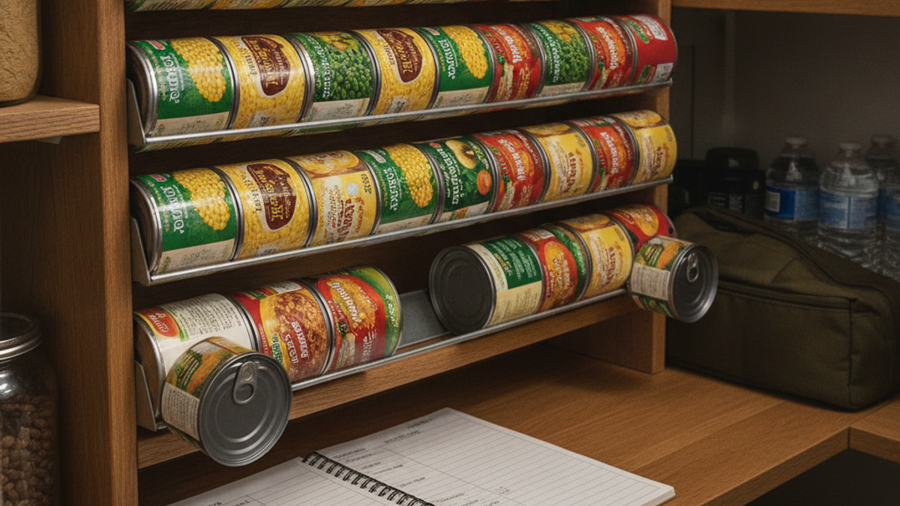
For canned goods, gravity-fed racks do the work for you. A FIFO Can Tracker organizer loads cans from the top and dispenses from the bottom, making it physically impossible to grab the newest can first. For larger stockpiles, a Shelf Reliance Harvest rotation shelf handles 400-plus cans in a footprint smaller than a bookshelf — worth the investment if you're storing for a family of four or more.
Apartment dwellers: you don't need a dedicated pantry. Stack 66-quart clear Sterilite bins under beds, in closet tops, and behind sofas, and treat each bin as an inventory unit with a laminated contents card taped to the lid. Clear bins let you eyeball contents without unstacking. See our full guide to building a serious stockpile in a small space for layout strategies.
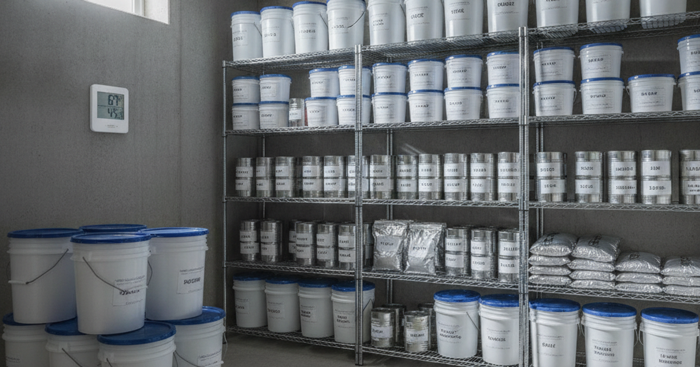
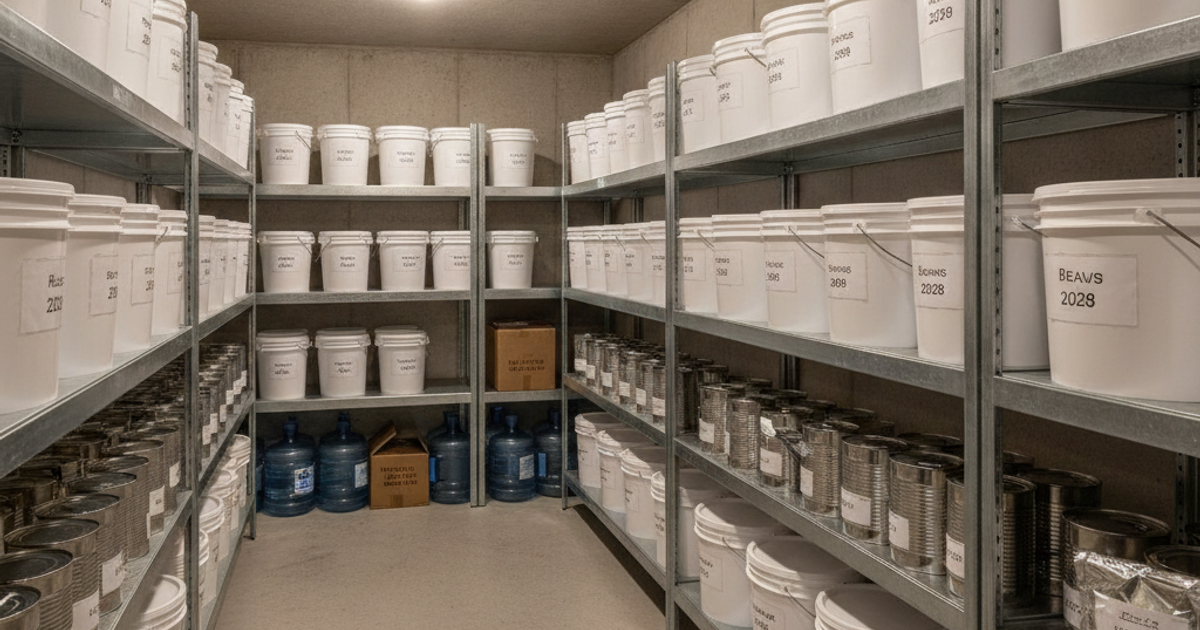
Rural and suburban preppers: your enemy is scale. Once you pass 30 buckets, memory fails completely. Switch to a zone system — label shelving units A, B, C — and record zone location in your master log alongside every item.
How to Label Prepper Supplies So You Can Read Them in 10 Years
Ink fades. Cardboard absorbs moisture. Cheap adhesive labels curl off buckets in unheated garages within two winters. Your labeling system needs to survive as long as the food does.
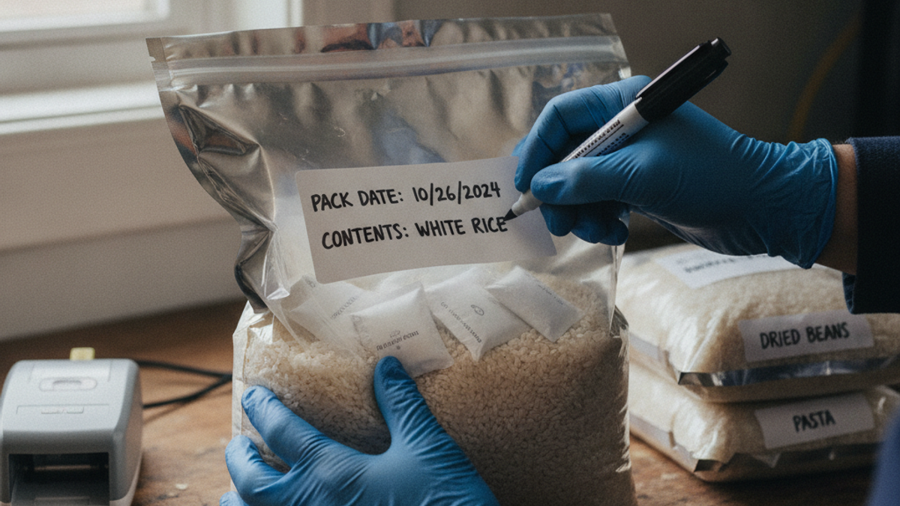
Every container should carry four data points: contents, pack date, best-by date, and net weight or count. Write them large enough to read from six feet away. A Sharpie industrial permanent marker is rated for extreme temperatures and won't smear on Mylar the way standard markers do — write directly on the bag before sealing, then again on the bucket exterior.
For items you rotate frequently, 2x4 removable Avery labels peel clean so you can relabel a container without residue buildup. For a professional, scannable system, a Brother P-touch PTD210 label maker prints laminated tape that resists water, oil, and abrasion — ideal for medical kits, ammo cans, and anything handled often.
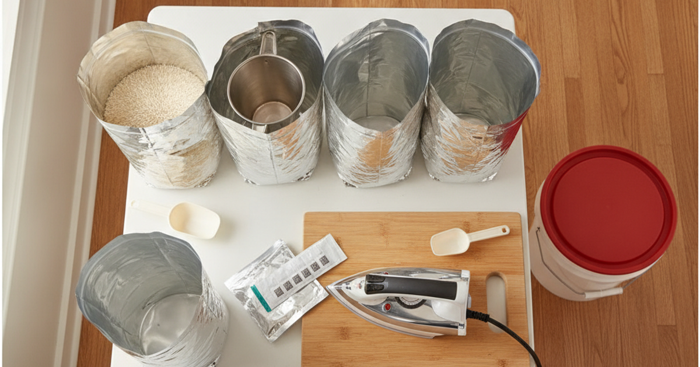
When repacking bulk staples, seal in 5-gallon Mylar bags with oxygen absorbers inside a food-grade bucket, then cap with a Gamma Seal lid so you can open and reseal without a mallet. That single upgrade is what makes rotation practical instead of a chore you avoid. Pair it with our guide to pest-proofing your emergency food storage.
Step-by-Step Instructions
Step 1: Gather and consolidate every supply into one place
Pull everything out — closets, garage, vehicle kits, bug out bag contents, medicine cabinets. You cannot inventory what you can't see. Expect to find duplicates, forgotten purchases, and at least one item that expired during a previous administration.
Step 2: Sort by category and check every expiration date
Group into food, water, medical, fuel, hygiene, batteries, and tools. Separate anything past its date into a "consume first" box. Discard only what's genuinely compromised: bulging cans, rust through the seam, off odors, mold, or any breached seal.
Step 3: Build a master inventory spreadsheet
Create columns for item, quantity, unit size, purchase date, best-by date, storage location, and calorie count. A spreadsheet with conditional formatting can auto-highlight anything expiring within 90 days. Print a hard copy quarterly — your digital file is useless in a grid-down scenario.
Step 4: Label every container with date and contents
Use a consistent format such as "WHITE RICE — PACKED 03/2025 — BEST BY 03/2050 — 25 LB." Write on two sides of every bucket and bin so labels stay visible regardless of stacking orientation.
Step 5: Install FIFO racks and reshelve oldest-forward
Load rotation racks with the oldest cans dispensing first. On open shelving, physically move older stock to the front edge and place new purchases at the back. Never stack new on top of old.
Step 6: Schedule recurring audits on your calendar
Set quarterly reminders for a spot check and one full annual audit — many preppers tie theirs to daylight saving time changes alongside smoke detector battery swaps. Verify counts against your spreadsheet and note discrepancies.
Step 7: Eat your stockpile and replace what you use
Pull "consume first" items into your weekly meal rotation. Store what you eat, eat what you store — this is the only rotation method that works long-term. Replace each consumed item within your next shopping trip.
How to Run an Annual Stockpile Audit
A real audit takes an afternoon. Count physical inventory against your log, then calculate coverage: total calories divided by (people × 2,000 × days) gives you actual days of food, not a guess. FEMA recommends a minimum two-week home supply; most serious preppers target 90 days minimum. Do the same math for water — one gallon per person per day, per our emergency water rationing guide.
Audit non-food items too: batteries lose roughly 2-3 percent charge per year in storage and alkaline cells leak; check fuel stabilizer dates; test flashlights and radios; inspect water containers for algae or plastic degradation. Note every gap and build next quarter's shopping list from the audit findings, not from impulse.
Recommended Gear
A functional inventory system needs durable labeling, sealed containers, and physical rotation hardware. Pair Gamma Seal lids with Mylar bags for bulk staples, clear bins for kit-level gear, FIFO racks for cans, and a permanent marker or label maker for everything. Browse more vetted options on our recommended survival gear page.
Frequently Asked Questions
How long does emergency food actually last past the printed date?
Commercially canned goods stored below 75°F typically remain safe and palatable 2-5 years past the printed date, and often far longer. Properly packed dry staples like white rice, rolled oats, pasta, sugar, and salt in Mylar with oxygen absorbers can last 25-30 years. Higher-fat items — brown rice, nuts, whole grain flours — go rancid within 6-18 months regardless of packaging.
How often should I audit my prepper stockpile?
Do a full audit annually and quick spot checks quarterly. If you store medications, insulin, or infant supplies, check those monthly. Tie audits to an existing calendar anchor like the time change so you don't forget.
Should I keep my inventory list on paper or digital?
Both. Maintain the working list digitally for easy sorting and calculation, but print a hard copy every quarter and store it with your other critical documents. In a grid-down SHTF scenario, a paper log is the only version that works — and keep it secured, since a detailed stockpile list is an OPSEC liability if it falls into the wrong hands.
Affiliate Disclosure: SHTFPlan.net participates in the Amazon Services LLC Associates Program. Some links are affiliate links — we may earn a small commission at no extra cost to you.