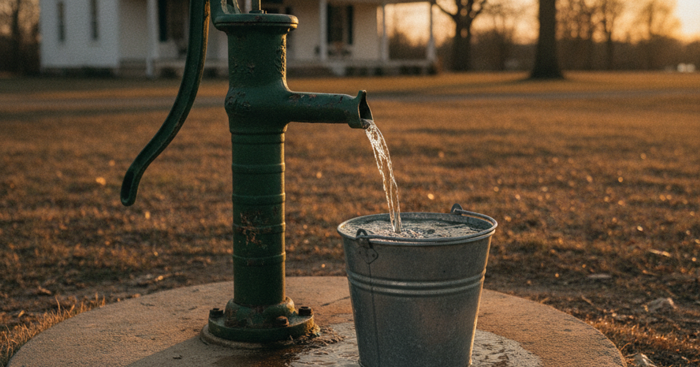
When the Taps Run Dry: How to Ration Emergency Water and Survive on One Gallon a Day
Municipal water can fail from drought, main breaks, contamination, or grid collapse. Learn how to ration emergency water, reuse greywater, and keep your family healthy on a single gallon per person per day.
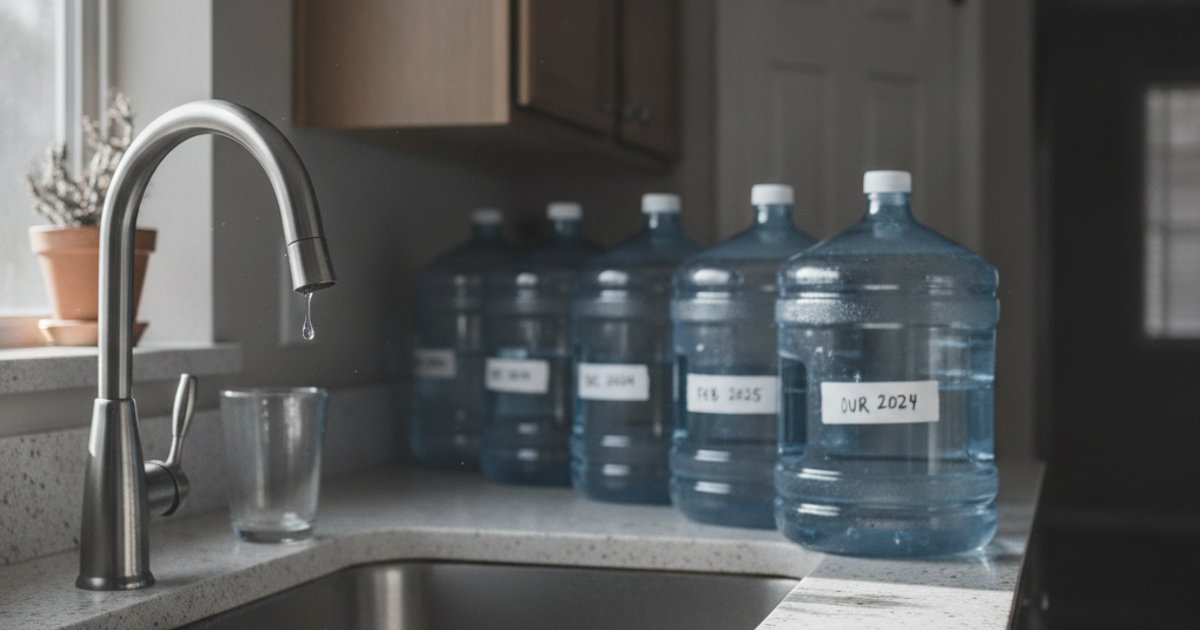
Water is the first thing you run out of and the fastest thing to kill you. You can survive weeks without food, days without shelter in mild weather, and months without electricity — but three days without water and your organs start shutting down. Yet FEMA's own preparedness surveys consistently find that fewer than half of American households have a three-day supply of water on hand, and even fewer have thought through what happens on day four.
Water outages are not exotic. The 2021 Texas freeze left more than 14 million people under boil-water notices. Jackson, Mississippi lost pressure citywide in 2022. Hurricane, wildfire, main breaks, cyberattacks on municipal SCADA systems, and multi-year drought in the Colorado River basin all produce the same result at your faucet: nothing. When that happens, the question stops being "how much water do I have?" and becomes "how long can I make it last?"
The federal standard — one gallon per person per day — is not a comfort number. It is a survival floor: roughly half for drinking, half for food preparation and minimal hygiene. This guide covers how to actually live on that gallon, how to stretch it further with greywater discipline, and how to stay clean enough to avoid the disease that historically kills more people in disasters than dehydration does.
What You'll Need
Tools
- Sawyer MINI water filtration system
- LifeStraw Family 1.0 gravity purifier
- Measuring cup and permanent marker (for rationing by volume)
- Two 5-gallon buckets, labeled clean and grey
Supplies
- Reliance Aqua-Tainer 7-gallon containers
- WaterBrick stackable 3.5-gallon containers
- Aquatabs purification tablets
- waterBOB bathtub storage bladder
- Alcohol-based hand sanitizer, baby wipes, dry shampoo
- Heavy-duty trash bags and kitty litter (waste containment)
How Much Water Do You Actually Need Per Person Per Day?
The one-gallon rule comes from FEMA and the American Red Cross, but it assumes a moderate climate and a sedentary person. Reality varies:
- Sedentary adult, 70°F indoors: ~2 to 2.5 quarts of drinking water minimum.
- Active adult or temperatures above 90°F: the CDC notes fluid needs can double or more; plan 1.5–2 gallons. If you're sweating through a grid-down summer, read our guide on surviving an extreme heat emergency without power.
- Children, nursing mothers, and the sick: add 50 percent. Anyone with vomiting or diarrhea can lose several liters a day and will die faster than everyone else.
- Pets: roughly 1 ounce per pound of body weight per day.
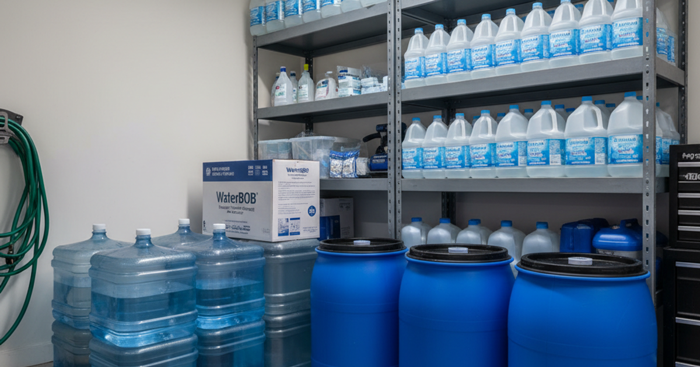
Do the math for your actual household, not a generic one. A family of four planning for two weeks needs 56 gallons at bare minimum — eight 7-gallon Aqua-Tainers, which occupy about the footprint of a closet floor. Apartment dwellers who can't dedicate that space should look at WaterBricks, which interlock like LEGO and slide under beds or stack in a closet corner. For deeper storage strategy, see our guide to choosing, filling, and rotating emergency water containers.
How to Ration Water Without Dehydrating Yourself
The single biggest rationing mistake is voluntary dehydration — people drinking less to "save" water while they still have water in storage. Military survival doctrine is explicit on this: ration sweat, not water. Drink to thirst, then reduce your water loss instead.
Practical loss reduction: stay in shade or the coolest room, work at dawn and dusk, avoid alcohol and excess caffeine, eat less protein (protein metabolism demands more water), and breathe through your nose. Monitor urine color — pale straw is fine, dark amber means you're already behind, and no urination for eight-plus hours is a medical warning sign.
Divide storage into daily allotments rather than drawing from one big jug. Mark a measuring cup or use single-serve rations so the accounting is automatic. Datrex 125ml emergency water pouches are Coast Guard–approved, five-year shelf stable, and make portion control effortless — they also fit flat in a bug out bag where round bottles waste space. For a set-and-forget reserve, Blue Can Emergency Drinking Water carries a 50-year rated shelf life in sealed aluminum cans — expensive per gallon, but it never needs rotation.
Greywater Reuse: Getting Three Uses From One Gallon
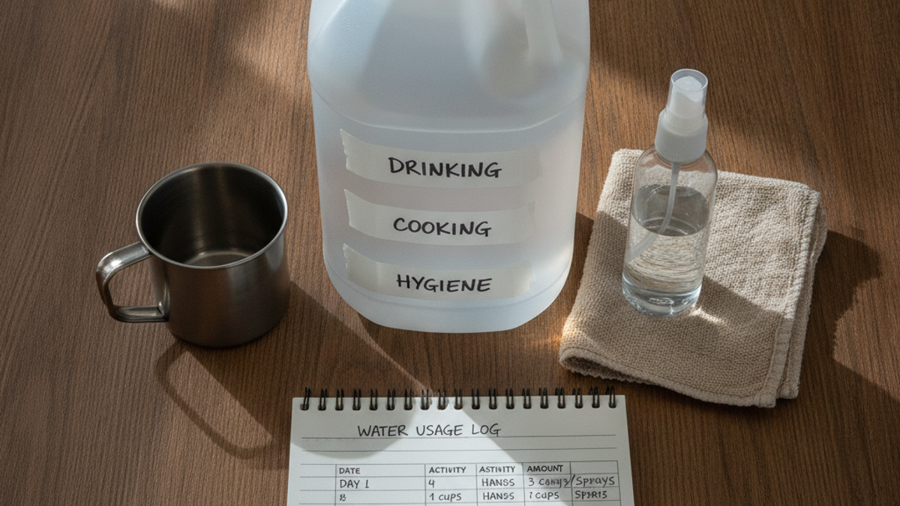
In a rationed household, water should move downhill through a hierarchy and never be dumped after one use:
- Potable: drinking, brushing teeth, medication.
- Cooking: pasta, rice, and vegetable water — save it. It becomes soup stock or wash water.
- Washing: body and dish washing, cleanest items first (glasses, then plates, then pots).
- Flushing and irrigation: the final destination.
A single 2-gallon bucket of greywater poured fast and straight into a toilet bowl will trigger a full siphon flush without touching the tank. Do that only for solids — the old rule "if it's yellow, let it mellow" saves enormous volume. Rural readers can send greywater to garden beds, but keep it off leafy greens and root crops you eat raw, and use plant-safe biodegradable soap only. If the sewer system itself has failed, greywater flushing may be off the table entirely; see how to manage waste when the sewers stop working.
Hygiene Without Running Water: Preventing the Second Disaster
Historically, gastrointestinal illness spikes after water outages. The Sphere humanitarian standards flag inadequate hygiene as a leading driver of post-disaster mortality, and WHO data attributes hundreds of thousands of annual diarrheal deaths to unsafe water and sanitation. Fecal-oral transmission in a home with no handwashing is a genuine killer.
The Rationed Hygiene Protocol
- Hands: alcohol sanitizer (60%+) as the default. Reserve water washing for after handling waste or raw meat, where sanitizer underperforms.
- Body: a "combat shower" — one quart in a basin, washcloth, hit the high-odor, high-infection zones: face, armpits, groin, feet. This prevents rashes and fungal infections that become serious without medical care.
- Hair: dry shampoo or cornstarch. Long hair braided and covered stays presentable for weeks.
- Teeth: brush with a quarter cup, or dry-brush and rinse with a mouthful. Dental infection is a nightmare without a dentist.
- Dishes: use paper plates or line dishes with foil while rationing. Zero-water cleanup is worth the trash.
Families with small children need extra planning — see our guide on keeping kids healthy without running water.
Step-by-Step Instructions
Step 1: Capture Water the Moment You Get Warning
At the first hint of an outage, freeze, or storm, fill everything. Deploy a waterBOB bathtub bladder — it holds up to 100 gallons of potable water in a sealed liner, far cleaner than a bare tub. Fill pots, pitchers, canning jars, and the washing machine drum as backup non-potable supply.
Step 2: Inventory Every Gallon in the House
Count stored containers, then add hidden reserves: the water heater (typically 40–50 gallons, drained from the bottom valve after shutting off power/gas and opening a hot tap), toilet tanks (not bowls), ice in the freezer, and canned vegetable liquid. Write the total on paper.
Step 3: Calculate Your Daily Ration and Divide It
Divide total gallons by household members, then by your expected outage length plus a 50 percent safety margin. Physically separate each day's allotment so nobody overdraws by accident.
Step 4: Establish a Greywater Collection Station
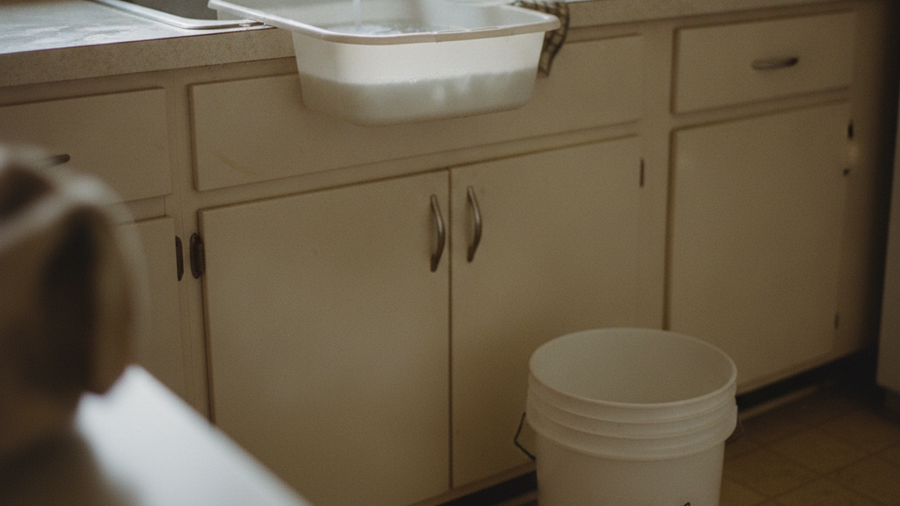
Put a labeled bucket under the kitchen sink and a basin in the shower. Every drop of wash and rinse water goes there. Never let anything run down a drain unrecovered.
Step 5: Purify Any Questionable Source Before Drinking
Pool, rain barrel, creek, and pond water can all be made safe with the right method. Keep a Sawyer MINI for individual use and a LifeStraw Family 1.0 gravity purifier for household volume. For chemically treating clear water fast, Aquatabs weigh nothing and treat 100 doses. Review the tradeoffs in our full guide to choosing the right water purification method.
Step 6: Enforce the Hygiene Protocol Daily
Assign one person to manage sanitation. Sanitizer before every meal, combat showers on a schedule, and strict separation of waste-handling gear from food-prep gear.
Step 7: Resupply Before You Hit Empty
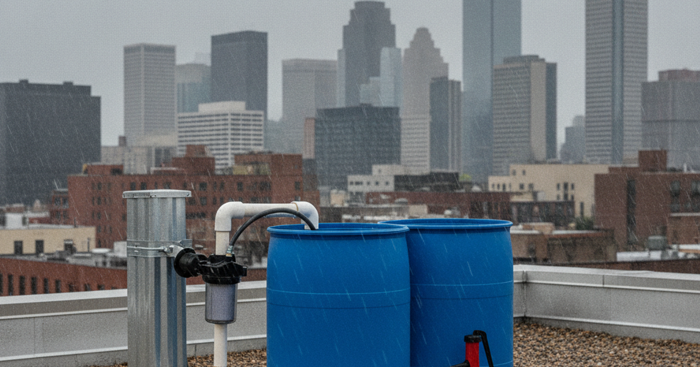
At the 50 percent mark, start actively sourcing more — rainwater off the roof or balcony, distribution points, or neighbors in a mutual aid arrangement. Urban and suburban readers should study rooftop and balcony rainwater harvesting; even a small apartment balcony can yield gallons from a modest rain.
Recommended Gear
A layered water plan beats any single product. Bulk storage in Aqua-Tainers or WaterBricks, a no-rotation reserve of Blue Can water, portable Datrex pouches for your kit, surge capture with a waterBOB, and treatment via Sawyer MINI, LifeStraw Family, and Aquatabs. Browse more vetted options on our recommended survival gear page.
Frequently Asked Questions
How long can you survive on one gallon of water a day?
Indefinitely, in moderate conditions, provided you're not doing heavy labor and you use roughly half for drinking. The gallon becomes inadequate above 90°F, at high altitude, during illness, or during sustained physical work — in those cases plan on two gallons or more per person per day.
Can I drink water from my water heater or toilet tank?
Yes to both, with caveats. Water heater water is potable but may carry sediment — filter it and shut off the power or gas before draining. Toilet tank water (not the bowl) is safe if you haven't used in-tank chemical cleaner pucks; filter and treat it anyway. Never drink from the bowl.
Is greywater safe to use for flushing and gardening?
Greywater from sinks, showers, and laundry is fine for toilet flushing immediately and for ornamental or fruit-tree irrigation if used within 24 hours before bacteria multiply. Do not apply it to leafy greens or root vegetables eaten raw, don't store it, and use biodegradable soaps. Water contaminated with sewage, diapers, or raw meat juices is blackwater and must be disposed of, not reused.
Affiliate Disclosure: SHTFPlan.net participates in the Amazon Services LLC Associates Program. Some links are affiliate links — we may earn a small commission at no extra cost to you.