Water Storage Containers: How to Choose, Fill, and Rotate Your Emergency Water Supply
The wrong water container can poison your stockpile or fail at the worst moment. Here's how to store water that's actually safe to drink when SHTF.
Water is the one resource you cannot improvise your way out of needing. The human body begins to deteriorate within 24 hours without it, and death can follow in as little as three days under stress or heat. Yet despite this biological reality, water storage remains one of the most neglected areas of emergency preparedness. Most households have enough canned food for several days but less than 24 hours of drinking water on hand. When a hurricane, ice storm, infrastructure failure, or prolonged grid-down scenario cuts off your municipal supply, that gap becomes a life-threatening liability.
This guide covers everything you need to know to choose the right water storage containers, fill them correctly, and maintain a rotating stockpile — whether you live in a studio apartment in Chicago, a suburban home in Phoenix, or a rural homestead in Montana. For deeper context on how much water your household actually needs, start with our article on Emergency Water Storage: How Much You Actually Need and How to Store It Safely.
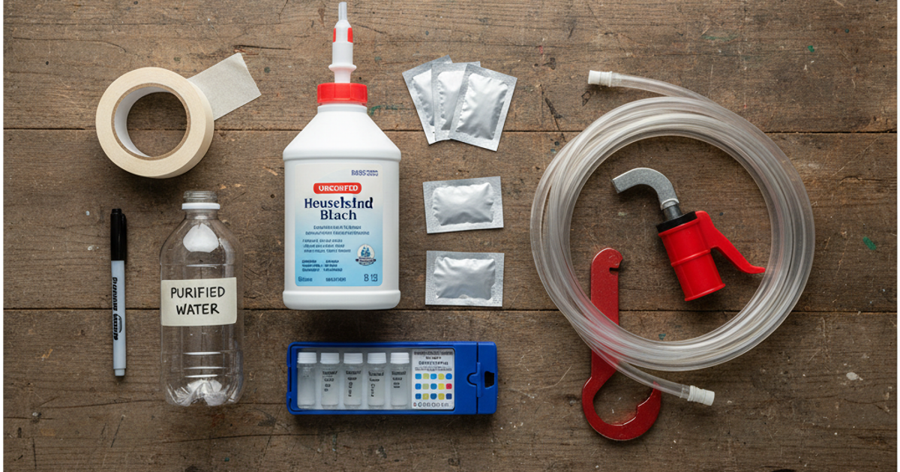
What You'll Need
Tools
- Clean siphon hose or hand pump for transferring water
- Permanent marker for labeling containers
- Flashlight for inspecting storage areas
Supplies
- WaterBrick stackable water storage containers
- Potable Aqua water purification tablets
- Unscented liquid chlorine bleach (8.25% sodium hypochlorite)
- Emergency Essentials mylar water storage pouches
Choosing the Right Water Storage Container for Your Situation
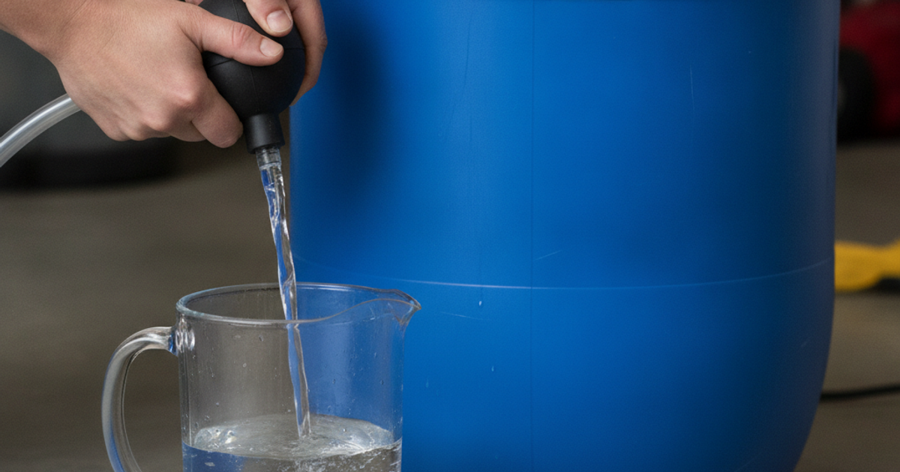
Not all water containers are created equal, and the best option for your prepper setup depends heavily on your living situation, available space, and budget. The core criteria for any water storage container are food-grade materials, a tight-sealing lid, and resistance to UV light and chemical leaching. Never store water in containers that previously held non-food products — the residue from chemicals, cleaning products, or milk (which harbors bacteria even after washing) can contaminate your supply.
Small-Space and Apartment Solutions
Urban preppers and apartment dwellers face real constraints: no basement, no garage, no yard. The solution is modular, stackable containers that can fit in closets, under beds, and behind furniture. WaterBrick stackable water storage containers are purpose-built for exactly this scenario. Each brick holds 3.5 gallons, is made from BPA-free HDPE plastic, and interlocks with other bricks for stable stacking. A single closet shelf can hold enough WaterBricks to supply a family of four for 72 hours — the minimum baseline for any functional survival kit or bug out bag plan.
For apartment preppers who want portability without sacrificing capacity, the Reliance Products Aqua-Tainer 7 gallon water container is a proven workhorse. It features a collapsible handle and a rear-facing vent for controlled pouring — practical details that matter when you're filling cups in a crisis. At seven gallons, it's heavy when full (about 58 pounds), so consider your physical capacity when deciding how many to store and where.
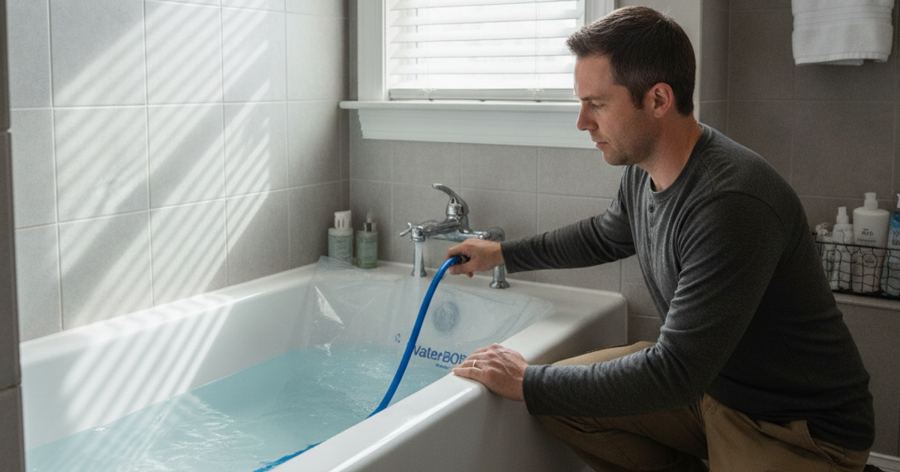
For true last-minute urban survival — a scenario where a boil order or municipal failure hits with no warning — the WaterBOB bathtub water storage container is one of the smartest low-cost tools in emergency preparedness. It's a food-grade bladder that fits in a standard bathtub and can hold up to 100 gallons of tap water, filled in minutes before a storm or event disrupts supply. It keeps water clean and covered for up to four weeks. Every apartment and home without a large-volume storage solution should have one of these sealed in a drawer.
Suburban and Mid-Volume Storage
Homeowners with a garage, basement, or utility room have more flexibility. The Scepter water can military style container — modeled after the NATO jerry can — is built to military specifications and is among the most durable options on the market. These 5-gallon containers are virtually indestructible, stackable, and designed to resist UV degradation and impact. They're also easy to transport in a vehicle, making them ideal for both shelter-in-place and bug-out scenarios.
Large-Scale and Rural Storage
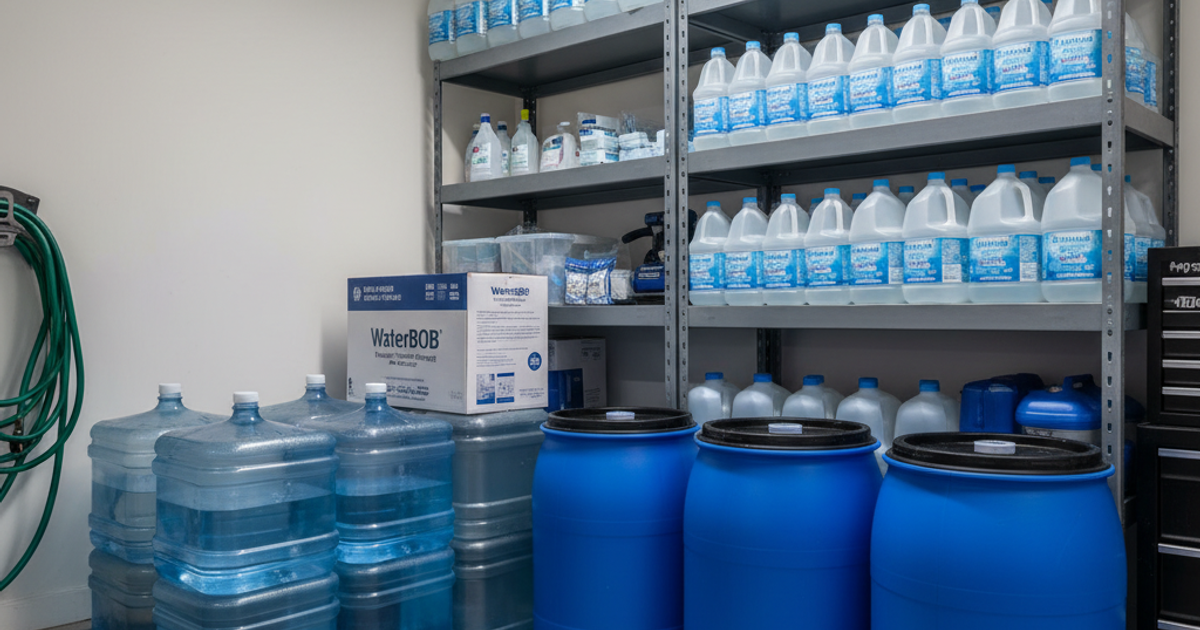
For those with outdoor space, a root cellar, or a dedicated storage room, high-volume barrels are the most cost-effective way to stockpile water per gallon. An Augason Farms water storage barrel 55 gallon holds enough water to supply two adults for over a month at the minimum recommended intake of one gallon per person per day. These barrels are food-grade, UV-resistant, and come with a bung wrench and hand pump for easy access. The downside is weight — a full 55-gallon barrel weighs approximately 460 pounds and should never be moved once filled. Place it exactly where you intend it to stay.
Mylar Pouches for Cache and Bug-Out Use
Emergency Essentials mylar water storage pouches fill a unique niche in water preparedness. Pre-filled pouches are sealed and rated for five-year shelf life, making them ideal for bug out bags, vehicle emergency kits, and remote cache locations. They're lightweight, compact, and require zero maintenance. Think of them as the backup to your backup — the water supply you forget about until you desperately need it.
How to Fill and Treat Water for Long-Term Storage
Municipal tap water in the United States is already treated and generally safe to store directly from the faucet. However, for long-term storage beyond six months, adding a small amount of unscented liquid chlorine bleach (8.25% sodium hypochlorite) is recommended by the CDC and FEMA. The ratio is 8 drops per gallon of water. Do not use bleach with added surfactants, thickeners, or fragrances — these introduce chemicals you don't want in your drinking water.
Well water and collected rainwater should always be filtered and treated before storage. The Berkey water filter system stainless steel is one of the most respected gravity-fed filtration systems in the prepper community. It removes bacteria, viruses, heavy metals, chlorine, and a wide range of contaminants without electricity — a critical feature in any off grid or SHTF scenario. Running well or surface water through a Berkey before filling long-term storage containers dramatically reduces microbial risk.
For situations where you need rapid treatment without equipment, Potable Aqua water purification tablets provide a reliable chemical purification option. Each tablet treats one quart of water and is effective against Giardia and most bacteria when used correctly. Keep a bottle in every bug out bag, vehicle kit, and go-bag. They're not a substitute for filtration in heavily contaminated water, but they're a critical last-resort tool in any emergency preparedness kit.
Step-by-Step Instructions
Step 1: Calculate Your Household's Minimum Water Requirement
The baseline recommended by FEMA is one gallon per person per day for drinking and basic sanitation. For a family of four planning a two-week supply, that means a minimum of 56 gallons. Add extra for medical needs, pets, cooking, and hygiene — most experienced preppers target 1.5–2 gallons per person per day for a realistic short-term SHTF scenario.
Step 2: Select Containers Matched to Your Storage Space
Audit your available storage space before purchasing containers. Apartment dwellers should prioritize stackable modular containers and WaterBOB bladders. Homeowners with a basement or garage can use jerry cans and 55-gallon barrels. Rural preppers may also consider above-ground or underground cisterns. Never mix container types without a plan for where each will be stored and rotated.
Step 3: Clean and Sanitize All Containers Before First Use
Even brand-new food-grade containers should be sanitized before filling. Rinse with a solution of one teaspoon of unscented bleach per quart of water, swirl to coat all interior surfaces, let sit for 30 seconds, then drain completely and allow to air dry. This removes manufacturing residues and eliminates any microbial contamination introduced during shipping or storage.
Step 4: Fill Containers with Treated Water from a Safe Source
Fill directly from a clean municipal tap using a food-grade hose or pitcher — never use a garden hose not rated for potable water, as most standard hoses leach chemicals and harbor bacteria. For non-municipal sources, filter through a Berkey or equivalent gravity filter first. Add the appropriate amount of unscented chlorine bleach for long-term storage (8 drops per gallon for 8.25% bleach).
Step 5: Seal, Label, and Date Every Container
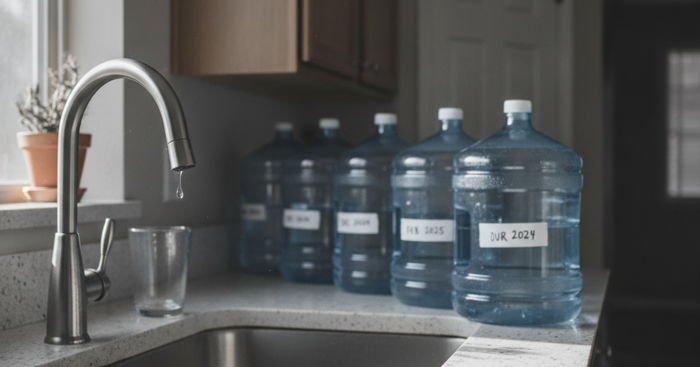
Cap each container tightly, then use a permanent marker or waterproof label to record the fill date and water source on the outside of the container. This step is non-negotiable for rotation. Without dates, you have no way to manage your stockpile systematically, and old water will inevitably sit longer than it should.
Step 6: Store Containers Away from Heat, Light, and Chemicals
Place containers in a cool, dark location — ideally below 70°F and away from direct sunlight, which degrades plastic over time and promotes algae growth. Never store water containers near gasoline, pesticides, paint, or cleaning chemicals. Volatile organic compounds can permeate even food-grade HDPE plastic under prolonged exposure. A basement, interior closet, or climate-controlled garage is ideal.
Step 7: Establish and Follow a Rotation Schedule
The standard recommendation for stored tap water is rotation every six to twelve months for non-treated storage and annually for bleach-treated storage. Set a calendar reminder twice yearly — many preppers rotate water during the spring and fall time changes, the same time they test smoke detectors. Pour old water into your garden or use it for cleaning, then refill fresh. Water that has been properly stored and shows no cloudiness, odor, or taste change is generally still safe, but rotation eliminates doubt.
Step 8: Test and Inspect Your Supply Regularly
Every 90 days, visually inspect your storage area. Look for container deformation, cracking, leaking, or discoloration. Sniff-test a small amount from each container type. Any water that smells of sulfur, mold, or chlorine has degraded beyond the point where simple re-treatment is appropriate — drain and replace. Check that lids and seals remain tight and that stackable containers haven't shifted to create stress fractures.
Water Storage for Urban Survival: Apartment-Specific Strategies
Urban survival and apartment prepping present a unique challenge: maximizing water storage without dedicated utility space. Think vertically — WaterBricks stacked in a bedroom closet behind clothing are invisible and functional. A WaterBOB under the bathroom sink (stored flat until needed) costs almost nothing and provides 100 gallons of emergency capacity with zero footprint. Mylar pouches can be distributed throughout the apartment — a handful in the kitchen, a few in the go-bag, and several sealed in a plastic bin under the bed. For more apartment-specific strategies, see our Apartment Prepping: How to Build a Serious Emergency Stockpile in a Small Space guide.
One often-overlooked urban resource is your water heater. A standard 40–50 gallon electric water heater contains potable water that can be drained through the bottom spigot in an emergency. This effectively doubles most apartment dwellers' emergency water supply without any additional investment.
Water Rotation Schedules: Building a System That Actually Gets Done
The biggest failure point in water storage isn't the container — it's the rotation. People fill containers once, feel accomplished, and forget them for years. Here's a practical rotation framework that works regardless of your living situation:
- Every 6 months: Rotate all unsealed or non-treated water. Rotate mylar pouches every 5 years per manufacturer specification.
- Every 12 months: Rotate bleach-treated tap water stored in quality food-grade containers.
- Every 3–5 years: Inspect and replace containers showing UV degradation, cracking, or persistent odor that doesn't resolve after cleaning.
- After every use: Refill and re-treat any container that has been opened or partially emptied.
Tie your rotation schedule to an existing habit — a seasonal holiday, a birthday, or a recurring household task. Systems that require you to remember independently almost always fail under the stress of life. Automation and habit-stacking are the cornerstones of sustainable emergency preparedness.
For those concerned about water access beyond stored supplies, our comprehensive guide on Making Any Water Safe to Drink: How to Purify Every Water Source When SHTF covers filtration, purification, and improvised water treatment for every scenario.
Recommended Gear
To summarize the core equipment covered in this article: for large-scale rural or suburban storage, an Augason Farms 55-gallon water storage barrel provides the best cost-per-gallon storage solution. For military-grade portable containers, the Scepter military-style water can is the gold standard for durability and transport. For emergency filtration of any water source, the Berkey stainless steel gravity filter remains the most recommended gravity-fed system in the off-grid and prepper community. And for last-minute emergency bathtub storage, the WaterBOB emergency bathtub bladder is a low-cost, high-value addition to any home. Finally, for portable water treatment in any bug out bag or vehicle kit, the Reliance Aqua-Tainer 7-gallon container rounds out a balanced, layered water storage strategy.
You can find additional gear recommendations on our Recommended Survival Gear & Equipment page, curated specifically for preppers at every level of readiness.
Frequently Asked Questions
How long can I store tap water before it goes bad?
Properly stored tap water in a sealed, food-grade container can last 6–12 months without treatment. If you add unscented liquid chlorine bleach at the correct ratio (8 drops per gallon of 8.25% bleach), the shelf life extends to 12 months or beyond under ideal storage conditions — cool, dark, and away from chemicals. Water doesn't truly "expire," but it can develop off-flavors, odors from container leaching, or microbial contamination if stored improperly. When in doubt, treat before drinking.
What are the best water storage containers for apartment preppers?
Apartment preppers should focus on stackable, modular containers that maximize storage density in limited space. WaterBricks and Reliance Aqua-Tainers are excellent choices. A WaterBOB bathtub bladder is essential for rapid-fill emergency capacity — it stores flat until needed and can be deployed in minutes before a storm hits. Mylar water pouches distributed throughout the apartment provide a distributed backup that's easy to overlook and ignore until critically needed.
Do I need to filter water before storing it if it comes from a city tap?
Generally, no — municipal tap water is already treated and meets EPA standards for immediate consumption. However, if your tap water has visible discoloration, unusual odor, or you receive a notice of system contamination, filter it through a gravity system like a Berkey before storing. Well water and any collected surface or rainwater always requires filtration and treatment before long-term storage. For water purification beyond what storage can provide, always keep chemical treatment tablets like Potable Aqua on hand as part of your broader water purification strategy.
Affiliate Disclosure: SHTFPlan.net participates in the Amazon Services LLC Associates Program. Some links are affiliate links — we may earn a small commission at no extra cost to you.