Well Hand Pumps: How to Draw Water From Your Well When the Power Fails
A 400-foot deep well is useless without electricity. Here's how to choose, install, and maintain a hand pump or manual backup so your household keeps water flowing during any blackout.
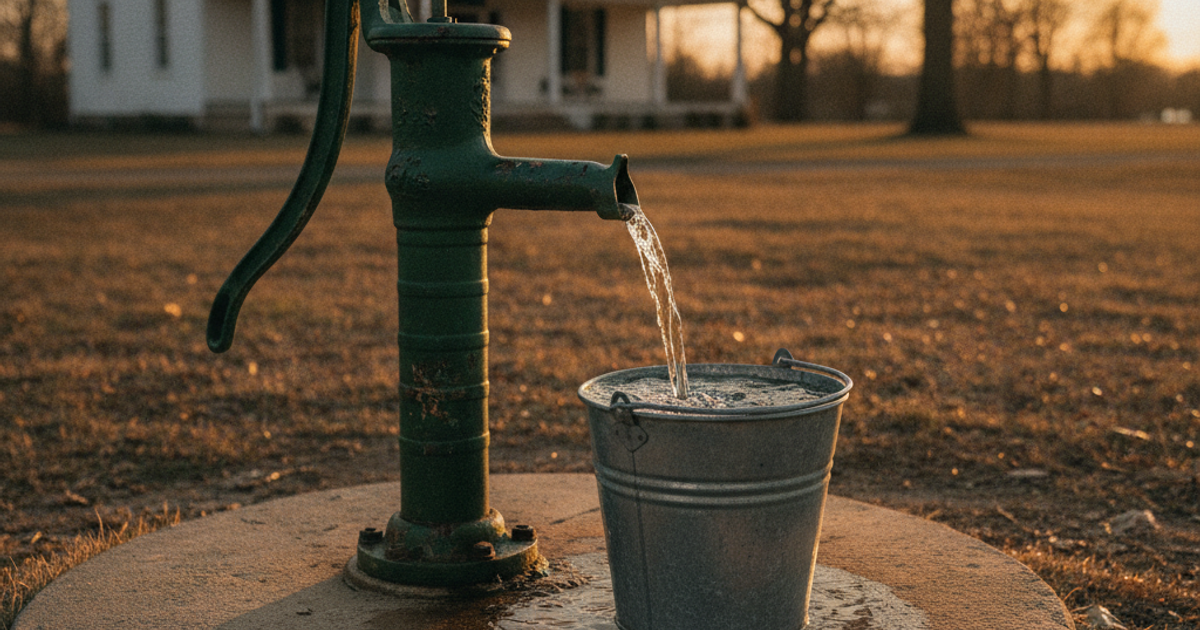
Roughly 13 million American households — about 43 million people, according to the U.S. Geological Survey — get their drinking water from a private well. Nearly every one of those wells depends on an electric submersible pump sitting 100 to 400 feet underground. When the grid drops, that pump becomes an expensive piece of scrap metal, and the household that felt the most water-secure in the neighborhood suddenly has zero gallons available.
This is the cruel irony of well ownership. City dwellers on municipal water often keep pressure for hours or days after an outage because gravity tanks and utility generators buy time. Well owners lose water the instant the lights flicker. During the February 2021 Texas grid failure, rural well households were among the hardest hit — no water for flushing, drinking, or firefighting, while the pressure tank drained in a single afternoon.
A manual backup pump solves that problem permanently. And even if you live in an apartment or a suburban subdivision on city water, understanding well retrieval matters: your bug-out location, your relatives' property, or the abandoned farmstead you pass on an evacuation route may all have a casing in the ground with hundreds of gallons under it.
Why Your Electric Well Pump Fails First in a Blackout
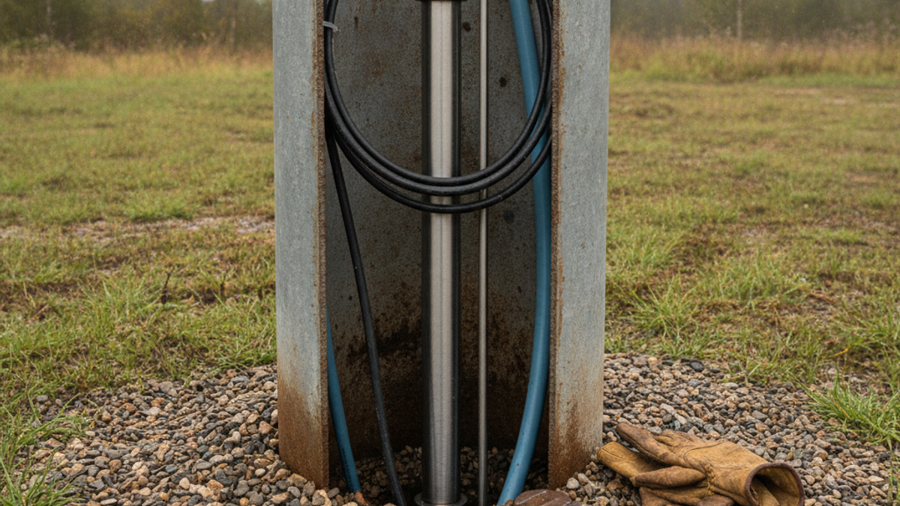
A typical residential submersible pump draws 1,000 to 2,400 running watts with a startup surge two to three times that. That surge is what kills small generators and most portable power stations. A 2,000-watt inverter generator that runs your fridge and lights will often stall the instant the pressure switch calls for the well pump.
Your pressure tank holds far less than people assume. A "40-gallon" tank typically contains only 12 to 16 gallons of usable drawdown water. At the FEMA-recommended one gallon per person per day, a family of four burns through that reserve in three days — and that's with zero flushing, bathing, or dish washing. If you're rationing, read our guide on how to ration emergency water and survive on one gallon a day, but understand rationing is a stopgap, not a solution.
How to Choose the Right Well Hand Pump for Your Water Depth
Everything hinges on one number: static water level — the distance from the top of your casing down to the surface of the water. This is not your well depth. A 300-foot well may have water standing at 60 feet. Your original well driller's report lists this figure; many state geological surveys also keep well logs online.
Shallow Well Pitcher Pumps (Under 25 Feet)
Suction-lift pitcher pumps work by atmospheric pressure and are physically limited to about 25 feet of lift at sea level — less at altitude. If your static level is shallow, a Lehman's cast iron pitcher pump is the classic, rebuildable answer and costs a fraction of a deep-well unit. The Water Source cast iron pitcher pump with a 3-inch cylinder is another proven option and moves more volume per stroke, which matters when you're filling livestock troughs or 5-gallon jugs.
Deep Well Hand Pumps (25 to 350+ Feet)
Below 25 feet you need a lift pump — a cylinder that sits in the water and pushes it up a drop pipe. The Simple Pump deep well hand pump is the benchmark for retrofits: it installs alongside an existing submersible in a 4-inch or larger casing, pumps from as deep as 350 feet, and can be motorized with solar later. The Bison Pumps stainless steel deep well hand pump is built entirely of food-grade stainless and is freeze-proof by design — worth the premium in northern climates.
On a budget, the Flojak EarthStraw Code Red well pump is a PVC-based system that a homeowner can install in an afternoon with hand tools, reaching depths around 100 to 150 feet at roughly a third the cost of a machined stainless unit.
What You'll Need
Tools
- Pipe wrenches (two, 18-inch minimum)
- Well sounder or weighted measuring tape
- Socket set and cordless drill
- Torpedo level and thread sealant tape
Supplies
- Deep well hand pump kit
- Well casing sanitary seal cap
- Stainless steel well bucket bailer
- 200 ft braided nylon rope
- Unscented household bleach for well disinfection
The Low-Tech Fallback: Well Buckets and Bailers
If a $1,200 pump isn't in the budget this year, a well bucket costs under $150 and works in any 4-inch or larger casing. It's a narrow stainless cylinder with a foot valve that fills as it submerges and seals as you haul it up. A stainless steel well retrieval bailer paired with 200 feet of braided nylon rope yields roughly a gallon per trip. It's slow and it's work, but it's the difference between water and no water. Store the assembly in a clean sealed tote — a contaminated bucket dropped down your casing contaminates the entire aquifer access point.
Step-by-Step Instructions
Step 1: Locate your well log and static water level
Pull your driller's report or search your state's online well log database using your parcel number. Record total depth, static water level, casing diameter, and pump setting depth. If no record exists, drop a weighted line with a plopper down the casing and listen for the splash. Without this number you cannot choose the right pump.
Step 2: Measure your casing diameter and available space
Remove the well cap and measure the inside diameter — most residential casings are 4, 5, or 6 inches. Note the existing drop pipe, electrical conduit, and torque arrestor. A retrofit hand pump needs roughly 1.75 to 2 inches of clear space alongside the existing hardware.
Step 3: Select a pump matched to depth, not price
Under 25 feet static, buy a pitcher pump. Between 25 and 150 feet, an EarthStraw-style system is cost-effective. Beyond 150 feet, buy machined stainless — cheap components fail under the weight of a 300-foot water column, and a dropped drop-pipe means a well service call you may not be able to get.
Step 4: Install the pump with a sanitary well seal
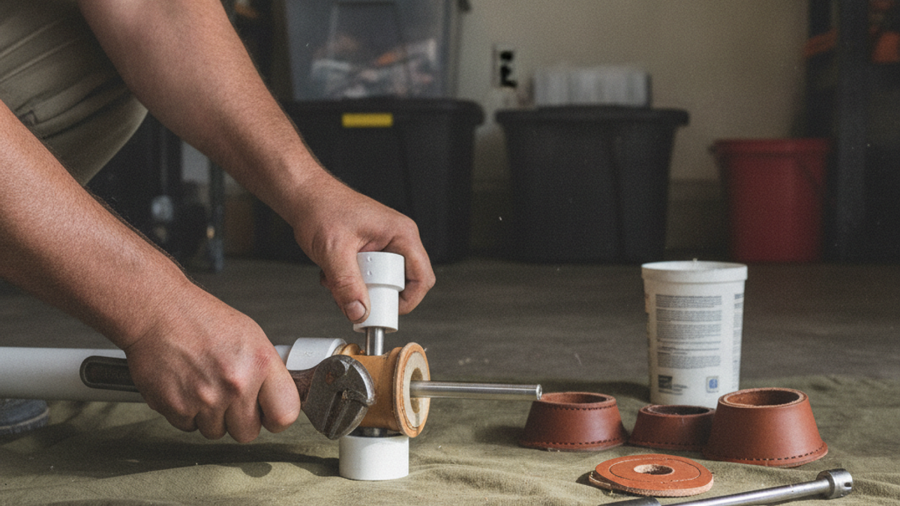
Assemble drop pipe in sections, supporting each length with pipe wrenches so nothing falls into the casing. Replace the old cap with a sanitary seal cap sized to your casing and drilled for both the electrical conduit and the hand pump rod. An unsealed casing invites insects, rodents, and surface runoff into your drinking water.
Step 5: Prime, test, and disinfect the system
Prime shallow pumps with clean water and work the handle until suction establishes. Deep-well units typically self-prime after 20 to 60 strokes. Once flowing, shock-chlorinate the well per your state health department protocol, then flush until the chlorine smell clears.
Step 6: Test the pump quarterly and log the results
Leather cup seals dry out and packing loosens. Pump 5 gallons every three months, note stroke count and any change in resistance, and add it to your prepper stockpile inventory and audit routine. Keep a spare seal kit on hand.
Step 7: Filter and purify before drinking during any outage
An open casing during installation, a flooded wellhead, or a power-loss pressure drop can all introduce bacteria. Treat well water as suspect after any disruption and apply the appropriate water purification method for your scenario until you can get a coliform test done.
Recommended Gear and Renter-Friendly Alternatives
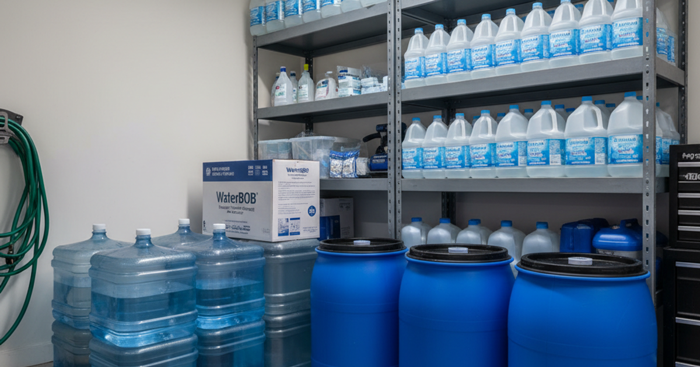
If you live in an apartment or don't own the ground under you, a hand pump isn't in the cards — but the underlying lesson is. Stored water plus a collection method beats a single point of failure. Combine a rotated container reserve with rooftop and balcony rainwater harvesting and a quality filter, and you've replicated the well owner's resilience without the casing. Well owners should still stock stored water; a hand pump is a supplement to reserves, not a replacement. Browse our recommended survival gear and equipment for filtration and storage picks that work in any dwelling.
Frequently Asked Questions
How deep can a hand pump pull water from a well?
Suction-style pitcher pumps max out near 25 feet of lift because they rely on atmospheric pressure. Deep-well lift pumps place the cylinder below the water line and can reach 300 to 350 feet, though effort per stroke increases significantly with depth. Above about 200 feet, expect roughly 1 to 3 gallons per minute of steady pumping.
Can I install a hand pump alongside my existing electric well pump?
Yes, in most cases. Retrofit systems are designed for 4-inch and larger casings and share the well with an existing submersible, so you keep normal pressurized service and gain a manual backup. Verify your casing's inside diameter and confirm there's clearance past the drop pipe and wiring before ordering.
Is well water safe to drink after a long power outage?
Not automatically. Loss of pressure can allow contaminants to migrate into the plumbing, and flooding can compromise the wellhead entirely. Boil, filter, or chemically treat well water after any outage, flood, or well work until a laboratory coliform test comes back clean.
Affiliate Disclosure: SHTFPlan.net participates in the Amazon Services LLC Associates Program. Some links are affiliate links — we may earn a small commission at no extra cost to you.