Why You Need 100 Pounds of Salt in Your Prepper Stockpile — and How to Store It Right
Salt preserves meat, keeps you alive in the heat, and has been traded like currency for 3,000 years. Here's how much to stockpile, which types to buy, and how to store it forever.
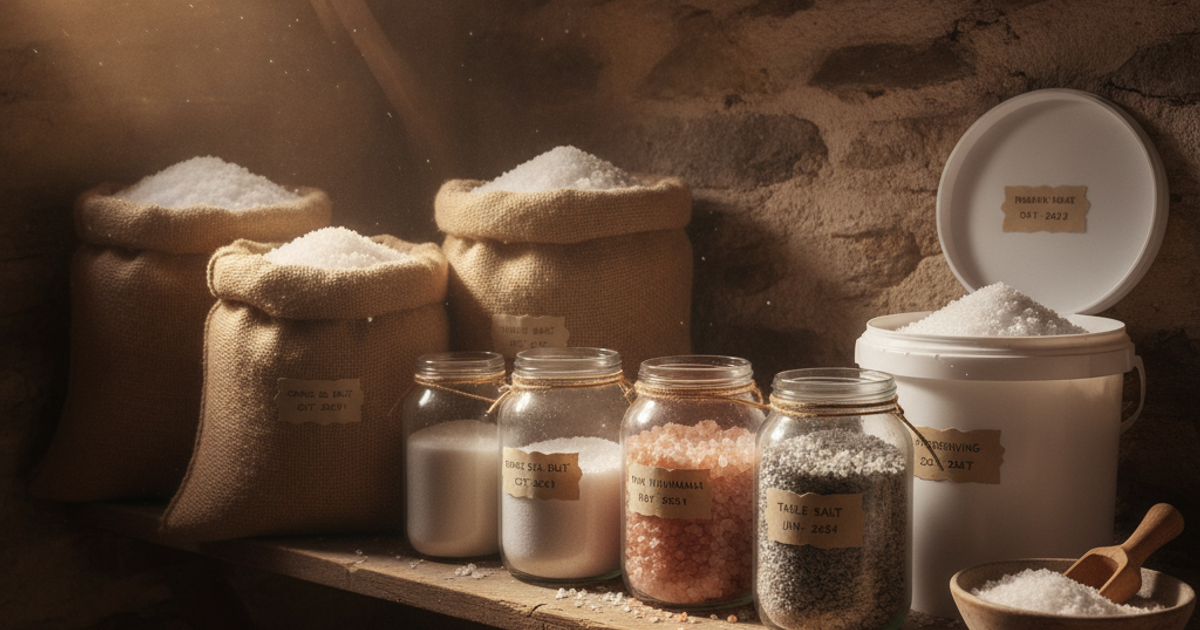
Salt is the only rock human beings eat, and for most of recorded history it was worth more than the labor of the people who mined it. Roman soldiers were partially paid in salt allowances — the root of the word "salary." Cities like Salzburg, Liverpool, and Syracuse were built on salt trade. Wars were fought over it. And then, sometime in the last century, salt became so cheap and abundant that we stopped thinking about it entirely.
That's a dangerous blind spot for anyone serious about emergency preparedness. Salt is the single most versatile, cheapest, and longest-lasting item you can put in a stockpile. It never expires. It costs pennies per pound. It preserves meat and vegetables without electricity, replaces electrolytes lost to heat and dysentery, makes bland survival calories edible, and — when the grocery supply chain fails — becomes hard currency. Yet most preppers who have 400 pounds of wheat and a year of freeze-dried entrées have a single 26-ounce canister of iodized table salt in the pantry.
Here's the case for 100 pounds, and exactly how to store it so it's still usable in 2075.
What You'll Need
Tools
- Kitchen or postal scale (for measuring cure ratios by weight)
- Hair straightener or impulse sealer (for sealing Mylar)
- Permanent marker and labels
- Moisture-tight scoop or dedicated measuring cup
Supplies
- Redmond Real Salt bulk 25 lb bag
- Morton Canning and Pickling Salt
- 5-gallon food grade buckets with Gamma Seal lids
- Mylar bags (5-gallon size)
- Prague Powder No. 1 curing salt
- Desiccant packs (silica gel, food-safe)
How Much Salt Does a Prepper Actually Need?
Start with consumption. The FDA's Dietary Guidelines recommend under 2,300 mg of sodium per day, and CDC data shows the average American actually consumes about 3,400 mg — roughly 8.5 grams of salt daily, though most of that is hidden in processed food. Strip out the processed food in a grid-down scenario and you're adding salt yourself, at maybe 5–10 grams per person per day. That's about 5–8 pounds per person per year for straight consumption.
But eating is the smallest use. Preservation is where salt disappears fast:
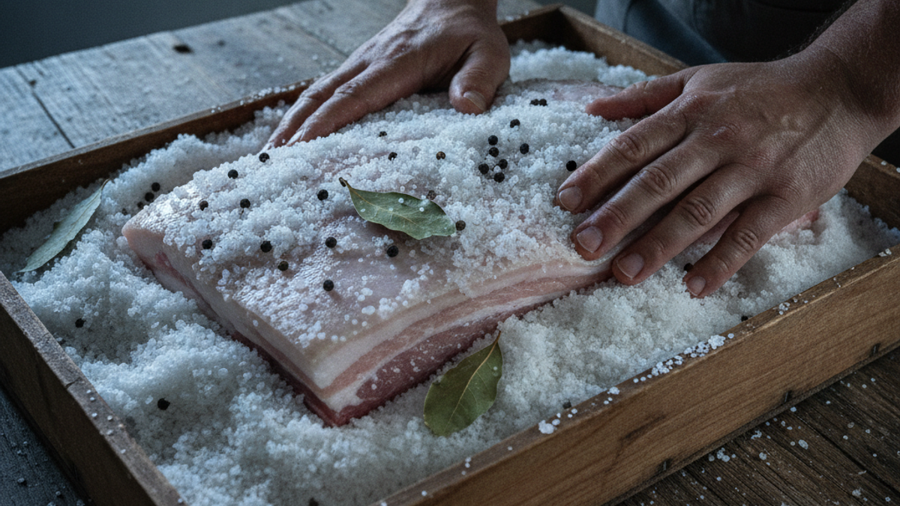
- Dry-curing meat: Traditional salt-box curing uses roughly 1 pound of salt per 8–10 pounds of pork belly or ham. A single 200-pound hog can consume 20–30 pounds of salt.
- Brining and pickling: A 5% brine takes about 6.5 ounces of salt per gallon of water. A 10-gallon crock of sauerkraut or pickles eats 2–4 pounds.
- Salting fish: Heavy salt-packing runs close to 1:3 salt-to-fish by weight.
- Livestock: A single goat or cow needs 1–2 ounces of loose mineral salt daily. That's 25–45 pounds per animal per year.
Do the math for a family of four planning on a year of self-sufficiency with any meat preservation at all, and 100 pounds isn't hoarding — it's the floor. At roughly $0.40 to $1.00 per pound in bulk, the entire stockpile costs less than one decent flashlight.
Why Salt Beats Every Other Long-Term Storage Food
Salt is a mineral. It has no expiration date, no nutrient degradation, no rancidity, and no oxidation pathway. Sodium chloride mined from ancient seabeds has been sitting underground for 250 million years and is perfectly edible. The only enemies are moisture (which causes caking and can leach anti-caking additives) and contamination.
Note one exception: iodized salt is not permanent. Potassium iodide degrades with exposure to heat, humidity, and light, losing potency over roughly 2–5 years. That matters, because iodine deficiency causes goiter and cognitive impairment — and it was iodized salt that virtually eliminated the American "goiter belt" after 1924. Store both: plain salt for preservation and bulk use, plus a rotating supply of iodized salt for nutrition. Sealed cans like Augason Farms iodized salt in a long-term storage can hold iodine potency far longer than a cardboard canister in a humid cabinet.
The Four Types of Salt Every Stockpile Needs
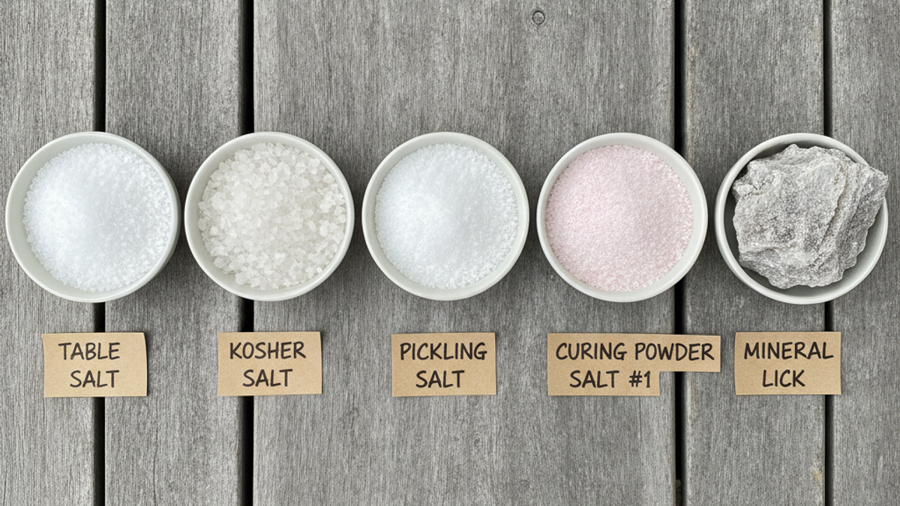
1. Pickling/canning salt. Pure sodium chloride, no iodine, no anti-caking agents. Anti-caking additives cloud brine and iodine can darken fermented vegetables. Morton Canning and Pickling Salt is the standard for anyone doing lacto-fermentation without refrigeration or water-bath canning.
2. Bulk unrefined salt. A 25-pound sack is the cheapest cost-per-pound you'll find, and unrefined varieties carry trace minerals. Redmond Real Salt in bulk is mined in Utah and works for cooking, curing, and livestock.
3. Curing salt (nitrite). Plain salt inhibits most spoilage bacteria but does not reliably stop Clostridium botulinum in low-oxygen cured meats. Nitrite does. Prague Powder No. 1 (6.25% sodium nitrite) is used at exactly 1 teaspoon per 5 pounds of meat. Morton Tender Quick is a more forgiving pre-mixed cure for beginners. Weigh these — never eyeball. Five pounds of curing salt goes a very long way and pairs directly with skills covered in our guide to processing and preserving meat without a grocery store.
4. Coarse kosher salt. The workhorse for dry-brining, koshering meat, and everyday cooking because the flakes are easy to pinch and measure by hand. A few boxes of Diamond Crystal Kosher Salt belong in the working pantry, separate from your sealed long-term reserve.
Salt for Electrolyte Replacement and Medical Use
In a heat emergency, a bout of dysentery, or heavy manual labor without air conditioning, sodium loss kills faster than calorie deficit. The World Health Organization's oral rehydration solution formula is 2.6 g salt, 13.5 g glucose, 2.9 g trisodium citrate, and 1.5 g potassium chloride per liter — but the field version that has saved millions is simply six level teaspoons of sugar plus one-half level teaspoon of salt per liter of clean water. Memorize it. Salt also makes a 0.9% saline wound irrigation solution (1 teaspoon per 2 cups boiled water) and a gargle for sore throats and dental abscesses.
Salt as a Barter Commodity When SHTF
Barter value comes from three traits: universal need, divisibility, and non-perishability. Salt hits all three better than almost anything except ammunition. Nobody can make it at home in an inland city, everyone needs it daily, and it splits into one-cup trade units. Repackage 10 pounds into one-pound jars or vacuum pouches specifically for trade — you never want to open your main reserve in front of a stranger. Read more on structuring trades in our guide to what goods and skills will actually have value when SHTF.
Step-by-Step Instructions
Step 1: Calculate your household salt requirement
Multiply 8 pounds per person per year for consumption and cooking. Add 25 pounds for every large animal you'll butcher, 10 pounds for annual fermenting and pickling, 30 pounds per head of livestock, and 10 pounds for barter. Most suburban families of four land between 90 and 130 pounds. Round up — salt is the cheapest insurance in your emergency food storage plan.
Step 2: Buy in a mix of formats, not one bulk sack
Split the purchase: 50 pounds bulk unrefined, 25 pounds pickling salt, 10 pounds iodized in sealed cans, 5 pounds curing salt, and the balance in kosher and trade-sized containers. Buying only one type leaves you unable to cure meat or ferment safely.
Step 3: Line food-grade buckets with Mylar
Place a Mylar liner inside each 5-gallon food-grade bucket with a Gamma Seal lid. A 5-gallon bucket holds roughly 40–45 pounds of salt, so 100 pounds fits in two and a half buckets — about 2 square feet of floor space, which even apartment dwellers can find under a bed.
Step 4: Seal without oxygen absorbers
Use 5-gallon Mylar bags with oxygen absorbers for your grains and beans, but for salt, skip the absorber and save it for other food — salt doesn't oxidize. Instead, toss in a food-safe desiccant pack and heat-seal the bag with an impulse sealer or hair straightener. Our full walkthrough on packaging bulk food for 25-year storage covers sealing technique in detail.
Step 5: Store off concrete and away from moisture
Salt is hygroscopic — it pulls water straight out of the air, and concrete slabs wick ground moisture. Set buckets on pallets, 2x4s, or a shelf. Target under 70°F and under 60% humidity. Basements are fine if dry; unvented crawl spaces and garage floors in humid climates are not.
Step 6: Label everything with type and date
Mark each container with the salt type, weight, purchase date, and — critically — a warning on curing salts. Prague Powder No. 1 is dyed pink for a reason: sodium nitrite is toxic in quantity and must never be mistaken for table salt. Store it separately and out of reach of children.
Step 7: Rotate the iodized portion annually
Pull iodized salt into kitchen use each year and replace it. Log it in your rotation system alongside everything else — see our guide to tracking, rotating, and auditing prepper supplies.
Storage Solutions for Apartments, Suburbs, and Rural Homes
Apartment dwellers: Salt's density is your friend — 100 pounds occupies less volume than a case of paper towels. Two buckets under a bed, in a closet corner, or doubling as a nightstand base solves it. Avoid exterior-wall closets in humid climates where condensation forms. See more small-space tactics in our apartment prepping guide.
Suburban homes: Interior closet or conditioned basement shelving. Keep salt away from ammunition and tools — airborne salt is corrosive to steel.
Rural properties: Buy livestock salt blocks and loose mineral separately from food-grade salt, and store them in a barn, not your food pantry. Keep at least a portion of the human-grade supply in the house so a barn fire or flood doesn't wipe out everything.
Recommended Gear
If you're starting from zero, the highest-value first purchase is a bulk 25-pound bag plus two Gamma Seal buckets — under $60 total for a quarter of your target and a permanent storage system. Add pickling salt before your first fermentation project, curing salt before your first butchering season, and a sealed iodized can as nutritional insurance. Browse more preparedness essentials on our recommended survival gear page.
Frequently Asked Questions
Does salt ever go bad or expire?
Pure salt never expires — it's a stable mineral with no organic content. The "best by" date on the container refers to additives, not the salt itself. Iodized salt loses iodine potency over 2–5 years, and salt exposed to humidity will cake, though caked salt is still perfectly usable once broken up. Store it dry and it will outlive you.
Can I just stockpile table salt instead of buying multiple types?
You can survive on it, but you'll be limited. Iodized table salt clouds brines, darkens pickles, and its anti-caking agents leave sediment in fermentation crocks. More importantly, plain salt won't safely cure meat in anaerobic conditions the way nitrite curing salts will. A mixed stockpile costs only a few dollars more and covers every scenario.
How much salt should I store per person for one year?
Plan on 8–10 pounds per person for eating and cooking, then add for preservation. If you intend to cure meat, ferment vegetables, or feed livestock, budget 25 pounds per person per year as a realistic working number. A family of four with any homesteading ambitions should target 100 pounds minimum — and it will still be good decades from now if stored correctly.
Affiliate Disclosure: SHTFPlan.net participates in the Amazon Services LLC Associates Program. Some links are affiliate links — we may earn a small commission at no extra cost to you.