Prepper's Guide to Bartering: What Skills and Goods Will Actually Have Value When SHTF
When cash is worthless and store shelves are empty, your ability to barter could mean the difference between thriving and desperate survival.

When the economy collapses, the dollar becomes worthless, or supply chains break down entirely, one thing becomes clear: the people who survive and even thrive in a post-SHTF world won't be the ones with the most cash. They'll be the ones with the most value to offer. Bartering — the direct exchange of goods and services without currency — isn't some primitive relic. It's what happens when modern systems fail, and history proves it every time. From post-WWII Germany to post-2001 Argentina, barter economies emerge fast when paper money loses meaning.
According to a 2020 study published in the Journal of Economic Behavior, informal barter networks expanded significantly in regions experiencing severe currency devaluation, demonstrating that communities naturally revert to direct exchange under economic stress. The question isn't whether bartering will matter after a collapse — it's whether you'll be positioned to participate from a place of strength rather than desperation.
This guide covers what goods and skills actually hold value in a real post-collapse barter economy, how to build your stockpile intelligently whether you're in an apartment, suburb, or rural homestead, and how to trade safely without painting a target on your back. For a deeper look at the financial side of preparedness, check out our article on Financial Preparedness: Building a Cash Reserve and Barter Economy for SHTF.
What You'll Need
Supplies
- BIC lighter bulk pack (50 count)
- McCormick salt and bulk seasoning supply
- Swan isopropyl alcohol 99% antiseptic (bulk)
- Energizer AA batteries bulk pack (48 count)
- First Aid Only complete first aid kit
Tools
Why Barter Beats Cash in a True Collapse Scenario
In any serious SHTF scenario — grid-down, hyperinflation, societal breakdown — paper money and digital assets can lose purchasing power within days. What maintains value are things people need right now to stay alive, comfortable, and functional. Barter works because it's immediate, tangible, and trust-based. The neighbor who has antibiotics or can fix a generator holds more power than the one with a wallet full of useless bills.
The key insight most preppers miss: barter goods aren't just for trading away — they're leverage. Having surplus barter items signals that you're a resource, not a burden, to your community. That status can protect you as much as any firearm. That said, smart barter requires smart OPSEC. Be careful about who knows what you have stored. Our deep-dive on OPSEC for Preppers: How to Keep Your Stockpile and Plans Secret is essential reading before you start broadcasting your inventory to the neighborhood.
High-Value Barter Goods That Are Cheap to Stockpile Now
The smartest barter stockpile is built with items that are inexpensive today but priceless tomorrow. You don't need a rural homestead to build a serious barter supply. Apartment dwellers and suburban preppers can store most of these in closets, under beds, and in storage units. Here's what actually moves in a barter economy:
Fire and Light
The ability to make fire will never lose value. Stocking up on BIC lighters in bulk (50-count packs) is one of the most cost-effective barter investments you can make. Each lighter costs roughly $1 now but could trade for food, labor, or medical supplies when matches are gone. Store them in a cool, dry location — they have a shelf life of several years when properly stored.
Similarly, Energizer AA batteries in 48-count bulk packs are small, lightweight, easy to store, and universally needed for flashlights, radios, and medical devices. In a grid-down scenario, batteries become a form of currency unto themselves. Store them in a temperature-stable environment to maximize shelf life, which for quality alkaline batteries can exceed 10 years.
Food Staples and Comfort Items
Salt is one of the oldest forms of currency on Earth — the word "salary" literally derives from the Latin word for salt. Bulk McCormick salt and bulk seasoning supplies serve double duty: they preserve your own food stores and become a high-demand trade item. Beyond basic nutrition, spices dramatically improve morale in long-term survival situations, making them surprisingly powerful trade goods.
Don't underestimate the psychological value of comfort items. Bulk hard candy assortments are compact, shelf-stable for years, and provide a morale boost that desperate people will trade real value to obtain. In every documented post-collapse economy — from WWII POW camps to post-Soviet black markets — sweets and small luxuries consistently command outsized trade value relative to their cost.
Medical and Sanitation Supplies
Medical supplies may be the single most valuable barter category in a long-term grid-down event. Swan isopropyl alcohol 99% in bulk is a critical disinfectant, wound cleaner, and fire-starting aid — versatile enough that it trades well with nearly everyone. Stock more than you think you'll personally need and keep the surplus sealed and labeled separately from your personal-use supply.
A well-stocked First Aid Only complete first aid kit gives you the ability to treat others in your community — which is itself a service you can barter — while the individual components (bandages, antiseptic wipes, medical tape) can be traded as standalone items. For a broader look at building your medical preparedness capacity, see our guide on Field Medicine: How to Treat Cuts, Burns, and Infections When There's No Hospital.
Skills That Are Worth More Than Any Stockpile
Physical goods get consumed. Skills are infinite. In a long-term collapse, the person who can do things for others becomes indispensable — and indispensable people don't go hungry. Here are the skills with the highest barter value across urban, suburban, and rural environments:
- Medical and first aid skills — Basic trauma care, wound closure, and infection management. Consider taking a Wilderness First Responder (WFR) course.
- Mechanical repair — Small engine repair, bicycle maintenance, and basic automotive work. People with running vehicles will pay handsomely for maintenance.
- Carpentry and construction — Structural repairs, door reinforcement, and basic shelter construction are perpetually needed. A Fiskars hand saw and basic carpentry toolkit lets you perform real work without electricity — and demonstrates to potential trade partners that you're a functioning craftsperson.
- Food preservation — Canning, dehydrating, smoking, and fermentation. These skills multiply the value of whatever food exists in your community.
- Water purification — Understanding how to make water safe to drink is critical. See our complete resource on Making Any Water Safe to Drink: How to Purify Every Water Source When SHTF.
- Security and defense training — People with trained situational awareness and defensive capabilities will find their services in high demand for community protection roles.
- Electrical and solar repair — Basic off-grid electrical knowledge becomes extraordinarily valuable in a grid-down scenario.
- Teaching and childcare — Underestimated but real. Parents in a survival community need childcare support, and literacy skills have long-term community value.
A quality Victorinox Swiss Army multi-tool is the kind of everyday carry item that supports hands-on skill work across carpentry, repair, food prep, and field medicine — making it both a personal survival essential and a demonstration of capability to potential trade partners.
What NOT to Barter — Common Mistakes That Get Preppers Killed
Never trade from your primary supply. Maintain a dedicated barter cache that is physically and mentally separate from your core emergency stockpile. Trading from your main food or medical reserve creates shortages you may not be able to replace.
Don't reveal the extent of your stockpile. If a trade partner sees you reaching into a room full of supplies, you've just made yourself a target. Meet trade partners in neutral locations when possible, and never invite strangers into your primary storage area.
Avoid trading firearms and ammunition with people you don't know well. The risk of arming someone who later becomes a threat is not worth any barter benefit.
Be cautious with alcohol and vice items. While they have barter value, trading substances to desperate or unstable individuals creates unpredictable risks.
Step-by-Step Instructions
Step 1: Audit Your Current Preparedness Inventory for Barter Surplus
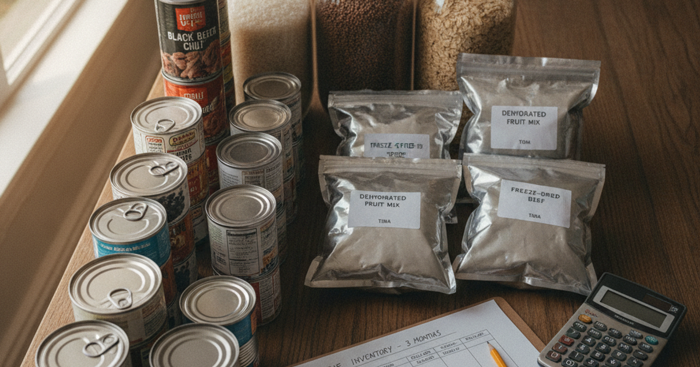
Before buying anything new, catalog what you already have in excess of your 90-day personal needs. Common items like over-the-counter medications, canned goods, hygiene supplies, and tools may already represent barter potential. Document quantities and expiration dates in a written ledger you keep private.
Step 2: Build a Dedicated Barter Cache Separate from Your Core Stockpile
Designate a specific container, bin, or storage space exclusively for barter goods. This might be a plastic tote in a closet, a box under a bed in an apartment, or a dedicated shelf in a garage. Keep this physically separate from your personal emergency food storage and medical supplies to prevent accidentally depleting critical reserves during trades.
Step 3: Prioritize High-Value, Low-Cost Consumables for Your Barter Stockpile
Focus initial purchasing on items that are cheap now but have universal demand post-collapse: lighters, batteries, salt, alcohol antiseptic, over-the-counter medications, seeds, and comfort foods. Buy in bulk where possible to reduce per-unit cost. Rotate stock using first-in, first-out (FIFO) principles to prevent expiration waste.
Step 4: Identify and Develop Two or Three High-Value Barter Skills
Choose skills that align with your existing background and that serve real needs. A nurse should develop advanced field medicine skills. A mechanic should expand into small engine and bicycle repair. An urban apartment dweller might focus on water purification, basic electronics, or food preservation techniques that require no outdoor space to practice.
Step 5: Map Your Local Community's Likely Needs and Skill Gaps
Think about who lives around you and what they lack. Suburban neighborhoods often have gaps in medical capability, mechanical repair, and food production. Urban environments may desperately lack water purification knowledge and fire-making materials. Rural areas may need manufacturing, communication, and medical expertise. Tailor your barter inventory to local demand — not just generic prepper lists.
Step 6: Establish Trade Protocols That Protect Your OPSEC and Safety
Decide in advance how you'll conduct trades: where you'll meet, how much of your inventory you'll reveal, who is authorized to trade on behalf of your household, and what you will never trade under any circumstances. Practice grey man tactics — don't advertise your preparedness status to the broader community before a crisis occurs.
Step 7: Network With Trusted Community Members Before a Crisis Hits
The most effective barter networks are built on pre-existing relationships. Connect now with neighbors, local farmers, mechanics, and medical professionals who might become trade partners. Building a neighborhood mutual aid network before SHTF means you enter any crisis with established trust — the most valuable currency of all.
Step 8: Regularly Review and Replenish Your Barter Cache
Set a calendar reminder every six months to inspect your barter stockpile for expired items, degraded goods, and emerging gaps. Replace anything traded or expired promptly. Update your inventory list and reassess community needs based on any changes in your local situation or current events that suggest what future shortages may look like.
Precious Metals as a Barter Bridge
Silver and gold occupy an important but nuanced role in a barter economy. In the early phases of collapse, consumable goods outperform metals because people need food and medicine more than they need coins. However, as a medium-term store of value — particularly for larger transactions like property, livestock, or skilled labor — pre-1965 U.S. silver coins (known as "junk silver") are widely recognized and valued by experienced preppers. For a comprehensive breakdown of metals strategy, see our dedicated guide on Precious Metals and Barter Goods: What to Stockpile When Paper Money Fails.
Frequently Asked Questions
What are the best barter items to stockpile for a collapse?
The best barter items are consumables with universal demand: lighters, batteries, salt, antiseptic alcohol, over-the-counter medications, seeds, hygiene items, and comfort foods like candy and coffee. These items are cheap to buy in bulk today, have long shelf lives, and address genuine needs that arise immediately after a collapse. Prioritize items that serve multiple purposes and have broad appeal across different demographics in your community.
Are skills or goods more valuable in a barter economy?
Both are essential, but skills offer a unique advantage: they can't be stolen, they don't expire, and they're reusable indefinitely. Medical skills, mechanical repair, food preservation, and water purification are consistently the highest-value barter skills across every documented post-collapse economy. Ideally, you build both a physical barter stockpile and develop two or three practical skills that meet genuine community needs — this dual approach gives you maximum flexibility and leverage.
How do I barter safely without revealing what I have stored?
Safety in barter starts with OPSEC before any trade takes place. Keep your barter cache in a separate location from your main supplies. Meet trade partners in neutral locations rather than your home whenever possible. Never display more than the specific item being traded. Vet potential trade partners through existing trusted relationships, and avoid trading with strangers who arrive unexpectedly after a collapse. Establish firm rules within your household about who can trade and what information can be shared.
Affiliate Disclosure: SHTFPlan.net participates in the Amazon Services LLC Associates Program. Some links are affiliate links — we may earn a small commission at no extra cost to you.