Neighborhood Mutual Aid Networks: How to Build a Community Survival Team Before SHTF
A lone prepper is a vulnerable prepper. Learn how to organize your neighbors into a resilient mutual aid network before disaster strikes.
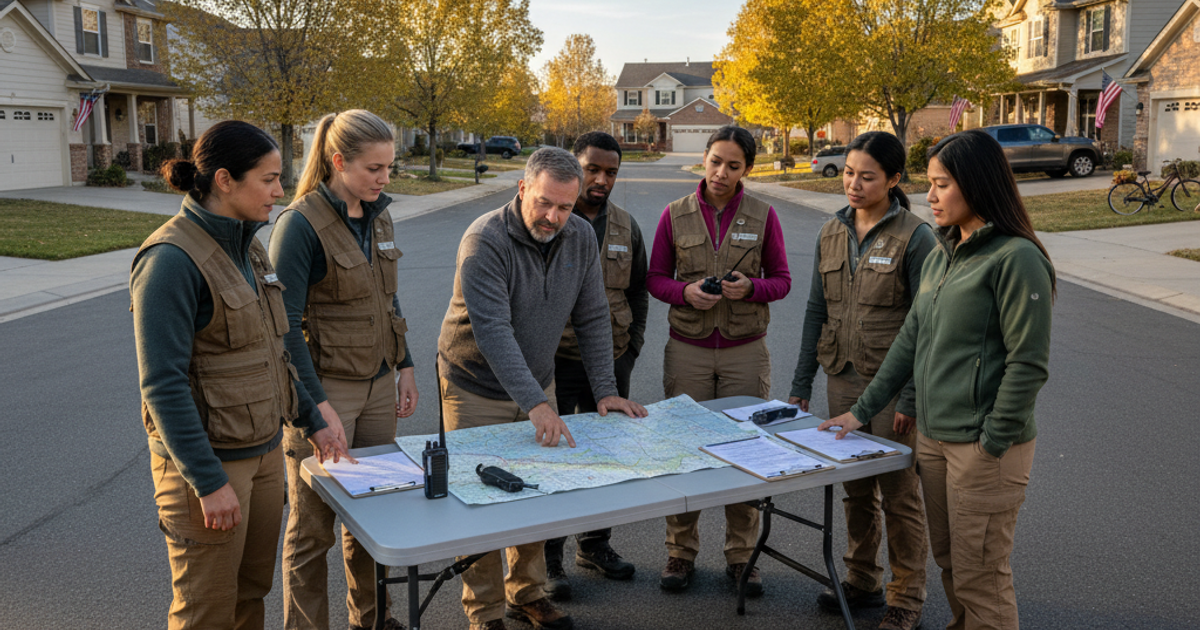
When the grid goes down, supply chains collapse, or a natural disaster strikes your area, the people most likely to survive aren't the lone wolves with the biggest stockpiles — they're the ones with strong community networks. Research consistently backs this up. A FEMA Community Resilience report found that neighborhoods with pre-established social ties recover significantly faster from disasters than isolated households. The prepper community has known this for years, but too many survivalists still operate under the assumption that going it alone is the safest strategy.
It isn't. And when SHTF, you'll wish you had built your tribe before you needed it.
Whether you live in a high-rise apartment, a suburban cul-de-sac, or a rural homestead twenty miles from the nearest town, neighborhood mutual aid networks can dramatically improve your odds of survival. This guide will show you exactly how to build one — quietly, practically, and effectively.
Why Solo Prepping Has Critical Limits — Even with a Full Bug Out Bag
The fantasy of the fully self-sufficient lone prepper is appealing. You've got your bug out bag packed, your emergency food storage dialed in, your water purification covered. But consider this: you have to sleep. You get sick. You can't watch all angles of your property simultaneously. You can't specialize in medicine, security, mechanics, and agriculture all at once.
A mutual aid network solves these problems by distributing skills, labor, and resources across multiple households. A retired nurse three doors down is worth more than a second safe full of ammo. The mechanic on the corner can keep your bug-out vehicle running when parts are scarce. The retired military veteran down the street brings situational awareness and tactical discipline that takes years to develop alone.
Community also provides psychological resilience. Mental strength during a prolonged SHTF scenario is one of the most overlooked survival factors. Isolation erodes it quickly. Community sustains it.
How to Identify and Approach Potential Network Members Without Raising Red Flags
One of the first challenges preppers face is who to trust. You don't want to advertise your stockpile or your plans. The grey man principle applies here — approach community building quietly and practically, without broadcasting your prepper identity to everyone on the block.
Start by framing everything around general emergency preparedness, not doomsday scenarios. Most people are receptive to the idea of being ready for hurricanes, power outages, or earthquakes. Use that common ground as your entry point.
Look for these natural allies in your neighborhood:
- Former military or law enforcement — security mindset, discipline, and often already prepping
- Medical professionals — nurses, EMTs, paramedics, doctors, even veterinarians
- Tradespeople — electricians, plumbers, mechanics, carpenters
- Farmers and gardeners — food production knowledge and often existing emergency food storage
- Ham radio operators — already plugged into emergency communication networks
- Retired individuals — often have time, life skills, and are home during the day
For urban and apartment dwellers, your network may span a floor or a building rather than a street. That's fine. The principles are identical. Check whether your building has a residents' association — that's a ready-made organizational structure you can work within.
How to Structure a Neighborhood Mutual Aid Network for SHTF Scenarios
A functional mutual aid network isn't a Facebook group for sharing casserole recipes. It's a structured, role-based team with clear responsibilities, communication protocols, and shared resources. Here's how to build it properly.
Step 1: Conduct a Skills and Resources Inventory
Before you know what your network can do, you need to know what it has. Create a simple, informal skills survey for willing participants. Ask about medical training, mechanical skills, food production capacity, communications equipment, tools, and physical fitness. Keep this information secure — don't share it broadly, and don't put everything in a digital document connected to the internet.
Step 2: Assign Roles Before You Need Them
Effective mutual aid networks mirror the structure of functional emergency response teams. Consider assigning or recruiting for these core roles:
- Security Coordinator — manages perimeter awareness, watch schedules, and threat response
- Medical Officer — any trained medical personnel; responsible for triage and first aid protocols
- Logistics Manager — tracks shared supplies, food, water purification resources, and fuel
- Communications Lead — manages radios, information gathering, and external contact
- Food and Water Officer — coordinates water storage, purification, and food production
- Morale and Community Leader — often overlooked but critical for long-term cohesion
Step 3: Establish Communication Protocols
Communication is the nervous system of any mutual aid network, and it's the first thing that breaks down in a disaster. You cannot rely on cell towers, internet, or landlines when SHTF. Your network needs redundant, off-grid communication options.
For short-range communication within your immediate neighborhood, the Midland T77VP5 walkie talkie two way radio is an excellent choice — it offers a solid range, weather alerts, and is rugged enough for field use. Every household in your network should have at least one pair.
For longer-range communication and connection to broader emergency networks, the Baofeng UV-5R ham radio handheld transceiver is the go-to budget option for preppers. Pair it with a ham radio license (the Technician exam is straightforward) and your Communications Lead gains access to a nationwide emergency communication infrastructure. Read more about building a comprehensive network in our guide to HAM Radio for Preppers.
Every household in your network should also have a dedicated weather radio. The Eton FRX5-BT emergency weather alert radio receives NOAA weather alerts, has multiple charging options including hand crank and solar, and can serve as a flashlight and phone charger. It's one of the most versatile pieces of emergency preparedness equipment you can own.
Step 4: Build a Shared Resource Cache
Your network doesn't need a communal bunker. A shared cache can be as simple as a designated space — a garage, a shed, a storage unit — where commonly needed supplies are pooled and inventoried. Focus on items that are expensive for one household but manageable when split across several:
- Water purification equipment and filters
- Medical and trauma supplies
- Generators and fuel
- Hand tools and mechanical equipment
- Bulk emergency food storage items
- Communication equipment
Security Considerations for a Neighborhood Mutual Aid Network
A functioning mutual aid network will inevitably become visible to outsiders during a prolonged emergency. That visibility creates security risks. You need a plan.
Perimeter awareness is your first line of defense. For suburban and rural members, strategically placed trail cameras can extend your early warning system significantly. The Meidase trail camera security monitoring outdoor camera is a solid option for monitoring approach routes, entry points, and perimeter zones without requiring constant manpower. Set them up on the main approaches to your neighborhood or property and check them on a rotating watch schedule.
For firearm storage within the network, responsible storage is non-negotiable — especially if you're integrating households with children or less experienced gun owners. The Vaultek safe gun storage line provides quick-access biometric storage that keeps firearms secure but immediately accessible when seconds count. Anyone participating in your network's armed security role should have their weapons stored responsibly. For more on selecting appropriate defensive firearms for your network, see our guide on Self-Defense for Preppers: How to Choose the Right Firearm.
Establish a clear protocol for dealing with outsiders requesting aid. This isn't about being heartless — it's about having a consistent, pre-planned response so you're not making emotional decisions under pressure. Decide in advance as a group what your policy is.
Practical Drills and Exercises to Run Before a Crisis
A plan that exists only on paper is a liability, not an asset. Regular, low-key drills build the muscle memory and trust that make a network functional under stress. You don't need to run military-style exercises — neighbors responding to a "what if the power went out for two weeks" tabletop exercise over coffee is infinitely more valuable than no preparation at all.
Run these exercises at least twice a year:
- Communications drill — test all radio equipment, confirm frequencies, establish check-in schedules
- Resource inventory review — verify that emergency food storage and water purification supplies are current
- Security walkthrough — walk your neighborhood's perimeter together, identify vulnerabilities
- Medical response drill — practice basic trauma response, confirm first aid kits are stocked
- Evacuation coordination drill — establish rally points, review urban evacuation routes, confirm everyone knows the plan
Building Mutual Aid Networks in Urban Apartments and Dense Neighborhoods
Urban preppers face unique challenges. You can't set up trail cameras on a public street without legal complications, your bug out bag may be your most critical asset rather than a home stockpile, and your "neighborhood" may be vertical rather than horizontal.
Work within your building's existing structure. Introduce yourself to building management and frame emergency preparedness as a tenant safety initiative. Connect with neighbors on your floor — even two or three households coordinating together dramatically improves your odds. Focus on skills trading over material resource sharing, since storage space is limited.
Urban mutual aid networks should also focus heavily on information gathering and grey man protocols. The ability to collect accurate intelligence about what's happening in your area — without drawing attention to yourself — is a critical urban survival skill. Review grey man methodology to understand how to operate effectively without becoming a target.
Step-by-Step Instructions
Step 1: Map Your Immediate Neighborhood and Identify Potential Members
Walk your neighborhood and create a simple map marking every household within a 3-5 block radius. Note any residents you already know, especially those with useful skills like medical training, construction experience, ham radio operation, or gardening knowledge. Pay attention to households with elderly members, young families, or people with disabilities who may need extra support. This initial reconnaissance helps you understand your neighborhood's assets and vulnerabilities before making contact.
Step 2: Initiate Contact Through Low-Pressure Social Events
Host a casual block party, barbecue, or coffee meetup to gauge interest without overwhelming neighbors with "prepper talk" immediately. Use this opportunity to build rapport and casually mention your interest in neighborhood resilience and emergency preparedness. Watch for neighbors who express similar concerns about power outages, natural disasters, or supply chain disruptions. Follow up individually with interested parties, suggesting a more focused meeting to discuss practical preparedness steps your street could take together.
Step 3: Conduct a Skills and Resources Inventory
During your first formal meeting, ask each household to complete a confidential inventory sheet listing their skills, tools, and resources they'd be willing to share in an emergency. Include categories like medical training, food preservation, security experience, mechanical skills, communication equipment, generators, water filtration, and extra supplies. Compile this information into a master directory (kept secure and shared only with network members) so everyone knows who to contact for specific needs. This inventory reveals your network's collective capabilities and identifies critical gaps to address.
Step 4: Establish Communication Protocols and Backup Systems
Create a phone tree or group messaging system for normal circumstances, but establish backup communication methods for when cell networks fail. Distribute FRS/GMRS radios with pre-programmed channels to each household, or encourage ham radio licensing for more serious members. Develop simple visual signals like colored flags or window cards to indicate status (safe, need help, danger). Schedule weekly radio checks and quarterly in-person meetings to maintain readiness and ensure everyone remembers the protocols.
Step 5: Organize Practical Training Sessions and Drills
Plan monthly skill-sharing workshops where members teach each other practical survival skills like first aid, food preservation, water purification, or fire safety. Conduct realistic drills simulating scenarios like power outages, civil unrest, or natural disasters to test your communication systems and response protocols. These events build competence, identify weaknesses in your plans, and strengthen relationships through shared learning experiences. Rotate hosting responsibilities to increase buy-in and ensure no single person becomes overburdened.
Step 6: Create a Mutual Aid Agreement and Security Plan
Draft a simple written agreement outlining how your network will function during emergencies, including resource-sharing principles, decision-making processes, and security protocols. Discuss sensitive topics like neighborhood watch rotations, perimeter security, and how to handle refugees or outsiders seeking help. Establish clear boundaries about what the group will and won't do, and get everyone's input on rules of engagement. This prevents conflicts when stress levels are high and ensures everyone shares the same expectations.
Step 7: Build Redundancy Through Supply Pooling and Group Purchases
Organize bulk buying opportunities for commonly needed supplies like water filters, batteries, medical supplies, or long-term food storage to leverage group purchasing power. Consider creating a neighborhood cache of shared resources stored at a central, secure location, with each household contributing according to their means. Develop a fair system for accessing these supplies during emergencies that accounts for different contribution levels while ensuring no one is left without essentials. Regular inventory checks and rotation schedules keep supplies fresh and demonstrate the network's ongoing commitment to preparedness.
Frequently Asked Questions
How do I start a neighborhood preparedness group without people thinking I'm a crazy prepper?
Frame it around mainstream emergency preparedness events like hurricane season, winter storms, or local power outage history — not doomsday scenarios. Host a casual "neighborhood emergency preparedness meeting" and focus on practical, universally relatable topics like communication plans, shared resources, and basic first aid. Most people are receptive when the framing is practical rather than apocalyptic. Build trust gradually before sharing your deeper level of preparation with anyone.
How many people should be in a mutual aid survival network?
Research on functional small-group dynamics suggests that 8 to 20 households is an ideal range for a neighborhood mutual aid network. Small enough to maintain trust and operational security, large enough to cover the skill sets and labor needs of a genuine crisis. Start with 3 to 5 highly trusted households and expand deliberately. Quality of relationships matters far more than quantity of members.
What should every household in a mutual aid network have as a minimum emergency preparedness baseline?
At minimum, every participating household should have: a 72-hour bug out bag per person, at least two weeks of emergency food storage and water (one gallon per person per day), a basic first aid kit, a hand-crank or battery emergency weather radio, a means of water purification, and a communication device capable of operating without cell service. Our Family Emergency Plan guide covers the household baseline in detail.
Affiliate Disclosure: SHTF Plan participates in the Amazon Services LLC Associates Program. Some links are affiliate links — we may earn a small commission at no extra cost to you.