Psychological Preparedness: How to Stay Mentally Strong When SHTF
Physical supplies won't save you if your mind breaks down first. Learn how to build mental resilience before, during, and after a crisis.
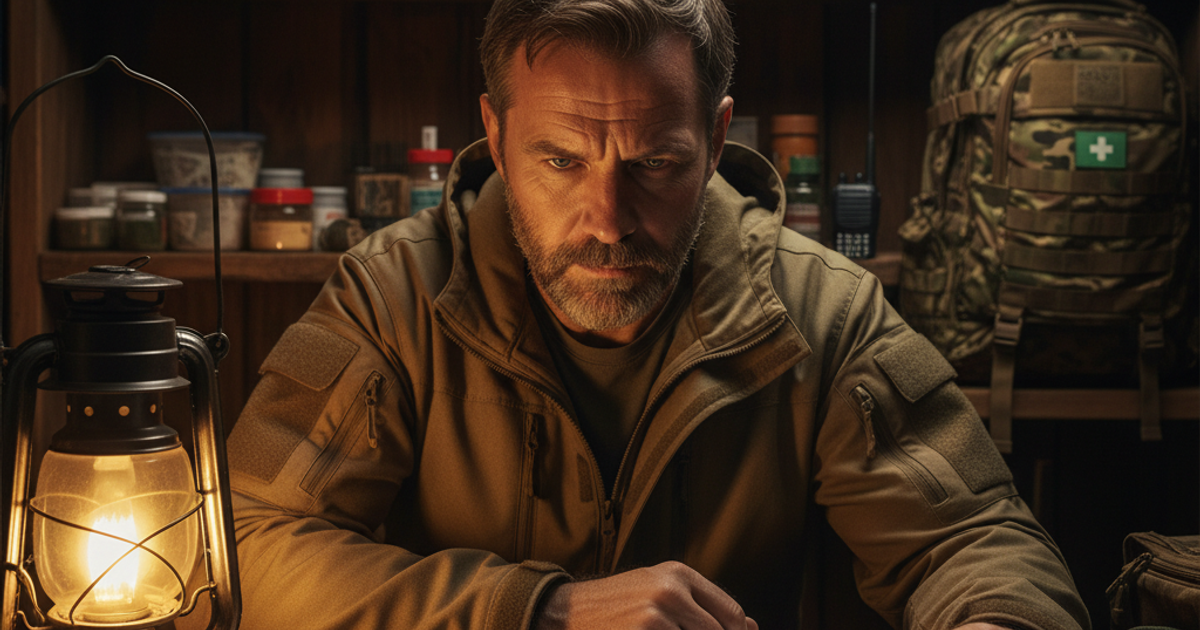
When most preppers think about emergency preparedness, they focus on tangible assets — a well-stocked bug out bag, emergency food storage, water purification systems, and survival gear. These are critical. But there's one resource that determines whether all that preparation actually pays off, and it lives between your ears. Psychological preparedness is the force multiplier that makes every other prep more effective — or renders it useless if neglected.
Research from disaster psychology consistently shows that in genuine crisis situations, it's rarely the most physically equipped person who survives and leads — it's the most mentally resilient. A 2010 study published in the journal Disasters found that psychological factors including perceived control, social cohesion, and prior mental preparation were among the strongest predictors of adaptive behavior in emergency scenarios. Your mindset is your most important piece of survival gear, and it requires just as much maintenance as your stockpile.
Understanding How Stress Destroys Decision-Making in a SHTF Scenario
When the SHTF — whether it's a natural disaster, civil unrest, grid-down emergency, or prolonged societal collapse — your brain doesn't behave the way you expect it to. The prefrontal cortex, responsible for rational planning and complex decision-making, goes partially offline under acute stress. The amygdala takes over, flooding your body with cortisol and adrenaline. This is the fight-or-flight response, and it was designed for short-term threats — not multi-week grid failures or extended bug-in scenarios.
Amanda Ripley's groundbreaking work The Unthinkable: Who Survives When Disaster Strikes — and Why dismantles many assumptions about how people behave in emergencies. Ripley's research reveals that most people freeze, deny, or engage in "milling" behavior — seeking social cues instead of acting — in the critical first moments of a disaster. The survivors are almost always those who had mentally rehearsed their response in advance. This is why mental rehearsal and stress inoculation training are not optional extras for the serious prepper. They are core skills.
Practical stress inoculation begins at home. Deliberately put yourself in mildly uncomfortable situations: cold showers, fasting for 24 hours, navigation exercises in unfamiliar areas, or timed problem-solving drills. The goal is to teach your nervous system that discomfort is manageable — not catastrophic. This kind of deliberate exposure builds the neurological pathways you'll draw on when urban survival situations demand clear thinking under pressure.
Building a Survival Mindset Before Crisis Strikes
Mental toughness isn't a personality trait you're born with — it's a trained capacity. Former Navy SEAL commander Mark Divine has spent decades studying and teaching exactly this. His framework in Unbeatable Mind outlines a five-mountain model of human development covering physical, mental, emotional, intuitional, and kokoro (warrior spirit) readiness. For preppers, the key takeaway is that mental toughness must be trained holistically — not just by acquiring more survival gear, but by developing inner discipline across every domain of life.
One of the most powerful tools for building a survival mindset is situational awareness — the practice of reading your environment and anticipating threats before they materialize. This skill dramatically reduces the cognitive shock of a crisis because your brain has already partially processed potential scenarios. For a deep dive into developing this habit, read our article on Situational Awareness: How to Detect Threats Before They Become Dangerous. Pair this with the grey man philosophy — the art of not drawing attention to yourself in a crisis — and you create a psychological posture of calm readiness rather than reactive panic.
Daily habits matter enormously. A consistent morning routine that includes breathwork, physical exercise, and journaling builds the mental infrastructure that holds up under pressure. Many preppers have found that maintaining a Stoic meditation journal for stress management anchors their mindset. Stoic philosophy — with its emphasis on focusing only on what you can control — is arguably the most practical psychological framework for SHTF scenarios. Journaling clarifies thinking, processes anxiety, and reinforces daily intentions. Do it every morning before you check the news.
How to Maintain Mental Health During a Prolonged SHTF Emergency
Short-term crises are challenging. Prolonged emergencies — lasting weeks, months, or longer — create an entirely different psychological burden. Chronic stress, disrupted sleep, food insecurity, loss of normal social structures, and the constant vigilance required for security all compound into serious mental health deterioration. Historical precedent bears this out: studies of survivors from Hurricane Katrina found that rates of PTSD, major depression, and anxiety disorders more than doubled in the year following the disaster.
Whether you're bugging in at an apartment in a high-rise or managing a rural homestead, the following strategies apply:
- Maintain structure and routine. Predictability signals safety to the brain. Set regular wake times, meal schedules, and task rotations even when the external world is chaotic.
- Create micro-wins daily. Completing small, meaningful tasks — organizing supplies, preparing a meal from storage, maintaining your emergency preparedness gear — triggers dopamine release and combats learned helplessness.
- Limit catastrophizing. Information overload during a crisis — especially from unreliable sources — feeds anxiety spirals. Designate specific times to assess the situation and make decisions. Outside those times, focus on immediate, actionable tasks.
- Protect sleep aggressively. Cognitive performance degrades rapidly with sleep deprivation. Establish watch rotations if needed. Prioritize sleep hygiene even in austere conditions.
- Practice controlled breathing. Box breathing (inhale 4 counts, hold 4, exhale 4, hold 4) activates the parasympathetic nervous system and can interrupt an acute stress response within minutes. Teach it to every member of your group.
David Goggins has become something of a patron saint of mental toughness culture, and for good reason. Can't Hurt Me details how Goggins transformed catastrophic personal circumstances into elite performance through radical accountability and what he calls "callusing the mind." While his methods are extreme, the core principle is directly applicable to prepper psychology: suffering that you've chosen and survived in training loses its power to break you in an actual emergency. Start building that callus now.
Maintaining Group Morale When Every Resource Is Stretched
Individual mental strength is necessary but insufficient. When SHTF extends beyond a few days, group dynamics become the primary determinant of survival outcomes. Families, neighborhoods, and prepper groups that maintain cohesion, clear communication, and shared purpose dramatically outperform isolated individuals or fractured groups — regardless of how well-stocked their survival kit is.
Leadership in a crisis is a psychological skill. The most effective crisis leaders share several traits: they communicate clearly and honestly (without catastrophizing), they distribute responsibility so no single person carries all the cognitive load, and they actively manage morale by acknowledging difficulty while reinforcing shared purpose. Ensure your family emergency plan includes not just logistics but explicit roles, communication protocols, and a clear decision-making structure. People handle stress better when they know what their job is.
For apartment dwellers and urban preppers who may lack the built-in community of a rural homestead, building neighborhood relationships before a crisis is one of the highest-value investments you can make. A trusted network of three to five nearby households multiplies your resources and psychological resilience simultaneously.
Meditation, Mindfulness, and Mental Recovery for Preppers
Meditation is not soft. Elite military units, first responders, and professional athletes use mindfulness training as a performance enhancement tool. The neuroscience is unambiguous: regular meditation practice physically thickens the prefrontal cortex — exactly the part of the brain that stress degrades — and reduces amygdala reactivity. In plain terms, it makes you harder to rattle.
For preppers who want to build this capability but don't know where to start, a Headspace meditation app gift card makes an excellent starting point — or gift for a family member you're trying to bring along on the preparedness journey. Even ten minutes of daily practice over eight weeks has been shown in peer-reviewed research to produce measurable changes in stress response and emotional regulation. Start now, before you need it. Like your emergency food storage, this is a resource you build in advance, not in the middle of a crisis.
Practical Mental Preparedness Drills You Can Do Right Now
- Scenario visualization. Once a week, spend 15 minutes mentally walking through a specific SHTF scenario — power grid failure, evacuation, civil unrest. Visualize your response step by step. This is not paranoia; it's rehearsal.
- Comfort deprivation exercises. Sleep on the floor. Skip a meal. Turn off the heat for a night. Deliberately experiencing mild discomfort trains your stress response and reveals gaps in your preps simultaneously.
- Communication blackout drills. Spend 48 hours without internet or social media. Practice navigating uncertainty and entertaining yourself without digital stimulus. This is closer to a real grid-down scenario than most people want to admit.
- After-action reviews. After any stressful event in daily life — an argument, a close call on the road, a difficult conversation — take five minutes to review your emotional response. What triggered you? How did you recover? This builds the self-knowledge that is foundational to crisis performance.
For broader context on how psychological preparedness fits into your overall readiness, the Top 10 Survival Books Every Prepper Should Read includes several titles that address the mental and emotional dimensions of survival alongside the tactical and logistical.
Step-by-Step Instructions
Step 1: Assess your current baseline stress response honestly
Before you can build mental resilience, you need an honest picture of where you currently stand. Spend one week tracking how you respond to everyday stressors — traffic, conflicts, unexpected problems — and note whether your reactions are measured or disproportionate. This self-audit identifies your specific psychological weak points before a genuine crisis exposes them at the worst possible moment.
Step 2: Establish a daily breathwork and grounding practice
Commit to ten minutes every morning of box breathing: inhale for four counts, hold for four, exhale for four, hold for four, and repeat for at least eight cycles. Do this before checking your phone, the news, or any external input. Consistency over two