Situational Awareness: How to Detect Threats Before They Become Dangerous
Situational awareness is your most powerful survival tool. Learn how to read your environment, spot threats early, and make faster decisions under pressure.
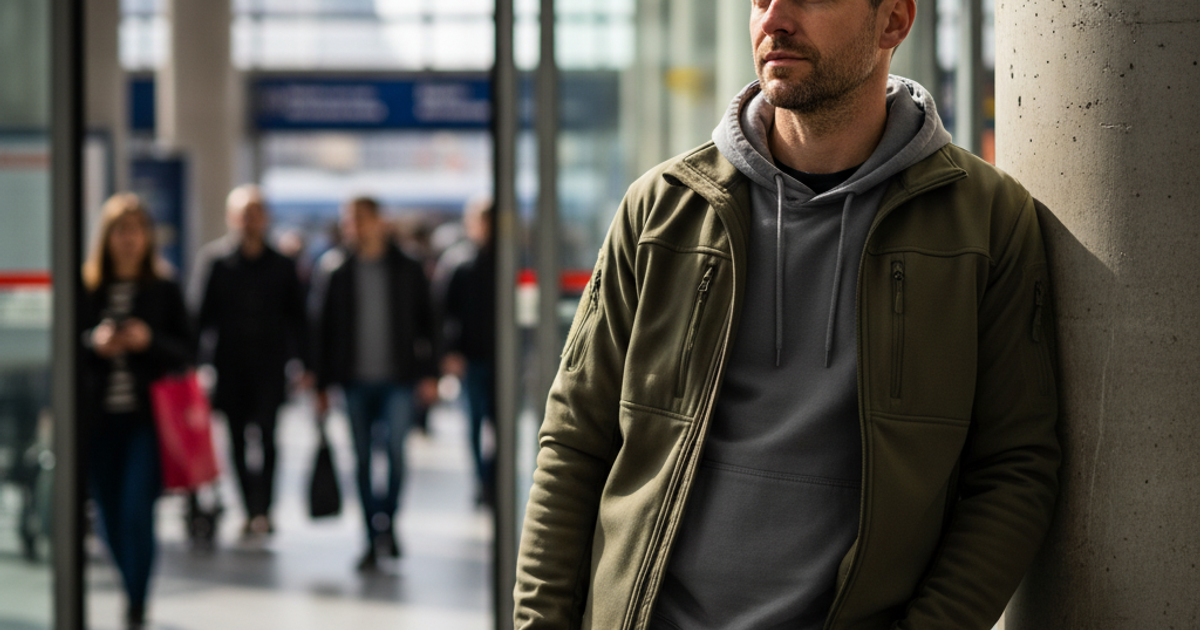
Most people go through their entire lives on autopilot — heads down, earbuds in, eyes on their phones. In a stable, low-threat environment, that's mostly fine. But when things go sideways — whether it's a mugging in a parking garage, a civil disturbance downtown, or a full-scale SHTF collapse — the people who survive are almost never the ones who were the most heavily armed or the best equipped. They're the ones who saw it coming first.
Situational awareness is the foundation of all prepper and survival skills. It costs nothing, requires no survival gear, and works whether you're in a high-rise apartment, a suburban neighborhood, or a rural homestead. And yet it's the most overlooked skill in the preparedness community. This article is your comprehensive introduction to developing a genuine tactical mindset — one that could save your life long before any crisis ever reaches your front door.
What Situational Awareness Actually Means for Urban Survival and Everyday Life
The term gets thrown around a lot, but genuine situational awareness is more than just "paying attention." It's a trained cognitive habit — a continuous loop of observation, interpretation, and preparation that runs in the background of everything you do.
According to research by security expert Gavin de Becker, author of The Gift of Fear, most violent crimes are preceded by detectable pre-attack signals that victims later admit they noticed but dismissed. That instinctive "something feels wrong" sensation is your subconscious pattern-recognition engine doing its job. Situational awareness training teaches you to consciously engage that system rather than override it.
Whether you're a prepper navigating an urban environment post-collapse or simply walking through a parking lot after dark, the same principles apply. The goal is to identify threats early enough to have options — specifically, options that don't involve violence.
The Cooper Color Code: A Practical Framework for Threat Awareness
Developed by Lt. Col. Jeff Cooper, the Color Code is the gold standard mental framework for situational awareness. It defines four states of alertness:
- White – Unaware: Relaxed, oblivious to surroundings. Appropriate only when sleeping in a secure location. Most people live here 90% of their lives.
- Yellow – Relaxed Alert: Calm but observant. You know who's around you, where the exits are, and what's normal for this environment. This is your default operating state in public.
- Orange – Specific Alert: Something has triggered your attention. You've identified a potential threat and are mentally preparing a response. "If that person does X, I will do Y."
- Red – Action: The threat is real and immediate. You are executing your pre-planned response.
The key insight of the Color Code is that most people jump directly from White to Red — they have no intermediate processing. That gap costs critical seconds. Training yourself to operate in Yellow by default means you almost never have to jump to Red, because you've already seen the threat developing in Orange.
For urban survival specifically, operating in Yellow doesn't mean looking paranoid. It means you glance up when entering a room, note the exits, and register the people around you. It takes about three seconds and is completely invisible to everyone else — especially if you've adopted a grey man approach to blending into your environment.
The OODA Loop: How Elite Decision-Makers Process Threats in Real Time
Developed by USAF Colonel John Boyd, the OODA Loop — Observe, Orient, Decide, Act — describes how humans process information and make decisions under pressure. Understanding it gives you a significant tactical advantage.
- Observe: Gather raw data from your environment — sights, sounds, smells, behavior, body language.
- Orient: Filter that data through your experience, training, and mental models to make sense of what you're seeing.
- Decide: Select a course of action from your available options.
- Act: Execute the decision.
The goal in a threat scenario is to complete your OODA loop faster than the threat. You do this not by thinking faster in the moment, but by doing the mental work in advance. Pre-planning your responses ("If I see X, I will immediately do Y") means your Orient and Decide phases are already complete, leaving only Observe and Act.
For deeper study into tactical decision-making frameworks, the Garett Machine tactical decision making training book is an excellent resource that applies military-grade cognitive frameworks to civilian threat assessment — highly recommended for any serious prepper building a tactical mindset.
Reading Pre-Attack Indicators and Threat Body Language
Human bodies betray intent before people act. Law enforcement and military personnel are trained to read these signals. You can be too.
High-Confidence Threat Indicators
- Target glancing: Repeatedly checking you while trying not to appear to do so.
- Interview behavior: Approaching with a question or distraction — "Do you have the time?" — while scanning you for valuables or vulnerabilities.
- Blading: Turning the body sideways to conceal a weapon or adopt a fighting stance.
- Grooming gestures: Repeatedly touching the face, neck, or a specific area of the body (often where a concealed weapon is located).
- Adrenal stress signs: Rapid breathing, flushing or pallor, dilated pupils, exaggerated swallowing.
- Behavioral anomalies: Someone wearing a heavy coat in warm weather, moving against the flow of foot traffic, or lingering without purpose.
Left of Bang by Patrick Van Horne is required reading for anyone serious about threat detection. Based on the Marine Corps Combat Hunter program, it teaches you to read behavioral baselines and identify anomalies before violence occurs — the "left of bang" moment before everything goes wrong. It's one of the most practical situational awareness books ever written for a civilian audience.
Establishing a Baseline
You can't spot an anomaly if you don't know what normal looks like. When you enter any environment — a grocery store, a gas station, a city park — take 10-15 seconds to establish the behavioral baseline. What are people doing? What's the ambient noise level? What's the normal pace of movement? Once you've internalized the baseline, anything that deviates from it stands out immediately.
Urban Threat Assessment: Scanning Environments Like a Tactical Professional
Urban environments present layered threats — and urban survival requires layered awareness. When entering any space, run a rapid assessment using this framework:
- Entries and exits: Always locate at least two ways out. In a restaurant, sit facing the door. In a parking garage, park near the exit.
- Choke points: Narrow corridors, stairwells, and blind corners are where ambushes happen. Move through them quickly and don't linger.
- Cover vs. concealment: Know the difference. Concealment hides you; cover stops bullets. Concrete pillars provide cover. Shrubs provide only concealment.
- Crowd dynamics: In a large group, watch for sudden directional changes, people running counter to the crowd, or areas where the crowd suddenly thins — these signal something happening that others are reacting to.
- Vehicles: A car idling without purpose near a building entrance, or one that appears to be following your route, warrants attention.
This same principle applies in rural settings. Know the normal traffic on your road. Know which neighbors' vehicles belong and which don't. Know the typical wildlife patterns on your property — animals going silent or suddenly flushing can signal human intrusion. Check out our guide on perimeter security for your retreat property for additional threat assessment strategies specific to rural environments.
The Tactical Mindset: Mental Preparation Before the Threat Arrives
Situational awareness isn't just about observation — it's about mental pre-loading. Before you leave the house, spend 60 seconds on a mental threat brief: Where am I going? What are the likely threat vectors? What are my responses if things go wrong? This isn't paranoia. It's the same pre-mission brief that soldiers and law enforcement officers run before every operation.
Rory Miller's Facing Violence is an outstanding companion resource here. Miller, a corrections officer and self-defense instructor, breaks down the legal, ethical, and tactical dimensions of force decisions in a way that helps preppers understand the full spectrum of self-defense — not just the physical mechanics, but the psychological and legal framework that should govern every decision. Understanding violence helps you avoid it.
Developing this mindset also means documenting your observations. Many tactical professionals keep a daily log — noting unusual vehicles, suspicious behavior, or patterns that seem off. The Viktos Operatus tactical notebook journal is purpose-built for this — durable, field-ready, and designed for operators who take their observation logs seriously. Writing things down forces precision of thought and creates a record you can review for patterns over time.
The Grey Man Principle: Awareness Without Visibility
Being situationally aware is only half the equation. The other half is not drawing attention to yourself in the process. The grey man concept — blending into the environment so thoroughly that you're neither remembered nor targeted — is the tactical complement to situational awareness. You're watching everyone. No one is watching you.
This means avoiding tactical clothing and gear in public, keeping your everyday carry (EDC) items low-profile and civilian-looking, and calibrating your behavior to match the baseline of whatever environment you're in. A prepper moving through an urban environment post-SHTF who looks like a soldier will be targeted. One who looks like a tired office worker will not.
Recommended Survival Gear to Support Your Situational Awareness
One piece of survival gear that directly supports situational awareness is a quality EDC flashlight. Darkness is one of the primary threat multipliers in any environment — it degrades your ability to observe and assess. The Streamlight MicroStream EDC pocket flashlight is compact enough to carry anywhere, produces enough output to illuminate a threat at close range, and can temporarily blind an attacker if needed. It's one of the most practical and underrated items you can add to your everyday carry setup — useful in everything from a power outage to a parking garage at midnight.
Pair your awareness skills with a solid foundation in emergency preparedness. A well-stocked bug out bag and a family emergency plan mean that when your awareness detects a developing threat — whether it's a weather emergency, civil unrest, or something worse — you already have the logistical resources to act immediately rather than scrambling.
Step-by-Step Instructions
Step 1: Establish Your Baseline Environment
When you enter any new location, take 30-60 seconds to observe what is "normal" for that environment. Note the typical behavior patterns of people, ambient noise levels, traffic flow, and general atmosphere. This baseline becomes your reference point for detecting anomalies. By understanding what belongs in a space, you'll immediately recognize when something is out of place or unusual.
Step 2: Adopt the Cooper Color Code System
Implement Colonel Jeff Cooper's awareness levels throughout your day, moving between Condition Yellow (relaxed alertness), Condition Orange (focused attention on a potential threat), and Condition Red (ready to act). Avoid Condition White (oblivious) and reserve Condition Black (panic) by training yourself to stay in Yellow as your default state. Practice transitioning between these states smoothly so your threat assessment becomes automatic rather than exhausting.
Step 3: Scan Your Environment in Systematic Patterns
Use a deliberate scanning pattern every 5-10 minutes: near to far, left to right, then check behind you. Pay special attention to transition zones like doorways, stairwells, parking lots, and alleys where threats commonly emerge. Don't just look—actively process what you're seeing by asking yourself "what if" questions about potential scenarios. This structured approach ensures you don't develop tunnel vision or miss important details in your peripheral zones.
Step 4: Identify Pre-Attack Indicators in Human Behavior
Watch for specific behavioral cues that signal hostile intent: excessive interest in you, hidden hands, bulging waistbands, inappropriate clothing for weather, or attempts to close distance without valid reason. Notice interview techniques where someone asks seemingly innocent questions to assess if you're a good target. Trust your instincts when someone's behavior contradicts their words—our subconscious often detects danger before our conscious mind can articulate why.
Step 5: Control Your Digital and Physical Footprint
Minimize predictable routines by varying your routes, schedules, and frequented locations whenever possible. Avoid broadcasting your location, plans, or valuables on social media in real-time. When in public, position yourself with your back to walls, maintain awareness of exit routes, and avoid advertising wealth through visible electronics or jewelry. Predators select targets based on perceived vulnerability and predictability.
Step 6: Create Decision Points Before Threats Escalate
As you scan your environment, identify specific triggers that would prompt immediate action—for example, "If that person moves within 10 feet, I will reposition." Pre-planning your responses eliminates hesitation during critical moments. Visualize how you would react to various scenarios: where you'd take cover, which exit you'd use, or how you'd create distance. This mental rehearsal builds neural pathways that enable faster, more effective responses under stress.
Step 7: Practice Active Listening and Sensory Integration
Develop all your senses beyond just visual scanning—listen for changes in sound patterns, notice unusual smells, and feel vibrations or temperature changes that might indicate danger. Remove one earbud if listening to music, and never become so absorbed in your phone that you disconnect from your surroundings. Train yourself to process multiple sensory inputs simultaneously, as threats often announce themselves through sound or smell before becoming visually apparent.
Frequently Asked Questions
How do I practice situational awareness in everyday life without becoming paranoid?
Start small. Each time you enter a new environment, give yourself 15 seconds to locate two exits, identify the people closest to you, and note anything that feels out of place. Make it a habit rather than a constant high-alert state. Operating in Condition Yellow — relaxed but observant — is calm and sustainable. Paranoia comes from operating in Orange or Red without a specific trigger. Most people find that regular awareness practice actually reduces anxiety because they feel more in control of their environment, not less.
What is the OODA loop and how do I use it in a real threat situation?
The OODA loop (Observe, Orient, Decide, Act) describes how you process information and make decisions under stress. In practice, the most valuable thing you can do is front-load the Orient and Decide phases through pre-planning. Ask yourself regularly: "If X happens, I will do Y." Run through scenarios for your home, your workplace, your regular commute. When a real threat appears, your brain recognizes the pattern, skips the deliberation, and moves straight to action — giving you a decisive speed advantage over anyone who hasn't done that mental work in advance.
Does situational awareness work the same way in rural areas as in cities?
The principles are identical — establish a baseline, detect anomalies, orient and act — but the baselines are different. In rural settings, your baseline includes the normal behavior of wildlife, regular vehicle traffic, neighbor patterns, and ambient noise levels. A dog barking where dogs don't usually bark, headlights on an unused road at 3 a.m., or an unfamiliar vehicle parked near a gate are all anomalies worth investigating. Rural preppers often have the advantage of more controlled perimeters and greater advance warning time — but only if they're actively maintaining awareness of what "normal" looks like on their property.
Affiliate Disclosure: SHTF Plan participates in the Amazon Services LLC Associates Program. Some links are affiliate links — we may earn a small commission at no extra cost to you.