Perimeter Security: Protecting Your Retreat Property
Advanced strategies for securing larger properties and rural retreat locations against intrusion and surveillance.

Introduction
Securing a rural retreat property requires advanced strategies to protect against intrusion, theft, and surveillance, especially in isolated areas where response times may be delayed. Perimeter security forms the first line of defense, integrating physical barriers, detection systems, and response protocols to safeguard assets and occupants. Drawing from official guidelines, this article outlines comprehensive approaches for larger properties, emphasizing proactive measures to deter threats and enhance resilience.
Perimeter Barriers and Fencing
Effective barriers define property boundaries and restrict unauthorized access. Install robust fencing such as chain-link with anti-climb features, topped with barbed or concertina wire for added deterrence. Maintain clear zones around fences—typically 15-20 feet free of vegetation—to eliminate hiding spots and facilitate surveillance. Use natural features like ditches, steep terrain, or rivers as supplementary barriers. For gates, opt for locked, reinforced designs that cannot be easily lifted or disassembled, and consider cables or bollards to block lanes.
Surveillance and Detection Systems
Advanced surveillance detects intrusions early. Deploy motion-activated cameras, sensors, and alarms along perimeters to monitor activity. Integrate video systems with digital recording for review, and use driveway enunciators or perimeter alarms that trigger alerts via phone or siren. In rural settings, leverage community surveillance by coordinating with neighbors to report suspicious activities. Conduct regular vulnerability assessments to identify weak points and enhance monitoring with technologies like CCTV or environmental sensors.
Access Control and Gates
Control entry points to minimize risks. Designate a single main access with a check-in point, using electronic locks, card readers, or keypads for restricted areas. Separate delivery and contractor access from main entries, and disable equipment or remove critical parts when not in use. For high-security, install anti-ram barriers like bollards or crash gates to prevent vehicle breaches, ensuring they allow emergency vehicle passage.
Lighting and Visibility
Proper lighting deters intruders by eliminating shadows. Install motion-activated or photocell-controlled lights around perimeters, fuel tanks, and storage areas. Use glare lighting directed outward to blind potential threats while maintaining interior visibility. High-mast lighting provides broad coverage for larger properties, and standby systems ensure functionality during outages.
Natural Defenses and Landscaping
Leverage the rural environment for defense. Plant thorny bushes or dense vegetation as natural barriers, but keep clear zones for fences. Use topography—such as elevating critical structures or using natural obstacles—to impede access. Site planning should maximize stand-off distances from perimeters to buildings, positioning assets away from high terrain or dense cover that could aid surveillance.
Response and Alarms
A swift response is critical. Integrate alarms with off-site monitoring or direct notifications to authorities. Train occupants in recognition and reporting of threats, and develop contingency plans including evacuation routes and mutual aid agreements with neighbors. Install secure emergency information boxes (e.g., Knox Boxes) containing maps and contacts for first responders. Regularly exercise plans to ensure readiness.
Benefits and Challenges
Benefits
- Enhanced deterrence through visible security measures.
- Early detection and rapid response to threats.
- Protection of assets in isolated rural locations.
Challenges
- High initial costs for advanced systems.
- Maintenance in remote areas.
- Balancing security with aesthetics and functionality.
What You'll Need
Tools
- Post hole digger or auger
- Wire stretcher and fence pliers
- Power drill and bits
- Bolt cutters (for sizing and adjusting wire)
- Shovel and tamping bar
- Ladder (for fence topping and light installation)
- Voltage tester or multimeter (for electrical components)
- Measuring tape and marking stakes
Supplies
- Chain-link or welded wire fencing panels
- Barbed wire or concertina wire rolls
- Fence posts (steel T-posts or wooden corner posts)
- Concrete mix (for setting posts)
- Motion-activated security cameras
- Perimeter alarm sensors and control panel
- Motion-activated LED security lights
- Electronic deadbolt locks and keypads
- Steel bollards or vehicle barrier cables
- Thorny shrub plants (e.g., hawthorn, blackberry, pyracantha)
- Padlocks (heavy-duty, weather-resistant)
- Weatherproof electrical conduit and wiring
- Battery backup or solar power unit for electronics
Step-by-Step Instructions
Step 1: Assess and Map Your Property's Vulnerabilities
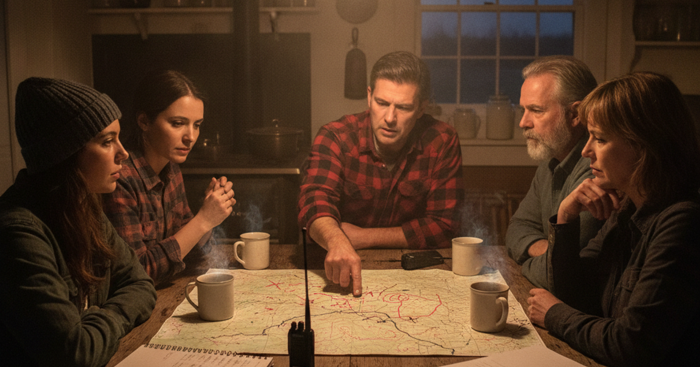
Walk the entire perimeter of your property at different times of day, noting natural access points, low ground, treelines, and any existing gaps in coverage. Mark these locations on a hand-drawn or digital property map, distinguishing between high-risk zones (road frontage, gates, outbuildings) and lower-risk areas. This vulnerability assessment becomes the master plan driving every decision that follows.
Step 2: Establish Your Perimeter Boundary with Fencing
Beginning at your highest-risk entry points, set fence posts at 8-10 foot intervals using concrete to anchor corner and gate posts at least 3 feet deep for stability. Stretch chain-link or welded wire fencing tightly between posts, then attach barbed or concertina wire along the top at an outward-facing angle to discourage climbing. Maintain a cleared buffer zone of at least 15-20 feet on both sides of the fence line by removing brush, tall grass, and any debris that could conceal an intruder.
Step 3: Install and Reinforce Access Control Points
Designate a single primary gate as your controlled entry point and secure it with a heavy-duty padlock or electronic deadbolt that cannot be shimmed or easily cut. Add a secondary locking mechanism such as a drop bar or chain-and-lock combination for redundancy, and install steel bollards or a cable barrier across any secondary vehicle lanes to prevent ram entry. Clearly mark all other potential vehicle entry points with locked barriers and post no-trespassing signage at legal intervals required by your state.
Step 4: Deploy Surveillance Cameras and Perimeter Sensors
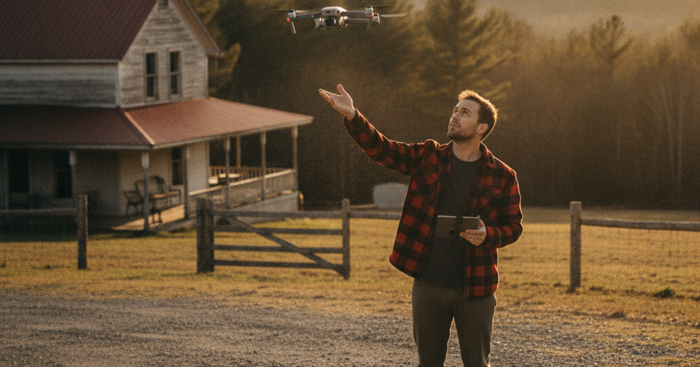
Mount motion-activated cameras at all gate entry points, building corners, and along fence lines at heights of 8-10 feet to prevent easy tampering while maintaining wide-angle coverage. Position cameras to overlap fields of view so there are no blind spots between units, and connect them to a digital video recorder with at least 30 days of storage capacity. Supplement cameras with wireless perimeter alarm sensors or driveway enunciators placed 20-30 feet inside the fence line to provide an early secondary alert layer before anyone reaches a structure.
Step 5: Set Up Strategic Perimeter Lighting
Install motion-activated LED floodlights at all entry points, building perimeters, fuel storage areas, and along the fence line at intervals that eliminate shadow gaps. Direct lights outward and downward so they illuminate approaching threats while preserving your own night vision inside the property. Connect lights to a battery backup or solar power source so they remain functional during grid outages, which are common during SHTF scenarios.
Step 6: Integrate Natural Barriers and Landscaping Defenses
Plant dense, thorny shrubs such as hawthorn, osage orange, or pyracantha along fence lines and beneath windows to create a painful natural deterrent that complements physical barriers. Use existing topography to your advantage by routing foot traffic away from elevated ground that could provide an adversary with a surveillance or firing position over your structures. Avoid planting tall trees or dense vegetation within your cleared buffer zone, as these can be exploited for concealment.
Step 7: Develop and Distribute Your Response Plan
Write a clear, concise response protocol that assigns every occupant a specific role when an alarm is triggered — such as monitoring cameras, securing interior doors, or making radio contact with neighbors. Establish pre-agreed code words or radio channels with trusted neighbors for mutual aid, and identify primary and secondary evacuation routes in case the perimeter is breached. Store printed copies of property maps, emergency contacts, and evacuation plans in a weatherproof container accessible to all members of your group.
Step 8: Test, Inspect, and Maintain All Systems Regularly
Schedule monthly walkthroughs of the entire perimeter to check for fence damage, camera alignment drift, dead batteries, burned-out lights, and sensor obstructions caused by vegetation growth. Test every alarm sensor and camera by walking through their detection zones and confirming alerts register on your monitoring device or phone. Conduct a full group drill at least twice a year so that every occupant can execute the response plan confidently and without hesitation under stress.
Recommended Products
Equip your property with these Amazon products (affiliate links; earnings support content):
- Security Camera System: Arlo Pro 4 Spotlight Camera - 3 Pack. Buy on Amazon
- Motion Sensor Lights: LEPOWER LED Motion Sensor Security Lights. Buy on Amazon
- Perimeter Alarm: Dakota Alert MURS Wireless Motion Detector. Buy on Amazon
- Anti-Climb Fence Topper: YARDGARD Barbed Wire. Buy on Amazon
- Electronic Lock: Kwikset SmartCode Electronic Deadbolt. Buy on Amazon
- Bollards: Vestil Steel Bollard. Buy on Amazon
Conclusion
Implementing advanced perimeter security transforms your retreat property into a fortified haven. By combining physical barriers, surveillance, and response strategies, you can effectively protect against intrusion and surveillance. Regular assessments and community involvement further strengthen defenses.
References
- National Farm Security Action Plan - USDA - https://www.usda.gov/sites/default/files/documents/farm-security-nat-sec.pdf
- All-Hazards Preparedness for Rural Communities - https://www.prep4agthreats.org/Assets/Factsheets/All-Hazards-Preparedness-for-Rural-Communities-Book-Cover.pdf
- Reference Manual to Mitigate Potential Terrorist