Emergency Utility Shutoff: How to Turn Off Your Home's Gas, Water, and Electricity Before Disaster Strikes
Ruptured gas lines, burst pipes, and energized wiring kill people after earthquakes, floods, and storms. Learn where every shutoff in your home is and how to operate it in the dark.
When an earthquake rattles your foundation, a tornado peels back your roof, or a car takes out the utility pole in front of your house, you may have less than sixty seconds to make a decision that determines whether your home survives — or burns to the ground. The U.S. Fire Administration and FEMA both list ruptured natural gas lines among the leading causes of post-disaster structure fires. After the 1994 Northridge earthquake, an estimated 15,000 gas leaks were reported across the Los Angeles basin, and the fires that followed destroyed homes that had otherwise survived the shaking intact. In the 1906 San Francisco earthquake, fire — much of it fed by broken gas mains — caused roughly 80% of the total damage.
Here's the uncomfortable truth: surveys by emergency management agencies routinely find that fewer than half of American households know where their gas shutoff valve is, and even fewer own the tool required to operate it. You can have a fully stocked survival kit, a perfectly packed bug out bag, and a year of emergency food storage in the basement — and lose all of it because nobody knew how to turn a quarter-turn valve in the dark.
This guide covers locating and operating gas, water, and electrical shutoffs for apartment dwellers, suburban homeowners, and rural properties on wells and propane. It's one of the cheapest, highest-return emergency preparedness skills you can learn — and it takes about twenty minutes to master.
What You'll Need
Tools
- 4-in-1 non-sparking gas and water shutoff wrench
- Hays 3-Way Gas Shut Off Wrench
- Klein Tools non-contact voltage tester pen
- LED headlamps (two-pack)
- Adjustable crescent wrench (12-inch) and a water meter key
Supplies
- Little Giant gas meter shutoff tool with chain (tethered at the meter)
- Lockout/tagout breaker lock kit
- Laminated shutoff location cards and a waterproof marker
- Bright-colored zip ties or paint to mark valve locations
Where Are the Shutoffs in an Apartment, House, or Rural Property?
Natural Gas and Propane
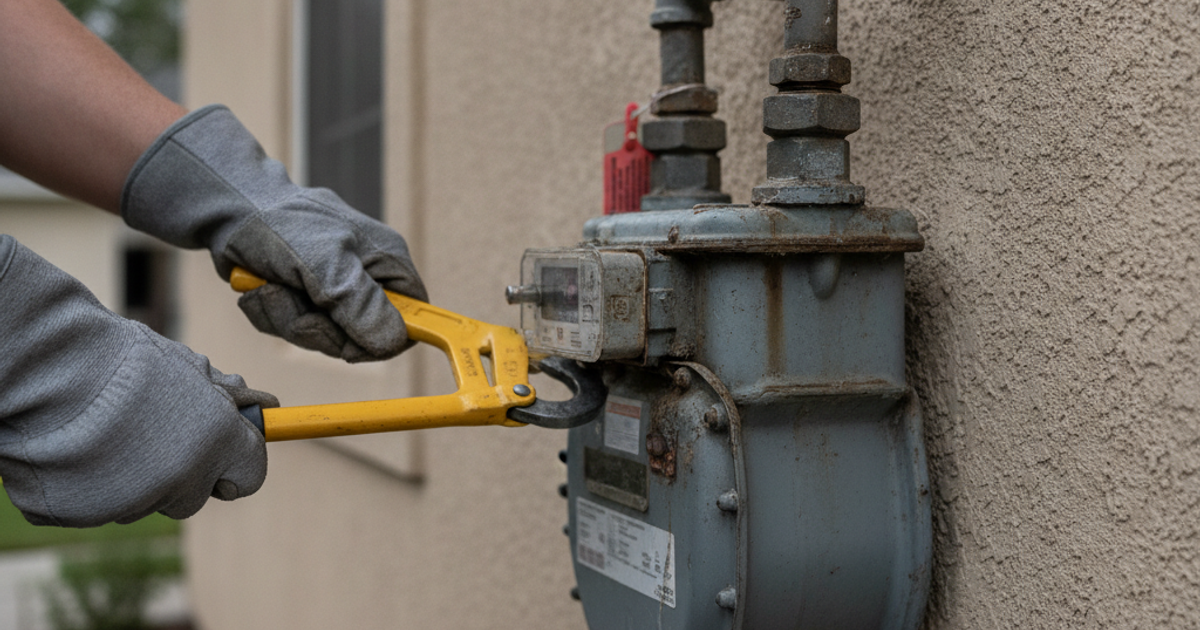
In most suburban and urban homes, the natural gas meter sits on an exterior wall, in a side yard, or in a basement utility area. The main shutoff is the valve on the inlet pipe — the one coming out of the ground before the meter. When the rectangular tang or "ear" on the valve runs parallel to the pipe, gas is flowing. Turn it a quarter turn so it sits perpendicular to the pipe, and the gas is off.
Apartment and condo residents often have no access to the building's master gas valve — it may be locked in a utility room or serve dozens of units. Your job is to know your appliance-level shutoffs: the small yellow-handled or oval valves behind the stove, water heater, and furnace. Photograph them. If you live above the tenth floor, pair this knowledge with a review of high-rise survival procedures.
Rural properties on propane have a shutoff valve at the tank itself — a hand wheel on top of a 250- or 500-gallon horizontal tank, or under the dome cover on a vertical tank. Turn clockwise to close. No tool required, which is one advantage of propane over piped natural gas.
Water
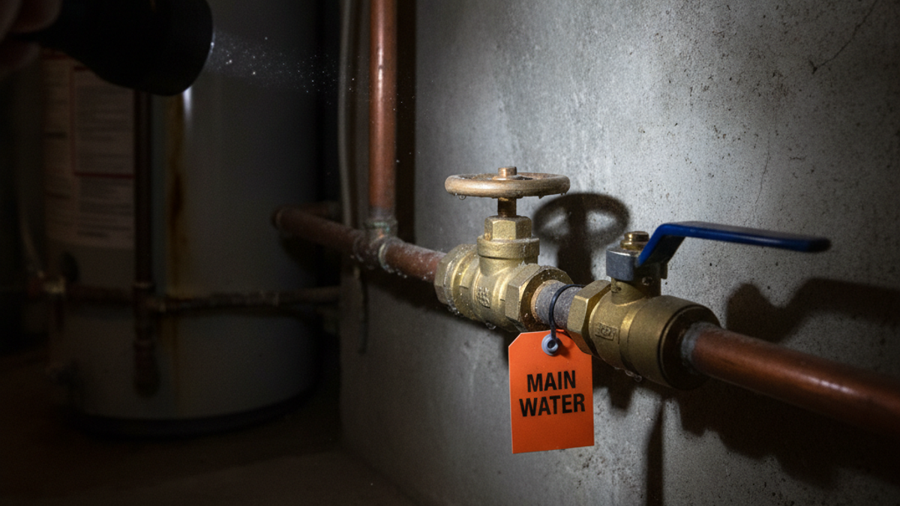
Municipal customers have two shutoffs. The street-side valve lives in a concrete or plastic meter box near the curb and usually requires a water meter key or a long-handled shutoff wrench. The house-side valve is typically where the supply line enters the structure — in a basement, crawlspace, garage, or utility closet. Gate valves turn clockwise several rotations; ball valves need only a quarter turn.
Well owners shut water off differently: kill power to the pump at the breaker, then close the valve on the pressure tank's outlet. If you're on a well, you should already have a manual backup — see our guide to well hand pumps for when the power fails. And before winter arrives, combine shutoff practice with winterizing your plumbing to prevent burst water lines.
Electricity
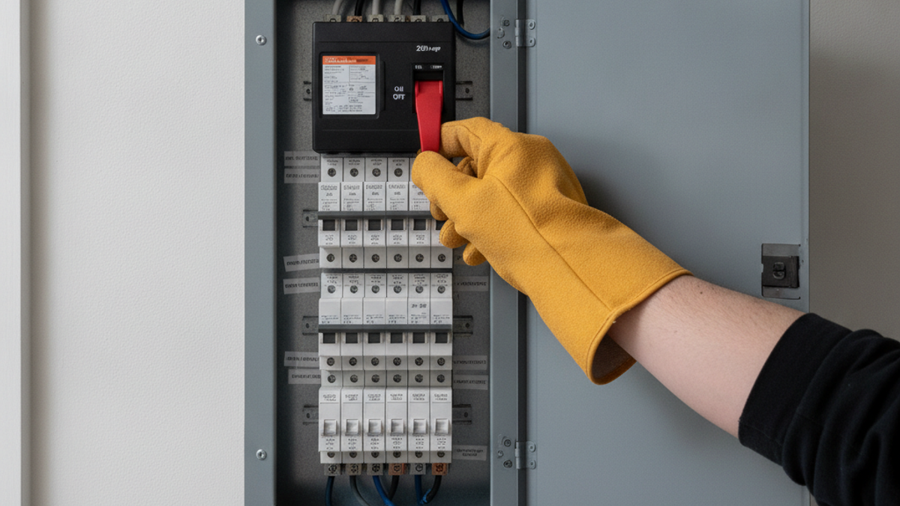
Your main breaker is the largest double-pole switch at the top of the panel, usually rated 100, 150, or 200 amps. Flipping it to OFF kills every circuit in the dwelling. Apartment dwellers have a panel inside the unit; the building's service disconnect is off-limits. Rural homes frequently have a separate outdoor disconnect at the meter base, plus subpanels for shops and barns — and if you have solar or a generator, the main breaker does not necessarily de-energize everything. Know where your PV disconnect and transfer switch are, and review safe operation with our whole-house standby generator guide.
When Should You Actually Shut Off the Utilities?
Shutting off gas unnecessarily is a real cost: in most jurisdictions, only the utility company may legally restore service, and after a regional disaster the wait can stretch for days or weeks. Use these triggers:
- Gas: Shut it off only if you smell sulfur/rotten eggs, hear hissing, see a damaged meter or blowing dirt near the line, or a fire is burning in or near the structure. Do not shut it off "just in case" after every tremor.
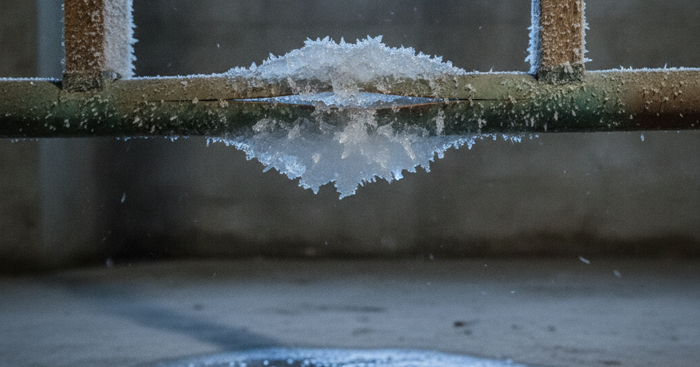
- Water: Shut it off for any burst pipe, flooding, contamination notice, or before evacuating for a hurricane, wildfire, or hard freeze.
- Electricity: Shut it off for rising floodwater, a burning smell or arcing from the panel, downed service drop, or before wading into any wet basement.
Step-by-Step Instructions
Step 1: Locate and photograph all three shutoffs
Walk your property with a flashlight and find the gas meter valve, the main water valve (both street and interior), and the main breaker. Photograph each one with a landmark in the frame, then store the images in your grab-and-go emergency document kit and print a copy for the panel door.
Step 2: Mark each valve so anyone can find it fast
Paint the gas valve tang bright yellow, zip-tie fluorescent tape to the water valve, and label the main breaker with a printed tag. In a smoke-filled house at 3 a.m., color beats memory every time.
Step 3: Stage the correct tool at each location
A 12-inch crescent wrench works on a gas valve, but a dedicated non-sparking shutoff wrench is faster and safer. Tether a gas meter shutoff tool on a chain directly to the meter riser so it's never missing when you need it, and keep a second wrench in your vehicle kit.
Step 4: Practice the water and electrical shutoffs annually
Close and reopen the main water valve once a year — valves that sit untouched for a decade seize or snap. Flip the main breaker off and back on to confirm it operates smoothly. Never practice on the gas valve; closing it commits you to a utility service call.
Step 5: Verify power is dead before touching anything
After throwing the main, confirm circuits are de-energized with a non-contact voltage tester pen at an outlet and at the panel. Backfeed from a generator or solar inverter has killed people who assumed the main breaker did the job.
Step 6: Lock out the panel if children or others are present
Once power is off for flood or repair reasons, install a lockout/tagout breaker lock so nobody restores power while you're working on wet or damaged wiring.
Step 7: Brief every family member and drill it
Every adult and capable teenager should be able to perform all three shutoffs in the dark. Run the drill at night with headlamps only. Add it to your family emergency plan and your annual home fire escape plan rehearsal.
Detecting Gas Before It Becomes a Fireball
Natural gas and propane are odorless; utilities add mercaptan for smell. But mercaptan can fade in older pipe ("odor fade"), and roughly 15% of adults have diminished smell sensitivity. Don't bet your house on your nose. A plug-in natural gas and propane leak alarm near the furnace or water heater gives you an audible warning long before concentrations reach the 5% lower explosive limit. For pinpointing a leak along a pipe run or at a fitting, a portable methane and propane gas leak detector with a flexible gooseneck probe costs less than a tank of fuel. Pair these with proper smoke, CO, and gas alarm coverage throughout the home.
Critical safety rule: if you smell gas, do not flip light switches, use a phone indoors, or start a generator. Any spark can ignite an accumulated pocket. Leave doors open, get outside, shut the gas off from the exterior meter, and call the utility from a safe distance.
Recommended Gear
Build a small "utility response kit" and hang it inside the door nearest your meters: a 4-in-1 non-sparking shutoff wrench that handles both gas and water valves, a compact Hays 3-way gas wrench as a backup or vehicle spare, and a two-pack of LED headlamps so both hands stay free in a dark crawlspace. For broader outage lighting strategy, see our roundup of emergency lighting options every prepper should have, and browse the full recommended survival gear list to fill remaining gaps.
Frequently Asked Questions
Can I turn my own gas back on after I shut it off?
Most utilities prohibit it, and for good reason: restoring gas requires purging air from the lines and relighting every pilot safely. An unlit pilot on a single appliance can fill a house with gas. Call the utility and expect delays after a regional disaster — which is exactly why you should only shut gas off when there's a genuine leak, fire, or structural damage.
What if my gas or water valve is stuck or painted over?
Do not force it with a cheater bar — snapping a gas riser creates the exact emergency you were trying to prevent. Call the utility now, before a disaster, and request a valve inspection or replacement; most perform this free. For seized interior water valves, consider having a plumber install a modern quarter-turn ball valve, which is far more reliable under stress.
Do apartment renters really need shutoff tools?
Yes. You may not control the building main, but you can shut off the gas line to your own range, the supply valve under a burst sink, and your unit's main breaker. That's enough to prevent a flood or a fire in your own space. Renters should pair this with the strategies in our apartment prepping guide.
Affiliate Disclosure: SHTFPlan.net participates in the Amazon Services LLC Associates Program. Some links are affiliate links — we may earn a small commission at no extra cost to you.