When Seconds Count: How to Choose Fire Extinguishers and Build a Home Fire Escape Plan Before Disaster Strikes
House fires kill faster than almost any disaster preppers plan for, yet most homes have one dusty extinguisher and no escape plan. Here's how to fix both.
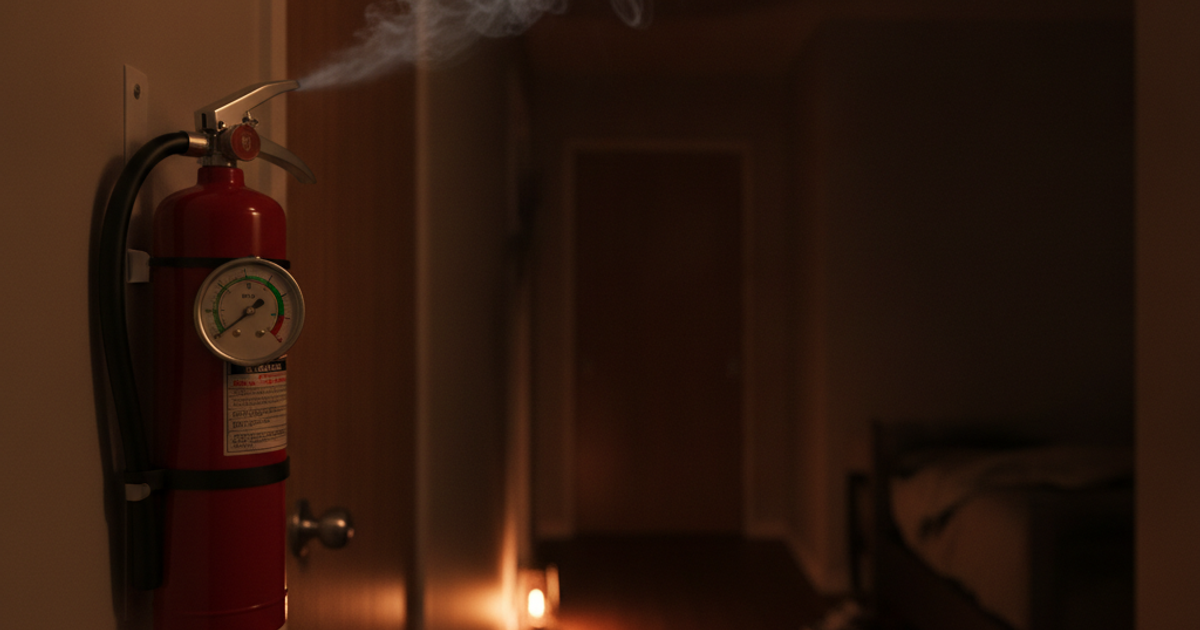
Most preppers spend years planning for grid-down scenarios, economic collapse, and civil unrest — yet the disaster statistically most likely to kill them is already sitting inside their walls. According to the National Fire Protection Association (NFPA), U.S. fire departments respond to a home structure fire roughly every 88 seconds, and home fires kill around 2,800 Americans annually. Worse, modern homes burn faster than ever. Testing by Underwriters Laboratories found that legacy furniture made of natural materials gave occupants roughly 17 minutes to escape a room fire. Modern synthetic furnishings and open floor plans have cut that window to as little as three minutes.
Three minutes. That's your entire response window — detection, decision, suppression or evacuation. No stockpile, no bug out bag, and no amount of emergency food storage matters if you're overcome by smoke in a hallway you've walked ten thousand times. Whether you're in a third-floor apartment, a suburban two-story, or a rural homestead 30 minutes from the nearest volunteer fire department, fire preparedness is the highest-return investment in your entire emergency preparedness plan.
What You'll Need
Tools
- Fire extinguisher mounting brackets
- Cordless drill and stud finder
- Step ladder for ceiling-mounted alarms
Supplies
- ABC dry chemical fire extinguishers (2A:10B:C or larger)
- 10-year sealed battery smoke alarms
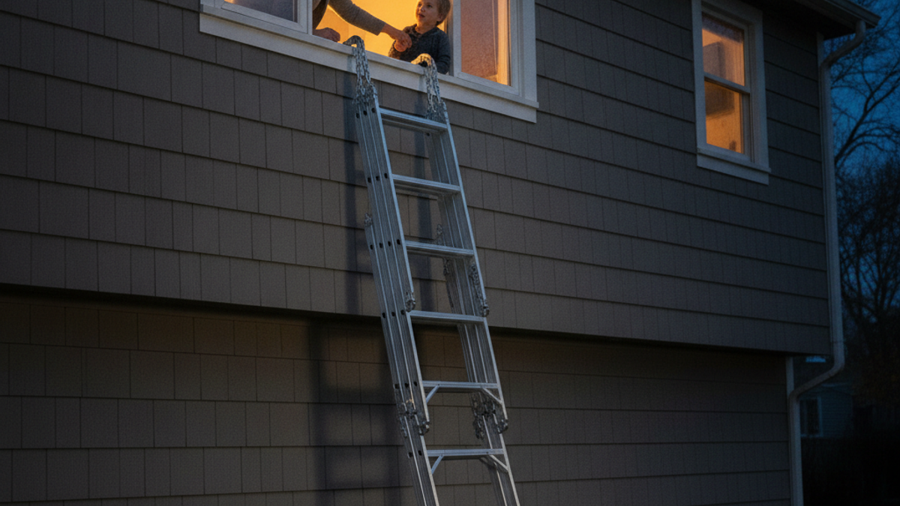
- Two-story emergency escape ladder
- Kitchen fire blanket
- Escape smoke hoods for each bedroom
How to Choose the Right Fire Extinguisher Class for Your Home
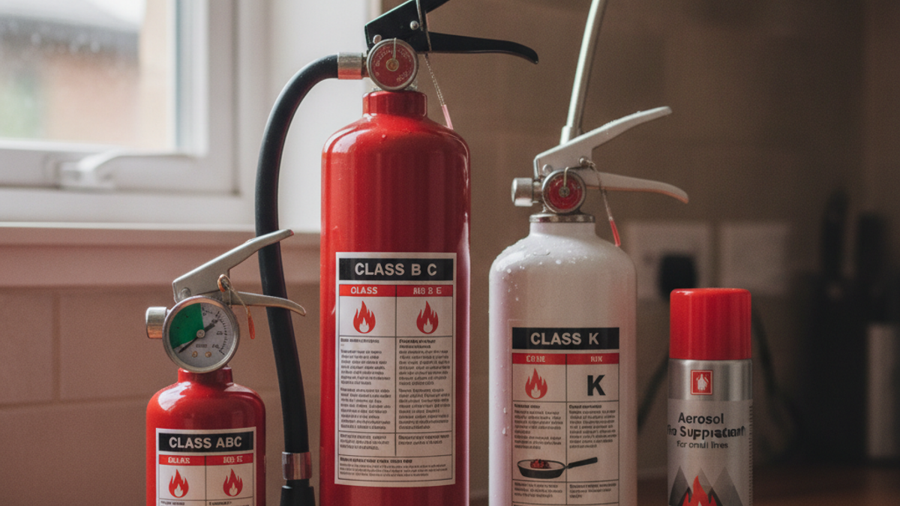
Extinguishers are rated by the class of fire they fight. Understanding the letters is non-negotiable — using the wrong agent can spread a fire violently.
- Class A — Ordinary combustibles: wood, paper, cloth, most plastics.
- Class B — Flammable liquids: gasoline, kerosene, propane, paint thinner. Critical for anyone storing fuel.
- Class C — Energized electrical equipment: panels, wiring, generators, inverters, battery banks.
- Class D — Combustible metals (shop and industrial use).
- Class K — Cooking oils and animal fats. Commercial kitchens use these; home cooks should rely on a lid or fire blanket.
For 95% of household use, a multipurpose ABC dry chemical extinguisher is the right answer. The numbers preceding the letters indicate capacity: a 2-A rating equals roughly 2.5 gallons of water in suppression capability, and 10-B means 10 square feet of flammable liquid fire.
Sizing: Bigger Than You Think
Those tiny 1-pound "auto" extinguishers discharge in about eight seconds. That's not a fire suppression tool — it's a lottery ticket. Minimum household standard should be a 2-A:10-B:C rated unit, roughly 5 pounds of agent with 13–20 seconds of discharge time. The Kidde Pro 210 is a widely available unit at exactly this rating and is a solid choice for hallways and bedrooms. For garages, workshops, barns, and generator sheds — anywhere fuel is stored — step up to a commercial-grade unit like the Amerex B402, which has a metal valve assembly and can be professionally recharged for decades.
Rechargeable vs. Disposable
Cheap big-box extinguishers use plastic valve heads and cannot be serviced — once the pin is pulled, even briefly, they must be replaced. Rechargeable units with metal heads, such as the First Alert HOME1, cost more upfront but let you train with them and refill afterward. For a prepper mindset built on sustainability, rechargeable is the only logical choice.
Where to Place Fire Extinguishers in a House or Apartment
NFPA guidance calls for extinguishers to be reachable within a 40-foot travel distance on each floor. Practically, that means:
- Kitchen — mounted near the exit, not beside the stove. You never want to reach through flames to grab your tool.
- Every sleeping level — hallway outside bedrooms.
- Garage, workshop, or fuel storage area — see our guide on safely stockpiling gasoline, diesel, and propane.
- Near heat sources — wood stoves, furnaces, generator enclosures.
- Vehicles — one in each bug-out rig.
Mount them at 3.5 to 5 feet off the floor on a wall, visible and unobstructed. A proper mounting bracket keeps the unit off the floor, prevents it from being buried behind storage totes, and keeps the powder from packing. Apartment dwellers with limited space should still mount rather than stash — see our apartment prepping guide for compact storage strategies.
Smoke Alarms, Heat Detectors, and Layered Fire Detection
The NFPA reports that three out of five home fire deaths occur in homes with no working smoke alarms. Detection buys you the minutes suppression can't.
Ionization alarms respond faster to fast-flaming fires; photoelectric alarms respond faster to smoldering fires — the type that kills people in their sleep. Dual-sensor or combination units cover both. Install alarms inside every bedroom, outside each sleeping area, and on every level including basements. Interconnected alarms are ideal: when one sounds, all sound. Ten-year sealed lithium battery alarms eliminate the dead-battery failure mode entirely.
Heat detectors — not smoke alarms — belong in garages, attics, workshops, and barns where dust, exhaust, and temperature swings cause nuisance trips. And don't neglect carbon monoxide detection, especially if you run generators or alternative heat. Our deeper breakdown on choosing smoke, CO, and gas alarm systems covers combination units and off-grid power considerations.
Escape Ladders, Smoke Hoods, and Getting Out Alive
Anyone sleeping above the ground floor needs a secondary egress route. A 13-foot two-story escape ladder stores under a bed and hooks over a window sill in seconds. Buy one per upstairs bedroom — not one for the house. Verify your windows actually open and that security bars have interior quick-release mechanisms.
Smoke, not flame, causes the majority of fire fatalities. A fire escape smoke hood filters carbon monoxide and particulates for roughly 15–60 minutes depending on model — more than enough to move through a smoke-filled hallway or descend an apartment stairwell. Store one in each bedroom nightstand.
For grease fires, a fiberglass fire blanket mounted near the kitchen exit smothers pan fires without spraying corrosive powder across your food storage. It also works to wrap a person whose clothing has ignited.
Step-by-Step Instructions
Step 1: Audit Your Home's Fire Risk Zones
Walk every room with a notepad. Identify heat sources, fuel storage, electrical panels, extension cord clusters, dryer vents, and wood stove clearances. Note which rooms have only one exit and which bedrooms are above ground level. Rural readers should include barns, generator sheds, and equipment storage.
Step 2: Install Extinguishers at Every Exit Path
Mount at least one 2-A:10-B:C ABC extinguisher per floor plus dedicated units in the kitchen, garage, and any fuel storage area. Position each one between the hazard and your exit route, at 3.5 to 5 feet of height, using a wall bracket rather than setting it on the floor.
Step 3: Install and Interconnect Smoke Alarms
Place alarms inside and outside every sleeping area and on every level. Mount ceiling units at least 4 inches from any wall, and wall units 4 to 12 inches below the ceiling. Keep alarms at least 10 feet from cooking appliances to reduce nuisance alarms that tempt people to disable them.
Step 4: Stage Escape Ladders and Smoke Hoods
Store an escape ladder under the bed or in the closet of every above-ground bedroom, and a smoke hood in each nightstand. Test-fit the ladder hooks on your actual window sills — some casement and vinyl replacement windows require a specific model.
Step 5: Map Two Exits From Every Room
Draw a floor plan showing two ways out of each room and mark the location of every extinguisher and ladder. Designate an outdoor meeting point a safe distance away — a specific tree, mailbox, or neighbor's driveway — and make sure every family member, including children, can name it from memory.
Step 6: Practice the Escape Plan Twice a Year
Run drills at night and in daylight. Practice crawling low, checking doors with the back of your hand, and closing doors behind you — a closed door can hold room temperatures 900 degrees cooler. Time it. If everyone isn't out in under two minutes, simplify the plan.
Step 7: Inspect and Maintain Every 30 Days
Check extinguisher gauges monthly and invert dry chemical units to prevent powder caking. Test smoke alarms monthly with the button, vacuum them quarterly, and replace any alarm over 10 years old regardless of whether it still chirps.
Step 8: Train Everyone on the PASS Technique
Pull the pin, Aim at the base of the flames, Squeeze the handle, Sweep side to side. Stand 6 to 8 feet back with your exit at your back. If the fire is larger than a trash can, or if smoke fills the room, abandon suppression and evacuate immediately.
Recommended Gear
Build your fire suppression layer around a rechargeable First Alert HOME1 for living areas, a Kidde Pro 210 for hallways, and an Amerex B402 anywhere fuel or machinery lives. For more foundational household planning, review our family emergency plan guide, and browse our full recommended survival gear list for related safety equipment.
Frequently Asked Questions
How often should I replace a home fire extinguisher?
Disposable extinguishers should be replaced every 10 to 12 years or immediately after any discharge, even a one-second burst. Rechargeable units can be professionally serviced every 6 years and hydrostatically tested every 12, giving them a service life of several decades. Check the pressure gauge monthly — if the needle sits outside the green zone, the unit is unreliable.
What size fire extinguisher do I need for a house or apartment?
A minimum 2-A:10-B:C rated extinguisher — typically a 5-pound unit — is the practical standard for living spaces. Small 2-pound units are acceptable in vehicles or as kitchen supplements, but they discharge in under 10 seconds. Garages, workshops, and rural outbuildings should get 5- to 10-pound commercial-grade extinguishers.
Should I fight a house fire or just evacuate?
Only attempt suppression if the fire is smaller than a wastebasket, is not spreading, the room is not filling with smoke, you have a clear exit at your back, and someone has already called 911. Everything else is an evacuation. In rural areas where response times exceed 20 minutes, the temptation to fight is stronger — resist it. Property is replaceable; your family is not.
Affiliate Disclosure: SHTFPlan.net participates in the Amazon Services LLC Associates Program. Some links are affiliate links — we may earn a small commission at no extra cost to you.