Vital Documents: How to Build a Grab-and-Go Emergency Document Kit Before Disaster Strikes
Insurance claims, identity, medical history, and property ownership all live on paper. Here's how to assemble a waterproof, fireproof emergency document kit you can grab in 60 seconds.
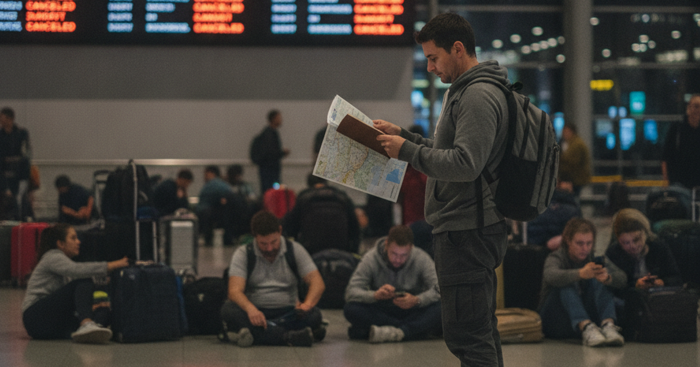
When the wildfire jumps the ridge or the levee gives way at 3 a.m., you have minutes — not hours — to get your family out the door. Most preppers have thought hard about water, food, and ammunition. Far fewer have thought about the manila folder in the filing cabinet that proves who they are, what they own, and what their insurance company owes them. That oversight costs people dearly. FEMA and disaster recovery specialists consistently report that missing documentation is one of the single biggest causes of delayed insurance settlements and denied federal assistance after major disasters.
The numbers back it up. FEMA has reported that only around half of American households have assembled emergency supplies at all, and a much smaller fraction have organized their vital records. Meanwhile, the National Fire Protection Association reports U.S. fire departments respond to roughly 350,000 home structure fires annually — and the average house fire reaches temperatures well above 1,100°F, hot enough to reduce a shoebox of paperwork to ash in minutes. Floods are worse: FEMA data shows that just one inch of water in a home can cause more than $25,000 in damage, and paper doesn't survive submersion.
A grab-and-go document kit is one of the cheapest, highest-return preps you can build. It costs under $150, takes a weekend, and works whether you live in a fifth-floor apartment in Chicago, a subdivision outside Dallas, or a 40-acre homestead in Montana. Here's how to build one that actually functions under pressure.
What You'll Need
Tools
- Portable document scanner
- Smartphone with a scanning app (backup to the scanner)
- Label maker or permanent marker
Supplies
- Fireproof waterproof document safe
- Fireproof document bag with lock
- Expanding accordion file organizer
- Encrypted USB drive
- Heavy-duty zip-top freezer bags and archival sleeves
The Vital Documents Checklist Every Prepper Needs
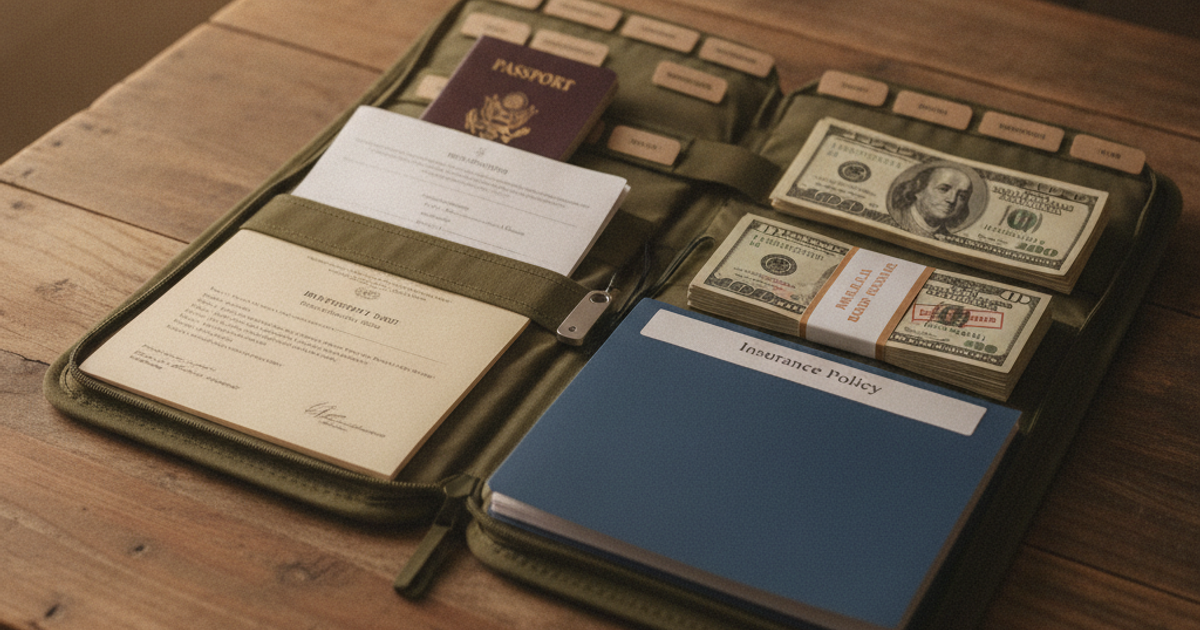
Think in four tiers. Tier one proves identity. Tier two proves ownership. Tier three proves financial and medical status. Tier four keeps your family functioning.
Tier 1: Identity and Citizenship
- Birth certificates (certified copies) for every household member
- Social Security cards
- Passports and passport cards
- Driver's licenses or state ID copies
- Marriage certificate, divorce decree, custody orders
- Adoption papers, naturalization certificates, green cards, military DD-214
Tier 2: Property and Ownership
- Property deed or lease/rental agreement
- Mortgage documents and payoff statements
- Vehicle titles and registrations (including trailers, ATVs, boats)
- Homeowner's, renter's, flood, auto, and life insurance policies with agent contact info
- Photo or video home inventory — insurers routinely deny or reduce claims when the policyholder can't document what was lost
- Firearm purchase records, serial numbers, and any permits or trust documents
Tier 3: Financial and Medical
- Bank and credit union account numbers, routing numbers, safe deposit box info
- Recent tax returns (two years minimum)
- Retirement, brokerage, and crypto recovery information (stored separately and encrypted)
- Immunization records, prescription lists with dosages, allergy documentation
- Health insurance and Medicare/Medicaid cards
- Advance directives, living wills, powers of attorney, and DNR orders
Tier 4: Family Continuity
- Printed emergency contact list including out-of-state rally contact
- Pet vaccination records and microchip numbers (most shelters won't admit unvaccinated animals)
- School records and IEPs for children
- Cash — $300 to $1,000 in small bills, because card readers die with the grid
- Spare keys for home, vehicles, storage units, and your bug-out location
How to Choose Fireproof and Waterproof Document Storage
Not all "fireproof" containers are equal. Look for a UL Classified rating of at least 350°F internal temperature for 30 minutes, plus a separate waterproof or ETL-verified water-resistance rating. Many cheap boxes protect against fire but leak when the sprinklers run or the box gets submerged — and after a structure fire, water damage is nearly guaranteed.
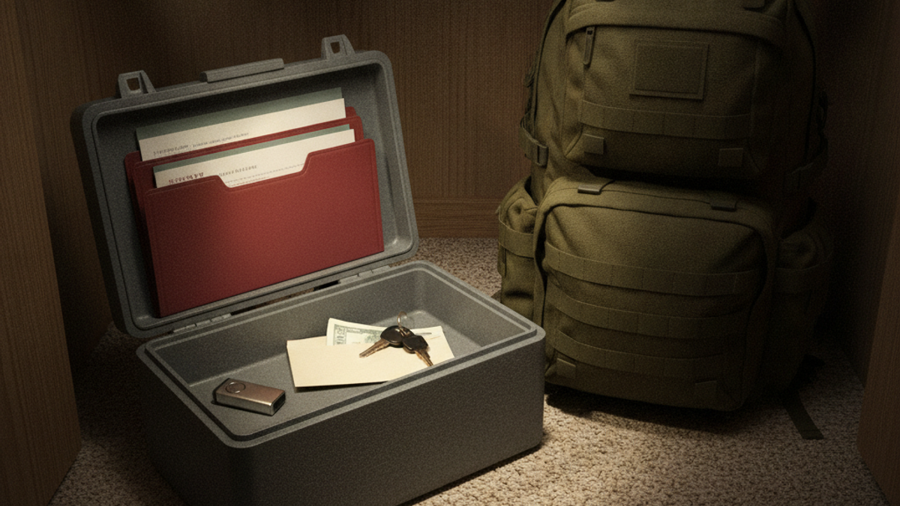
For a home base container, a SentrySafe fireproof and waterproof document safe is the standard for a reason: it's heavy enough to deter a smash-and-grab, rated for real fire exposure, and sized for letter-size files. Keep it on the ground floor near your exit route, not in a basement that floods or an attic that collapses.
For actual evacuation, weight matters. A rigid safe is a poor grab-and-go item. This is where a fireproof document bag with a lock shines — silicone-coated fiberglass, a few ounces, and it slides into a backpack or under a car seat. Apartment dwellers who can't bolt down a safe should treat the fire bag as their primary container. A multi-piece ENGPOW fireproof money and document bag set lets you compartmentalize: one pouch for identity documents, one for cash and cards, one for drives and small valuables.
Inside any container, sleeve documents in archival plastic or heavy freezer bags. Fire bags stop flame; they don't stop humidity, and mold will destroy a birth certificate over a decade in storage just as effectively as a fire.
Building Digital Backups That Survive a Grid-Down Scenario
Paper burns. Cloud storage disappears when the internet does. You need both, plus a local encrypted copy.
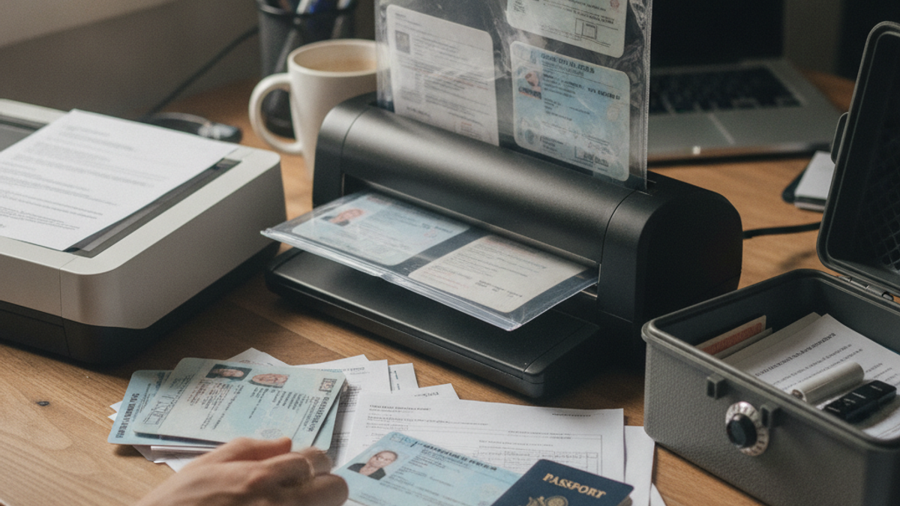
Scan everything at 300 DPI in color. A Brother DS-640 portable scanner is USB-powered, fits in a laptop bag, and will chew through a two-inch stack of records in an afternoon — far better quality than phone photos, which insurance adjusters and government agencies sometimes reject.
Store the scans in three places: an encrypted cloud account, a home computer, and a physical drive in your kit. For the kit drive, use an Apricorn Aegis Secure Key hardware-encrypted USB drive, which requires a PIN entered on the device itself and self-wipes after repeated failed attempts. That matters enormously if your bag is lost or stolen — a plain drive full of Social Security numbers is an identity theft bomb. Keep a second, lower-cost SanDisk Cruzer 128GB flash drive with encrypted archive files for your out-of-state contact or a trusted relative — geographic separation is what saves you when your whole county burns.
This dovetails with broader financial resilience. Read our guide on protecting your cash, assets, and financial records when the system goes down for the banking side of the equation.
Evacuation-Ready Organization for Apartments, Suburbs, and Rural Homes
Organization is what turns a pile of paper into a usable tool. Use a color-coded Smead expanding accordion file organizer inside your fire bag: red for identity, blue for property, green for financial, yellow for medical. Under stress, color beats reading.
Apartment dwellers: Your kit lives by the door with your 72-hour bug out bag. You may be evacuating on foot or by bike, so weight is everything — go all-digital plus originals in a lightweight fire bag.
Suburban families: Keep the safe at home and a duplicate fire bag in the vehicle trunk. A Loctote or Vaultz locking storage box secured in the trunk protects against casual theft during a chaotic evacuation or shelter stay.
Rural homesteaders: You likely have more documents — livestock records, well permits, timber deeds, equipment titles — and longer response times. Consider a buried or concealed cache as a third copy, along the lines of our guide to concealed storage.
Step-by-Step Instructions
Step 1: Gather every vital document in one place
Set aside three hours and pull everything from filing cabinets, desk drawers, glove boxes, and shoeboxes. Work through the four-tier checklist above and note what's missing. Order replacements now — certified birth certificates can take four to twelve weeks from vital records offices.
Step 2: Sort documents into originals and copies
Originals of deeds, titles, birth certificates, and passports go in your primary fire-rated container. Make one photocopy set for a second location — a relative's house, an office, or a safe deposit box. Never store the only copy of anything in a single building.
Step 3: Scan and digitize everything at 300 DPI
Feed each document through your portable scanner, naming files clearly (e.g., "Smith_John_BirthCert_2024.pdf"). Photograph the interiors of every room, closet, and outbuilding for your insurance inventory, including serial numbers on appliances, tools, and firearms.
Step 4: Encrypt and distribute the digital copies
Load the scans onto a hardware-encrypted USB drive for your kit, upload an encrypted archive to cloud storage, and mail a second drive to an out-of-state contact. Use a strong passphrase you can recall under stress, and write the recovery hint — not the password — on a card in your safe.
Step 5: Pack the grab-and-go bag in priority order
Load the accordion organizer into the fire bag with identity documents on top, since those are needed first at shelters, checkpoints, and FEMA registration tables. Add cash, spare keys, and the encrypted drive. Total weight should stay under five pounds.
Step 6: Stage the kit at your primary exit point
Place the bag where you can grab it blind — the same closet as your bug out bag, next to the door you use during a fire drill. Every adult in the household must know its exact location. Tie this into your home fire escape plan and your family emergency plan.
Step 7: Test the kit with a timed evacuation drill
Twice a year, run a 10-minute drill. Have a family member retrieve the document kit while others handle pets and water. Then open the bag and verify you can actually find a specific document in under 30 seconds.
Step 8: Review and refresh documents every six months
Passports expire, policies renew, kids get new prescriptions, and vehicles get sold. Sync your review with daylight saving time changes, the same weekend you test smoke detectors and rotate emergency water and food.
Operational Security for Your Document Kit
Your document kit is the single most valuable target in your home to a thief — not for its cash, but for the identity data. Don't label it "IMPORTANT DOCUMENTS" in three-inch letters. Don't discuss its location outside the household. Apply the same OPSEC principles you'd use for a food stockpile. If you're staying in a public shelter, keep the bag on your body or under your head while sleeping — shelter theft is a documented and recurring problem after major disasters.
Frequently Asked Questions
What documents should I put in my emergency grab-and-go kit?
At minimum: birth certificates, Social Security cards, passports, insurance policies, property deeds or lease agreements, vehicle titles, medical and prescription records, recent tax returns, a printed contact list, and $300–$1,000 in small bills. Add pet vaccination records, custody orders, and firearm documentation if applicable. Anything that proves who you are, what you own, or what you're owed belongs in the kit.
Are fireproof document bags actually good enough for a house fire?
Quality fireproof bags rated to roughly 2,000°F for short exposure will protect paper in a typical residential fire, but they are best used as a portable layer, not your only protection. A UL-classified fire safe rated at 350°F internal for 30 minutes or more offers superior protection at home. The real answer is redundancy — physical originals in a rated container, plus encrypted digital copies stored off-site.
How often should I update my emergency document kit?
Review it every six months and immediately after any life event: a move, marriage, birth, death, new vehicle, new insurance policy, or prescription change. Rescan updated documents and refresh the digital drives at the same time. A kit full of expired paperwork is worse than useless because it creates false confidence.
Affiliate Disclosure: SHTFPlan.net participates in the Amazon Services LLC Associates Program. Some links are affiliate links — we may earn a small commission at no extra cost to you.