Bug-Out Location Selection: How to Choose, Secure, and Stock a Survival Retreat Before SHTF
A bug-out bag is worthless without a destination. Learn how to evaluate land, water, access, and neighbors to pick a survival retreat that can actually sustain your family long term.
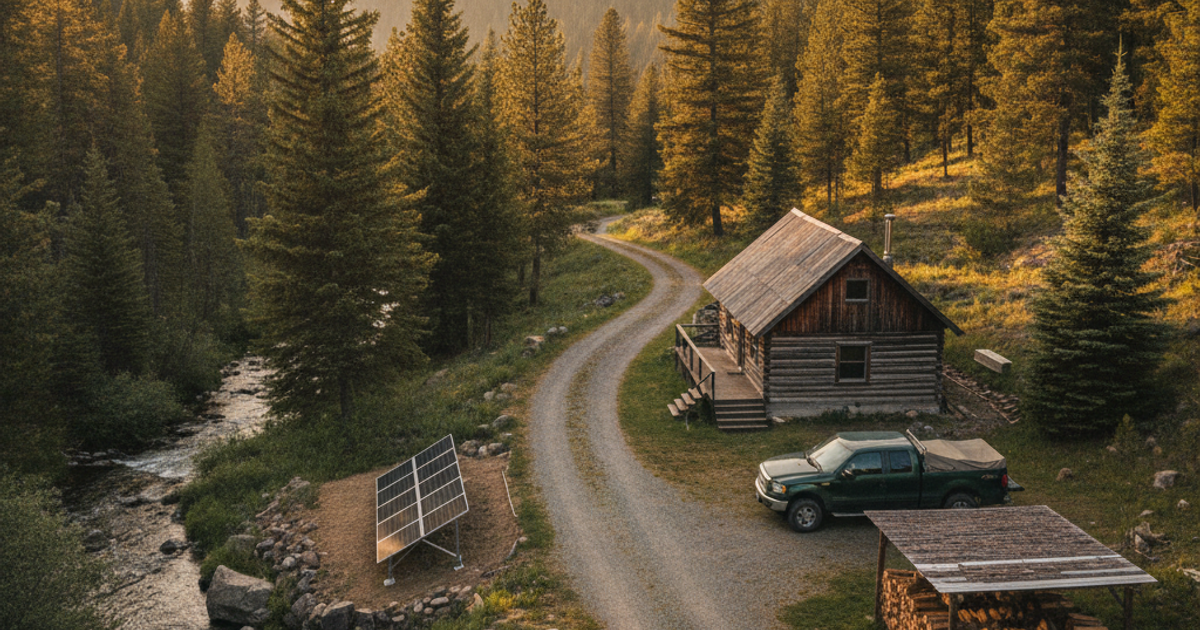
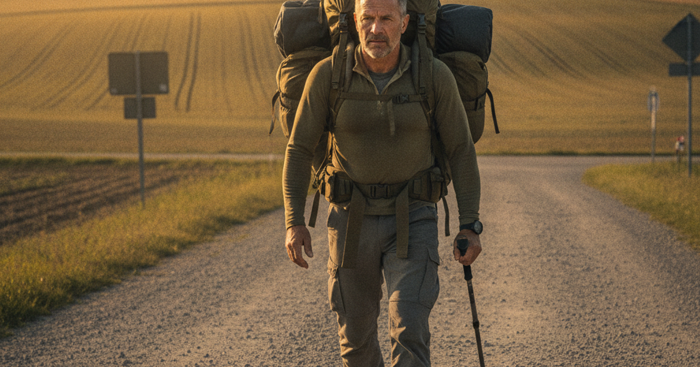
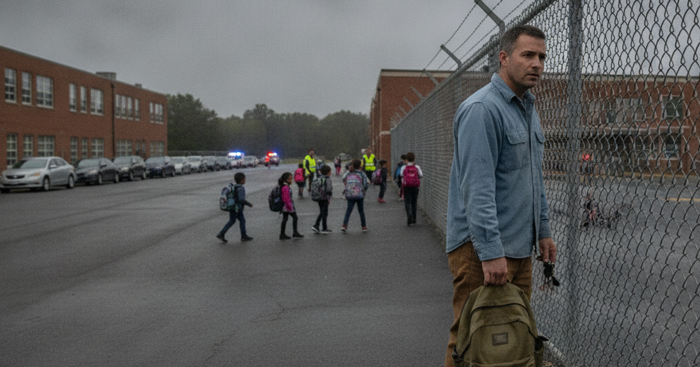
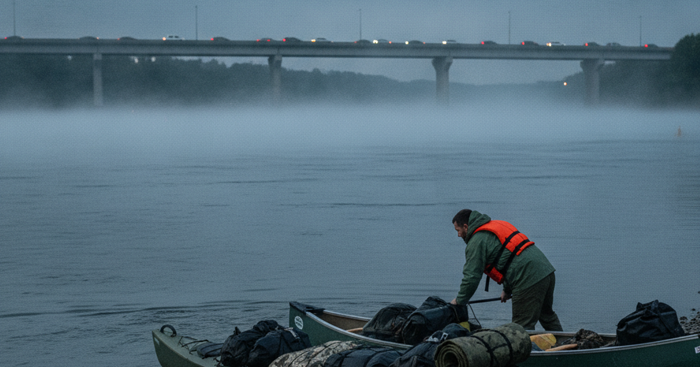
Every prepper eventually reaches the same conclusion: some disasters can't be survived in place. A chemical plant fire, a multi-week grid collapse, a wildfire crowning through your subdivision, or widespread civil unrest can all make "bugging in" the wrong choice. But a bug-out bag without a destination isn't a plan — it's a camping trip with extra anxiety. Research on evacuation behavior consistently shows that the overwhelming majority of evacuees head for the homes of family and friends rather than public shelters. FEMA and Red Cross data from major hurricane events have repeatedly found that fewer than 15% of evacuees end up in official shelters. That statistic is the single best argument for identifying, securing, and stocking a bug-out location before SHTF.
The good news: a survival retreat doesn't require 40 acres and a cabin. It can be a leased hunting parcel, a shared cousin's basement, a paid-up storage unit two counties over, or a formal reciprocal agreement with a rural friend. What matters is that the location is real, reachable, and already stocked.
What You'll Need
Tools
- Topographic maps and a baseplate compass for route and terrain analysis
- Cordless drill and basic hand tools for hardening doors, windows, and storage
- Moisture meter or hygrometer for evaluating storage spaces
- Handheld GPS or odometer log for verifying route mileage and fuel needs
Supplies
- Long-term emergency food buckets
- Stackable water storage containers
- Gravity water filter system
- Heavy-duty padlock and hasp set
- Rodent-proof storage bins, mylar bags, and oxygen absorbers
How to Choose a Bug-Out Location That Actually Works
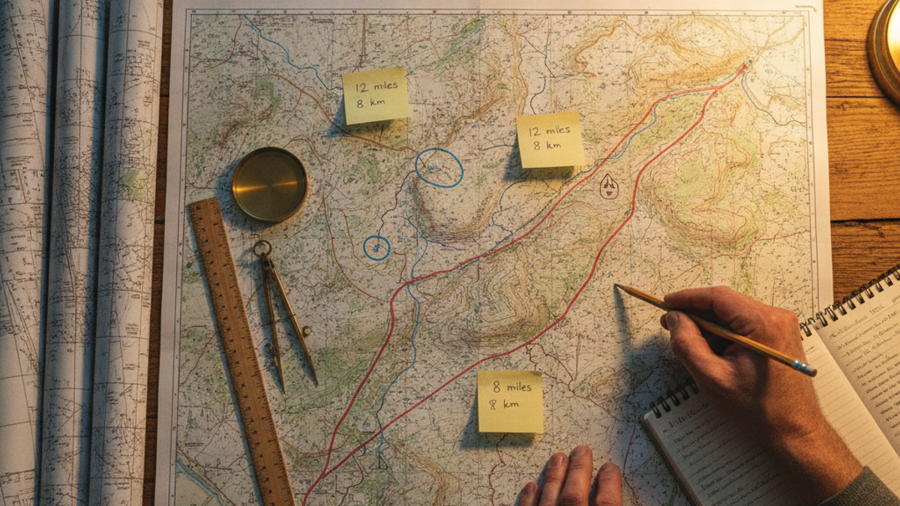
The fantasy retreat is remote, defensible, and self-sufficient. The practical retreat is one you can actually reach with a half tank of gas and a screaming toddler in the back seat. Prioritize in this order:
Distance and Reachability
The standard guidance is that a retreat should be reachable on a single tank of fuel without refueling — typically 100 to 300 miles. Push past that and you're gambling on functioning gas stations during exactly the period when they'll be empty. AAA and DOE data show most stations lose pumping capability within hours of a power failure because pumps require grid electricity. Also consider: could you reach it on foot or by bicycle if roads are impassable? A location 40 miles out is walkable in three days. A location 400 miles out is not.
Water First, Always
A property with year-round surface water, a shallow water table, or a functioning well beats one with a nicer structure every single time. Check county well logs — most states publish drilling records showing depth to water for neighboring parcels. If your retreat has no natural water, you're committing to hauling roughly one gallon per person per day minimum, which becomes untenable fast. Study our guide to choosing the right water purification method for every survival scenario before you commit to any property.
Terrain, Access, and Isolation Balance
Look for a property that is off a main artery but not at the end of a single dead-end road. One access route means one chokepoint that can strand you. Ideal retreats have two or more egress options, sit above the 500-year floodplain (check FEMA's Flood Map Service Center — it's free), and are not downwind or downhill of industrial facilities. In wildfire country, evaluate defensible space potential before you buy; our wildfire defensible space guide covers what a survivable property layout looks like.
Options for Apartment Dwellers and Suburbanites
No land? You still have paths to a retreat:
- Reciprocal agreements: Formalize a mutual arrangement with rural family or friends. Contribute now — pay for a portion of their food storage, help install solar, cover property taxes one year. Show up as an asset, not a refugee.
- Group ownership: Three to five families co-purchasing 10–20 acres of raw rural land is dramatically cheaper than any individual buying alone. Use a written LLC operating agreement covering usage rights, cost sharing, and exit terms.
- Leased hunting land: Annual leases in many states run $500–$2,000 and often permit a small structure or camper.
- Cached storage: A climate-controlled storage unit along your evacuation route, stocked with food, water, and gear, functions as a resupply node even if your destination is someone else's home.
How to Secure a Survival Retreat You Can't Occupy Full Time
An unoccupied rural property is a target for thieves during normal times and for desperate people during a crisis. The most common failure mode isn't a firefight — it's arriving to find your retreat already stripped.
Layer one is concealment. A structure invisible from the road with no signage, no "prepper" bumper stickers on your vehicle, and no online chatter about the property is far safer than a hardened building everyone knows about. Apply strict OPSEC to your retreat plans — county deed records are public, but your inventory doesn't have to be.
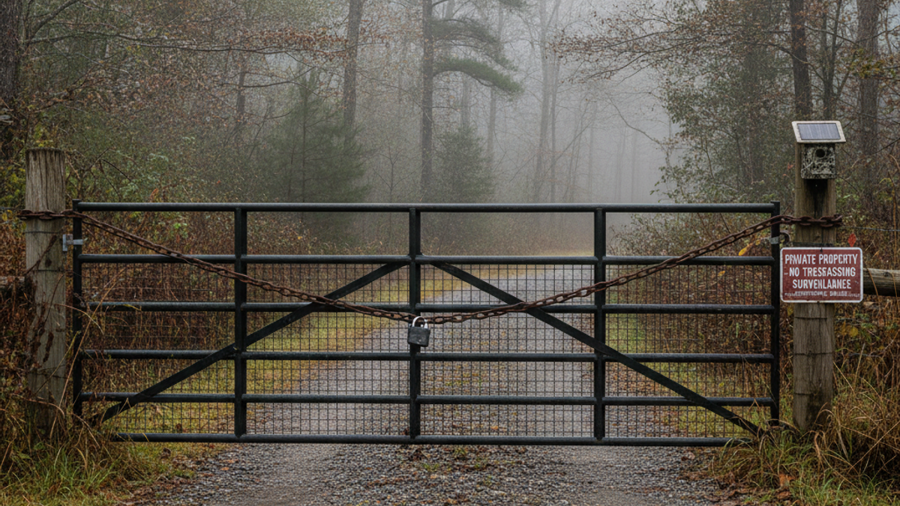
Layer two is physical hardening. Replace hollow-core exterior doors with solid ones, install 3-inch screws in reinforced strike plates, and add security film to accessible windows. Secure outbuildings, gates, and storage containers with a Master Lock heavy-duty padlock and hasp set — a shrouded hardened-steel shackle defeats casual bolt cutters and is one of the highest-return investments on an unoccupied property. Our guide to reinforcing doors and windows applies equally to a cabin.
Layer three is remote monitoring. Cellular trail cameras and solar security cameras let you verify the property is untouched without a six-hour drive. A Reolink Argus solar wireless security camera runs indefinitely off its own panel and works over Wi-Fi or cellular, making it viable at properties with no grid power. Pair it with perimeter alarms and trip wires for post-arrival security, and build a rotating watch schedule if you'll be occupying with a group.
How to Stock a Bug-Out Location for Long-Term Habitation
Cache in depth: a minimum 30-day supply for every person in your plan, scaled to 90 days or more as budget allows. Calorie math matters — 2,000 calories per adult per day is a baseline, and hard physical labor pushes that to 3,000+.
Bulk staple buckets form the foundation. An Augason Farms 30-day emergency food supply bucket stores compactly, resists rodents better than bagged goods, and carries 20–25 year shelf life claims in stable conditions. Supplement with a Mountain House freeze-dried meal 10-can case for calorie-dense, minimal-water meals during the chaotic arrival period when you have no time to cook properly. Cache everything inside sealed totes and inspect annually — see our guide to pest-proofing emergency food storage, because mice will destroy an unprotected cache in a single winter.
For water, stage 14 days of stored drinking water on-site using WaterBrick stackable 3.5-gallon containers, which interlock and survive freeze cycles better than thin-walled jugs. Then plan for renewable supply: a Berkey gravity water filter system requires no power or pressure and can process thousands of gallons from a creek, pond, or rain catchment.
Power is the third pillar. A Jackery Explorer 1000 portable power station runs lights, radios, CPAP machines, and rechargeable tools without fuel or noise. Pair it with a Renogy 200-watt solar panel starter kit for indefinite recharging — the combination gives an off-grid retreat real electrical capability for under the cost of a generator plus a year of fuel.
Step-by-Step Instructions
Step 1: Define your threat profile and distance requirement
List the five most likely disasters for your specific location — hurricane, wildfire, chemical release, grid failure, civil unrest. Map the geographic footprint of each. Your retreat must sit outside every one of those footprints while remaining within a single tank of fuel.
Step 2: Screen candidate properties using free public data
Before you visit anything, run each parcel through FEMA flood maps, USGS topographic quads, county well logs, and state wildfire hazard maps. Check the county GIS portal for parcel boundaries, tax status, and easements. This eliminates 80% of bad candidates from your desk.
Step 3: Walk the property and verify water and access
Visit in the worst season — mud season or deep winter — not on a perfect spring day. Confirm the water source flows year-round, test road access with your actual bug-out vehicle, and identify at least two exit routes. Note cell coverage and line-of-sight for radio antennas.
Step 4: Secure legal access with documentation
Whether it's a purchase, lease, co-ownership LLC, or a written reciprocal agreement with family, get it in writing. Verbal "you're always welcome" arrangements evaporate under stress. Specify who may come, how many people, and what each party contributes.
Step 5: Harden the structure and storage
Install solid doors, reinforced strike plates, window security film, and heavy-duty locks on all outbuildings. Set up remote solar cameras and secure any fuel or propane storage away from the main structure per local fire code clearances.
Step 6: Cache food, water, power, and medical supplies
Stage a minimum 30 days of food and 14 days of water per person in rodent-proof, temperature-tolerant containers. Add a gravity filter, solar power system, a full trauma kit, a paper reference library, and duplicate tools so you're not dependent on what's in your vehicle.
Step 7: Map and physically drive three routes
Identify a primary, secondary, and foot/bicycle route. Drive each one at least once, logging actual mileage, fuel burn, chokepoints, bridges, and alternate refueling. Cache fuel or supplies at a midpoint if the trip exceeds your vehicle's range.
Step 8: Rehearse a full bug-out at least twice a year
Time your loadout from the moment you decide to go. Sleep at the retreat, cook the stored food, run the water filter, and use the solar system. Every failure you find during a drill is a failure that won't kill you during the real thing.
Recommended Gear
Round out your retreat build with the essentials on our recommended survival gear page, and don't neglect knowledge storage — a paper prepper survival library is the one asset that doesn't need batteries. If your bug-out route may involve gridlock, review urban evacuation route planning and consider a bicycle bug-out option as your fallback.
Frequently Asked Questions
How far away should a bug-out location be from my home?
Aim for 100 to 300 miles — far enough to be outside the disaster footprint and the urban exodus radius, close enough to reach on one tank of fuel without stopping. If you can only manage 40–60 miles, that's still vastly better than nothing, and it has the advantage of being reachable on foot or bicycle within a few days.
Can I have a bug-out location if I live in an apartment and can't afford land?
Absolutely. The most common and most affordable options are formal reciprocal agreements with rural family or friends, co-purchasing raw land with two to four other families through an LLC, leasing hunting land, or renting a storage unit along your evacuation route as a resupply cache. Contribute resources now so you arrive as a valued asset rather than an unexpected burden.
How much food and water should I store at my survival retreat?
Start with 30 days per person — roughly 60,000 calories for an adult — and 14 days of water at one gallon per person per day, then expand toward 90 days or more. Because unoccupied retreats face temperature swings and rodent pressure, prioritize sealed buckets, mylar with oxygen absorbers, and hard-sided totes, and inspect your cache at least once a year.
Affiliate Disclosure: SHTFPlan.net participates in the Amazon Services LLC Associates Program. Some links are affiliate links — we may earn a small commission at no extra cost to you.