Pedal Power Bug-Out: How to Use a Bicycle to Escape the City When Roads Are Gridlocked
When highways turn into parking lots and fuel is gone, a bicycle can move you 40 miles a day past stalled traffic. Here's how to choose, load, and ride a bug-out bike.
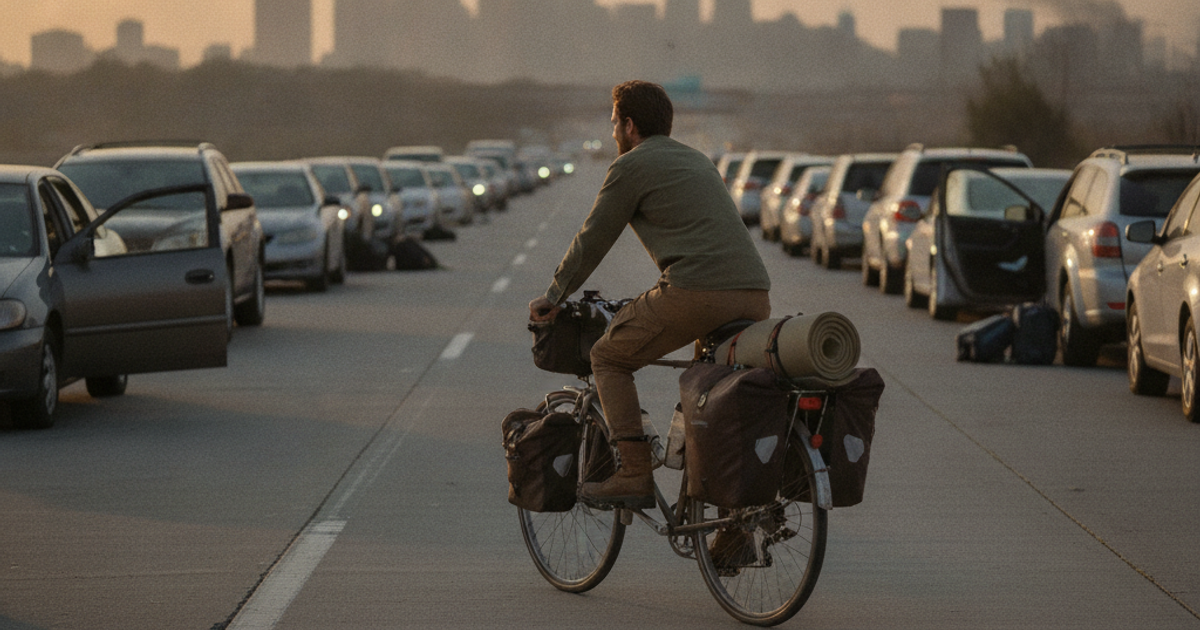
When Hurricane Rita triggered the evacuation of the Houston metro area in 2005, roughly 2.5 million people tried to leave at once. Interstate 45 became a 100-mile parking lot. Cars overheated in triple-digit temperatures, gas stations ran dry within hours, and more than 100 people died during the evacuation itself — more than were killed by the storm. Average speeds on some corridors dropped below 5 miles per hour for over 20 hours.
Here's the number that should reframe your entire bug-out plan: a moderately fit adult on a loaded touring bicycle sustains 10 to 12 mph on pavement. That means during the worst gridlock in modern American evacuation history, a bicycle would have been the fastest vehicle on the road — by a factor of two or three. And it would have done it on tortillas and water instead of gasoline.
A bicycle isn't a replacement for a vehicle. It's the answer to a specific and highly probable failure mode: the roads are physically impassable, but you still need to cover 20 to 60 miles fast. For apartment dwellers, suburbanites with a single car, and rural residents whose one bridge out has washed away, pedal power deserves a serious place in your emergency preparedness plan.
What You'll Need
Tools
- Park Tool IB-3 bicycle multi-tool
- Lezyne Micro Floor Drive hand pump
- Tire levers (two, plastic)
- Chain quick-link and small pliers
Supplies
- Two spare inner tubes (self-sealing)
- Puncture-resistant tires
- Red-light headlamp
- Paper topographic and county road maps
- Chain lube and a rag
How to Choose the Right Bug-Out Bicycle for Urban Escape
Forget the carbon-fiber road bike and forget the full-suspension mountain bike. Neither is right. You want a rigid or hardtail frame with rack mounts, mechanical (cable) disc or rim brakes, and tires in the 35mm to 50mm range. Rigid steel frames are field-repairable and don't have suspension seals to fail. Cable brakes can be adjusted roadside with the multi-tool you already carry; hydraulics cannot.
Gravel bikes, rigid 1990s mountain bikes, and steel touring bikes are the sweet spot. A used steel mountain bike from a thrift store or garage sale, fitted with new tires and cables, will outperform a $3,000 race bike for this mission because it will carry 60 pounds of gear over curbs, gravel shoulders, railroad ballast, and dirt levee roads without complaint.
On e-bikes: a mid-drive e-bike with a 500Wh battery gives you 30 to 50 miles of assisted range and lets a less-fit rider haul serious weight. But the battery is finite, chargers need grid power or a solar setup, and the bike weighs 55+ pounds when the battery dies. If you go electric, choose a model you can still pedal comfortably unpowered, and consider pairing it with a portable panel from your solar power setup.
Cargo Racks, Panniers, and Trailers: How to Haul a Bug-Out Bag on Two Wheels
Never ride a loaded backpack more than a few miles. A 35-pound bug out bag on your shoulders raises your center of gravity, wrecks your handling, soaks your back, and destroys your neck within 10 miles. Put the weight on the bike.
Start with a solid rear rack. The Topeak Explorer rear bike rack handles roughly 55 pounds and mounts to almost any frame with eyelets, making it the workhorse platform for panniers, a duffel, or a lashed dry bag. Bolt it on now and leave it there — a rack is invisible to normal people and doesn't scream prepper.
For the load itself, waterproof roll-top panniers beat anything with a zipper. The Ortlieb Back-Roller Classic panniers hold about 40 liters combined, stay dry in a downpour, and detach in seconds so you can carry them into a shelter or hotel room. Load heavy items low and forward in the bags to keep the bike stable.
If you're moving a family, water, or a pet, a trailer changes the math. The Burley Travoy cargo trailer carries roughly 60 pounds, folds flat for apartment storage, and converts into a hand cart — meaning when you hit a collapsed overpass or a debris field, you unhitch and keep moving on foot with your gear still on wheels. That dual-mode capability is exactly what urban evacuation demands.
Building a Bicycle Repair Kit That Actually Gets You Home
Flats are the number one failure. Industry data consistently shows punctures account for the large majority of roadside bike breakdowns, and post-disaster streets are carpeted in glass, roofing nails, and metal debris. Mount Continental Gatorskin puncture-resistant tires now — the aramid breaker layer stops most of what a broken city throws at you. Back them up with self-sealing Slime inner tubes, which plug small punctures without you ever stopping.
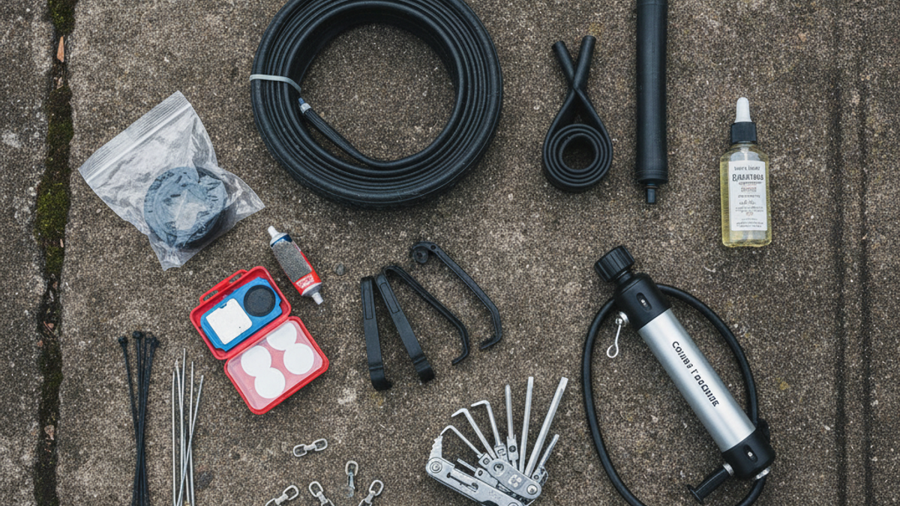
Your inflation tool matters more than people think. A mini pump that takes 300 strokes to reach 40 psi is a liability at 2 a.m. in a bad neighborhood. The Lezyne Micro Floor Drive hand pump has a fold-out foot peg and hose, so it works like a real floor pump and gets you to full pressure in under two minutes. Pair it with the Park Tool IB-3 multi-tool, which includes the chain breaker you'll need if your chain snaps under load on a hill.
Round out the kit with a patch kit, a spare quick-link, a short length of baling wire, six zip ties, and duct tape wrapped around your seatpost. That's under two pounds and covers 90% of mechanical failures.
Route Planning: How to Find Bicycle Escape Corridors Out of a City
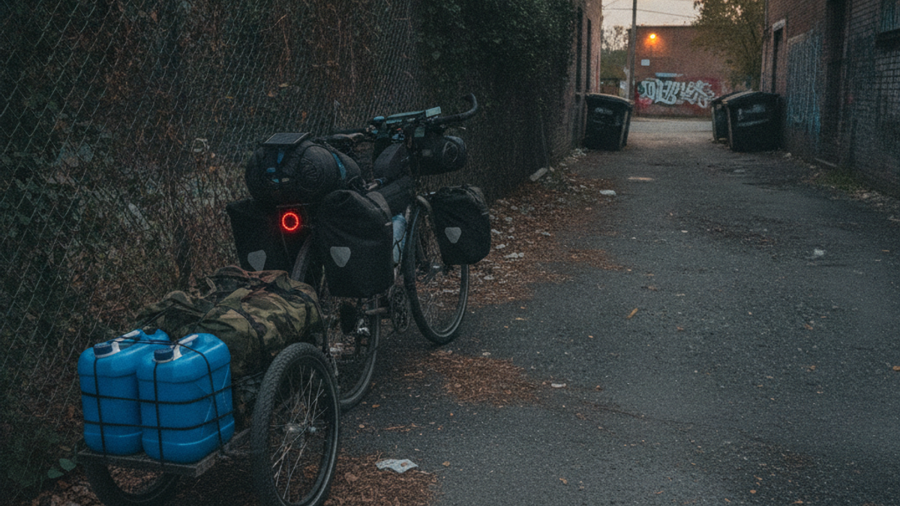
Bicycles win because they use infrastructure cars can't. Your planning job, done now on paper maps, is to identify and physically scout:
- Rail trails and greenways — often the straightest, flattest, car-free path out of a metro area
- Utility and pipeline easements — long, unbroken corridors with no traffic
- Drainage canals, levees, and flood-control channels — usually gated to vehicles, passable on two wheels
- Golf courses, cemeteries, school campuses, and park chains — connective tissue between neighborhoods
- Frontage roads and rail right-of-ways paralleling the highways that will be jammed
Mark at least three routes: a primary, an alternate on a different compass heading, and a contingency you can walk. Identify choke points — bridges, tunnels, single-lane overpasses — and plan how you'd bypass each one. Pair this with solid map and compass navigation skills, because GPS on a dying phone is not a plan. If your primary and alternate both close, you need the mindset described in our guide to dead reckoning when every road out is blocked.
Low-Profile Night Riding and Grey Man Tactics on a Bicycle
In a degraded environment, a loaded bicycle is a rolling advertisement that you have food, water, and gear. Move at night when possible, and move dark.
Use a red-light headlamp instead of blazing white lights. The Petzl Tactikka headlamp with red mode preserves your dark-adapted vision, is far harder to spot at distance than white light, and lets you read a map or fix a chain without lighting yourself up like a beacon. Keep a white mode available for genuine hazard-avoidance at speed, but treat it as a spotlight, not a floodlight.
Other grey man practices: strip reflective tape and bright logos, choose muted olive or gray bags over neon, cover a nice frame with matte tape or a few strategic scuffs, and remove anything that looks tactical. Ride upright and unhurried through populated areas — situational awareness beats speed. Stop, dismount, and listen at every blind corner and underpass. For more on blending in, see our breakdown of grey man everyday carry principles.
Step-by-Step Instructions
Step 1: Select and Set Up a Rack-Compatible Bike
Choose a rigid steel or aluminum frame with rack eyelets, cable-actuated brakes, and clearance for 35–50mm tires. Get the fit right at a shop or by careful measurement — a saddle 20mm too low will end your ride at mile 15 with a blown knee. Replace worn cables, chain, and brake pads before you need them.
Step 2: Install Puncture-Resistant Tires and Sealant Tubes
Mount aramid-belted tires with self-sealing tubes and inflate to the pressure printed on the sidewall. Carry two spare tubes regardless — sealant handles thorns, not sidewall gashes. Add a folding spare tire if your route crosses long stretches with no resupply.
Step 3: Mount the Rack, Panniers, and Trailer Hitch
Bolt the rear rack on with threadlocker and torque the bolts properly. Fit panniers, then load-test the setup with 40 pounds of water jugs and ride a few miles to check for heel strike, rack sway, and shimmy. Install the trailer hitch now so deployment takes seconds, not minutes.
Step 4: Assemble and Stage the Repair Kit
Pack the multi-tool, pump, tire levers, patch kit, spare tubes, quick-link, zip ties, and lube into a single seat bag or top-tube pouch that never leaves the bike. Practice a full tire change in your driveway, then do it again wearing gloves in the dark. Aim for under 10 minutes.
Step 5: Map Three Routes and Scout Them on the Bike
Draw a primary, alternate, and walking contingency route out of your area on paper maps, then physically ride each one on a normal weekend. Note water sources, choke points, gates, fences, hills that force you off the bike, and safe rest points. Record real elapsed times, not optimistic estimates.
Step 6: Train Loaded Distance Rides Progressively
Ride your fully loaded bug-out setup 10 miles, then 20, then 35. Loaded riding is a different sport than casual cruising, and you need to discover saddle sores, hand numbness, and gearing problems now. Ride at least one route after dark to validate your lighting and navigation.
Step 7: Rehearse a Night Departure Under Time Pressure
Set a 15-minute timer, load the bike, and ride your primary route for an hour using only red light. Debrief afterward: what did you forget, what rattled loose, what took too long? Fix those three things before the next rehearsal.
Step 8: Store the Bike Ready and Inspect It Monthly
Keep the bike accessible — not buried in a storage unit or hanging from a ceiling hook behind boxes. Monthly, check tire pressure, brake pads, chain wear, and bolt torque. Apartment dwellers should invest in a vertical wall mount inside the unit; a bike locked in a shared garage is a bike you may not have when you need it.
Recommended Gear
A complete pedal-powered bug-out setup runs roughly $400 to $900 beyond the bike itself: rack, panniers or trailer, tires and tubes, pump, multi-tool, and lighting. That's a fraction of what most preppers spend on a single firearm, and it buys you mobility no traffic jam can take away. Browse more vetted options on our recommended survival gear page, and make sure your 72-hour bug out bag includes a reliable water purification option — a bicycle lets you carry less water because you can cover ground to the next source fast.
Frequently Asked Questions
How far can you realistically bike out of a city in one day during an emergency?
An average adult in moderate shape on a loaded bike covers 40 to 60 miles in a day on pavement, including rest stops. A fit rider can push 80 to 100. Off-road, in heat, at night, or with a trailer, cut those figures by 30 to 50%. Plan on 30 miles for your first day if you haven't trained, and remember that 30 miles will typically put you well outside a metro core and its congestion.
Is a bicycle safe as a bug-out vehicle when society breaks down?
A bike is quiet, fast, and low-signature, which are real security advantages — but you're exposed with no armor and limited ability to flee uphill. Mitigate it with route selection away from crowds, night movement, muted gear, a partner riding as a second set of eyes, and disciplined urban survival awareness. Do not stop for anyone who flags you down in a chokepoint.
What if I live in an apartment with no room for a bike and trailer?
A folding rack-equipped bike and a collapsible trailer like the Travoy fit in a closet or under a bed. Vertical wall mounts store a full-size bike in about 12 inches of depth behind a door. Never rely on a shared bike room or balcony — theft and access issues make those a single point of failure in a crisis.
Affiliate Disclosure: SHTFPlan.net participates in the Amazon Services LLC Associates Program. Some links are affiliate links — we may earn a small commission at no extra cost to you.