Water Bug-Out: How to Use Kayaks, Canoes, and Small Boats to Escape When Roads Are Blocked
When highways gridlock and bridges close, rivers and coastlines become the only open evacuation routes. Here's how to plan, equip, and execute a waterborne bug-out.
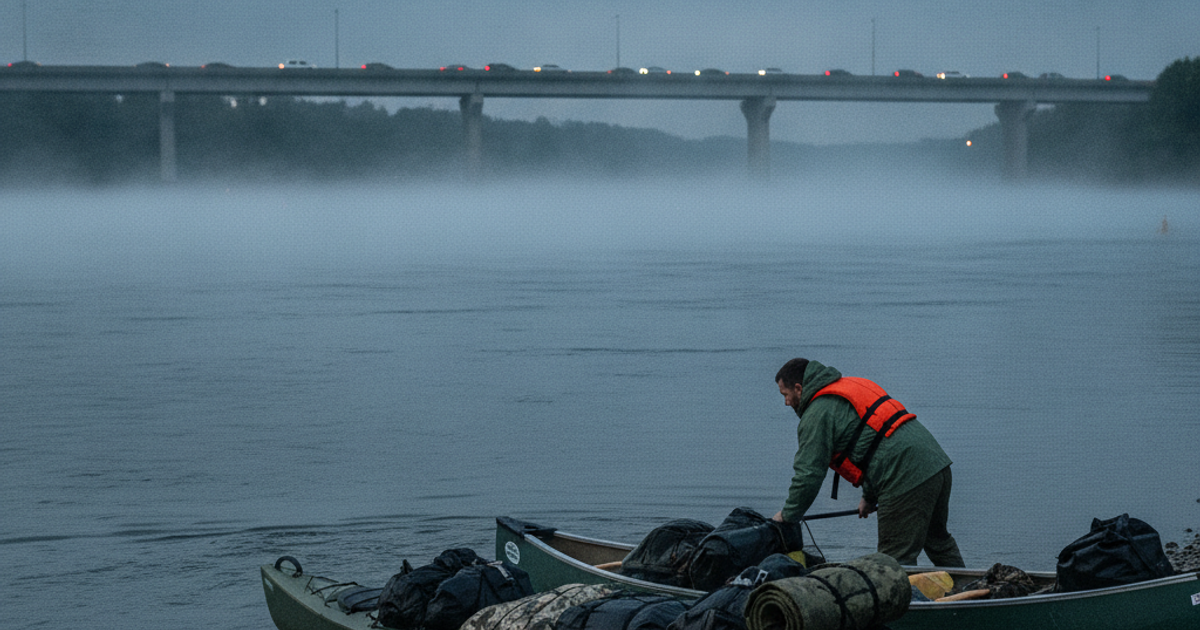
When Hurricane Katrina flooded New Orleans in 2005, the interstates out of the city were either underwater or gridlocked — but the water itself became the evacuation route. Volunteer boaters in the "Cajun Navy" pulled thousands of people out of neighborhoods no ambulance or bus could reach. Two decades later, the same lesson holds: in a flood, a bridge collapse, a civil disturbance, or a mass evacuation, the road network fails first because everyone uses it. Rivers, canals, lakes, and intracoastal waterways don't jam.
FEMA reports that roughly 40% of all U.S. natural disasters involve flooding, and the Department of Transportation estimates that more than 47,000 U.S. bridges are structurally deficient. Meanwhile, the American Canoe Association notes that a packable inflatable kayak can be carried up a flight of apartment stairs by one person. That combination — highly vulnerable roads and highly portable boats — makes waterborne bug-out one of the most overlooked options in modern emergency preparedness.
This isn't a fantasy about paddling to a wilderness homestead. It's about having a second, third, and fourth way out of your city, suburb, or valley when the first one is blocked. Apartment dwellers can store a folding kayak in a closet. Suburbanites can rack a canoe in the garage. Rural readers with a creek or river frontage may already own the best escape route they'll ever have.
Why a Boat Beats a Car When SHTF
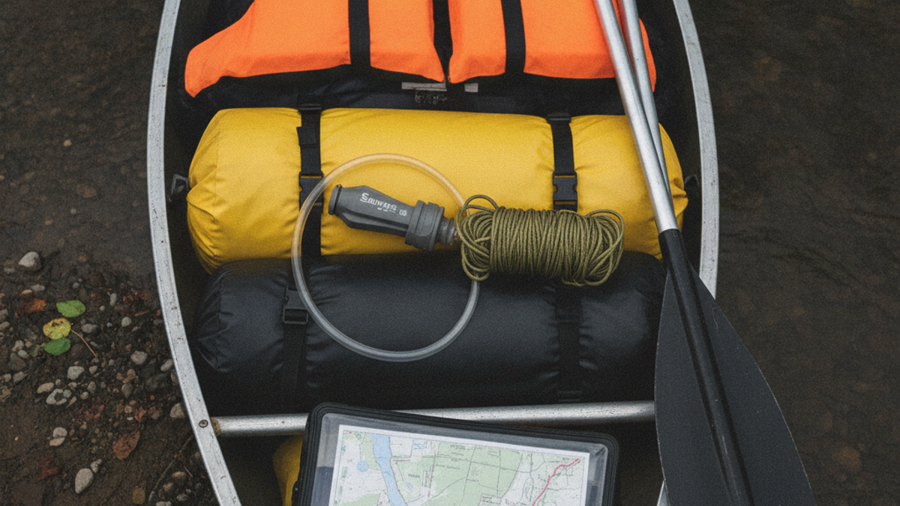
Cars need fuel, open lanes, and functioning bridges. A paddlecraft needs none of those. During a SHTF scenario, waterways offer several distinct advantages:
- No congestion. Even in dense metros, rivers and canals carry almost no civilian traffic during a crisis.
- Load capacity. A 16-foot canoe can carry 600–800 pounds — far more than you can hump in a backpack. A tandem kayak handles 350–400 pounds.
- Silence and low profile. A paddler hugging a shoreline at dusk is about as grey man as it gets.
- Water access. You're traveling on your drinking supply, assuming you have proper water purification on board.
The trade-offs are real: cold water kills fast, current is unforgiving, and a swamped boat means lost gear. Roughly 75% of paddling fatalities involve victims not wearing a life jacket, according to U.S. Coast Guard recreational boating statistics, and about 80% of drowning victims in boating accidents weren't wearing a PFD at all. That single statistic should shape your entire kit.
What You'll Need
Tools
- Intex Explorer K2 inflatable kayak (budget two-person option)
- Advanced Elements inflatable kayak (rigid-frame hybrid)
- Sea Eagle packable inflatable kayak
- Take-apart paddle plus a spare blade set
- Manual double-action pump and repair/patch kit
- Bilge pump or bailer and a large sponge
Supplies
- Onyx MoveVent Dynamic paddle life vest
- Stohlquist Fit kayak PFD
- SealLine Baja dry bags in multiple sizes
- Earth Pak waterproof dry bag backpack
- Pelican 1200 waterproof protector case for radios, documents, and optics
- 50 ft of floating throw rope, carabiners, and 25 ft of paracord
- Waterproof headlamp, whistle, and signal mirror
How to Plan a Waterborne Bug-Out Route
Your route planning starts on paper, not on the water. Pull a USGS topographic quad or a NOAA chart for your region and mark every navigable waterway within 10 miles of home. Then mark:
- Put-in points: public boat ramps, park access, low banks, storm drain outfalls, riverwalk stairs. Note which are gated and which require a portage.
- Take-out points: at least three, spaced along the route, so you can abort early if conditions change.
- Hazards: low-head dams (the "drowning machines" that kill dozens of paddlers annually), strainers, bridge pilings, locks, and industrial discharge.
- Choke points: bridges and dams are where people — and potential threats — concentrate. Treat them like urban intersections and pass quickly, ideally at low light.
Always plan to travel downstream if possible. Fighting a 3-knot current in a loaded kayak will exhaust you inside an hour. Use the USGS National Water Dashboard to learn your local river's normal gauge height now, so you can recognize dangerous flood-stage flow later. Pair this with solid map and compass navigation skills — waterways look completely different at night and from the waterline.
How to Pack a Boat for Emergency Evacuation
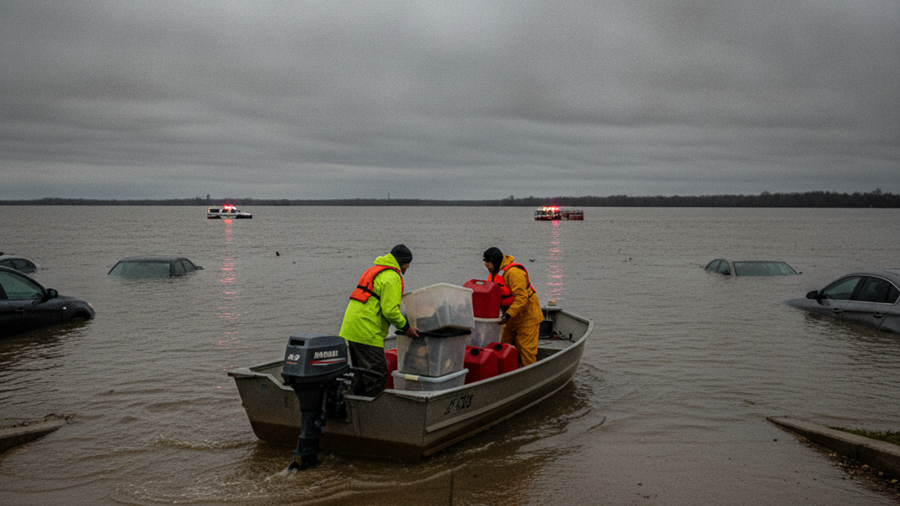
Packing a boat is not packing a truck. Weight distribution determines whether you stay upright.
- Keep heavy items low and centered, just behind the midpoint. High loads raise your center of gravity and roll you.
- Every single item goes in a dry bag — no exceptions. Use the smaller SealLine roll-tops for clothing and food, and a hard case for electronics.
- Leave 25% of your capacity unused. An overloaded boat has almost no freeboard and swamps in the first wake from a rescue craft.
- Tether nothing to your body. Gear gets clipped to the boat with short leashes; a line around your torso in moving water is a death sentence.
- Your bug out bag should be the last item in and the first out — ideally a waterproof pack you can shoulder and walk away with when the boat is no longer useful.
That last point matters more than anything else. A waterborne bug-out is almost always a leg of a journey, not the whole trip. Study our guide on 72-hour walking evacuation planning so you can transition from paddle to boots without losing momentum, and consider placing buried supply caches near your planned take-out points.
Step-by-Step Instructions
Step 1: Map every waterway within ten miles
Print physical maps of all rivers, canals, reservoirs, and drainage channels near your home and workplace. Mark put-ins, take-outs, dams, and portages with a grease pencil, then seal the maps in a hard case. Digital maps fail the moment the grid does.
Step 2: Choose a boat that matches your storage and crew
Apartment dwellers should look at packable inflatables that fold into a duffel; suburban and rural readers can go with a rigid canoe or sit-on-top kayak on a garage rack. Match capacity to your group — two adults plus gear demands at least a tandem rated above 400 pounds.
Step 3: Fit and test a PFD for every person
Buy type III paddling vests sized by chest measurement, not shirt size, and check the fit by having someone pull up on the shoulder straps while you wear it buckled. It shouldn't rise past your ears. Add a whistle and strobe to each vest.
Step 4: Waterproof and balance your load
Pack food, clothing, and sleep gear in roll-top dry bags; put radios, documents, medication, and batteries in a hard waterproof case. Load heavy items low and centered, and leave a quarter of your capacity empty for freeboard.
Step 5: Practice a wet exit and re-entry
In calm, shallow, warm water, deliberately capsize the loaded boat and practice flipping it, re-entering, and bailing. Time yourself. If you can't recover the boat in under three minutes, reduce your load or change craft.
Step 6: Rehearse the route in daylight, then at dusk
Paddle your primary route at least twice a year under real load. Record actual travel times, current speed, and portage distances. Most paddlers average only 2–3 mph loaded — far slower than they expect.
Step 7: Build a launch checklist and stage the kit
Write a one-page laminated checklist: boat, paddles, pump, PFDs, throw rope, dry bags, nav kit, comms. Store everything together in one location so a family member can load it in under ten minutes without you.
Cold Water, Current, and Other Ways This Kills You
Water below 60°F triggers cold shock response within seconds — involuntary gasping, hyperventilation, and rapid loss of hand function. Dress for the water temperature, not the air. In spring flooding, that usually means synthetic base layers and a paddling jacket, never cotton.
Floodwater is also biologically filthy: sewage overflow, fuel, pesticides, and chemical runoff. Never drink it untreated and cover open wounds before launching. Review our breakdown of water purification methods for every survival scenario and our flood survival guide before you ever need them. Maintain situational awareness on the water — scan banks and bridges continuously, because you're visible and slow-moving to anyone above you.
Recommended Gear
For apartment and urban survival preppers, the Intex Explorer K2 is the cheapest realistic entry point and stores under a bed, while the Advanced Elements inflatable kayak uses aluminum rib framing that tracks far better in current. If you need a boat you can genuinely carry down six flights of stairs, the Sea Eagle packable line is the proven choice. Pair it with an Onyx MoveVent Dynamic vest for hot-weather paddling or the higher-cut Stohlquist Fit PFD for all-day comfort. Keep your survival gear dry with an Earth Pak dry bag backpack that converts straight into a carry pack at the take-out, and protect radios and emergency food storage records in a Pelican 1200 case. Browse more vetted options on our recommended survival gear page.
Frequently Asked Questions
Is an inflatable kayak strong enough for a real bug-out?
Modern drop-stitch and PVC inflatables handle Class I–III water and are used by military and rescue units. They're more puncture-resistant than most people assume, but you must carry a patch kit, a manual pump, and avoid dragging the hull over concrete, rebar, or storm debris. For rural readers with garage space, a rigid canoe or polyethylene kayak is more durable.
How far can I realistically paddle in a day with a loaded boat?
Plan on 2–3 mph and 4–6 hours of sustained paddling for an unconditioned adult — roughly 10–18 miles per day, plus more if you're moving with current. Cut those numbers in half if you're paddling against wind, portaging around dams, or towing children and pets.
What's the single most important piece of water bug-out gear?
A properly fitted life jacket, worn — not stowed. Coast Guard data consistently shows the overwhelming majority of paddling deaths involve victims who had a PFD aboard but weren't wearing it. Everything else in your survival kit is irrelevant if you're in the water without flotation.
Affiliate Disclosure: SHTFPlan.net participates in the Amazon Services LLC Associates Program. Some links are affiliate links — we may earn a small commission at no extra cost to you.