Bugging Out on Foot: How to Build the Perfect 72-Hour Walking Evacuation Plan
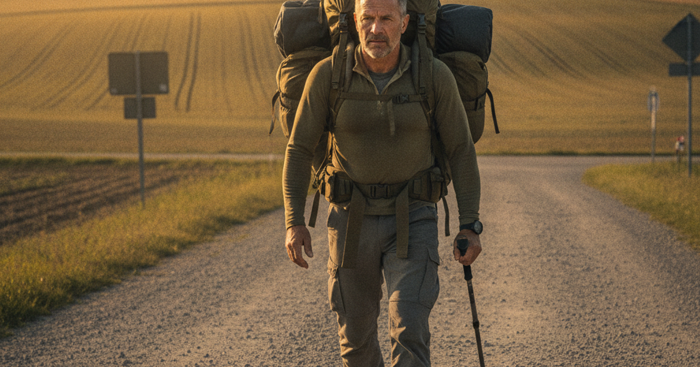
When roads are blocked and vehicles are useless, your feet become your only exit. Here's how to plan, pack, and execute a foot evacuation that keeps you alive.
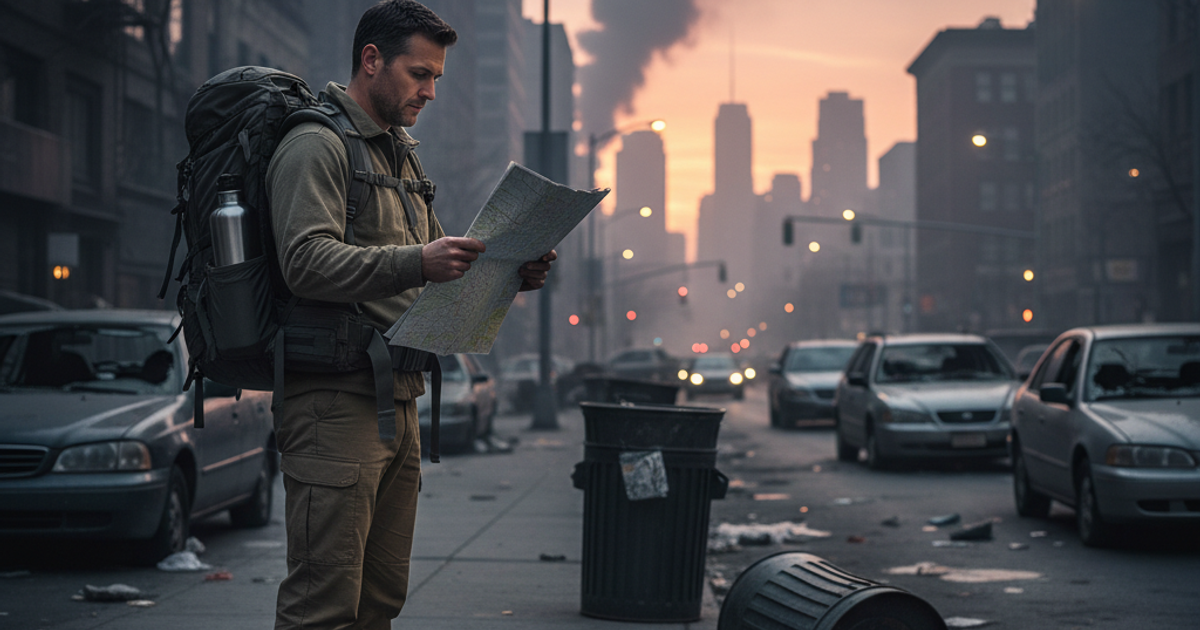
When SHTF and roads are gridlocked, vehicles are disabled, or infrastructure has collapsed, your feet may be your most reliable form of transportation. According to FEMA, roughly 60% of Americans live within 20 miles of a major urban center — close enough to walk out in 72 hours if properly prepared. Yet most bug-out plans assume you'll have a running vehicle, fuel in the tank, and open roads. That assumption can get you killed.
A foot evacuation plan isn't a fallback position. For apartment dwellers, urban preppers, and anyone caught in a dense metro area when disaster strikes, it may be your primary plan. This guide breaks down everything you need to build a realistic, tested, 72-hour walking evacuation strategy — from route selection and pack weight to gear choices and situational awareness on the move.
Why Every Prepper Needs a Foot Evacuation Plan
The 2017 Hurricane Harvey evacuation and the 2003 Northeast blackout both demonstrated the same ugly truth: when everyone tries to leave at once, highways become parking lots. During Harvey, some drivers sat on Texas interstates for 12+ hours without moving. A fit adult walking at 3 miles per hour through light terrain covers ground faster than a vehicle in gridlock — and doesn't run out of fuel.
Even rural preppers need to account for scenarios where their vehicle is disabled, confiscated, or where driving draws unwanted attention. A well-executed foot evacuation, paired with strong situational awareness and route planning, is often the most tactically sound option in a true SHTF scenario.
How to Choose Urban Walking Escape Routes Before a Crisis Hits
Route planning is the foundation of any foot evacuation. Don't wait until the sirens go off to figure out how you're leaving. Identify at least three separate routes out of your area — a primary, secondary, and tertiary — that avoid major highways, bridges that may be controlled or collapsed, and high-density population centers where crowds can turn dangerous fast.
For urban survival situations, focus on:
- Greenways, rail trails, and riverbank paths — These corridors are often overlooked by panicking crowds and provide consistent navigation landmarks.
- Utility easements and drainage channels — Often navigable on foot and not visible from main roads, useful for low-profile movement.
- Secondary roads and residential streets — Less congestion than arterials and easier to read threats at a distance.
- Elevated terrain where available — Higher ground offers better line of sight and situational awareness of what lies ahead.
Study your routes using both Google Maps satellite view and printed topographic maps. Identify water sources, potential overnight shelter locations, dangerous choke points, and areas likely to see civil unrest. Walk each route at least once before you need it — ideally at different times of day. For a deeper look at urban escape route strategy, see our guide on Urban Evacuation Routes: How to Escape the City When SHTF.
Suburban and rural preppers should map routes between their home and their bug-out location using off-road paths, farm lanes, and forest service roads that remain passable on foot even when vehicle traffic is impossible or inadvisable.
How Much Ground Can You Actually Cover on Foot in 72 Hours?
A healthy, moderately fit adult carrying a 30-pound pack can realistically cover 15–20 miles per day over mixed terrain. Over 72 hours, accounting for sleep, meals, and rest, that puts your realistic range at 35–55 miles. If your bug-out location is farther than that, you need to either reconsider your destination, cache supplies along the route, or plan for a staged evacuation with waypoints.
Factors that significantly reduce your daily mileage include:
- Pack weight above 25–30% of your body weight
- Inadequate footwear or poorly broken-in boots
- Urban obstacles: fencing, debris, flooded streets, crowds
- Extreme heat, cold, or precipitation
- Children, elderly family members, or injured individuals in your group
Test your actual capacity now. Load your bug out bag to its intended weight and walk your primary route, or a comparable distance, on a weekend. Most people dramatically overestimate their unloaded walking speed and underestimate how quickly pack weight accumulates fatigue.
Building the Right Lightweight Bug Out Bag for a 72-Hour Walk
The cardinal sin of bug-out bag building is overpacking. On foot, every pound matters. Target a total pack weight — including contents — of no more than 20–25% of your body weight. For a 180-pound person, that's roughly 36–45 pounds maximum, and lighter is almost always better when you're walking 15 miles a day.
For a pack chassis that can handle heavy loads while keeping weight distributed efficiently, the 5.11 Tactical Rush 72 backpack is a well-regarded choice among preppers — it offers 55 liters of organized capacity with load-bearing straps, a hydration sleeve, and a low-profile appearance that doesn't scream "tactical" to casual observers.
Your 72-hour walking survival kit should include the following core categories:
Water and Water Purification
You need a minimum of 1 liter of water per hour of strenuous activity in warm conditions. Carrying three days of water is not realistic on foot — you need a reliable purification system and knowledge of water sources along your route. The Sawyer MINI water filter weighs just 2 ounces, filters up to 100,000 gallons, and removes 99.99999% of bacteria and protozoa. Carry it with a collapsible water bottle and pre-mark water sources — streams, municipal fountains, fire hydrant access points — on your route maps.
Emergency Food Storage for the Trail
You don't need gourmet meals when you're moving, but you do need caloric density. Target 2,000–2,500 calories per day minimum, more if you're covering difficult terrain in cold weather. Freeze-dried pouches are an excellent option because they're lightweight, calorie-dense, and require nothing but water. Mountain House freeze dried meals are a staple of serious bug-out kits — a single pouch delivers 500–700 calories at roughly 5–6 ounces, and they require only boiling water or can be eaten cold in a pinch.
Navigation and Communication Gear
When the cell towers go dark, your smartphone is a brick. Carry printed topographic maps of your entire route, a quality baseplate compass, and know how to use them. For longer evacuations or if you're coordinating with family members spread across distance, the Garmin inReach Mini GPS communicator uses the Iridium satellite network — not cell towers — to send texts and GPS coordinates even in remote areas with zero signal. It's one of the most valuable pieces of survival gear you can carry when communication infrastructure has failed. See also our guide on Navigation Without GPS: How to Find Your Way When Technology Fails.
Shelter and Sleep
A lightweight emergency bivy or tarp shelter and a compact sleeping bag rated for your region's low temperatures are non-negotiable. You lose approximately 80% of your decision-making capacity after 24 hours without sleep. Rest is a tactical necessity, not a luxury. Our article on Sleep Security: How to Stay Safe and Rest When SHTF covers how to establish safe overnight positions when you're on the move and danger doesn't sleep.
Footwear and Clothing
Your feet are your vehicle. Blisters, hot spots, and wet socks can end your evacuation within the first day. Invest in high-quality, broken-in hiking boots and prioritize your sock system. Darn Tough merino wool hiking socks are widely considered the gold standard — they regulate temperature in both heat and cold, resist odor over multiple wears, and the company backs them with a lifetime guarantee. Carry at least two additional pairs and change socks at midday rest stops to prevent moisture buildup.
Moving Unseen: Grey Man and Situational Awareness Tactics on Foot
In a SHTF scenario, drawing attention to yourself is a security liability. The grey man philosophy — blending in with your environment rather than standing out as a prepared or resourced individual — is essential when moving through populated or semi-populated areas. Avoid tactical clothing, patches, and military-style gear that signal you're carrying valuable supplies. A civilian hiking pack in earth tones draws far less attention than a MOLLE-covered plate carrier rig.
Maintain constant situational awareness by scanning ahead, watching body language of people you encounter, and identifying chokepoints — alleys, bridges, underpasses — before you enter them. Move in a staggered formation if traveling with others. Don't stop to engage with strangers if you can avoid it, and never reveal your destination or your resources. For detailed movement and evasion tactics, see our article on Escape and Evasion: How to Move Undetected When SHTF.
The 72-Hour Walking Timeline: Pacing Your Evacuation
Structure your movement to maximize mileage while managing physical and psychological fatigue:
- Hours 1–6 (Day 1 Morning): Move fast and cover maximum ground before roads and routes become congested or monitored. Depart as early as possible, ideally before dawn.
- Hours 6–8 (Midday Rest): Find concealment, change socks, eat, treat hotspots before they become blisters, reassess your route based on what you've observed.
- Hours 8–14 (Day 1 Afternoon/Evening): Continue movement, slower pace. Identify your overnight position at least 2 hours before dark.
- Hours 14–22 (Overnight): Sleep in shifts if traveling with others. Minimum 6 hours in shelter before moving again.
- Repeat for Days 2 and 3, adjusting pace based on physical condition, threat environment, and remaining distance.
What You'll Need
- Topographic maps of your region and surrounding areas
- Compass and GPS device with extra batteries
- Backpack (40-65 liters) with padded hip belt
- Three days of non-perishable food (lightweight, calorie-dense)
- Water filtration system and two water bottles
- Weather-appropriate clothing and sturdy hiking boots
- First aid kit and essential medications
- Multi-tool, fire starter, and emergency shelter
- Flashlight or headlamp with backup batteries
- Emergency cash and copies of important documents
Step-by-Step Instructions
Step 1: Identify Your Primary and Secondary Evacuation Routes
Study topographic maps to plot at least two different walking routes from your home to your bug-out destination, which should be 15-30 miles away. Avoid major roads and highways where crowds will bottleneck, instead choosing trails, greenways, railroad tracks, and residential streets. Mark water sources, potential shelter locations, and high-risk areas like bridges or industrial zones on your maps. Walk these routes at least once during daylight to identify obstacles and calculate realistic travel times with your loaded pack.
Step 2: Calculate Your Realistic Walking Pace and Distance Goals
Test your actual walking speed while carrying your fully loaded bug-out bag over varied terrain to establish a realistic pace. Most people average 2-3 miles per hour on flat ground with a 30-pound pack, but this drops to 1-2 mph on hills or rough terrain. Plan for 8-12 miles per day maximum, accounting for rest breaks, navigational challenges, and physical fatigue. Build in extra time buffers of at least 30% to account for unexpected delays or the need to take alternate routes.
Step 3: Establish Rally Points and Communication Protocols
Designate specific rally points at 5-mile intervals along your route where family members can regroup if separated. Choose distinctive landmarks like churches, water towers, or major intersections that are easy to find without GPS. Create a communication schedule with backup methods since cell networks may fail, including pre-arranged check-in times and locations. Ensure every family member memorizes the first two rally points and carries written instructions for the complete route.
Step 4: Pack and Organize Your 72-Hour Bug-Out Bag
Load your backpack strategically with heavy items close to your back and between shoulder blades, keeping weight under 20% of your body weight. Organize gear by priority: survival essentials in outer pockets, camp items in the middle, and clothing at the bottom. Use compression sacks and waterproof bags to protect contents and maximize space. Test-wear your packed bag for at least 4-6 hours before an emergency to identify hot spots, adjust straps, and ensure comfortable weight distribution.
Step 5: Develop Night Movement and Rest Strategies
Plan designated rest stops every 2-3 hours and identify safe locations for overnight camps away from main paths. Practice using your headlamp with a red lens to preserve night vision and maintain operational security. Develop the ability to move quietly during low-light hours if necessary, but prioritize safety over speed in darkness. Create a sleep rotation plan if traveling with others, ensuring someone remains alert during rest periods.
Step 6: Prepare for Weather and Environmental Challenges
Check seasonal weather patterns for your region and pack appropriate layers that can handle temperature swings of 30+ degrees. Include rain gear even in dry seasons, as hypothermia kills faster than dehydration. Research potential environmental hazards along your route such as flooding zones, wildlife areas, or heat exposure on treeless sections. Develop contingency plans for extreme weather, including alternate routes and emergency shelter locations.
Step 7: Conduct Regular Practice Drills and Route Maintenance
Execute quarterly practice evacuations, walking at least the first 5 miles of your route with your full bug-out bag. Update your maps and route plans twice yearly to account for new construction, seasonal changes, or altered terrain. Rotate food and check equipment expiration dates every six months, replacing batteries and refreshing water supplies. Time your drills to practice in various weather conditions and different times of day to build confidence and identify weaknesses in your plan.
Frequently Asked Questions
What should I put in a 72-hour bug out bag for walking?
A 72-hour walking bug out bag should contain water (at least 2 liters) plus a water purification system like the Sawyer MINI, 3 days of calorie-dense emergency food such as freeze-dried meals and energy bars, a lightweight shelter (tarp or bivy), a sleeping bag rated for local conditions, a first aid kit, navigation tools (map and compass), a fire-starting kit, a fixed-blade knife or multi-tool, a headlamp with extra batteries, and a change of clothes including quality merino wool socks. Keep total pack weight under 25% of your body weight. See our Complete 72-Hour Bug Out Bag Checklist for a full breakdown.
How far can you realistically walk in 72 hours during a bug-out?
A moderately fit adult carrying a 25–35 pound pack can realistically cover 35–55 miles over 72 hours, accounting for rest, sleep, meals, and terrain challenges. Plan for 15–20 miles per day under average conditions. Difficult terrain, extreme weather, traveling with children, or an overloaded pack can cut that figure in half. Walk your planned routes before an emergency to calibrate your actual pace — not your estimated one.
How do I find water on a foot evacuation route through the city?
Pre-identify water sources along your route before you need them: streams, rivers, retention ponds, park water features, and even swimming pools can be used as water sources if properly filtered and purified. Mark these on your printed maps. Carry a water purification system capable of removing bacteria and protozoa — a lightweight filter like the Sawyer MINI plus water purification tablets as a backup gives you redundancy. Avoid water near industrial areas or obvious contamination. In suburban and rural environments, look for natural running water sources, which are generally safer than standing water.
Affiliate Disclosure: SHTF Plan participates in the Amazon Services LLC Associates Program. Some links are affiliate links — we may earn a small commission at no extra cost to you.