Sleep Security: How to Stay Safe and Rest When SHTF and Danger Never Sleeps
When disaster strikes, sleep deprivation can kill you as fast as a bullet. Learn how to set up a secure sleep system that keeps you rested and alive.
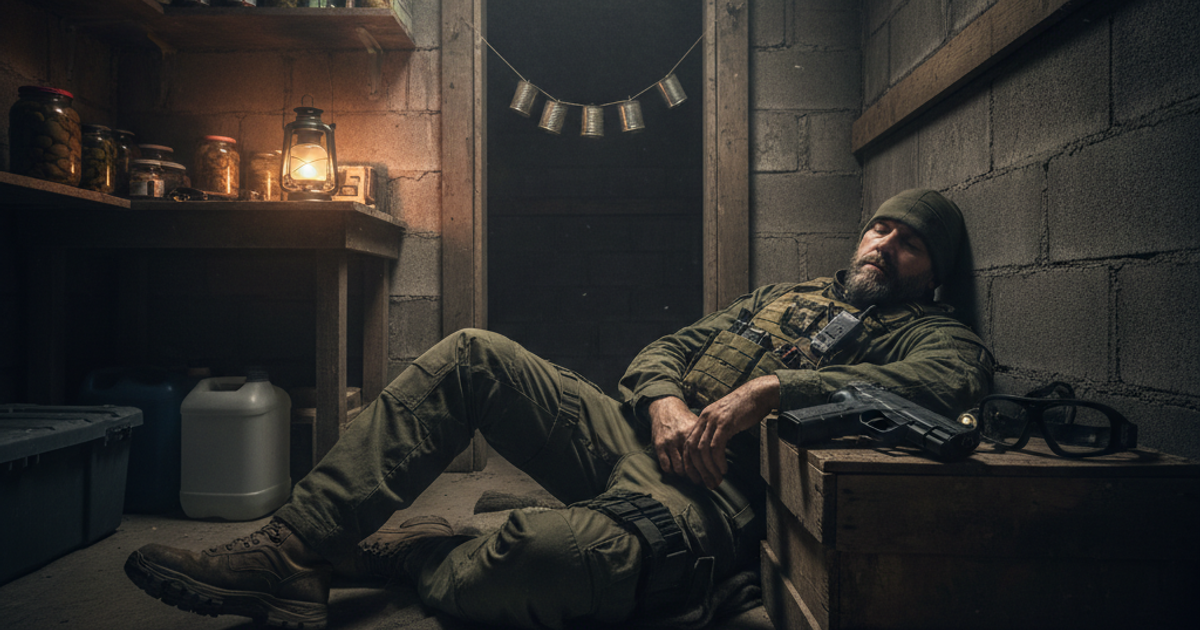
When the grid goes down and society fractures, most preppers obsess over food, water, and firepower. What gets dangerously overlooked is sleep. Not rest as a luxury — rest as a survival necessity. According to the U.S. Army Research Laboratory, cognitive performance degrades by up to 25% after just 24 hours of sleep deprivation, and decision-making under stress becomes increasingly erratic after 36 hours without rest. In a true SHTF scenario, a bad decision doesn't cost you a meeting — it costs you your life.
The hard truth is this: you cannot maintain effective situational awareness, accurate threat assessment, or physical readiness without sleep. Every serious prepper needs a sleep security system — a layered approach to rest that keeps you safe whether you're sheltering in a high-rise apartment, a suburban home, or a remote off-grid retreat.
Why Sleep Security Is a Non-Negotiable Survival Skill
In a collapsed or high-threat environment, your sleep window is your most vulnerable period. You're unconscious, immobile, and unaware. Threats during this window — whether human intruders, opportunistic looters, or environmental hazards — can be fatal before you ever process what's happening. Military units and law enforcement agencies have long understood this: the perimeter doesn't stand down at night. Neither should yours.
Sleep security isn't just about defense. It's about engineering rest cycles that allow you to recover cognitively and physically while still maintaining enough awareness to respond to threats. That requires a system, not luck.
How to Set Up a Sleep Security Perimeter in Any Environment
Whether you're in a third-floor apartment or a rural homestead, the core principle is the same: create layered detection zones that alert you to intrusion before a threat reaches you. Think of it like concentric rings — each layer buys you time to wake, orient, and respond.
Layer One: Outer Perimeter Detection
For rural preppers with land, perimeter security around your retreat property starts at the property line. Simple trip-wire systems using Gerber Bear Grylls paracord trip wire can be rigged to snap a can of pebbles, trigger a flare, or activate an audible alarm at choke points like fence gaps, trail heads, and gate approaches. Paracord trip lines are cheap, lightweight, and devastatingly effective at giving you 10 to 30 seconds of advance warning — which is everything.
For campers, bugging out in a vehicle, or anyone sleeping in an exposed outdoor position, the Coghlan's camping perimeter alarm is a compact, affordable solution designed specifically for this scenario. It clips to a line strung around your campsite and triggers a loud alert when disturbed. It's lightweight enough to fit in any bug out bag and requires no power infrastructure to operate.
Layer Two: Structure and Entry Point Security
For urban and suburban preppers — which means the majority of readers — entry point security is where most of your effort should go. Doors and windows are your primary vulnerability during sleep. The Doberman Security door alarm is a simple, battery-operated magnetic sensor that screams at 100 decibels when a door or window is opened. At under ten dollars per unit, there's no excuse not to have these on every entry point in your shelter. Apartment dwellers: these work on sliding glass doors and windows just as effectively as exterior doors. No installation, no wiring, no permits.
Supplement door alarms with physical reinforcement. A door barricade bar, a door wedge alarm, or even a chair jammed under a doorknob adds mechanical resistance that buys you critical seconds. In a grid-down environment, locks are only as good as the door frame behind them — and most residential door frames fail in one to two kicks.
Layer Three: Personal and Immediate Space Security
Even if an intruder breaches your outer layers, you want one final alert system within arm's reach. The SABRE personal alarm keychain pulls double duty here: clipped to your bag, your wrist, or a nearby object, it can be activated instantly and produces 120 decibels — enough to disorient an attacker and alert anyone nearby. In a group survival situation, this doubles as an emergency signal for your team. It should be part of every prepper's everyday carry kit and sleep setup alike.
Also consider your sleeping position. Face the door. Sleep on the side of the bed closest to your defensive tool. Know your layout cold — how many steps to the door, where the window is, which way it opens. Practice waking and orienting in darkness. This sounds basic, but under the cortisol spike of a sudden wakeup, muscle memory is what saves you, not cognition.
The Watch System: How to Sleep in Shifts When You Can't Sleep Alone
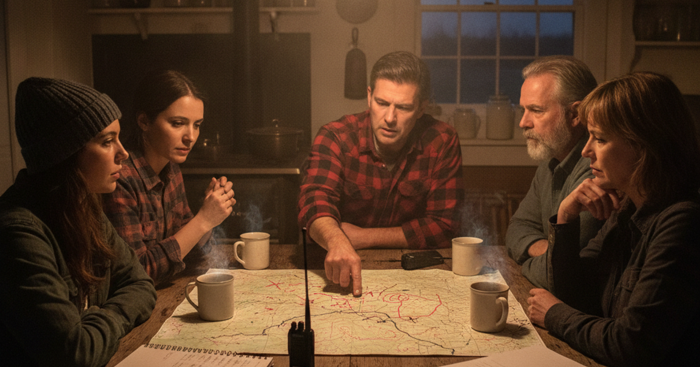
If you're part of a survival group — family, mutual aid network, or retreat team — the watch rotation system is your most powerful sleep security tool. The military uses it for a reason: it allows members to get meaningful rest while maintaining continuous situational awareness.
A simple two-person watch rotation divides sleep into overlapping blocks. With two people, each person can sleep four to six hours while the other maintains watch. With three or more, you can drop to three-hour watch blocks, which while short, are restorative enough over multiple cycles to maintain basic function. Document your watch schedule. Tired people forget their rotation. A written or printed schedule keeps the system honest.
Building and maintaining that kind of trusted group before a crisis hits is critical. Neighborhood mutual aid networks aren't just about sharing resources — they're about having reliable people who can watch your back while you sleep.
Sleep Strategies for Urban Survival: Apartment and City Dwellers
Urban preppers face unique challenges. High-density environments mean more potential threats, thinner walls, and less control over access points. Here's what to prioritize:
- Relocate your sleep position away from exterior windows during high-threat periods. The interior of a room or an interior hallway reduces exposure to glass breach and projectile threats.
- Use white noise strategically. While it can mask environmental sounds, it can also prevent you from hearing alerts. Battery-powered alarms compensate for this — don't rely on your ears alone.
- Maintain grey man protocol in your building. Don't advertise that you're stocked, armed, or prepared. Neighbors who know you have resources become threats when they're desperate. The grey man methodology applies at home as much as it does in the street.
- Identify secondary exits from your unit and know how to use them in darkness without hesitation.
Cold Weather, Bug-Out, and Field Sleep Security
If you're bugging out and sleeping in the field — whether in a vehicle, a tent, or a debris shelter — your thermal signature and physical comfort directly affect your security. Hypothermia degrades judgment faster than sleep deprivation, and a prepper who's too cold to sleep is a prepper who's too exhausted to fight or flee.
The Tact Bivvy emergency sleeping bag is a lightweight, reflective bivy that retains up to 90% of your body heat and packs down small enough to fit in any survival kit or bug out bag. In a field sleep scenario, staying warm isn't just about comfort — it's about maintaining cognitive function, protecting your immune system, and ensuring you can physically respond to a threat if your perimeter is breached. This is must-have survival gear for anyone who may need to sleep outside their home in an emergency.
For field positioning, apply basic military principles: sleep with your back protected (against a wall, rock face, or dense brush), maintain a clear sightline toward your most likely approach vector, and never sleep in the same location two nights running if you're moving through contested or unknown territory. For more on moving safely through dangerous environments, our guide on escape and evasion tactics for SHTF covers low-profile movement in depth.
The Psychology of Sleep in High-Stress Survival Scenarios
Even when conditions are secure, many preppers find that adrenaline, anxiety, and hypervigilance make sleep nearly impossible. This is a physiological reality — the sympathetic nervous system doesn't have an off switch in crisis mode. Research published in the journal Sleep Medicine Reviews confirms that chronic threat stress suppresses melatonin production and keeps cortisol elevated, making restful sleep elusive even when exhaustion is extreme.
Tactics to counter this include:
- Controlled breathing protocols — the 4-7-8 method (inhale for 4, hold for 7, exhale for 8) activates the parasympathetic nervous system and can reduce time to sleep onset significantly.
- Physical exertion before rest — burning physical energy through watch duties, camp maintenance, or deliberate exercise helps clear cortisol.
- Structured pre-sleep routines — even a 10-minute consistent sequence (check gear, secure perimeter, settle in) signals the brain that sleep is permissible.
- Limit threat-scanning behavior — trust your perimeter system. Constant mental re-checking of threats prevents sleep onset. Your alarm systems exist so your brain can stand down.
Recommended Gear Summary for Sleep Security
To build an effective sleep security system from the ground up, prioritize these items. The Doberman Security door alarm and Coghlan's camping perimeter alarm cover your structural and field perimeter detection. Gerber Bear Grylls paracord trip wire extends your outer perimeter in a rural or field setting. The SABRE personal alarm keychain gives you immediate personal-space defense and emergency signaling capability. And the Tact Bivvy emergency sleeping bag ensures thermal protection in field conditions. All five belong in your emergency preparedness kit — and none of them will break the bank.
For a broader look at home hardening and physical security, see our comprehensive guide on hardening your home on a budget.
What You'll Need
- Portable door alarm or tripwire system
- Sleeping bag or emergency blanket
- Headlamp with red light setting
- Whistle or air horn
- Weapon or defensive tool within arm's reach
- Watch or timer for rotation schedules
- Comfortable ground pad or insulation layer
Step-by-Step Instructions
Step 1: Establish a Watch Rotation Schedule
Divide your group into shifts of 2-4 hours per person to ensure continuous security coverage throughout the night. Never leave your shelter completely unguarded, even if you're alone—set alarms to wake yourself periodically for security checks. Assign the most alert person to the hours between 2-4 AM when human awareness is naturally at its lowest. Document the rotation clearly so everyone knows their responsibilities and can be held accountable.
Step 2: Secure Your Perimeter with Early Warning Systems
Set up low-tech tripwires using fishing line and empty cans filled with pebbles at all likely approach points 20-30 feet from your shelter. Install battery-powered door alarms on entry points and windows if you're sheltering in a structure. Create noise-making barriers using dry leaves, twigs, or gravel that crunch underfully when stepped on. Test all systems before nightfall to ensure they're functioning and won't create false alarms from wind or animals.
Step 3: Position Yourself Strategically Within Your Shelter
Sleep with your back against a solid wall or in a corner that provides maximum visibility of entry points and minimizes blind spots. Keep your head toward the door or main threat vector so you wake facing danger rather than having to reorient yourself. Never sleep directly in front of windows or doors where you're silhouetted or vulnerable to immediate attack. Ensure your sleeping position allows you to roll into cover or a defensive posture within seconds of waking.
Step 4: Prepare Your Immediate Action Response
Keep your defensive tools, footwear, and essential gear within immediate reach—practice grabbing them in darkness until it becomes muscle memory. Pre-position a flashlight, whistle, and weapon so you can access them without thinking or fumbling. Develop a clear action plan for different threat scenarios: what you'll do if you hear an alarm, see movement, or are awakened by group members. Brief all group members on rally points and communication signals to avoid confusion during a night emergency.
Step 5: Control Light and Noise Discipline
Use blackout materials or position yourself deep within a structure to prevent light from revealing your location to threats outside. If you must use light, rely on red-filtered headlamps that preserve night vision and are less visible from a distance. Minimize noise by establishing quiet hours and using hand signals for communication during guard shifts. Brief all members on sound discipline—no snoring locations near windows, controlled coughing, and muffled movements.
Step 6: Optimize Your Sleep Quality in Short Intervals
Accept that you'll be sleeping in shorter cycles and train yourself to fall asleep quickly by developing a brief pre-sleep routine. Use earplugs on one ear only or position your less-dominant ear down so you maintain some environmental awareness while blocking disruptive sounds. Keep your core temperature regulated with layered clothing you can adjust without fully waking. Practice tactical napping during daylight hours when security is easier to maintain, banking rest before high-risk nights.
Step 7: Conduct Dawn Stand-To Procedures
Wake everyone 30-45 minutes before first light, as dawn and dusk are the most common times for attacks when visibility favors aggressors. Have all group members assume defensive positions with weapons ready while the most vulnerable transition between sleep and wakefulness occurs. Use this time to conduct a perimeter check, verify all security measures remained intact, and assess any overnight changes to your situation. Only stand down and begin daily activities once you've confirmed the area is secure in full daylight.
Frequently Asked Questions
How do I stay safe while sleeping during a SHTF scenario if I live alone?
Living alone in a high-threat environment requires maximum automation of your security layer. Prioritize door and window alarms on every entry point, use a door barricade bar, and set a physical trip-wire or perimeter alarm at any approach to your sleeping area. Sleep with your defensive tool within immediate reach and keep a personal alarm on your wrist or attached to your gear. Practice waking and orienting in complete darkness so disorientation doesn't cost you reaction time. Consider connecting with a trusted neighbor or local mutual aid network who can provide backup and share watch responsibilities during prolonged emergencies.
What should I include in my bug out bag for sleep security in the field?
Your bug out bag sleep security kit should include a compact perimeter alarm system, paracord for trip-wire setups, a lightweight emergency bivy or sleeping bag like the Tact Bivvy, a personal alarm, and a quality tactical flashlight for night navigation. Physical comfort items — a compact sleeping pad and a packable pillow — matter more than most preppers acknowledge because poor sleep quality in the field degrades performance faster than skipping sleep entirely. Keep your sleep security gear accessible in a dedicated pouch rather than buried at the bottom of your bag.
How long can a prepper survive without adequate sleep during a survival situation?
The human body can technically survive longer without sleep than without water, but functional collapse happens much sooner than most people expect. After 72 hours without sleep, hallucinations, severe cognitive impairment, and loss of fine motor control become common — all catastrophic in a survival environment. Even moderate sleep deprivation after just two to three days of four-hour nights produces decision-making deficits equivalent to being legally drunk. The practical takeaway: getting six hours of protected, secure sleep every 24-hour period should be treated as a mission-critical priority, not a comfort preference.
Affiliate Disclosure: SHTF Plan participates in the Amazon Services LLC Associates Program. Some links are affiliate links — we may earn a small commission at no extra cost to you.