Flood Survival Guide: How to Prepare, Escape, and Recover When the Waters Rise
Floods are the most common and deadly natural disaster in the U.S. Here's exactly what to do before, during, and after the waters rise.
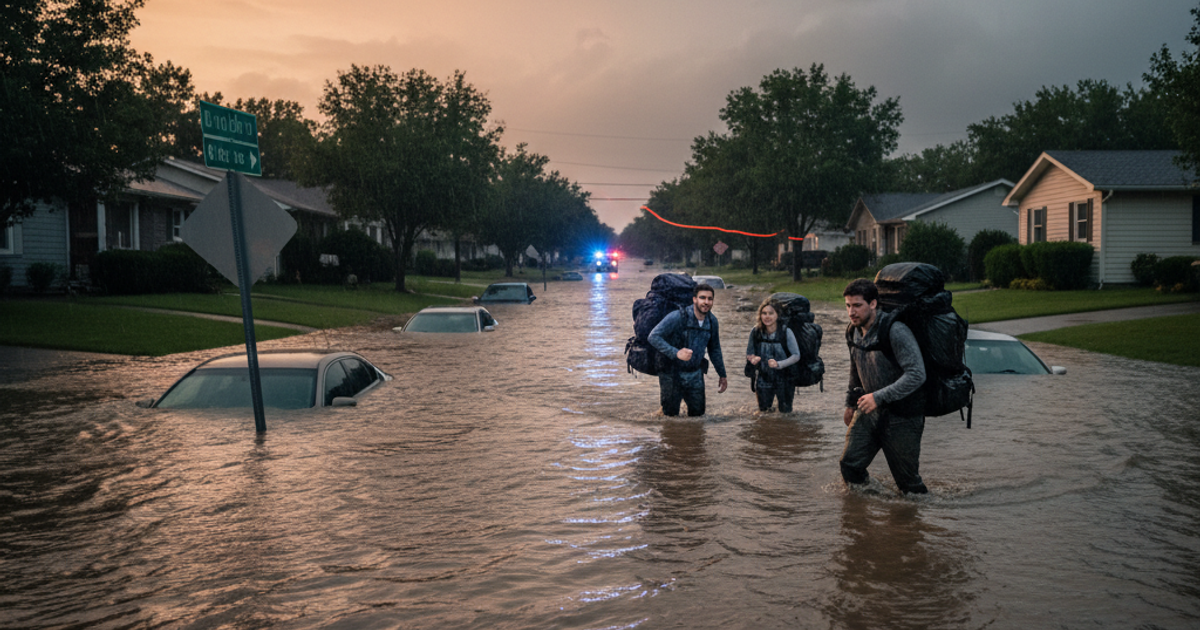
Floods are the most common and costly natural disaster in the United States, responsible for more deaths each year than tornadoes, hurricanes, or lightning combined. According to FEMA, just one inch of floodwater can cause up to $25,000 in damage to a home — and the average flood claim costs more than $30,000. Whether you live in a high-rise apartment, a suburban neighborhood, or a rural homestead, rising water is a threat every serious prepper needs to plan for. This guide covers what to do before, during, and after a flood — with practical emergency preparedness advice that works across all environments.
Understanding Flood Risk: Why Situational Awareness Starts at Home
Most flood victims are caught off guard — not because warnings weren't issued, but because they weren't paying attention. Situational awareness isn't just a field skill; it starts with understanding your environment before a single drop of rain falls. Check FEMA's Flood Map Service Center to determine your flood zone. Know whether you're in a 100-year or 500-year floodplain. Find out if you're downstream from a dam, levee, or retention pond. Understand where your local drainage systems flow and how quickly your streets or fields flood during heavy rain.
Urban dwellers need to know which subway stations, underpasses, and low-lying corridors become dangerous channels during heavy rain. Rural preppers need to understand how quickly seasonal rivers and creeks can rise — some flash floods go from dry creek bed to wall of water in under ten minutes. Suburban residents often underestimate risk because their neighborhood "never flooded before," but a single upstream land development change can dramatically alter drainage patterns. Don't assume you're safe because you always have been. Check out our guide on Situational Awareness: How to Detect Threats Before They Become Dangerous for a deeper look at building this critical skill set.
Building Your Flood-Ready Emergency Preparedness Kit
Standard survival kit advice tells you to store three days of supplies. For floods, that baseline is often insufficient. Flood events can cut off entire communities for a week or more, compromise municipal water systems, and render roads impassable long after the rain stops. Your flood-specific emergency preparedness kit should account for these realities.
Start with your bug out bag — but waterproof it. A standard bag packed with paper documents, electronics, and perishable food becomes useless after 30 seconds in floodwater. Use waterproof dry bags or pelican-style cases for critical items. A DryTac waterproof dry bag is an excellent solution for protecting passports, birth certificates, insurance policies, and cash from submersion — these are exactly the documents you'll desperately need during the recovery phase.
Your kit should include at minimum:
- 72-hour supply of food and water (minimum — aim for two weeks)
- Water purification supplies (tablets, filter, or both)
- First aid kit with trauma supplies
- Waterproofed copies of critical documents
- Battery-powered or hand-crank NOAA weather radio
- Headlamps with spare batteries
- Work gloves and N95 masks (floodwater carries raw sewage and contaminants)
- Change of clothes sealed in a dry bag
- Cash in small bills (ATMs fail when power goes out)
- Sturdy footwear appropriate for wading
For a full rundown of what belongs in a flood-ready go bag, see our Complete 72-Hour Bug Out Bag Checklist for Urban Survival.
Early Warning Systems: Never Be Caught Sleeping Through a Flood Alert
Your phone's emergency alert system is better than nothing — but it's not enough. Cell towers fail, batteries die, and some flash flood events develop faster than digital alert systems can respond. Every prepared household should have a dedicated NOAA weather radio. The Midland WR120B NOAA weather alert radio automatically sounds an alarm when the National Weather Service issues warnings for your specific county — even if you're asleep. This is not optional gear. It is a life-safety device, particularly for rural families and anyone in a flood-prone area.
Sign up for your county's emergency alert text system. Download the FEMA app. Follow your local National Weather Service office on social media. The more redundant your information channels, the less likely you are to be blindsided. In any SHTF scenario, information is one of your most critical resources.
Flood Evacuation Planning for Urban, Suburban, and Rural Preppers
Whether you're in a downtown apartment or a rural farmhouse, your evacuation plan must be specific, practiced, and have multiple contingencies. Never assume your first route will be available — floods close roads fast and without warning.
Urban Evacuation Considerations
Urban residents face unique challenges: high traffic density, limited exits, and vertical living. If you're in an apartment, know which floors are above the likely flood line for your building. Know multiple stairwell exit routes. Understand that underground parking garages fill with terrifying speed — never shelter in or near one during heavy rain. Review our detailed guide on Urban Evacuation Routes: How to Escape the City When SHTF for route planning strategies. The grey man principle applies here too — move with purpose and blend in rather than drawing attention to your supplies or direction of travel.
Suburban and Rural Evacuation Considerations
Suburban residents often have more vehicle options but may share the same bottleneck exit roads as thousands of neighbors. Identify at least three evacuation routes from your neighborhood, including one that goes opposite to the primary traffic flow. Rural preppers may face washed-out bridges, flooded creek crossings, or long stretches of isolated road. Pre-position a small inflatable watercraft if you're in a flood-prone area with water crossings. The Intex Challenger inflatable kayak is a lightweight, affordable option that can be stored compactly and deployed quickly if rising water cuts off conventional evacuation routes — particularly valuable for rural homesteaders or anyone living near rivers, lakes, or low-lying terrain.
Whatever your setting, your plan should include: a designated out-of-area contact person, two to three rally points for family members, vehicle emergency kits, and a clear trigger point — a specific water level, road closure, or official warning — that automatically initiates your bug-out.
Water Safety: Floodwater Is Never Safe to Drink or Touch
This cannot be overstated: floodwater is contaminated. It carries raw sewage, agricultural runoff, fuel, industrial chemicals, and biological pathogens. Do not wade through it without protection. If you must enter floodwater, wear waterproof boots — Muck Boot waterproof rubber boots provide reliable waterproofing, ankle support, and chemical resistance for wading through contaminated flood zones — they're a worthwhile piece of survival gear for anyone in a flood-prone area.
Municipal water supplies are frequently compromised during and after flood events. Boil orders can remain in effect for days or weeks. Your water purification capability must not depend solely on tap water or bottled water supplies, which will be sold out within hours of any major emergency. Aquatabs water purification tablets are a compact, affordable, and effective solution for treating water in flood emergencies — each tablet treats a liter of water and neutralizes most biological contaminants. Pack them in every bug out bag, vehicle kit, and emergency cache. Pair them with a quality mechanical filter for a layered water purification approach. See our guide on Emergency Water Storage: How Much You Actually Need and How to Store It Safely for comprehensive water planning guidance.
Post-Flood Recovery: The Phase Most Preppers Underestimate
Surviving the flood event is only phase one. The recovery phase — which can last weeks to months — presents serious hazards and logistical challenges that unprepared families are not ready to handle.
Structural and Environmental Hazards
Do not re-enter a flooded structure without professional assessment. Floodwaters weaken foundations, saturate walls, short-circuit electrical systems, and introduce toxic mold within 24 to 48 hours. If you smell gas, leave immediately. Assume all electrical systems are compromised until verified otherwise. Wear gloves, boots, and an N95 or P100 respirator when cleaning up flood-damaged areas.
Food and Water After the Flood
Your emergency food storage must be flood-hardened. Food stored in cardboard boxes, lower cabinets, or on basement shelves may be completely lost. Keep a minimum 30-day supply of shelf-stable food elevated off the floor in waterproof containers. Any canned good that was submerged in floodwater with a compromised seal must be discarded. Never eat food from a flooded refrigerator or freezer unless you can confirm it remained at safe temperatures. Your emergency food storage planning should account for a post-flood period when resupply may be severely limited.
Community and Security Considerations
Major flood events frequently trigger looting, particularly in evacuation zones where homes and businesses sit unattended. Maintain situational awareness during the recovery phase — predatory behavior spikes in the aftermath of any disaster. Having a community network of neighbors who look out for each other dramatically improves both security and recovery speed. Read our guide on Neighborhood Mutual Aid Networks: How to Build a Community Survival Team Before SHTF for practical steps on organizing before disaster strikes.
What You'll Need
- Emergency kit with flashlight, batteries, first aid supplies, and whistle
- Three-day supply of non-perishable food and one gallon of water per person per day
- Battery-powered or hand-crank weather radio
- Waterproof containers for important documents and medications
- Rubber boots, life jackets, and flotation devices
- Plastic sheeting and sandbags
- Charged cell phone with backup power bank
- Emergency contact list and local evacuation route map
Step-by-Step Instructions
Step 1: Monitor Weather Alerts and Flood Warnings
Sign up for emergency alerts through your local government's notification system and download weather apps that provide real-time flood warnings. Keep your weather radio tuned to NOAA stations for continuous updates on developing flood conditions. Understand the difference between a flood watch (conditions are favorable) and a flood warning (flooding is occurring or imminent), and be prepared to act immediately when warnings are issued. Stay informed about river levels and dam operations in your area through official sources.
Step 2: Prepare Your Home and Property Before Flooding Begins
Move valuable items, electronics, and important documents to the highest level of your home or to waterproof containers. Install check valves in plumbing to prevent floodwater from backing up into drains, and seal basement walls with waterproofing compounds. Place sandbags around doorways and in areas where water might enter, creating barriers at least three sandbags high. Turn off utilities at main switches if instructed by authorities, and disconnect electrical appliances to prevent shock hazards when water recedes.
Step 3: Evacuate Immediately When Ordered
Never ignore mandatory evacuation orders, as conditions can deteriorate rapidly and escape routes may become impassable within hours. Follow designated evacuation routes rather than shortcuts, as authorities have cleared these paths and they avoid known hazards. Bring your emergency kit, medications, important documents, and enough supplies for at least three days. If you have pets, take them with you along with their food, medications, and carriers, as you may not be able to return for several days.
Step 4: Avoid Floodwaters and Move to Higher Ground
Never attempt to walk, swim, or drive through floodwater, as just six inches of moving water can knock you down and two feet can sweep away most vehicles. Move immediately to higher ground if water begins entering your home, and go to the highest level if evacuation is no longer possible. Avoid contact with floodwater, which often contains sewage, chemicals, and debris that can cause serious infections. If trapped, move to the roof if necessary and signal for help with a whistle, flashlight, or brightly colored cloth.
Step 5: Signal for Rescue and Stay Visible
If you become stranded, call 911 immediately and provide your exact location, then move to the highest accessible point of your structure. Use a whistle to signal rescuers every few minutes, as sound travels farther than shouting and conserves your energy. Display brightly colored fabric, reflective materials, or use a flashlight to make yourself visible to rescue boats and helicopters. Stay where you are once you've signaled for help rather than attempting to swim or wade to safety, as rescuers will be searching your last known location.
Step 6: Wait for Official All-Clear Before Returning Home
Do not return to your home until local authorities declare it safe, as floodwaters may still be rising in some areas or structural damage may make buildings unsafe. Listen to official announcements about water safety, as municipal water may be contaminated and require boiling. Watch for downed power lines, gas leaks, and structural damage before entering any building. Take photographs of all damage before cleaning for insurance purposes, and wear protective clothing including rubber boots and gloves when handling flood-damaged items.
Step 7: Clean and Disinfect Your Home Properly
Remove standing water using pumps or wet vacuums, but do so gradually if your basement was completely flooded to avoid structural damage from pressure changes. Discard any food, cosmetics, or medicines that came into contact with floodwater, as well as items that cannot be thoroughly cleaned and dried like mattresses, carpeting, and stuffed toys. Wash all hard surfaces with hot water and household bleach solution, then dry everything thoroughly within 24-48 hours to prevent mold growth. Contact your insurance company immediately to begin the claims process and consider hiring professional restoration services for extensive damage.
Frequently Asked Questions
What should I put in my bug out bag specifically for a flood emergency?
A flood-specific bug out bag should prioritize waterproofing above all else. Use waterproof dry bags to protect documents, electronics, and clothing. Include water purification tablets, a quality mechanical filter, at least three days of calorie-dense food, a battery-powered NOAA weather radio, a headlamp with spare batteries, N95 masks, rubber gloves, waterproof boots, and a compact first aid kit. Keep cash in small bills since ATMs and card readers go offline. A full checklist is available in our Complete 72-Hour Bug Out Bag Checklist.
How do I purify water after a flood when tap water isn't safe?
Use a layered approach: first, filter visibly turbid water through a cloth or coffee filter to remove sediment. Then use water purification tablets like Aquatabs, which are effective against bacteria, viruses, and protozoa. For longer-term needs, a quality gravity filter or pump filter rated for biological and chemical contaminants is a critical piece of survival gear. Boiling remains the gold standard if you have fuel and a clean container — bring water to a rolling boil for at least one minute (three minutes at elevations above 6,500 feet).
Should I stay home (bug in) or evacuate (bug out) during a flood?
This depends entirely on your specific location, the nature of the flood, and official guidance. If you are in a mandatory evacuation zone, leave early — do not wait for the last minute. Bugging in during a flood is only viable if you are on high ground with no realistic flood risk and have adequate supplies. If your home or access roads could be compromised by rising water, bugging in becomes increasingly dangerous. The cardinal rule: never shelter in a low-lying area once water begins to rise. Have a pre-determined trigger point — a specific water level, road closure, or emergency alert — that automatically initiates your evacuation.
Affiliate Disclosure: SHTF Plan participates in the Amazon Services LLC Associates Program. Some links are affiliate links — we may earn a small commission at no extra cost to you.