Shadow Prep: How to Use Gray Man Principles for Everyday Carry Without Looking Like a Prepper
Your EDC loadout could make you a target. Learn how to carry serious survival gear every day without broadcasting that you're prepared.

Most people who get serious about emergency preparedness make the same mistake: they start looking like they're prepared. The tactical backpack covered in MOLLE loops. The cargo pants with twelve pockets. The fixed-blade knife clipped to the belt. The military-surplus water bottle hanging off a carabiner. Individually, none of these items is a problem. Collectively, they broadcast a message to every person in your vicinity — and that message is this person has supplies worth taking.
The gray man concept is simple in theory and demanding in practice. The goal is to move through any environment — urban, suburban, or rural — without registering as a threat, a target, or a resource. You want to be the person nobody remembers seeing. In a crisis, that invisibility is one of the most powerful survival tools available. According to a 2019 study published in Applied Cognitive Psychology, witnesses to street incidents consistently failed to accurately describe clothing, carried items, or physical details of bystanders who appeared unremarkable. Ordinariness is a form of armor.
This article breaks down how to build a gray man everyday carry — a low-profile EDC loadout that keeps you prepared for emergencies without advertising that fact to anyone around you. Whether you're commuting through a dense city, working in a suburban office park, or running errands in a small rural town, these principles apply.
Why Gray Man EDC Matters for Urban Survival and Emergency Preparedness
The gray man philosophy isn't about paranoia — it's about operational security. In a stable environment, looking like a prepper mostly just attracts curious glances. In a deteriorating situation — civil unrest, a natural disaster, a grid-down emergency — looking like you have gear and supplies makes you a target for people who don't. This is why OPSEC (operational security) matters long before SHTF. You can read more about the deeper strategy behind this in our article on OPSEC for Preppers: How to Keep Your Stockpile and Plans Secret When SHTF.
The secondary benefit is social. In most professional environments, looking like you walked out of a military surplus store carries a social cost. Gray man EDC lets you carry meaningful survival gear — a knife, a light, a fire starter, basic trauma supplies — without triggering workplace HR conversations or drawing side-eyes at the coffee shop.
The gray man approach also pairs naturally with situational awareness — the ability to read your environment and detect threats before they escalate. When you're not broadcasting anything unusual, you can observe more freely. Nobody's watching the guy in the forgettable khakis and a plain canvas bag.
What You'll Need
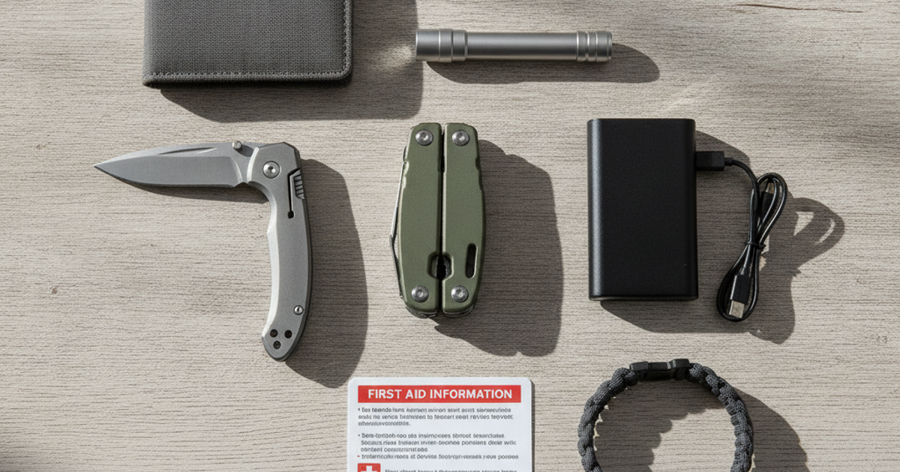
Tools
- Benchmade Proper slip joint pocket knife
- Leatherman Squirt PS4 keychain multitool
- Nitecore TIP SE keychain flashlight
- Maxpedition Micro Pocket Organizer EDC pouch
Supplies
- Bellroy Note Sleeve minimalist wallet
- Paracord survival bracelet (unbranded, woven)
- Small folded cash reserve in small bills
- Nitrile gloves (2 pair, folded flat)
How to Build a Low-Profile EDC Kit That Doesn't Look Like a Survival Kit
The first rule of gray man EDC is that form follows function — but presentation matters as much as capability. Every item you carry should be able to pass a casual visual inspection as completely normal. Here's how to think through each category.
Clothing: The First Layer of Concealment
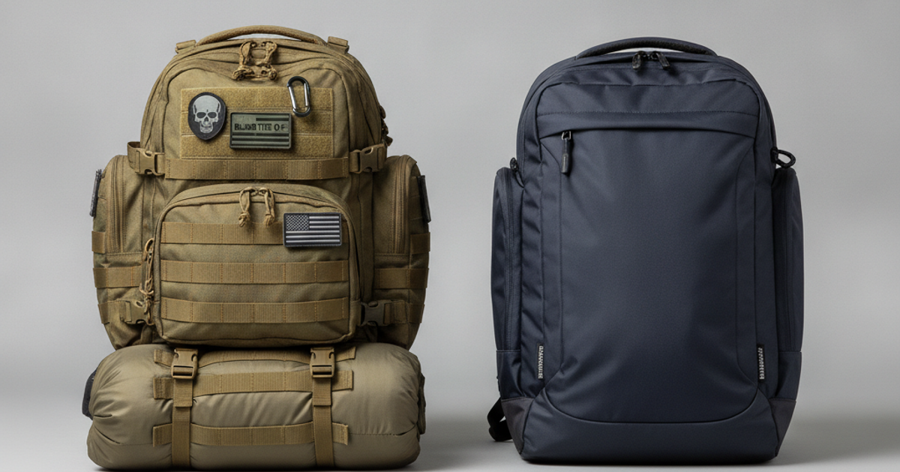
Your clothing is your most visible EDC choice, and it's where most people blow their cover. Multicam patterns, military-cut pants, and shirts with brand logos from companies like 5.11 or Blackhawk immediately signal to anyone paying attention that you're a "tactical" person. The gray man solution is clothing that functions tactically but looks civilian.
The 5.11 Tactical Covert Khaki pants are an excellent example of this done right — they're built with reinforced knees, a concealed waistband, and extra pocket capacity, but they look indistinguishable from standard chinos you'd wear to a casual office. Pair them with a plain, neutral-colored button-down or polo and you have functional clothing that reads as "business casual" from twenty feet away.
Color palette matters. Stick to earth tones, grays, navy, and tan. Avoid black head-to-toe, which can read as tactical or aggressive depending on environment. The goal is to match the median appearance of your local area. Rural preppers should dress like local residents. Urban preppers should aim for what a mid-level office worker or delivery driver wears. Invisibility is contextual.
Carry Platform: Bags That Don't Scream "Bug Out Bag"
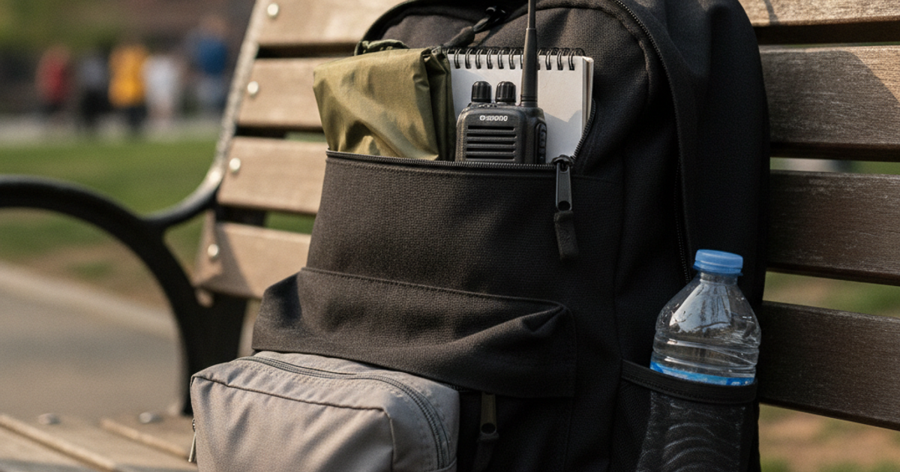
A fully-loaded MOLLE backpack is a walking advertisement. A plain canvas tote, a worn laptop backpack from a tech company, or a standard commuter daypack in a neutral color is not. Your carry platform — whatever you're using to hold the gear that doesn't fit in pockets — should look like something everyone else carries.
Inside that unremarkable bag, organization matters. The Maxpedition Micro Pocket Organizer EDC pouch lets you consolidate your small survival items — fire starter, cash, medications, a small tourniquet — into one compact, flat pouch that slides into any bag without the jumble of loose gear that announces itself every time you open a zipper. Organization is also a speed advantage: in an emergency, you need to access gear fast, not dig through chaos.
Edged Tools: Choosing a Knife That Flies Under the Radar
A fixed-blade knife on your hip is a statement. In many urban environments it's also a legal liability. A slip joint folder — one without a locking blade — is legal in virtually every jurisdiction in the United States, discreet in every pocket, and functionally capable for most EDC cutting tasks.
The Benchmade Proper slip joint pocket knife is purpose-built for exactly this role. It looks like a classic gentleman's folder, carries like a traditional pocketknife, and draws zero attention — while being made to Benchmade's exacting quality standards. For apartment dwellers and urban commuters who can't carry a locking blade at work, this is the knife to have.
Light: Powerful but Pocketable
A full-size tactical flashlight clipped to your pocket projects an image. A keychain light projects nothing. The Nitecore TIP SE keychain flashlight delivers up to 700 lumens from a device smaller than a USB drive, charges via USB-C, and lives on your keyring without adding meaningful bulk. In a power outage, a structure fire, or any low-light emergency, those 700 lumens are the difference between competence and panic.
Multi-Tools: Compact Over Conspicuous
Full-size multi-tools clipped to a belt are conspicuous in any non-blue-collar setting. Two alternatives dominate the gray man toolkit. The Leatherman Squirt PS4 keychain multitool lives on your keychain and includes pliers, scissors, a file, a screwdriver, and a blade — all in a package smaller than a lighter. Alternatively, the Gerber Dime mini multitool lays flat in a pocket and offers similar functionality at a slightly larger size. Either one is invisible in daily carry.
Wallet: Thin, Functional, and Unassuming
A fat, disorganized wallet broadcasts several things, none of them useful. The Bellroy Note Sleeve minimalist wallet carries your critical cards, ID, and a folded cash reserve in a profile thin enough that it disappears in a front pocket. Keep small bills — fives and ones — accessible. In emergencies where electronic payment systems fail, small bills are more useful than large ones because making change becomes impossible.
Cordage: Practical and Completely Normal-Looking
Paracord has hundreds of practical survival applications — improvised tourniquet, shelter lashing, gear repair, securing loads. An unbranded woven paracord survival bracelet keeps approximately 8–10 feet of 550 paracord on your wrist in a format that looks like an ordinary woven bracelet. Skip the ones with skulls, camo patterns, or bright orange — choose a neutral color that reads as a fashion accessory. You can read more about tactical self-defense carry options in our guide to Concealed Carry for Preppers.
Step-by-Step Instructions
Step 1: Audit Your Current EDC for Visual Signature
Lay out everything you currently carry and photograph it. Ask yourself honestly: does this look like survival gear or everyday gear? Anything with tactical branding, visible MOLLE webbing, or military coloring gets flagged for replacement with a functionally equivalent but visually neutral alternative. This audit is your baseline.
Step 2: Select Clothing That Provides Function Without Tactical Signaling
Choose two or three pairs of pants that offer extra pocket capacity or reinforced construction but look civilian — khakis, chinos, or plain dark jeans. Do the same with outerwear: a plain canvas jacket or a zip fleece carries a multitool and a folding knife without broadcasting it. The rule is simple — if someone can identify the brand as "tactical" from across a room, choose something else.
Step 3: Choose a Low-Profile Carry Bag That Matches Your Environment
Select a bag that blends into your daily context. Urban commuters should use laptop backpacks or sling bags from mainstream brands. Suburban preppers can use a plain canvas tote or a standard hydration pack with no branding. Rural users have more latitude but should still avoid fully tactical aesthetics in public settings. Internal organization pouches keep gear accessible without the tactical aesthetic.
Step 4: Build Your Core EDC Layer Around Pocket-Sized Tools
Populate your carry with compact, inconspicuous versions of each critical tool category: a slip joint folder, a keychain multitool, a keychain light, and a minimalist wallet. These four items cover cutting, repair, illumination, and financial access — the four most common everyday emergencies — in a package indistinguishable from what any ordinary person might carry.
Step 5: Add Discreet Medical and Emergency Supplies
A folded nitrile glove pair, two ibuprofen tablets, a small hemostatic gauze pad, and a folded emergency mylar sheet take up less space than a smartphone and weigh almost nothing. Store these flat in a pocket organizer pouch inside your bag. These items address the most statistically common emergencies — bleeding, pain, and thermal exposure — without any item being individually identifiable as "prepper gear."
Step 6: Practice Gray Man Behavioral Discipline in Public
Gear is only part of the equation. Gray man behavior means moving at the pace of your environment, avoiding eye contact that is too direct or too prolonged, not reacting visibly to events around you before others do, and not discussing your preparedness with strangers. Your EDC is useless if your behavior flags you as situationally aware to someone who is scanning for exactly that. Blend the behavior with the gear.
Step 7: Test Your Loadout in Real Environments Before You Need It
Carry your gray man EDC daily for two weeks before you need it in a crisis. You'll quickly discover what's actually comfortable to carry all day, what you reach for, and what sits unused. Adjust based on real use, not theory. Gear you don't carry because it's uncomfortable is gear you don't have when you need it.
Step 8: Maintain Separate Home and Vehicle Supplies to Reduce EDC Burden
Gray man EDC is your personal carry — it doesn't need to replicate your full survival kit. Keep deeper supplies in your vehicle and at home. This lets your EDC stay minimal and inconspicuous while ensuring full emergency preparedness capability when you have access to those secondary caches. Review our Everyday Carry (EDC) Essentials guide for a complete breakdown of how to layer your carry systems.
Urban vs. Rural Gray Man EDC: Adjusting for Your Environment
The gray man strategy isn't one-size-fits-all. In a dense urban environment, the threat profile includes crowded spaces, opportunistic theft, and social scrutiny. EDC here should prioritize concealability above all else — smaller tools, more subdued clothing, and a bag that looks like it belongs in a coffee shop or on public transit.
In suburban environments, you have more flexibility. A plain daypack is unremarkable in a suburb; so is a car-carry setup that includes a more complete survival kit in the trunk. The social surveillance is lower, but maintaining a non-prepper appearance at work and in public still matters for OPSEC.
In rural areas, the gray man calculus shifts. What makes you blend in is different — work boots, a plain flannel, and a truck with no tactical stickers blends better than minimalist urban carry. But the principle remains: don't advertise what you have. For rural preparedness and how it intersects with neighbor dynamics, our article on Prepper's Guide to Neighborhood Intelligence covers the social dimension in detail.
Frequently Asked Questions
What is the gray man concept in everyday carry and survival preparedness?
The gray man concept refers to the practice of blending into your environment so thoroughly that you don't attract attention, appear as a threat, or register as a target. In EDC terms, it means carrying functional survival gear in formats that look ordinary to casual observation — civilian clothing with hidden capacity, compact tools that look like everyday items, and bags that don't signal "prepper" or "tactical" to anyone watching. The goal is operational security through unremarkability.
What should I carry in a gray man EDC kit without looking like a prepper?
A solid gray man EDC includes a slim minimalist wallet with cash, a slip joint folder or small locking knife appropriate to your local laws, a keychain multitool, a keychain flashlight, a paracord bracelet in a neutral color, basic folded medical supplies (gloves, gauze, pain relief), and a pocket organizer pouch inside a plain bag. Every item should have a civilian explanation. The Nitecore TIP SE is a flashlight anyone might carry. The Benchmade Proper looks like a traditional pocketknife. None of it reads as a survival kit to a casual observer.
How do I apply gray man principles if I live in an apartment or don't have land?
Gray man EDC is actually easier for apartment dwellers because the principles naturally scale to urban environments. Focus on pocket carry and a low-profile bag rather than vehicle or property-based systems. Keep a compact emergency kit in a plain bag by your door. Dress in civilian clothing with functional properties. Practice behavioral discipline — don't discuss your preparedness with neighbors or on social media. Your apartment can still have serious emergency supplies (see our Apartment Prepping guide), but your everyday carry keeps you prepared everywhere those supplies aren't.
Affiliate Disclosure: SHTFPlan.net participates in the Amazon Services LLC Associates Program. Some links are affiliate links — we may earn a small commission at no extra cost to you.