Prepper's Guide to Neighborhood Intelligence: How to Monitor Local Threats Without Drawing Attention
Learn how to build a low-profile neighborhood intelligence network that detects threats early — without tipping off anyone that you're watching.
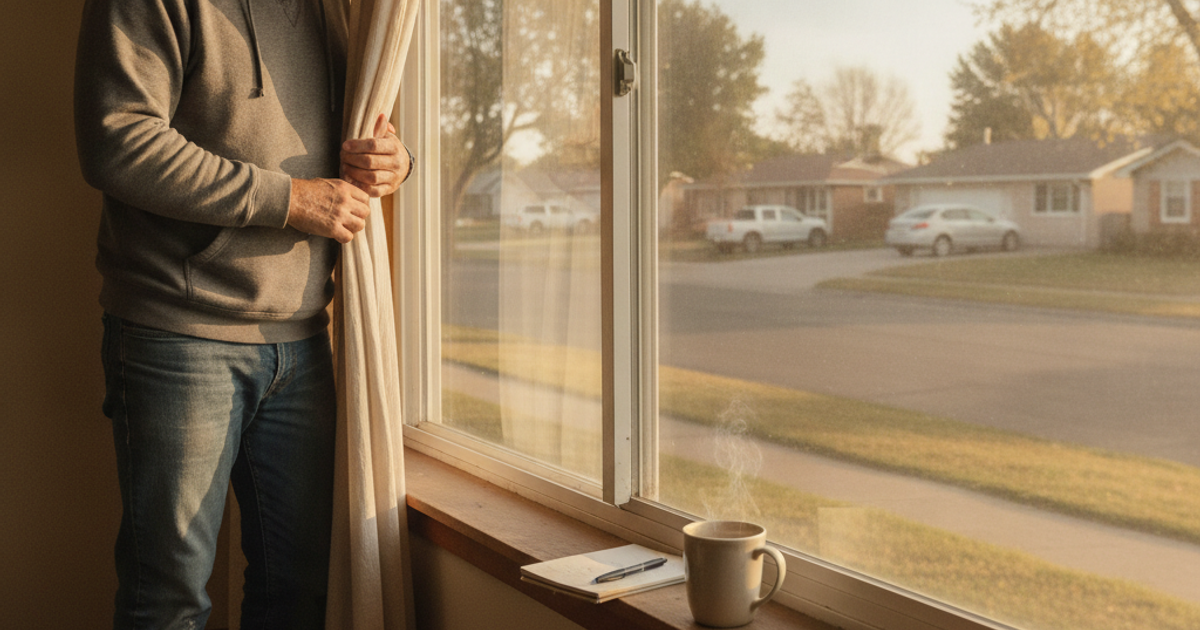
In a stable world, you might never need to think twice about who's moving through your neighborhood, what vehicles park on your street, or why the power has been flickering at odd hours. But as any serious prepper knows, situational awareness isn't paranoia — it's preparation. According to FEMA, only 50% of Americans have a household emergency plan, and even fewer actively monitor local threats before they escalate. The difference between surviving a crisis and being blindsided by one often comes down to how much you knew, and how early you knew it.
Neighborhood intelligence is the art of gathering, analyzing, and acting on local threat information — without drawing attention to yourself or your preparations. Whether you're in a high-rise apartment, a suburban cul-de-sac, or a rural homestead miles from the nearest town, the principles of low-profile community surveillance apply to everyone. This guide will show you how to build a quiet, effective local intelligence network that respects your OPSEC and keeps your family safer when SHTF.
For a deeper foundation on staying invisible while gathering information, read our guide on Grey Man Methodology in a Societal Breakdown — many of those principles apply directly to neighborhood monitoring.
What You'll Need
Tools
- Bushnell compact surveillance binoculars
- Uniden Bearcat police scanner radio
- Wyze cam outdoor wireless security camera
- Browning trail camera for wildlife and security
- Midland GMRS two-way radio family pack
Supplies
- Waterproof tactical field notebook
- Faraday bag RFID signal blocking pouch
- Garmin inReach mini GPS communicator
Why Neighborhood Intelligence Matters for Urban Survival and Emergency Preparedness
Most crisis situations don't arrive without warning. Crime spikes, infrastructure failures, social unrest, and natural disasters all produce early indicators — if you know what to look for. The challenge isn't that information is unavailable; it's that most people aren't trained to collect and interpret it. Law enforcement agencies use a concept called community intelligence to map threats before they materialize. As a prepper, you can apply the same logic at the neighborhood level.
The key distinction between intelligent monitoring and suspicious behavior is method. You're not stalking neighbors or recording private conversations. You're observing patterns, documenting anomalies, and maintaining awareness of what's normal so you can immediately recognize what isn't. This is the core of situational awareness — a skill set applicable whether you live in a dense urban environment or a remote rural setting.
Understanding local threats also pairs directly with your broader emergency preparedness planning. A neighborhood intelligence network tells you when to act on your bug out bag, when to shelter in place, and when to activate your community defense protocols. You can also review our article on how to detect threats before they become dangerous to sharpen your baseline awareness skills before building out your network.
How to Establish a Baseline for Detecting Local Threats
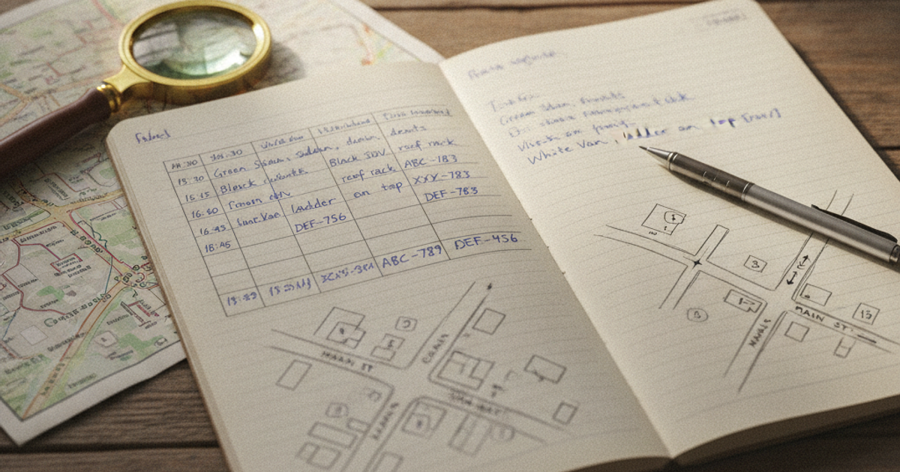
You can't identify what's abnormal until you know what's normal. Establishing a neighborhood baseline means systematically documenting the regular patterns of activity in your area: when people leave for work, which vehicles belong to which properties, what delivery trucks appear and on what schedule, and when pedestrian traffic peaks and drops.
For urban and suburban preppers, this baseline-building process can happen naturally through daily routines — walking the dog, taking out the trash, or sitting on a porch or balcony. Rural preppers have the advantage of lower ambient traffic, making anomalies more obvious, but also more ground to cover. In either environment, a pair of quality optics makes a significant difference. Bushnell compact surveillance binoculars are a discreet tool for observing activity at a distance without drawing attention — keep them in a jacket pocket or near a window with a clear sightline to your street.
Document your observations. A waterproof tactical field notebook is ideal for logging vehicle plates, visitor patterns, and timestamps in a format that holds up to weather and rough handling. Over two to four weeks of consistent observation, you'll have a reliable baseline from which any deviation becomes immediately meaningful.
Building a Low-Profile Community Surveillance Network
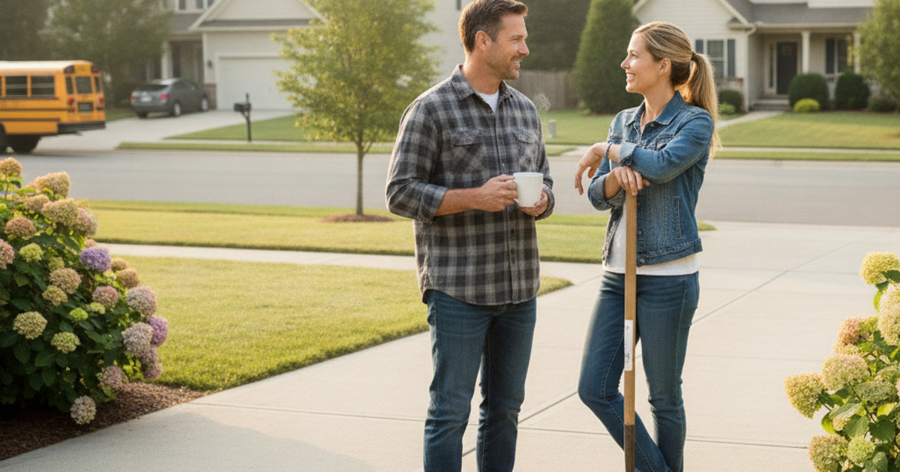
The most powerful intelligence network isn't cameras or scanners — it's trusted neighbors. Research from the Urban Institute consistently shows that neighborhoods with stronger social ties have lower crime rates and faster recovery from disasters. Your goal is to identify two to five trusted contacts within your immediate area who share situational awareness as a value, even if they don't identify as preppers.
This doesn't require broadcasting your preparedness philosophy. Framing conversations around general safety and community watchfulness is enough. A simple "I've been keeping an eye on the street lately — have you noticed anything unusual?" opens the door without exposing your full preparedness posture. If your neighbors are receptive, you can gradually build toward a more organized communication structure. Our article on building a neighborhood mutual aid network provides a comprehensive framework for organizing this kind of community security team.
For inter-group communication, a Midland GMRS two-way radio family pack gives your core group encrypted-channel, cell-independent communication — critical when conventional networks are congested or down during a crisis. GMRS radios require an FCC license (currently $35 for 10 years, no exam required), and their range in suburban and rural environments is substantial.
Using Technology Discreetly for Neighborhood Threat Monitoring
Technology can dramatically extend your monitoring capability — but it must be deployed with OPSEC discipline. Visible security infrastructure signals to outsiders that you have something worth protecting. The goal is coverage without conspicuousness.
Wireless cameras are the most accessible entry point. A Wyze outdoor wireless security camera offers full HD monitoring, motion alerts, and night vision at a price point accessible to most preppers. Mount cameras to cover entry points, driveways, and the street in front of your property. Angle them to maximize coverage while minimizing how obvious they are to passersby.
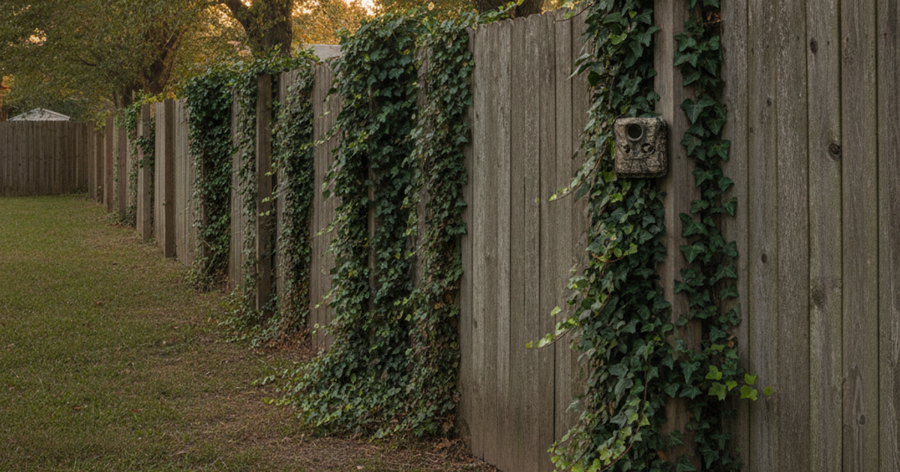
For rural preppers or those with larger properties, Browning trail cameras are an outstanding solution. Designed for wildlife monitoring, they're camouflaged, weather-resistant, and triggered by motion — making them nearly invisible in wooded or brushy perimeter positions. You can check SD card footage regularly without ever needing a live feed or internet connection, which keeps your surveillance completely off-grid and off-network.
One often-overlooked threat in the digital surveillance space is passive data leakage from your own devices. If you're carrying a smartphone into sensitive planning conversations, you may be broadcasting more than you intend. A Faraday bag RFID signal blocking pouch prevents your phone from transmitting or receiving signals without powering it down entirely — a useful tool for sensitive meetings or when you want to ensure location data isn't being logged. For deeper reading on this vulnerability, check out our article on OPSEC for Preppers: How to Keep Your Stockpile and Plans Secret.
Monitoring Official Channels Without Relying on Them
Police scanners remain one of the most underutilized tools in the prepper's urban survival toolkit. Emergency dispatch audio gives you real-time awareness of incidents — structure fires, civil disturbances, active crime scenes — often 20 to 40 minutes before local news picks up the story. In a fast-moving SHTF scenario, that window is the difference between being ahead of the situation and being caught in it.
A Uniden Bearcat police scanner radio is the industry standard for this purpose. Most models are programmable for your local frequencies, and many municipalities still broadcast unencrypted. Pair it with the RadioReference.com database for your county to program the most relevant channels. Even partial scanner coverage gives you a significant intelligence advantage over anyone depending solely on smartphones and social media.
Beyond scanners, maintain access to NOAA weather radio, your county's emergency alert system, and any official apps (like FEMA's app or your state's emergency notification system). These official channels tend to underreport civil unrest but are reliable for natural disaster timelines. Cross-referencing scanner traffic with official channels gives you a much cleaner threat picture.
For those who want to go deeper into off-grid communication infrastructure, the Garmin inReach mini GPS communicator allows two-way satellite messaging from anywhere on Earth — invaluable if you need to coordinate with group members outside your immediate area when cell networks are down. Its SOS capability also adds a critical safety layer for rural preppers operating in isolated environments.
Step-by-Step Instructions
Step 1: Map Your Neighborhood's Physical Layout and Key Choke Points
Draw or print a detailed map of your immediate area — covering a minimum two-block radius in urban settings, or a half-mile perimeter in rural ones. Mark entry and exit routes, natural choke points like bridges or one-lane roads, utility infrastructure, and any locations that could become gathering points or conflict zones during a crisis. This map becomes the foundation of your threat assessment and should be updated whenever the physical environment changes.
Step 2: Establish Your Normal Baseline Over Two to Four Weeks
Observe and document daily patterns in your neighborhood with consistency and discipline. Log vehicle types, pedestrian traffic, delivery schedules, and any regular visitors using your waterproof field notebook. Note timestamps and weather conditions, as threat patterns sometimes correlate with specific environmental factors. After three to four weeks, you'll have a reliable picture of "normal" that makes anomalies immediately visible.
Step 3: Install Discreet Camera Coverage at Key Observation Points
Position wireless cameras at your property's entry points and along the primary approaches to your home. For rural properties, deploy trail cameras at perimeter positions, concealed in natural vegetation. Ensure your camera angles provide overlapping coverage with no blind spots, and test night vision and motion sensitivity settings before relying on them operationally. Review footage regularly and correlate it with your field notes to identify emerging patterns.
Step 4: Program and Monitor Your Police Scanner for Local Frequencies
Using the RadioReference.com database, identify and program your county and municipal emergency services frequencies into your scanner. Monitor it daily during high-traffic periods — morning commute, evening hours, and weekends — to build familiarity with normal dispatch traffic. Set aside dedicated time during any elevated threat period to monitor continuously, and brief your household on what different types of radio traffic indicate.
Step 5: Recruit and Organize a Small Trusted Neighborhood Network
Identify two to five neighbors who demonstrate natural situational awareness and community investment. Approach conversations around general safety and mutual support rather than prepping specifically. Establish a simple communication protocol — a group text thread as a baseline, with GMRS radios as a backup — and define what types of information each person should report and when. Keep the group small enough to maintain operational security and social cohesion.
Step 6: Create a Standardized Threat Reporting Format
Establish a simple, consistent format for reporting observations within your network — time, location, description, behavior, and any vehicle or physical identifiers. Military units use similar SALUTE reports (Size, Activity, Location, Unit, Time, Equipment) for exactly this reason: standardization reduces miscommunication under stress. Practice using this format in low-stakes situations so it becomes automatic when the stakes are high.
Step 7: Conduct Regular Communication Checks and Network Drills
Test your communication systems — radios, backup devices, and alert protocols — at least monthly. Run brief scenario-based drills with your network: "If I send a code word, it means there's a threat at the north entry — what does each person do?" Regular practice reveals gaps in your plan before a real event does. Document the results of each drill and update your protocols accordingly.
Step 8: Maintain Strict OPSEC Across All Intelligence Activities
Never discuss your intelligence network, surveillance equipment, or preparedness posture on social media or with untrusted acquaintances. Vary your observation routines to avoid establishing a predictable pattern that others might notice. Keep physical notes secured and digital files encrypted. Conduct sensitive planning conversations with phones stored in signal-blocking pouches and away from windows. Treat your network's existence as need-to-know information.
Recommended Gear
To round out your neighborhood intelligence toolkit, the products mentioned throughout this article form a cohesive system. Bushnell compact surveillance binoculars handle visual observation at range. The Uniden Bearcat scanner monitors official emergency channels in real time. Wyze outdoor cameras provide affordable perimeter coverage, while Browning trail cameras extend that coverage to rural perimeters without any network dependency. The Midland GMRS radio pack keeps your network communicating when cell towers fail. A waterproof tactical notebook ensures your observations are documented in durable, portable form. The Faraday signal blocking pouch protects your OPSEC at the device level. And for situations where you need satellite-independent coordination across longer distances, the Garmin inReach mini provides two-way messaging from anywhere on the planet. Browse additional vetted options on our Recommended Survival Gear & Equipment page.
Frequently Asked Questions
Is monitoring my neighborhood legal, and could I get in trouble for watching my neighbors?
Observing activity in public spaces — streets, sidewalks, driveways — is entirely legal and is the same thing neighborhood watch programs have done for decades. You are not permitted to record conversations without consent (laws vary by state), trespass, or interfere with anyone's activities. Cameras mounted on your own property that capture public areas are generally legal in all U.S. jurisdictions, though some states have specific rules about audio recording. The activities described in this guide — observing public spaces, documenting patterns, and sharing information with trusted neighbors — fall well within legal and ethical boundaries.
How do I build a neighborhood intelligence network without revealing that I'm a prepper?
Frame your outreach around general community safety rather than preparedness specifically. Most people respond positively to a neighbor who says "I've been keeping an eye on things and wanted to set up a simple way we can alert each other if something looks off." This language is universal and doesn't require disclosing your emergency food storage, bug out bag, or any other aspect of your preparedness posture. Let trust build gradually before sharing any deeper details, and always let others set the pace for how much involvement they're comfortable with.
What are the most important early warning signs that a neighborhood situation is escalating toward SHTF?
Watch for clusters of indicators rather than single events: unusual vehicle traffic patterns (especially at odd hours), unfamiliar individuals conducting slow drive-bys or on-foot reconnaissance, sudden increase in group gatherings with no clear social purpose, rapid changes in commercial activity (stores closing or boarding up), reports of utility disruptions beyond your immediate block, and a noticeable change in how neighbors are behaving — increased anxiety, hoarding behaviors at local stores, or people suddenly moving out. When two or more of these signals appear simultaneously, treat it as a significant threat upgrade and activate your communication network immediately.
Affiliate Disclosure: SHTFPlan.net participates in the Amazon Services LLC Associates Program. Some links are affiliate links — we may earn a small commission at no extra cost to you.