Paper Over Pixels: How to Build a Prepper Survival Library That Works When the Internet Is Gone
When search engines, YouTube tutorials, and cloud storage vanish, printed knowledge becomes your most valuable asset. Here's how to build a survival library that actually works offline.
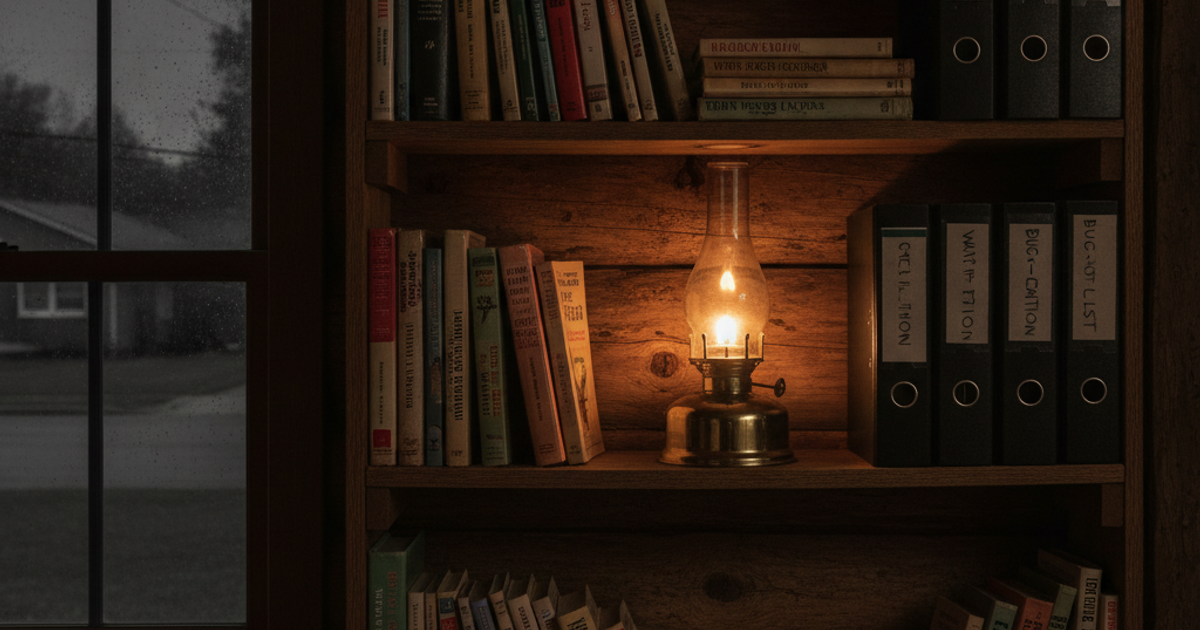
Your phone holds thousands of survival articles, YouTube tutorials, and PDF manuals. It also holds a battery that dies in a day, a screen that cracks, and a dependence on cell towers and server farms you don't control. When Hurricane Maria knocked out power to essentially all of Puerto Rico in 2017, some residents waited nearly a year for restoration. During the February 2021 Texas grid failure, millions lost power for days in sub-freezing temperatures. In both cases, the digital library most people rely on became a paperweight.
A printed survival library is the least glamorous purchase in emergency preparedness — and one of the highest-leverage. Paper needs no charge, no signal, and no subscription. It can be handed to a neighbor, read by candlelight, and annotated with a pencil. Whether you're in a 600-square-foot apartment or on 40 rural acres, here's how to build a reference collection that actually works when the internet is gone.
Why a Printed Survival Library Beats a Hard Drive When SHTF
Digital storage fails in predictable ways. Consumer SSDs can lose data charge over years of unpowered storage, hard drives suffer mechanical failure, and any device with a microchip is vulnerable to electromagnetic pulse unless you've built proper Faraday cage protection for your electronics. Paper degrades slowly and predictably — acid-free books stored dry and dark last a century or more.
There's also a cognitive argument. Research on reading comprehension, including a 2018 meta-analysis published in Educational Research Review covering more than 170,000 participants, found that comprehension of informational text was measurably better on paper than on screens. Under stress, that margin matters. When you're trying to splint a fracture by headlamp, you want a book you can prop open, not a screen you have to keep waking up.
What You'll Need
Tools
- Three-hole punch and heavy-duty binders
- Laser printer or access to a print shop
- Laminating pouches and a laminator (or cold-seal pouches)
- Label maker or permanent marker
Supplies
- SAS Survival Handbook
- Where There Is No Doctor
- Rite in the Rain all-weather notebook
- Fireproof, waterproof document bag
- Mylar bags or airtight plastic totes with gasket lids
- Silica gel desiccant packs
The Core Titles Every Prepper Bookshelf Needs
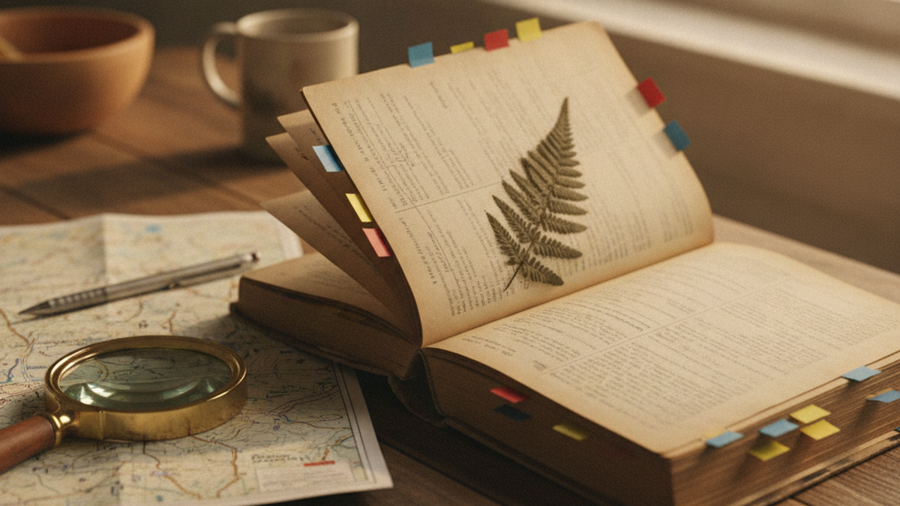
Build outward from five subject pillars: medicine, food production, food preservation, general survival skills, and local plant/animal identification. Depth beats breadth — one authoritative book per pillar outperforms a dozen thin paperbacks that recycle the same campfire advice.
Medical Reference
Start with Where There Is No Doctor from the Hesperian Foundation. It was written for village health workers in regions without hospitals — precisely the scenario preppers plan for — and covers diagnosis, dosing, wound care, and childbirth in plain language with clear illustrations. Pair it with a trauma-specific text and keep it beside your medical supplies, not on a shelf across the house. If you haven't built the kit to match, start with our guide to building a trauma kit that keeps your family alive.
General Survival and Field Craft
The SAS Survival Handbook by John "Lofty" Wiseman remains the benchmark single-volume reference for shelter, signaling, water, and improvised gear. The compact pocket edition fits in a bug out bag without meaningful weight penalty. Complement it with the US Army Survival Manual FM 21-76, which is dry but exceptionally systematic on navigation, knots, and field expedients — and cheap enough to buy two copies and stash one in the vehicle.
Food Production and Preservation
Carla Emery's Encyclopedia of Country Living is the single densest self-sufficiency reference in print, covering everything from grain milling to butchering to soap making. Apartment dwellers shouldn't skip it — the sections on sprouting, small-batch dairy, and food handling apply anywhere, and it pairs well with our guide to building a serious stockpile in a small space. For preservation, the Ball Complete Book of Home Preserving gives you tested, lab-verified processing times — critical, because botulism risk in improperly canned low-acid food is not something to improvise around.
Regional Field Guides
Generic foraging books get people poisoned. Buy a region-specific guide plus a broad reference like the Peterson Field Guide to Edible Wild Plants, and learn the dangerous look-alikes in your area before you ever need to eat. City dwellers should read it alongside our urban foraging guide, since vacant lots and greenways host more edible species than most people realize.
Step-by-Step Instructions
Step 1: Audit your existing knowledge gaps
Write down the five emergencies most likely to hit your location — wildfire, hurricane, grid failure, civil unrest, extended job loss. For each, list the skills you cannot currently perform without looking something up. That list is your buying order. Don't purchase a wilderness trapping manual if you live on the 12th floor of a high-rise and can't yet purify water.
Step 2: Buy print editions, not e-books
Purchase physical copies of your five pillar titles first. Used editions from thrift stores and library sales cost a fraction of retail; content on knot tying and canning temperatures doesn't expire. Budget roughly $150–$250 for a solid five-to-ten book foundation.
Step 3: Print your custom reference binder
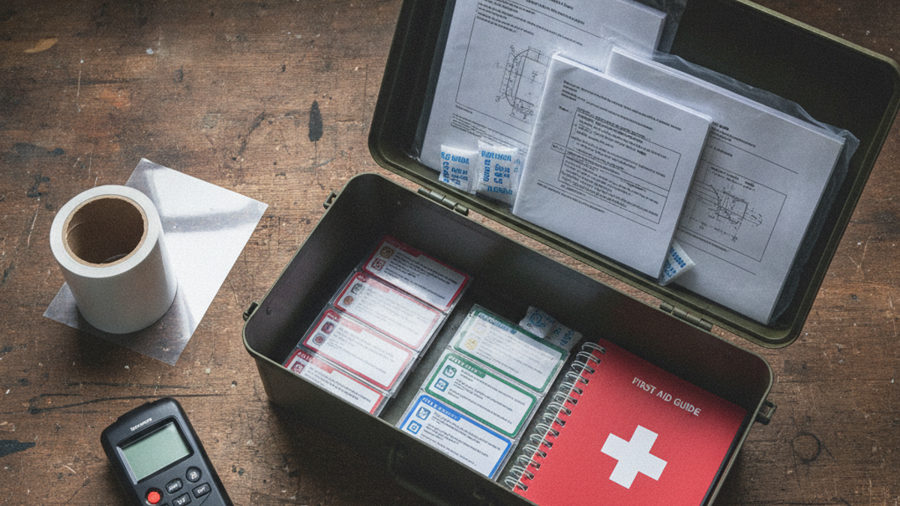
Download and print the documents no commercial book contains: your family communication plan, medication lists and dosages, insurance policy numbers, well pump specs, generator maintenance procedures, local topo maps, and ham radio frequency lists. Use a laser printer — inkjet ink runs when wet. Three-hole punch everything into a binder with tabbed dividers.
Step 4: Laminate the critical single pages
Some pages you'll use with wet, bloody, or dirty hands. Laminate the CPR sequence, tourniquet application steps, water purification ratios, edible plant quick-reference cards, and your evacuation route map. Punch a corner hole and ring them together so they can hang inside a cabinet door.
Step 5: Store in waterproof, fire-resistant containers
Books are destroyed by water, mold, and rodents far more often than fire. Store your library in gasketed plastic totes with silica desiccant packs, kept off concrete floors (which wick moisture) on shelving or pallets. Keep irreplaceable documents — deeds, passports, birth certificates, cash reserves — in a fireproof, waterproof document bag that can be grabbed in seconds during an evacuation.
Step 6: Distribute duplicate copies across locations
A single library in a single house is a single point of failure. Keep a pocket survival manual in your bug out bag, the Army manual and a road atlas in your vehicle, and — if possible — a duplicate medical reference at a relative's home or your workplace. This mirrors the redundancy principle behind a layered emergency communication plan.
Step 7: Read and annotate before the crisis
An unread book is dead weight. Schedule one chapter a week and physically practice what you read — tie the knot, can the jars, filter the water. Write margin notes with dates and results. Log every drill in a Rite in the Rain all-weather notebook, which writes wet and survives rain, sweat, and mud — the same notebook becomes your journal for water levels, fuel use, and watch rotations if SHTF.
Step 8: Keep it discreet
A wall of survival manuals in your front room broadcasts exactly what you have. Store the bulk of the library in a closet, basement, or bin — the same OPSEC logic that governs your stockpile applies to your bookshelf. Grey man discipline includes what visitors can read from your décor.
Recommended Gear
If you're starting from zero, the fastest path to a functional library is the SAS Survival Handbook for skills, Where There Is No Doctor for medicine, the Encyclopedia of Country Living for self-sufficiency, Ball Complete Book of Home Preserving for emergency food storage, the Peterson Field Guide to Edible Wild Plants for identification, and the US Army Survival Manual FM 21-76 as a vehicle copy. Add a Rite in the Rain notebook and a fireproof document bag, and browse more titles in our roundup of the top 10 survival books every prepper should read or our recommended survival gear page.
Frequently Asked Questions
How many survival books do I actually need?
Ten well-chosen, well-read books beat fifty unread ones. Aim for one authoritative title per pillar — medicine, food growing, food preservation, general survival, regional plant ID — plus a custom binder of location-specific documents. Add depth only in areas you've already practiced.
Can't I just save PDFs to a tablet or e-reader?
Digital backups are worth having as a supplement, ideally on a device stored in a Faraday bag with a solar charging option. But treat them as the backup, not the primary. Batteries fail, screens shatter, and electronics can't be shared across a group the way a passed-around book can.
How should I store books to prevent mold and water damage?
Keep them between 60–70°F at 30–50% relative humidity, off concrete floors, and inside gasketed totes with silica gel desiccant. Avoid attics (heat cycling) and unfinished basements (moisture) unless you're using sealed containers. Check annually for musty odor, which is the first sign of mold before visible growth appears.
Affiliate Disclosure: SHTFPlan.net participates in the Amazon Services LLC Associates Program. Some links are affiliate links — we may earn a small commission at no extra cost to you.
