Urban Foraging: How to Find Wild Edibles in the City When Food Runs Out
When grocery stores empty and supply chains collapse, the food growing right under your feet in city parks, vacant lots, and sidewalk cracks could save your life.
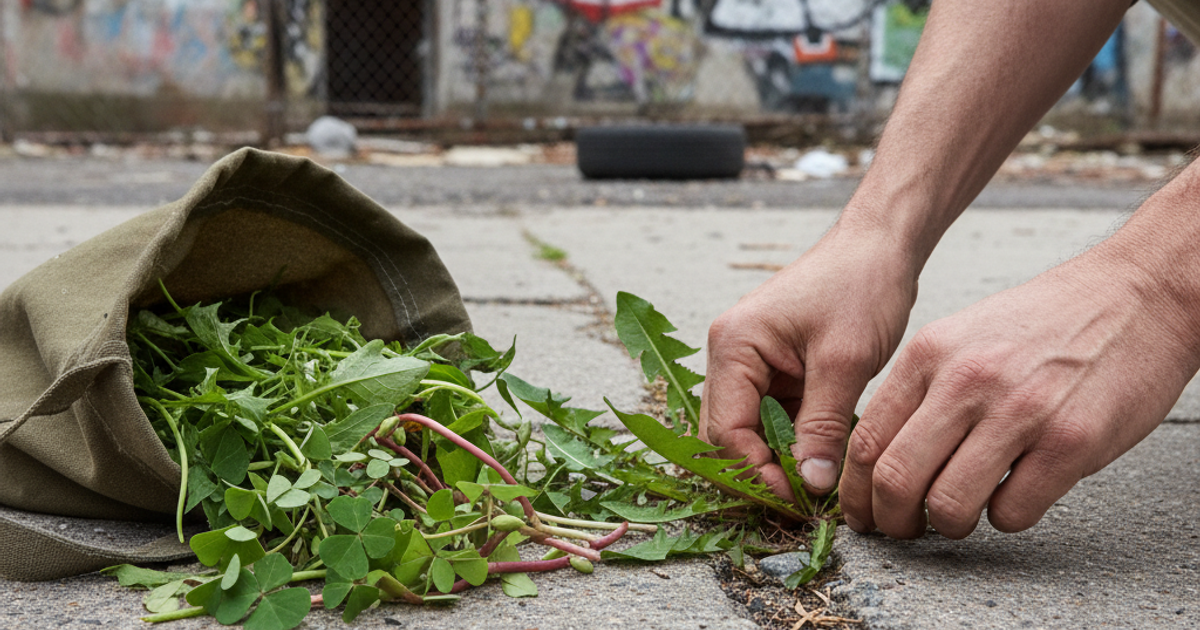
When the supply chain collapses, grocery store shelves go bare within 72 hours. We saw a preview of this during the COVID-19 disruptions of 2020, when panic buying stripped stores of essentials in days. In a true SHTF scenario — grid-down, economic collapse, or prolonged supply chain failure — those shelves won't be restocked. For the urban and suburban prepper, this is the moment your emergency food storage becomes your lifeline. But what happens when that runs out?
Wild edible plants are growing right now in your city, your suburb, along highway medians, in vacant lots, in parks, and pushing up through sidewalk cracks. Most people walk past them every day without a second glance. Learning to identify and harvest these plants is one of the most overlooked — and most valuable — skills in any serious urban survival toolkit. This isn't about hiking in the wilderness. This is about feeding yourself and your family in the concrete environment you already live in.
Why Urban Foraging Deserves a Place in Your Emergency Preparedness Plan
According to the USDA, Americans live in increasingly urbanized environments — roughly 83% of the U.S. population lives in urban or suburban areas. That's a lot of preppers who don't have homesteads or acres of farmland. Yet studies in urban ecology consistently show that disturbed urban environments are among the most biologically diverse on the planet. Plants don't care about zoning laws. They colonize any available soil, sun, and moisture.
Wild edibles serve as a critical supplement to your emergency food storage when supplies run low. They're free, renewable, and — if you know what you're doing — nutritious. Many common urban weeds are more nutrient-dense than supermarket produce. Dandelion greens, for instance, contain more calcium and vitamin A than spinach. Lamb's quarters rival spinach in iron content. This isn't survival desperation food — it's legitimate nutrition hiding in plain sight.
That said, wild foraging in an urban context carries unique risks compared to rural settings. Soil contamination, pesticide drift, and proximity to industrial sites all demand careful situational awareness. The prepper who treats urban foraging as a serious discipline — learning plants systematically, understanding local contamination risks, and building foraging into a broader emergency preparedness plan — will have a meaningful edge when the food system fails.
How to Identify the Most Common Urban Wild Edibles You Can Find Right Now
Start with the plants most likely to appear within walking distance of where you live. These are resilient, widespread species that thrive in disturbed urban environments:
- Dandelion (Taraxacum officinale): Every part is edible — leaves, flowers, and roots. Young leaves are least bitter. Roots can be roasted as a coffee substitute. Found in virtually every lawn, park, and vacant lot in North America.
- Lamb's Quarters (Chenopodium album): Often mistaken for a weed, this plant is a nutritional powerhouse. Leaves taste similar to spinach and can be eaten raw or cooked. Common in disturbed soils, gardens, and empty lots.
- Purslane (Portulaca oleracea): A fleshy succulent that pushes through sidewalk cracks and grows in urban planters. Contains more omega-3 fatty acids than any other leafy plant. Slightly tangy, good raw or cooked.
- Plantain (Plantago major): Not the banana — this is a low rosette herb that grows in compacted soil, along footpaths, and in lawns. Young leaves are edible and mildly bitter. Also has medicinal uses for minor wounds and insect bites.
- Wood Sorrel (Oxalis spp.): Recognizable by heart-shaped leaflets in groups of three. Has a pleasant lemony flavor from oxalic acid. Common in shady urban areas, parks, and under trees. Consume in moderation due to oxalic acid content.
- Chickweed (Stellaria media): A cool-weather plant that carpets urban soil in spring and fall. Mild flavor, good in salads. Rich in vitamin C.
- Stinging Nettle (Urtica dioica): Common along waterways, fences, and disturbed ground. Once cooked or dried, the sting is neutralized. Nutritionally dense — high in iron, calcium, and vitamins A and C. One of the best survival greens available.
- Black Mustard (Brassica nigra): Prolific along roadsides, vacant lots, and railway corridors. Young leaves, flowers, and seeds are all edible. The seeds can be ground into a condiment.
Building your plant identification library before a crisis is essential. The Peterson Field Guides edible wild plants series is considered a gold standard for North American foragers — organized by plant family and color-coded for quick field identification, it belongs in every serious prepper's reference library. Keep a physical copy; apps won't work when the grid goes down.
Building a Foraging Knowledge Base Before SHTF Hits
The single biggest mistake preppers make with foraging is assuming they'll figure it out when they need to. Misidentification of wild plants can be fatal. Poison hemlock and wild carrot look similar to the untrained eye. Deadly nightshade berries can kill a child. The time to learn is now, while stakes are low and grocery stores are still open.
Samuel Thayer's work is among the most thorough and practical available for serious foragers. The Samuel Thayer Forager's Harvest wild edibles book goes far beyond simple identification — it covers harvest timing, preparation methods, and the ecology of each plant in practical depth that most field guides skip entirely. This is required reading for anyone building foraging into their long-term survival strategy.
For a broader visual reference, the Audubon Society field guide North American wildflowers provides extensive photographic coverage of plant species across regions, making it easier to cross-reference identifications before eating anything unfamiliar.
Right now, while infrastructure is intact, use technology to accelerate your learning. The iNaturalist platform has become one of the most powerful plant identification tools available — and there are companion iNaturalist plant identification field guide books that translate its digital database into a physical reference you can rely on when your phone is dead or the internet is gone. Practice identifying plants in your neighborhood now. Walk your local parks, vacant lots, and green spaces and catalog what's growing there. Build that mental map before you need it.
You should also pair your foraging knowledge with relevant skills from other survival disciplines. For instance, medicinal herbs you can grow at home overlap significantly with forageable wild plants — many of the same species serve both nutritional and medical functions, which matters when supply chains fail. And if you're thinking about diversifying your food production, check out urban farming for resilience as a complementary approach to foraging.
Urban Foraging Safety: Contamination, Pesticides, and Smart Harvest Zones
Knowing what to eat is only half the equation. Knowing where to harvest safely is equally critical in an urban environment.
Avoid harvesting from these locations:
- Within 50 feet of high-traffic roadways — lead, cadmium, and other heavy metals concentrate in roadside soil and plant tissue
- Near industrial sites, brownfields, or former gas stations — soil contamination can be severe and invisible
- In areas visibly treated with herbicides — yellowing, curled, or dying vegetation in otherwise green areas is a warning sign
- Near storm drain outflows — these concentrate runoff from wide urban areas
- In dog parks or areas with high pet traffic — pathogen contamination from animal waste
Prefer these harvest zones:
- City parks, especially those with formal organic management policies
- Community gardens and natural areas managed without pesticides
- Suburban lawns where you know the owner and their maintenance habits
- Your own property or containers
- Riparian corridors and creek banks away from industrial influence
- Rural field edges and fence lines (highly productive, often low contamination)
Always wash foraged plants thoroughly. Where possible, use clean water — and if tap water is unavailable during a grid-down scenario, prioritize water purification for washing food as well as drinking. This connects directly to your broader survival kit preparations.
Harvesting Techniques and Essential Tools for Urban Foragers
Urban foraging doesn't require much gear, but a few quality tools make a significant difference. A sturdy fixed-blade knife handles most harvesting tasks — cutting stems, digging shallow roots, and splitting thick stalks. The Morakniv bushcraft fixed blade knife is a trusted choice among experienced preppers and foragers — it holds an excellent edge, is corrosion-resistant, and is rugged enough for demanding field use. Add it to your bug out bag or everyday carry rotation now.
Beyond a knife, your core foraging kit should include:
- Canvas or mesh bags for carrying harvest (allows plants to breathe)
- Lightweight gloves (especially for nettles)
- A small folding trowel for root harvesting
- Physical field guides — kept dry in a ziplock bag
- A hand lens or loupe for examining small identifying features
Practice the grey man approach when foraging in populated urban areas during a crisis. Harvesting plants from a city park while infrastructure is still functioning is legal in most jurisdictions with some restrictions — but in a true SHTF environment, drawing attention to your food source is a security liability. Forage during off-peak hours, carry non-descript bags, and maintain low visibility. Your situational awareness skills matter as much in a foraging context as in any other survival scenario. See our guide on situational awareness and threat detection for a deeper look at staying safe and unnoticed.
Seasonal Foraging Calendar: What Urban Dwellers Can Harvest Year-Round
One of the most important concepts for the urban forager to internalize is seasonality. Different plants are available and nutritious at different times of year:
- Spring: Peak season. Dandelion, chickweed, wood sorrel, young nettles, lamb's quarters emerging. Focus on tender young growth — most nutritious and least bitter.
- Summer: Purslane, black mustard seed, elderberries, mulberries (from urban trees), plantain. Heat tolerant species dominate.
- Fall: Acorns (require leaching of tannins), rose hips, hawthorn berries, late lamb's quarters seed heads. Focus on calorie-dense harvests for storage.
- Winter: Roots become more accessible as above-ground growth dies back. Pine needle tea (vitamin C). Dried and stored harvests from previous seasons carry you through.
Pairing foraged foods with your existing emergency food storage significantly extends your supply. Foraged greens provide vitamins and minerals that stored grains and canned goods often lack — the combination is nutritionally superior to either alone. For a longer-term approach to food security, also consider reading our guide on apartment prepping and growing food in small spaces, which complements foraging with intentional cultivation even without land access.
What You'll Need
- Field guide to edible plants (specific to your region)
- Small knife or scissors for harvesting
- Canvas bag or basket for collecting
- Gloves to protect hands from thorns and irritants
- Notebook to document locations and plant identification
- Water bottle for cleaning plants in the field
Step-by-Step Instructions
Step 1: Learn to Identify Common Urban Edibles
Start by memorizing 5-10 easily recognizable edible plants that grow abundantly in cities, such as dandelions, plantain, purslane, lamb's quarters, and chickweed. Study their distinctive features including leaf shape, stem characteristics, and growth patterns using your field guide. Practice identifying these plants in different seasons and growth stages, as young and mature plants can look quite different. Never consume any plant unless you are 100% certain of its identification, as many edibles have toxic look-alikes.
Step 2: Scout Safe Foraging Locations
Identify parks, abandoned lots, railway corridors, and green spaces away from heavy traffic and industrial areas. Avoid foraging within 50 feet of roads due to exhaust contamination and areas that may have been treated with pesticides or herbicides. Check for posted signs indicating chemical treatments and ask local parks departments about their maintenance schedules. Look for established plant communities rather than isolated specimens, which often indicate healthier, more sustainable foraging spots.
Step 3: Follow the Rule of Twos for Safe Harvesting
Never harvest more than one-third of any plant population to ensure continued growth and reproduction. Take only what you need from at least two different locations to avoid depleting a single area. Wait at least two weeks before returning to the same foraging site to allow plants time to recover. This sustainable approach ensures you'll have ongoing access to food sources even during extended emergencies.
Step 4: Harvest Plants at Optimal Times
Collect leafy greens in the early morning after dew has dried but before the heat of the day, when they're most crisp and nutritious. Harvest flowers when they've just opened fully and roots in fall or early spring when plants store maximum nutrients underground. Young leaves are generally more tender and less bitter than mature ones, making them preferable for eating raw. Avoid plants that are wilted, diseased, or have visible insect damage.
Step 5: Clean and Prepare Your Foraged Foods Properly
Thoroughly wash all foraged plants in clean water at least three times to remove dirt, insects, and potential contaminants. Soak leafy greens in cold water for 10-15 minutes to allow debris to settle, then rinse again. Remove any damaged or discolored portions before consumption. Some plants like dandelion greens benefit from blanching to reduce bitterness, while others like purslane can be eaten raw in salads.
Step 6: Test New Plants Using the Universal Edibility Test
Before consuming any unfamiliar plant in quantity, perform a skin test by rubbing a small piece on your inner forearm and waiting 15 minutes for reactions. If no irritation occurs, touch a small piece to your lips, then tongue, then chew and hold in your mouth for several minutes without swallowing. Wait 8 hours and monitor for any negative reactions before consuming a small amount and waiting another 8 hours. Only after passing all stages should you eat normal portions of that plant.
Step 7: Document and Expand Your Foraging Knowledge
Keep detailed records of where you find specific plants, their abundance, and seasonal availability in your notebook. Take photos throughout the growing season to build a personal reference library of local edibles in various stages. Connect with local foraging groups or experienced foragers to learn new species and verify identifications. Continuously expand your repertoire beyond the initial common plants to increase your food security options and nutritional diversity.
Frequently Asked Questions
Is urban foraging safe, and how do I know if a plant is contaminated?
Urban foraging carries real contamination risks that rural foraging typically doesn't. Heavy metals, pesticides, and industrial pollutants can be absorbed by plants from contaminated soil without any visible sign on the plant itself. The safest approach is to avoid harvesting within 50 feet of heavy traffic roads, near industrial sites, or in areas with unknown chemical history. When in doubt, choose harvest sites where you have knowledge of land management history — community gardens with organic policies or your own property are ideal. Washing all foraged plants thoroughly with clean or purified water reduces surface contamination from pesticide drift and animal waste, but does not remove heavy metals absorbed into plant tissue. Err on the side of caution: when you cannot confirm a site's contamination history, move on to a better location.
What are the most dangerous lookalike plants urban foragers need to avoid?
Several highly toxic plants have edible lookalikes that kill inexperienced foragers every year. The most dangerous pairings include: poison hemlock (Conium maculatum) versus wild carrot, water hemlock versus edible water parsnip, deadly nightshade berries versus edible berries, and pokeweed roots versus edible roots like burdock. The cardinal rule is: never eat any plant you cannot positively identify using at least two independent characteristics. Cross-reference every ID using a physical field guide — do not rely solely on smartphone apps, which have documented misidentification rates. When uncertain, do not eat. There are enough unambiguous, safe urban edibles (dandelion, purslane, plantain, chickweed) that you never need to gamble on uncertain identifications, especially in a high-stress survival situation.
Can I realistically survive on urban foraged food alone during a SHTF scenario?
Foraging alone is unlikely to sustain an adult's full caloric needs in most urban environments — wild plants are primarily micronutrient sources rather than significant calorie sources. A realistic urban survival food strategy treats foraging as a critical supplement to stored food, not a replacement for it. Foraged greens provide vitamins and minerals your stored rice, beans, and canned goods lack. Foraged calorie sources — acorns, starchy roots, seeds — can add meaningful energy to your diet in fall and winter. The most sustainable approach combines a solid emergency food storage foundation with foraging skills, supplemented where possible by container gardening and community food networks. Begin building your food storage base while simultaneously developing your foraging knowledge, and you'll have layers of redundancy that make a genuine difference in a prolonged crisis.
Affiliate Disclosure: SHTF Plan participates in the Amazon Services LLC Associates Program. Some links are affiliate links — we may earn a small commission at no extra cost to you.