Reinforcing Doors and Windows: How to Harden Your Home's Weakest Entry Points Before SHTF
Your doors and windows are the first things a threat will target. Here's how to fortify them before disaster strikes.
Most burglaries take less than 60 seconds to execute. According to FBI crime data, approximately 34% of burglars enter through the front door — and the vast majority of residential break-ins involve nothing more sophisticated than a boot heel or a well-placed shoulder. When SHTF and law enforcement is overwhelmed, delayed, or nonexistent, that statistic becomes your worst nightmare. Your door isn't a barrier. It's a suggestion.
The good news: hardening your home's entry points doesn't require a construction crew, a rural homestead, or a massive budget. Whether you're an apartment dweller in Chicago, a suburban homeowner in Phoenix, or a rural prepper on 20 acres, there are layered physical security upgrades you can implement right now — before the grid goes down, before civil unrest reaches your neighborhood, and before your emergency food storage and survival gear become a target for desperate people.
This guide covers the most vulnerable entry points in any residence — doors and windows — and gives you practical, actionable steps to harden them against forced entry, severe weather, and disaster scenarios.
Why Your Front Door Is Already Failing You as a Security Barrier
The average residential door frame is made from standard pine lumber, held together with ¾-inch screws that barely penetrate the door jamb. The strike plate — that small metal plate where the deadbolt latches — is typically secured with screws only ¾ to 1 inch long. A single solid kick delivers enough force to split the frame, rip out the strike plate, and breach the door in under two seconds. The lock itself almost never fails. The frame does.
This is not a rural or urban problem exclusively. It applies to every standard residential door in America — from apartment doors in high-rise buildings to farmhouse doors on remote properties. Understanding this vulnerability is the first step toward fixing it.
How to Reinforce Door Frames and Strike Plates Against Forced Entry
The single most impactful upgrade you can make is replacing your standard strike plate with a heavy-duty, wrap-around strike plate secured with 3-inch screws that penetrate the wall stud behind the door jamb. This alone dramatically increases resistance to kick-in attacks. Hardware kits designed specifically for this purpose replace the entire weak-link chain in your door system.
The Door Armor MAX complete door reinforcement kit is one of the most comprehensive solutions available. It reinforces the door jamb, the hinge side, and the strike area simultaneously — the three primary failure points during a forced entry attempt. Independent testing shows doors reinforced with this type of system can withstand multiple strikes that would shatter a standard door frame in seconds. For any prepper serious about home hardening, this is a foundational investment.
Key upgrades for door frames include:
- Wrap-around steel strike plates secured with 3-inch structural screws
- Hinge bolts or security hinges on doors where hinges are exposed (outward-swinging doors)
- Door jamb reinforcement armor — steel inserts that run the full length of the jamb
- Grade 1 deadbolt locks with a minimum 1-inch throw
- Door viewers (peepholes) with wide-angle lenses so you can identify threats before opening
Using Door Security Bars and Barricade Devices for Rapid Fortification
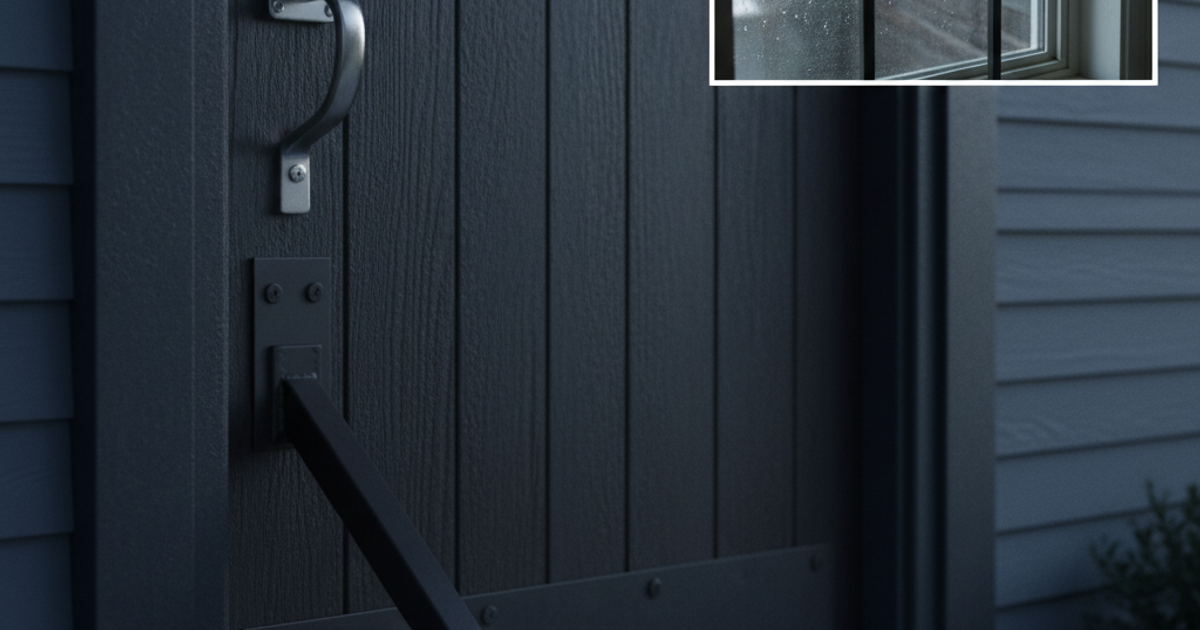
When you need fast, tool-free security — especially in an apartment where you can't permanently modify the frame — door security bars are your best friend. These devices brace against the floor at an angle, creating a mechanical barrier that's extraordinarily difficult to overcome from the outside.
The Buddybar door security bar brace is specifically engineered to fit standard residential door heights and holds under extreme force. Unlike cheap door wedges, a proper security bar distributes force across the floor rather than relying on friction alone. This is an essential piece of urban survival equipment for anyone who rents and can't make permanent modifications.
For sliding doors — a notoriously weak entry point in suburban homes — the Master Lock door bar security bar is designed to prevent sliding glass doors and patio doors from being lifted off their tracks or forced open. Sliding doors are among the easiest entry points for intruders and among the most overlooked by homeowners focused only on the front door. Don't neglect them.
Additional door security measures worth implementing:
- Door chains and door reinforcement shields to prevent kick-in attacks even with the deadbolt engaged
- Barricade bars for inward-swinging doors that anchor to the floor
- Pinning sliding doors with a cut-down wooden dowel in the track as a low-cost backup measure
- Security door cameras integrated with your overall home security camera system for early threat detection
Reinforcing Door Hinges and the Often-Overlooked Side Channels
The OnGARD door reinforcement shield addresses a specific vulnerability most preppers miss entirely: the gap between the door edge and the frame. This shield mounts to the door itself and prevents the frame from splitting away from the latch point — the exact failure mode that makes most residential doors so easy to kick in. It's compatible with most standard door setups and installs without professional help.
On outward-swinging doors, exposed hinges can be attacked with a hammer and punch to drive out the hinge pins. Fix this with non-removable hinge pins or by installing hinge bolts (also called security studs) that keep the door anchored to the frame even if the pins are removed.
How to Harden Windows Against Forced Entry and Disaster Damage
Windows are the second most common entry point after doors. Standard single-pane and even double-pane glass shatters easily and quietly with the right tools. Beyond forced entry, windows also represent your primary vulnerability during hurricanes, tornadoes, civil unrest, and blast scenarios.
The most cost-effective and widely applicable solution is security window film. This polyester laminate doesn't prevent glass from breaking, but it holds the shards together, making entry significantly more difficult and time-consuming. It also protects against flying debris during storms — a dual-purpose upgrade that applies equally to preppers in hurricane country and those preparing for civil unrest.
The 3M Safety Series window security film is among the most tested and trusted products in this category. 3M's safety films are used commercially in banks, government buildings, and schools — and they're DIY-installable on residential windows. For a prepper who can't afford impact-rated glass replacements, this film is the single best window upgrade available at any budget level.
Additional window hardening strategies include:
- Window pins and key locks that prevent sashes from being forced up from outside
- Window sensors tied into a local alarm system — even a battery-powered standalone unit
- Interior storm shutters or security bars for high-risk windows (basement windows are a primary target)
- Thorny bushes planted beneath ground-floor windows — a low-tech deterrent that works surprisingly well
- Polycarbonate window inserts for critical rooms — near-unbreakable and installable as secondary layers behind existing windows
Applying the Prepper Mindset: Layered Defense and Situational Awareness
Physical hardening is only one layer of a complete home defense system. Situational awareness — knowing who's approaching your home before they reach your door — gives you reaction time. Combining hardened entry points with lighting, cameras, alarms, and neighbor networks creates a layered defense that's exponentially harder to defeat than any single upgrade alone.
Good OPSEC practices matter here too. A hardened home is more valuable if potential threats don't know what's inside worth taking. Avoid advertising your emergency food storage, survival gear, or prepper status to casual observers. The grey man principle — blending in and not drawing attention — applies to your home's exterior as much as it does to your personal appearance in a crowd.
For rural preppers, perimeter hardening extends well beyond the door frame. Distance and early warning systems — motion-activated lights, dogs, gravel driveways that crunch underfoot, and clear sight lines — are your first layer of defense. For apartment and suburban dwellers, the emphasis shifts to hardening the door and windows themselves since you have less physical buffer between you and a threat. Consider also your safe room options as a last-resort fallback position within the home.
What Apartment Renters Can Do Without Violating Their Lease
Many emergency preparedness guides assume you own your home. If you're renting — especially in an urban environment — your options for permanent modification are limited. But you're not without options:
- Door security bars require no installation and leave no damage
- Window security film is removable and typically lease-compliant
- Portable door alarms that hang on the handle and trigger if the door opens
- Door frame reinforcement brackets that use existing screw holes with longer screws — ask your landlord for permission first
- Window pins and window locks that fit into the existing sash hardware
Even modest upgrades dramatically raise the effort required to breach your unit — and in a crisis, most opportunistic threats will move to easier targets. That's the core logic of home hardening: you don't need an impenetrable fortress. You need to be harder to breach than the next target.
Recommended Gear Summary
To recap the hardware discussed in this article, here are the core products worth adding to your home hardening kit:
- The Door Armor MAX complete door reinforcement kit for comprehensive frame, hinge, and strike reinforcement
- The Buddybar door security bar brace for tool-free door barricading in any residence
- The Master Lock door bar security bar for sliding and patio door security
- The OnGARD door reinforcement shield to prevent frame splitting at the strike zone
- The 3M Safety Series window security film for shatter-resistance and storm protection on all ground-floor windows
These upgrades, combined with solid situational awareness training and a comprehensive family emergency plan, form the backbone of a defensible home position whether you're bugging in for a week or holding down the fort for the long haul.
What You'll Need
- 3-inch stainless steel screws
- Door reinforcement strike plates
- Solid core or steel doors
- Door jamb reinforcement kit
- Security film or polycarbonate glazing shields
- Window security bars or grilles
- Sliding door lock bars
- Heavy-duty hinges with non-removable pins
- Drill and drill bits
- Screwdriver set
- Measuring tape
- Level
Step-by-Step Instructions
Step 1: Replace Hollow Core Doors with Solid Core or Steel Doors
Remove all hollow core exterior doors and replace them with solid wood core or steel doors that can withstand forced entry attempts. A hollow door can be kicked in with one or two strong blows, while a solid core door provides substantially more resistance. Ensure the new door fits snugly in the frame with minimal gap around the edges. This is your first and most critical line of defense against intruders.
Step 2: Reinforce Door Frames and Jambs
Install a door jamb reinforcement kit on all exterior doors, focusing especially on the strike plate area where the deadbolt enters the frame. Replace the short screws that come standard in strike plates with 3-inch stainless steel screws that penetrate through the jamb and into the wall studs. This prevents the frame from splintering when force is applied. Add reinforcement plates to both sides of the door frame for maximum strength.
Step 3: Upgrade All Locks and Install Deadbolts
Install Grade 1 deadbolts with at least a 1-inch throw on every exterior door, positioning them separately from the door handle. Replace any standard locks with high-security cylinders that resist picking, drilling, and bumping. For maximum security, consider installing a deadbolt that locks from both sides, though keep a key accessible near exits for emergency egress. Ensure all locks are properly aligned so they engage smoothly without resistance.
Step 4: Strengthen Door Hinges and Prevent Removal
Replace standard hinges with heavy-duty security hinges that have non-removable pins or install hinge bolts on the hinge side of the door. If your door swings outward with exposed hinges, add set screws or studs that prevent the door from being lifted off even if hinge pins are removed. Use 3-inch screws to secure each hinge directly into the wall studs, not just the door frame. This simple upgrade prevents attackers from simply removing the door by taking out the hinge pins.
Step 5: Apply Security Film or Install Window Reinforcements
Cover all accessible ground-floor and basement windows with security film rated at least 8 mil thick, which holds glass together even when shattered. For higher security needs, install polycarbonate glazing shields or security screens over vulnerable windows. These barriers prevent easy access while still allowing natural light and ventilation. Pay special attention to windows near door locks that could allow someone to break glass and reach through to unlock the door.
Step 6: Install Window Bars or Grilles on Vulnerable Openings
Mount steel security bars or decorative grilles on basement windows, ground-floor windows, and any windows concealed from street view. Ensure at least one window per room has a quick-release mechanism for emergency escape, as required by fire codes. Space bars no more than 4 inches apart to prevent entry while still meeting safety regulations. Anchor the bars into the concrete or brick surrounding the window frame, not just the window frame itself.
Step 7: Secure Sliding Doors and Install Secondary Barriers
Place a wooden dowel or security bar in the track of sliding glass doors to prevent them from being forced open. Install anti-lift devices in the upper track to prevent the door from being lifted out of its frame, a common bypass technique. Add a secondary lock or pin lock through the frame for additional security. Consider replacing standard sliding doors with impact-resistant glass models that meet hurricane standards, as these provide significantly better protection against forced entry.
Frequently Asked Questions
How can I reinforce my door without spending a lot of money?
The most cost-effective door hardening upgrade is replacing your existing strike plate screws with 3-inch structural screws that reach the wall studs behind the jamb. This single change costs less than a dollar in hardware and dramatically increases kick resistance. Adding a door security bar or brace is the next step — these run $30–$60 and require zero installation. For under $100 total, you can significantly improve the forced-entry resistance of most standard residential doors.
Does window security film really work against break-ins?
Yes — with an important caveat. Security window film doesn't prevent glass from cracking, but it holds the broken pieces together, turning what would be an instant breach into a multi-strike, time-consuming effort. Most opportunistic intruders rely on speed and quiet; a window that won't clear out after repeated strikes is a major deterrent. Thicker films (4–8 mil) tested by organizations including the Department of Homeland Security have demonstrated meaningful resistance to both forced entry and blast pressure. The 3M Safety Series is one of the most rigorously tested options in the residential market.
What are the most important home security upgrades for a prepper who is bugging in during a SHTF scenario?
In a bug-in scenario, your priority order should be: (1) reinforce all exterior door frames and install quality deadbolts with proper strike plates; (2) add door security bars to all entry doors; (3) apply security film to all ground-floor and accessible windows; (4) establish a watch schedule or early-warning system using motion lights, alarms, or cameras; and (5) identify and prepare a safe room as a fallback position. Layer these physical upgrades with OPSEC discipline — don't advertise what you have — and build relationships with trusted neighbors for mutual security. A well-hardened home combined with community awareness is far more effective than hardware alone.
Affiliate Disclosure: SHTF Plan participates in the Amazon Services LLC Associates Program. Some links are affiliate links — we may earn a small commission at no extra cost to you.