Ashfall: How to Survive a Volcanic Eruption When the Sky Turns Gray
Volcanic ash isn't soft snow — it's pulverized glass that collapses roofs, kills engines, and scars lungs. Here's how to seal your home, protect your family, and keep moving when ashfall blankets your region.
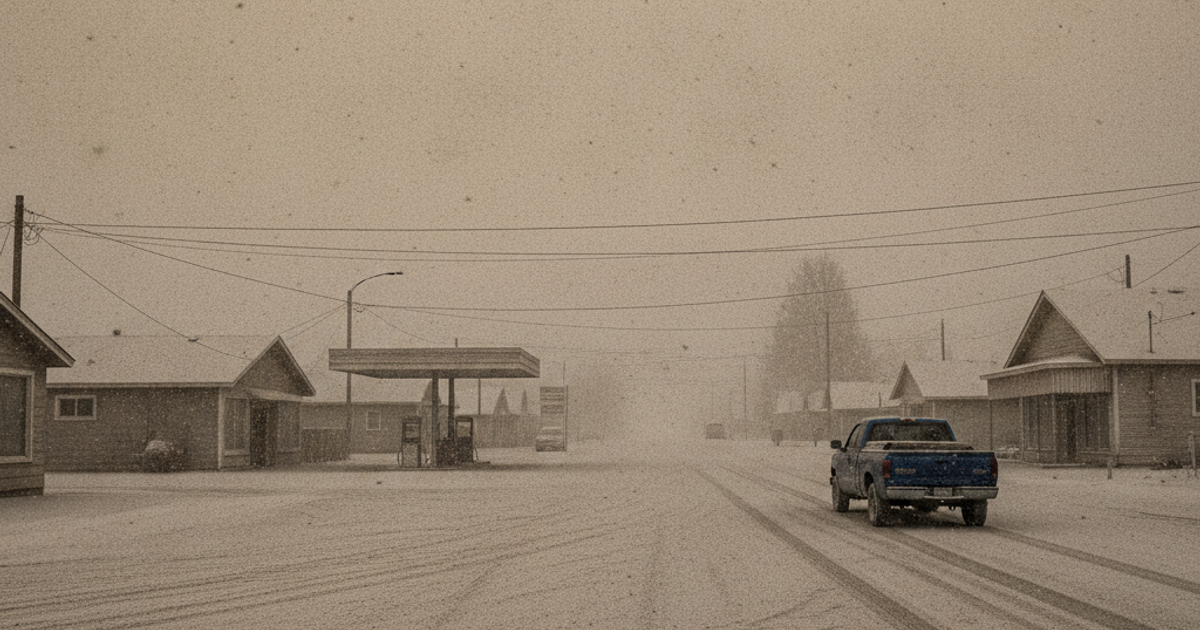
When Mount St. Helens blew apart on May 18, 1980, it ejected roughly 540 million tons of ash across more than 22,000 square miles. Cities like Yakima, Washington — 85 miles away — went dark at midday under four inches of gray powder. Vehicles seized. Water systems clogged. Roofs groaned. Hospitals filled with people whose lungs were burning from a substance that is, chemically speaking, powdered glass.
Most Americans assume volcanoes are somebody else's problem. The USGS 2018 National Volcanic Threat Assessment identified 161 active volcanoes in the United States, 18 of them rated "very high threat." Ashfall doesn't respect state lines. Prevailing winds can carry measurable ash 500 to 1,000 miles downwind, which puts residents of Idaho, Montana, Wyoming, Utah, and the Dakotas squarely in the hazard zone for a Cascade or Yellowstone-region event. If you live in Seattle, Portland, Anchorage, Boise, or Spokane, this is a local hazard, not a documentary topic.
The good news: unlike a tornado or a tsunami, ashfall rarely kills instantly. It kills slowly — through roof collapse, respiratory disease, contaminated water, vehicle accidents, and the cascading infrastructure failures that follow. Every one of those is survivable with preparation.
What You'll Need
Tools
- Plastic snow shovel or roof rake (metal shovels damage roofing)
- Stiff-bristle push broom and garden hose with spray nozzle
- Shop vacuum with HEPA-rated filter bag
- Utility knife and staple gun for sheeting installation
Supplies
- N95 particulate respirators
- Half-facepiece respirator with P100 filters
- Sealed anti-fog safety goggles
- 6-mil plastic sheeting and waterproof duct tape
- Foam weatherstrip tape
- Spare engine air filters, cabin filters, and 5+ gallons stored water per person
Why Volcanic Ash Is Not Like Wood Ash or Snow
Volcanic ash is pulverized rock and volcanic glass. It is angular, abrasive, chemically reactive, and it does not dissolve or melt. Particles smaller than 10 microns (PM10) penetrate deep into the lungs, and fresh ash from dome-building eruptions often contains cristobalite — a crystalline silica form linked to silicosis with prolonged exposure.
Ash is also heavy. Dry ash weighs roughly 25 pounds per square foot per 4 inches of depth. Saturate it with rain and that figure can nearly double. Many residential roofs are engineered for 20 to 30 pounds per square foot of live load. That means as little as 4 inches of wet ash can threaten a standard roof, and flat commercial roofs, carports, greenhouses, and mobile home add-ons fail well before that.
How to Seal Your Home Against Ash Infiltration
Ash behaves like fine dust driven by wind — it finds every gap. Sealing is the single highest-value action you can take, and it works whether you're in a third-floor apartment or a farmhouse.
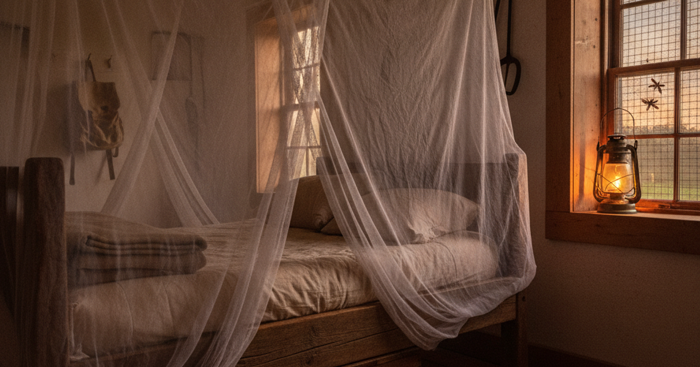
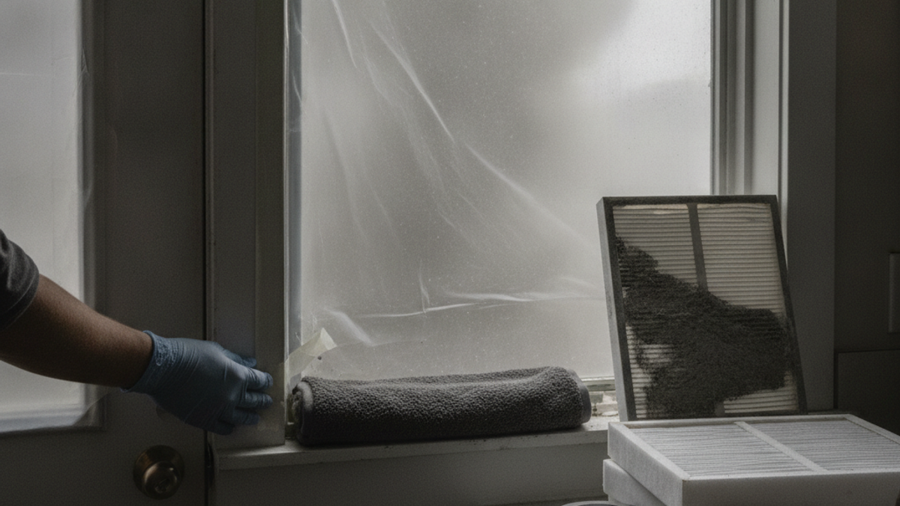
Start with the envelope. Apply foam weatherstrip tape around exterior door frames and operable window sashes; it's cheap, renter-friendly, and cuts infiltration dramatically. Cover window-mounted AC units, bathroom and kitchen exhaust vents, dryer vents, and pet doors with 6-mil plastic sheeting taped down with waterproof duct tape. Designate one interior room with the fewest windows as your clean room, and seal it as a second layer.
For HVAC systems, upgrade to a MERV 13 furnace filter and shut off any fresh-air intake damper. Expect to change filters every few days during heavy fall — ash loads them fast and a clogged filter can burn out a blower motor. Run a HEPA air purifier in your sleep area continuously; true HEPA media captures 99.97% of 0.3-micron particles, which covers the respirable ash fraction. The same tactics apply to smoke events — see our guide on filtering indoor air and protecting your lungs when SHTF.
Respiratory and Eye Protection During Ashfall
Bandanas, surgical masks, and wet towels are near-useless against PM10 ash. A properly fitted N95 respirator is the minimum standard endorsed by the International Volcanic Health Hazard Network. For extended outdoor cleanup work, step up to a half-facepiece respirator with P100 cartridges, which seals better, filters 99.97%, and uses replaceable elements. Stock at least 10 N95s per household member.
Contact lens wearers face a serious hazard: abrasive particles trapped under a lens can scratch the cornea. Switch to glasses and wear sealed anti-fog goggles — not open-sided safety glasses — anytime you're outside.
Roof Load and Safe Ash Cleanup
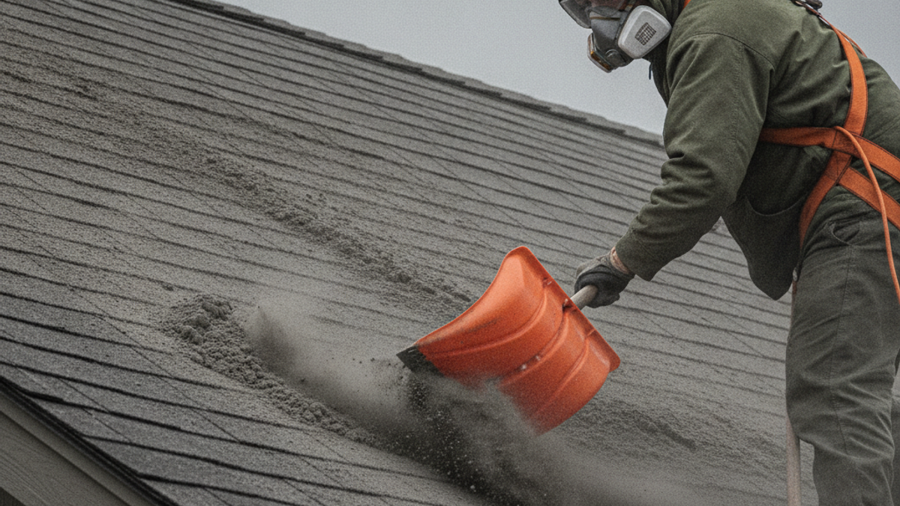
Do not wait for ash to accumulate. Clear it when it reaches 3 to 4 inches, and clear it before forecast rain. Work from a ladder with a roof rake where possible; walking on ash-covered roofing is extremely slick and every year people die falling during ash and snow removal. Use plastic shovels, never metal. Push ash off evenly on opposite sides to avoid unbalanced loading, and never dump it against foundation walls or into storm drains — ash sets up like concrete and will clog municipal systems permanently.
Apartment dwellers aren't off the hook. Clear balconies and check that scuppers and drains aren't plugged. If your building has a flat roof, report accumulation to management immediately.
Protecting Vehicles and Engines From Volcanic Ash
Ash destroys engines. It scours cylinder walls, plugs air filters, and turns brake rotors into grinding wheels. Drive only if absolutely necessary — and remember that ash on pavement is as slick as ice while reducing visibility to near zero. Keep two or three spare engine air filters and a cabin filter on hand, and inspect them after every trip. Never run windshield wipers on dry ash; you'll sand the glass opaque. Flood the windshield with water first. Park vehicles in garages or cover them with tarps. Our vehicle emergency kit guide covers the broader loadout worth keeping in the trunk year-round.
Water Contamination and Purification After an Eruption
Ash leachates can raise fluoride, sulfate, and chloride levels and drop pH in open water sources. More immediately, ash clogs filters, damages pump impellers, and overwhelms municipal treatment. Disconnect rainwater catchment downspouts before ashfall begins — that first flush will ruin a cistern. Store at least one gallon per person per day for two weeks; see our breakdown of how much emergency water you actually need. For post-event treatment, prefilter through cloth to remove grit before running water through ceramic or hollow-fiber elements, then disinfect. Our water purification method guide explains which approach fits which scenario.
Step-by-Step Instructions
Step 1: Monitor official volcano alert levels
Bookmark the USGS Volcano Hazards Program and your regional volcano observatory, and set up NOAA Weather Radio alerts. Ash advisories typically give hours of warning. Know your prevailing wind direction — it determines whether you're downwind.
Step 2: Seal the building envelope before ash arrives
Apply weatherstrip tape to doors and windows, tape plastic sheeting over vents and window AC units, close the fireplace damper, and shut down HVAC fresh-air intakes. Set up one interior clean room with a HEPA purifier running.
Step 3: Fit and stage respiratory protection for every person
Test the seal on each N95 or half-mask respirator now, not during the event. Facial hair breaks the seal. Store masks, goggles, and disposable coveralls by the door you'll use for outdoor work.
Step 4: Disconnect rainwater systems and fill storage
Divert downspouts away from cisterns and rain barrels. Fill bathtubs, food-grade containers, and every water bottle you own before municipal supply is disrupted or pumps are damaged.
Step 5: Protect vehicles and shut down outdoor equipment
Garage or tarp your vehicles, seal generator air intakes with filter socks, and stage spare air filters. Bring livestock into covered shelter with clean feed and water, and cover well heads.
Step 6: Clear ash in stages, never all at once
Remove roof ash at 3 to 4 inches of depth using plastic tools, wearing full PPE. Work in short shifts, hydrate, and never work alone on a roof. Dampen ash lightly to control dust — but don't soak it, because wet ash weighs far more.
Step 7: Decontaminate before re-entering the clean room
Establish a transition zone at the door. Brush off clothing outside, remove boots, and bag dirty garments. Wet-wipe or HEPA-vacuum interior surfaces; dry sweeping just re-suspends the ash you're trying to remove.
Recommended Gear
A complete ashfall kit is inexpensive relative to almost any other disaster prep: respirators, sealed goggles, plastic sheeting, tape, weatherstripping, a stack of MERV 13 filters, a HEPA purifier, spare vehicle filters, and stored water. Add a two-week food stockpile and reliable emergency lighting, because ashfall routinely knocks down power lines and shorts transformers. Browse our full recommended survival gear list to fill remaining gaps in your emergency preparedness plan.
Frequently Asked Questions
How much volcanic ash does it take to collapse a roof?
Roughly 4 inches of wet ash — about 20 to 25 pounds per square foot — can exceed the design load of many residential roofs. Dry ash is about half that weight, so a roof might tolerate 8 to 10 inches dry but fail the moment it rains. Flat roofs, carports, and greenhouses fail first. Clear ash at 3 to 4 inches, and always before forecast precipitation.
Will an N95 mask protect me from volcanic ash?
Yes, for the respirable fraction, provided it's properly fitted with a tight seal against clean-shaven skin. N95s filter 95% of 0.3-micron particles, which covers the fine ash that reaches deep lung tissue. For sustained outdoor cleanup work over hours or days, a half-facepiece respirator with P100 cartridges is significantly better and reusable.
Can I drink tap water after an ashfall event?
Assume no until your utility issues an all-clear. Ash can overwhelm treatment plants, and leachates may elevate fluoride and acidity in open reservoirs and private wells. Rely on stored water first, then prefilter to remove grit before running any source through a ceramic or hollow-fiber filter and disinfecting. Never use ash-contaminated water in a filter without pre-settling — the abrasive particles will destroy the element.
Affiliate Disclosure: SHTFPlan.net participates in the Amazon Services LLC Associates Program. Some links are affiliate links — we may earn a small commission at no extra cost to you.