Wildfire Smoke and Toxic Air: How to Filter Indoor Air and Protect Your Lungs When SHTF
When wildfire smoke or toxic air fills your neighborhood, your home may not be the safe haven you think. Here's how to filter indoor air and protect your lungs when SHTF.
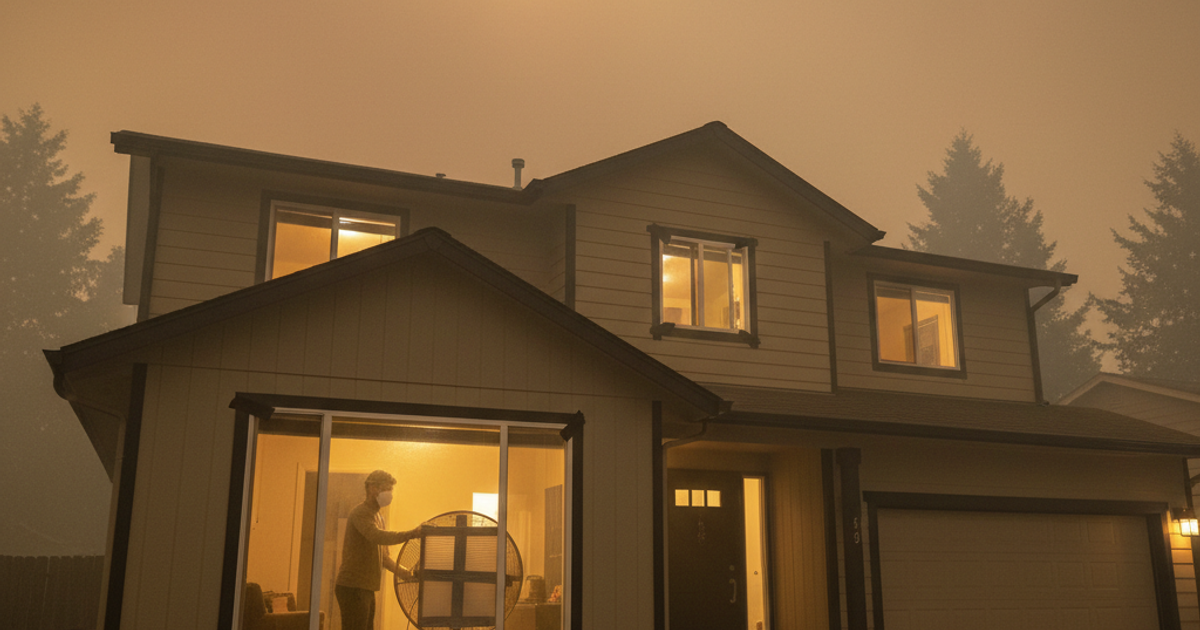
When wildfire season hits — or when an industrial accident, chemical spill, or grid-down catastrophe fills the air with toxic particulates — your home can quickly become a death trap if you don't know how to manage your indoor air quality. The air inside your house is not automatically safe just because the windows are closed. According to the EPA, indoor air can be two to five times more polluted than outdoor air under normal conditions. During a wildfire smoke event or toxic air emergency, that number climbs dramatically as fine particles and volatile organic compounds infiltrate your living space through gaps in doors, windows, and HVAC systems.
This isn't just a problem for rural preppers living in fire-prone Western states. Urban and suburban dwellers are equally — sometimes more — vulnerable. High-density apartment buildings draw enormous volumes of outside air through shared ventilation systems. City residents often lack the space or resources for large-scale filtration setups. And when emergency preparedness fails at the civic level, the burden falls squarely on individual households. Understanding how to filter your indoor air and protect your lungs is a core survival skill that belongs in every prepper's toolkit, right alongside shelter-in-place planning and emergency food storage.
Why Wildfire Smoke Is More Dangerous Than You Think
Wildfire smoke is not like campfire smoke. It is a complex mixture of fine particulate matter (PM2.5), carbon monoxide, nitrogen oxides, benzene, formaldehyde, and dozens of other volatile organic compounds — many of them carcinogenic. The 2018 Camp Fire in Paradise, California sent smoke across hundreds of miles, exposing millions to dangerous air quality levels for weeks. Studies published in the New England Journal of Medicine and other peer-reviewed journals have linked repeated wildfire smoke exposure to increased rates of asthma, COPD exacerbation, cardiovascular events, and long-term cognitive decline.
PM2.5 particles — those smaller than 2.5 microns in diameter — are the primary culprit. They are small enough to bypass the upper respiratory tract entirely and embed deep in lung tissue, entering the bloodstream and causing systemic inflammation. Children, the elderly, pregnant women, and anyone with pre-existing respiratory or cardiovascular conditions are at extreme risk. But even healthy adults suffer measurable lung damage after prolonged exposure. The bottom line: when the Air Quality Index (AQI) exceeds 150, you need an action plan, not just a handkerchief over your face.
The Difference Between PM2.5, VOCs, and Chemical Smoke
Not all toxic air events are created equal, and your filtration strategy should match the threat. Wildfire smoke primarily consists of PM2.5 particulates along with some VOCs from burning vegetation and structures. Industrial accidents and chemical fires add heavy metals, chlorinated compounds, and concentrated VOCs to the mix. Nuclear or radiological events introduce an entirely different category of threat covered in our guide to nuclear and radiological emergency survival.
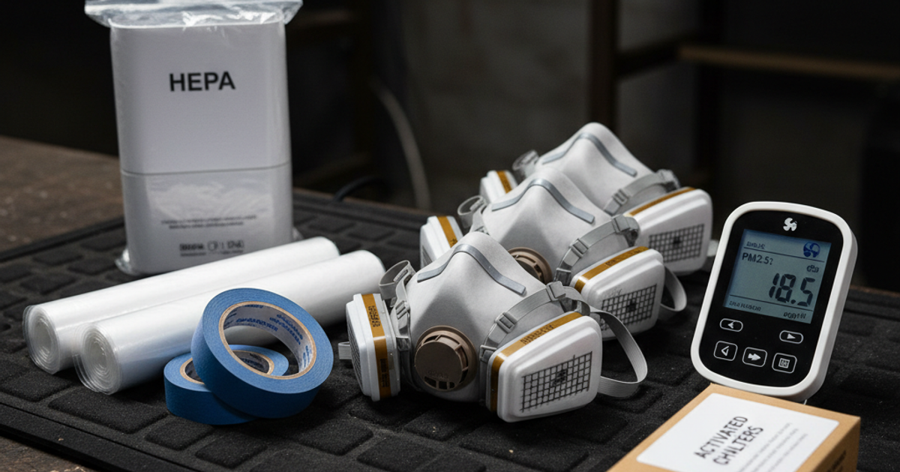
HEPA filtration captures particulate matter down to 0.3 microns with 99.97% efficiency — excellent for wildfire smoke. But HEPA filters do not capture gases or VOCs. For chemical smoke or toxic gas scenarios, you need activated carbon filtration in addition to HEPA. Understanding this distinction is critical when choosing your equipment and planning your response.
What You'll Need
Tools
- Box fan or window fan (for DIY air filter builds)
- Utility knife or scissors (for cutting filter material)
- Duct tape or painter's tape (for sealing gaps)
Supplies
- 3M N95 respirator masks for smoke protection
- Honeywell HPA300 HEPA air purifier for large rooms
- MERV-13 or higher HVAC furnace filters
- Weatherstripping and door draft stoppers
- Plastic sheeting and painter's tape (for sealing rooms)
- Air quality monitor with PM2.5 sensor
How to Seal Your Home Against Wildfire Smoke and Toxic Air
Before any filtration equipment can do its job, you need to reduce the volume of contaminated air entering your space. Every gap, crack, and unsealed penetration is an entry point for smoke and toxic particles. This is true whether you live in a 1,200-square-foot apartment in Chicago or a rural homestead in rural Montana.
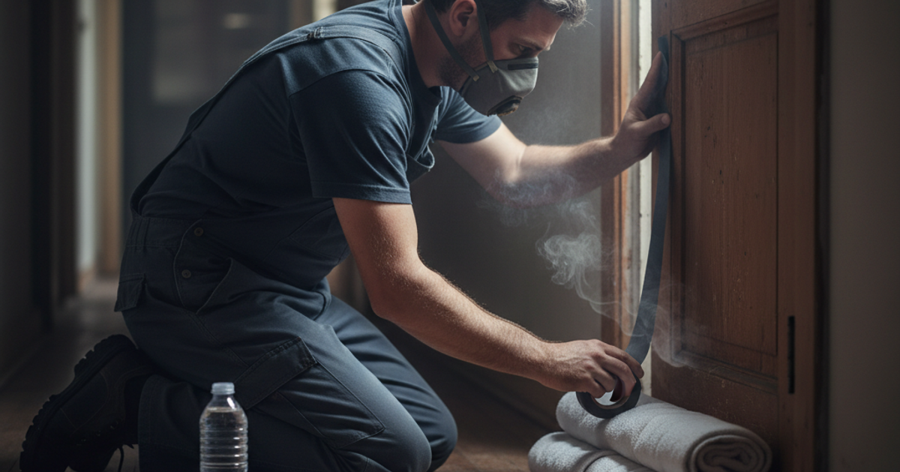
Start by identifying your home's major air infiltration points: gaps around window frames, door sweeps, fireplace dampers, exhaust fans, and bathroom vents. Seal these using weatherstripping, door draft stoppers, and painter's tape over vents you won't need during the emergency. If your HVAC system has a fresh-air intake, shut it off or block it — this is one of the primary routes for smoke to enter a forced-air home. Upgrade your HVAC filter to at least MERV-13 rating if you must run the system at all. In a genuine toxic air SHTF scenario, consider designating a single "clean room" — typically an interior bedroom — and concentrating your sealing and filtration efforts there.
For apartment dwellers with little control over building HVAC, focus on your unit's entry door and any operable windows. A rolled-up wet towel along the bottom of your front door is not just movie lore — it genuinely reduces particle infiltration in the short term. Longer-term, self-adhesive foam weatherstripping applied to your door frame is a cheap and highly effective upgrade that costs under $15 and should be in every urban prepper's supply kit.
Choosing the Right Air Purifier for Smoke and Toxic Air Events
For sustained indoor air quality management during a wildfire smoke event, a quality HEPA air purifier is your most effective tool. The Winix 5500-2 air purifier with activated carbon filter is a strong all-around performer that combines true HEPA filtration with a washable carbon filter — addressing both particulates and VOCs in a single unit. This dual-action capability makes it particularly valuable during wildfires that burn structures, where chemical VOC levels in smoke are significantly elevated.
Room coverage matters enormously. An undersized purifier running in a large space provides a false sense of security. For larger living areas and open floor plans, the Honeywell HPA300 HEPA air purifier is engineered to circulate air in rooms up to 465 square feet, making it a solid choice for main living areas. Pair it with a smaller unit in your designated safe room for layered protection.
Budget-conscious preppers in apartments or smaller homes should look at the Levoit Core 300 true HEPA air purifier, which handles smoke odor and PM2.5 in rooms up to 219 square feet. It's compact, quiet, and energy-efficient — useful attributes when you're managing power consumption during an extended emergency. On the premium end, the IQAir HealthPro Plus is widely regarded as medical-grade and can handle extremely high particulate loads — the kind you'd encounter during severe wildfire events. It's an investment, but for households with medically vulnerable members, it may be the difference between a safe shelter-in-place and a hospital visit.
The Coway AP-1512HH Mighty air purifier consistently ranks among the top performers in independent testing by Consumer Reports and the Wirecutter. It features a four-stage filtration system and an air quality indicator that gives you real-time feedback — valuable situational awareness during an ongoing air quality emergency. The Blueair Blue Pure 211 air purifier is another top contender, with exceptionally high Clean Air Delivery Rate (CADR) scores for smoke, dust, and pollen — meaning it cycles room air more frequently per hour than many competing units at similar price points.
DIY Filtration When Commercial Units Aren't Available
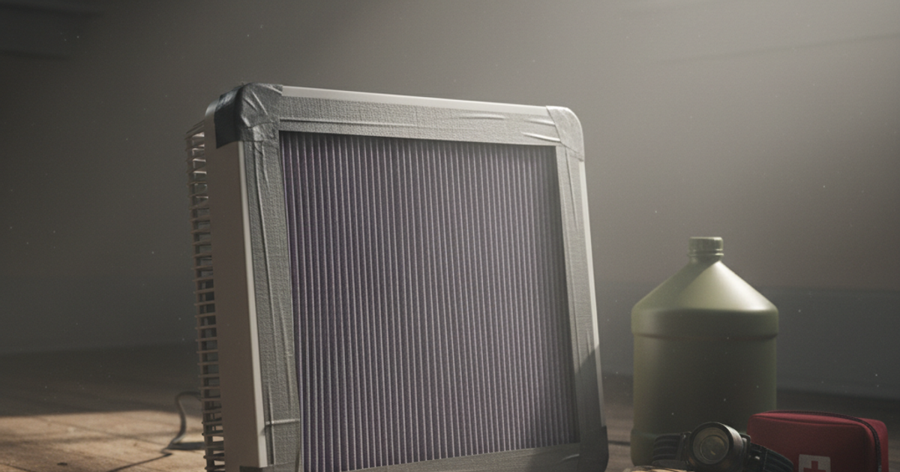
If you're in a grid-down scenario, stores are sold out, or your SHTF situation happened faster than your emergency preparedness planning anticipated, you can build an effective improvised air filter using a box fan and a MERV-13 furnace filter. Known as the "Corsi-Rosenthal Box," this DIY design was validated by air quality researchers during the COVID-19 pandemic and was found to reduce indoor particulate matter by 50-90% depending on room size and smoke conditions. Tape a furnace filter to the intake side of a 20-inch box fan, ensure the airflow direction is correct (air flows through the filter into the fan), and run it continuously. For enhanced performance, build a cube using four filters taped together on all four sides of the fan for maximum filtration surface area.
Personal Respiratory Protection: Masks That Actually Work
Air purifiers protect your indoor space, but the moment you step outside — or if smoke infiltration in your shelter overwhelms your filtration capacity — you need personal respiratory protection. Surgical masks and cloth face coverings offer essentially zero protection against PM2.5 particles. Only N95 respirators and higher provide meaningful filtration of fine particulate matter.
The 3M N95 respirator mask is the standard minimum for wildfire smoke protection. Properly fitted N95s filter at least 95% of airborne particles, including PM2.5. Fit matters enormously — a poorly fitted N95 performs no better than a surgical mask. Every prepper should practice donning and doffing their N95 correctly, check the seal by placing hands over the mask and exhaling sharply, and have a supply of at least 10-20 masks per household member in their survival kit.
For extended outdoor operations in chemical smoke or VOC-heavy environments, a half-face respirator with the appropriate cartridges provides significantly more protection and comfort than disposable N95s. The 3M 6502QL half face respirator with organic vapor and P100 particulate cartridges addresses both VOCs and fine particles simultaneously — essential for wildfire smoke that involves burning structures, vehicles, and synthetic materials. This level of protection is appropriate for anyone who must bug out on foot through a smoke-filled environment or work outdoors during an industrial accident scenario.
Step-by-Step Instructions
Step 1: Monitor Air Quality and Identify Your Threat Level
Check current AQI using an app like AirNow, PurpleAir, or IQAir before taking action. An AQI above 100 (Unhealthy for Sensitive Groups) warrants precautions; above 150 requires active filtration and mask use; above 200 is a shelter-in-place situation for all household members. If official monitoring is down during a SHTF scenario, use a personal PM2.5 monitor to assess your indoor and outdoor air quality in real time.
Step 2: Designate and Prepare a Clean Room
Choose an interior room — preferably with no windows or minimal window area — as your household's clean air refuge. This concentrates your filtration resources and reduces the volume of air you need to clean. An interior bedroom or bathroom works well for this purpose and can double as a safe room for other threats.
Step 3: Seal All Infiltration Points Around Doors and Windows
Apply self-adhesive foam weatherstripping to window frames and door edges. Use painter's tape to seal around window air conditioning units, exhaust fan openings, and any visible gaps in walls or floors. Lay a draft stopper or rolled towel along the bottom of exterior-facing doors. In apartments, also seal your front door with tape if the building hallway is smoke-affected.
Step 4: Shut Down HVAC Fresh-Air Intake and Upgrade Filters
Locate your HVAC system's fresh-air or outside-air intake damper and close it manually. If you must run the HVAC system for heating or cooling, replace your current filter with a MERV-13 or higher-rated filter. Do not use the "fan only" setting on systems with outdoor air connections, as this actively pumps contaminated air into your home.
Step 5: Deploy Air Purifiers Strategically Throughout Your Space
Place your primary high-CADR air purifier in the room where your household spends the most time. Place secondary units in sleeping areas. Run units on their highest fan speed during peak smoke events, then reduce to medium once indoor air quality improves. Keep purifiers running continuously — cycling them on and off allows particle levels to rebound quickly.
Step 6: Fit and Distribute Respiratory Masks to All Household Members
Ensure every household member age 2 and older has a properly fitted N95 mask. Conduct a brief fit-check with each person: put on the mask, cup both hands over the mask, exhale sharply — you should feel air escaping around the edges if the seal is poor. Adjust the nose wire and straps until the seal is complete. Children under 2 cannot safely wear respirators and must be kept in the cleanest possible indoor environment.
Step 7: Establish a Medication and Hydration Protocol
Smoke inhalation causes airway inflammation. Anyone with asthma or reactive airway disease should have their rescue inhaler accessible at all times during a smoke event. Keep everyone well-hydrated, as mucus production is your body's natural defense mechanism for trapping particles. If you have household members with severe respiratory conditions, this toxic air scenario may also necessitate evacuation — know your threshold before the emergency begins. Consult resources like our guide to stockpiling first aid supplies for a medical crisis to ensure your medicine cabinet is prepared.
Step 8: Test Indoor Air Quality and Adjust Your Strategy
Use a portable PM2.5 monitor to verify that your sealing and filtration efforts are working. Readings above 35 micrograms per cubic meter indoors indicate inadequate filtration and require additional action — more sealing, additional purifier capacity, or relocating to a cleaner space. Log readings every hour during an active smoke event to track trends and adjust accordingly.
Long-Term Considerations for Prepper Air Quality Planning
Emergency preparedness for air quality threats should be built into your overall survival kit before a crisis occurs, not assembled during one. Wildfire seasons are growing longer and more intense each decade. The 2020 wildfire season burned over 10 million acres in the United States alone, setting a modern record. As part of your wildfire evacuation bag preparation, ensure you include at minimum a 10-day supply of N95 masks, as availability collapses during regional disasters.
For rural preppers and homesteaders with off-grid power considerations, air purifiers present a real energy challenge during extended grid-down scenarios. Calculate the wattage of your preferred units — most quality HEPA purifiers draw between 40-100 watts on medium speed — and factor this into your solar or generator capacity planning. Running a purifier 24 hours a day at 60 watts consumes 1.44 kWh daily, which is well within the capacity of a modest solar setup.
Also consider the intersection of toxic air exposure and other health threats. Smoke inhalation that damages the respiratory epithelium significantly increases susceptibility to respiratory infections. If medical services are unavailable during a prolonged SHTF scenario, preventing lung damage through proactive filtration is far preferable to managing smoke-induced illness without medical support. For related medical preparedness, see our article on field medicine: how to treat injuries when there's no hospital.
Recommended Gear
Beyond the units highlighted above, rounding out your air filtration arsenal with the right equipment is essential for comprehensive protection. The Blueair Blue Pure 211 is an excellent high-volume choice for large open living spaces, combining a fabric pre-filter with a combined particle and carbon filter for broad-spectrum coverage. For households building a layered defense, having one large-room unit and one smaller dedicated bedroom unit provides the best coverage during extended shelter-in-place scenarios. Check our recommended survival gear page for additional vetted equipment to support your emergency preparedness planning.
Frequently Asked Questions
How long do N95 masks last during wildfire smoke events?
An N95 respirator is designed for single-shift use in occupational settings — approximately 8 hours of continuous wear. During wildfire smoke events where you're wearing the mask intermittently throughout the day, a single N95 can often be extended to 2-3 days of use as long as it retains its structural integrity, the nose wire still holds its shape, and the straps haven't stretched loose. If the mask becomes visibly dirty, damp from breathing moisture, or distorted, replace it. Store used masks in a paper bag (not plastic) between uses to allow moisture to evaporate and reduce bacterial growth. Build a stockpile of at least 20-30 masks per person as part of your core survival kit.
Can I use a regular furnace filter instead of a HEPA air purifier to clean my air?
A standalone furnace filter won't clean your air unless air is forced through it by a fan — it only works when integrated into a forced-air system or built into a DIY box fan unit as described in this article. MERV-13 filters in your HVAC system do capture PM2.5 particles effectively, but only the air that cycles through your ductwork gets filtered. A dedicated HEPA air purifier with a built-in fan actively circulates room air through the filter multiple times per hour, providing far superior particle reduction in occupied spaces. For best results during a smoke emergency, use both: a MERV-13 in your HVAC and a dedicated HEPA purifier in your primary living and sleeping areas.
What is the safest room to shelter in during a wildfire smoke emergency?
The safest room is typically an interior room with no exterior windows or doors — often a central bedroom, hallway bathroom, or interior office space. Interior rooms have fewer air infiltration pathways than rooms with exterior-facing windows and walls. If you must choose between a larger interior room and a smaller exterior bedroom, prioritize the interior location and bring your air purifier with you. Avoid rooms with fireplaces, as the chimney and damper create a significant infiltration pathway even when closed. Running bathroom exhaust fans or kitchen range hoods is counterproductive during a smoke event — these fans depressurize the building and actively draw outside air in through every available gap.
Affiliate Disclosure: SHTFPlan.net participates in the Amazon Services LLC Associates Program. Some links are affiliate links — we may earn a small commission at no extra cost to you.