Shelter-in-Place Without Losing Your Mind: How to Survive Weeks of Home Confinement When SHTF
When leaving isn't an option, your home becomes your survival base. Here's how to stay safe, sane, and supplied during extended shelter-in-place emergencies.
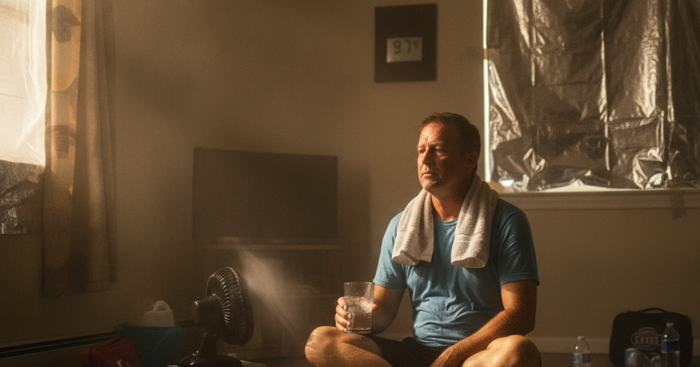
When the grid goes down, civil unrest erupts, or a natural disaster locks your city in a vice grip, the decision to shelter in place may not be optional — it may be the only rational choice. Whether you're in a high-rise apartment in Chicago, a suburban tract home in Phoenix, or a rural farmhouse in rural Montana, the same core challenges will confront you: security, supplies, sanity, and the slow grind of uncertainty. Weeks of home confinement during a SHTF scenario are psychologically and logistically grueling in ways that a 72-hour storm prep simply can't prepare you for.
According to FEMA's emergency preparedness research, the average American household has less than three days of food and water on hand. That's catastrophic when extended grid-down events — ice storms, cyberattacks on infrastructure, supply chain collapses, or widespread civil unrest — can stretch confinement to weeks or even months. The good news: with the right preparation and mindset, you can outlast almost anything from your own home. This guide covers how to do exactly that.
What You'll Need
Tools
- Master Lock door security bar
- Wyze home security camera system (indoor)
- Goal Zero Yeti portable power station
- Midland emergency weather alert radio
Supplies
- Mountain House freeze dried meals variety bucket
- LifeStraw home water filter pitcher
- First Aid Only all-purpose emergency kit
- Family strategy board games
How to Harden Your Home Against Forced Entry During an Extended Crisis
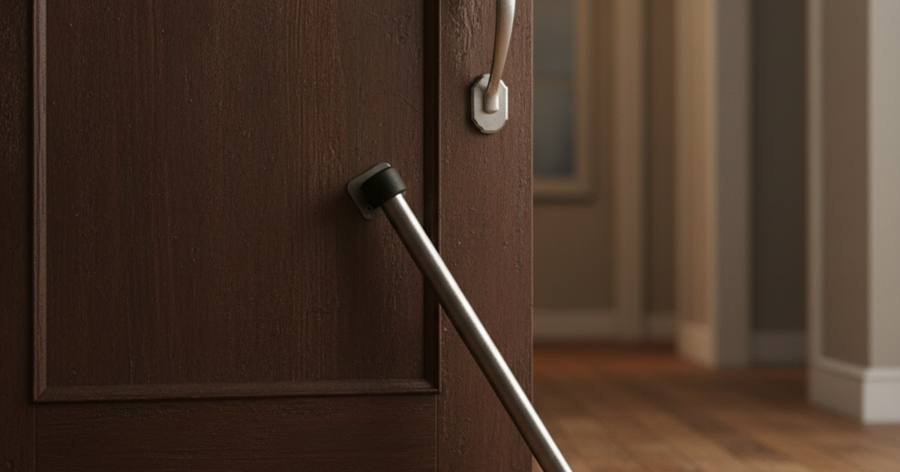
Your home's default security is designed for normal times — not SHTF. Standard residential doors can be kicked in within seconds, and most window locks are little more than psychological deterrents. Before any extended shelter-in-place begins, you need to systematically harden every entry point.
Start with your doors. Most exterior doors have a 1-inch deadbolt throwing into a weak strike plate held by ½-inch screws. Replace those with 3-inch screws and a reinforced steel strike plate. A door security bar like the Master Lock model wedged under a door handle at night adds a critical secondary barrier — this simple device can stop a forced entry cold, buying you precious time to respond. For sliding glass doors, cut a wooden dowel to fit the track and use a secondary pin lock.
Windows are your second vulnerability. Window film (security-grade polyester laminate) prevents shattering and slows entry by up to 60 seconds — enough time to react. Heavy curtains or blackout panels serve a dual purpose: they conceal light signatures at night so your home doesn't advertise your presence to desperate neighbors or looters. This is a core principle of grey man strategy applied to your dwelling. For more on protecting your stockpile from unwanted attention, see our guide on OPSEC for Preppers: How to Keep Your Stockpile and Plans Secret When SHTF.
Install a basic camera system before things deteriorate. The Wyze home security camera system is an affordable option that lets you monitor entry points, hallways, and perimeter areas from a tablet or phone — and with local storage options, it can function even without internet. Pair it with perimeter alarms and trip wires around your property's outer edges to create early warning before threats reach your door.
Managing Emergency Food Storage Rationing When the Crisis Drags On
Caloric discipline is the difference between a two-week supply and a six-week supply. During extended confinement, your activity level will likely drop — you're not commuting, exercising vigorously, or running errands. Most adults can function well on 1,800–2,000 calories per day under low-activity conditions, compared to the typical 2,500+ consumed in normal life.
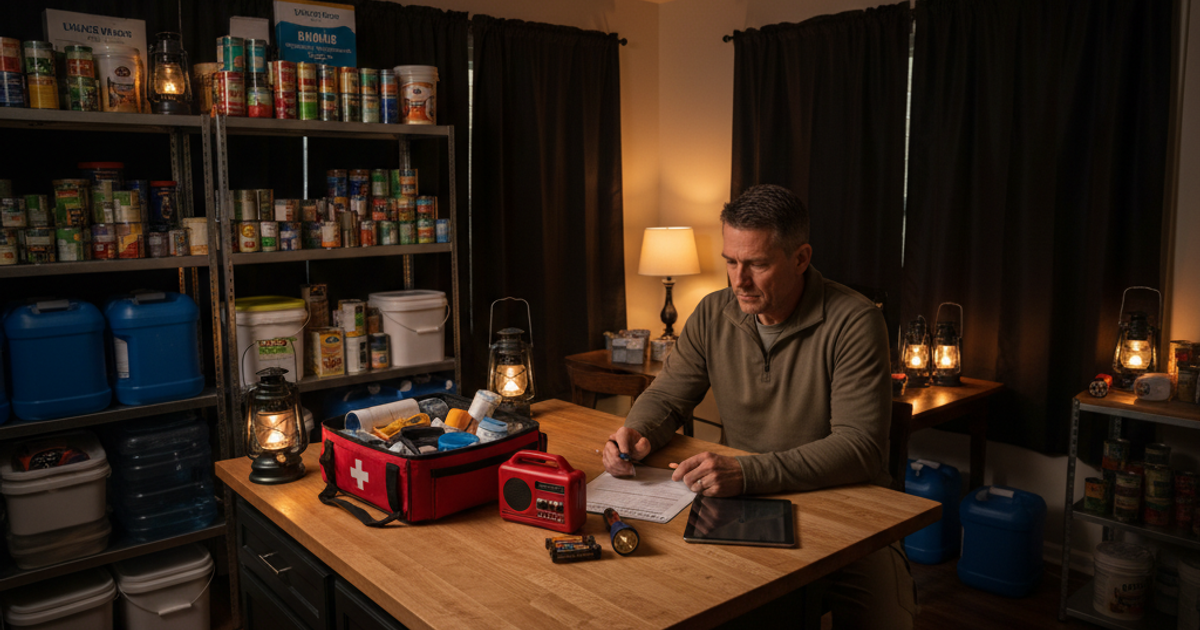
Build your emergency food storage in three tiers: a 72-hour supply of grab-and-go foods, a 30-day rotating pantry of canned goods and staples you actually eat, and a long-term reserve of shelf-stable emergency rations. Mountain House freeze dried meals are an excellent long-term tier option — their variety buckets provide a full 30-day supply with up to 30-year shelf life, requiring only water to prepare. For apartment dwellers, under-bed storage containers, closet organizers, and furniture-integrated storage can hold a surprisingly robust supply without dedicated pantry space.
Implement a strict rotation system. Label everything with acquisition dates and consume oldest stock first. Keep a written inventory — in a grid-down scenario, you won't have a spreadsheet app. A simple notebook tracking daily consumption against remaining stock tells you exactly when you're in trouble with enough time to adapt. For deep dives on building and preserving your food supply, our articles on pressure cooker canning for long-term emergency food storage and building a long-term food stockpile are essential reading.
Water Purification and Storage Strategies for Home Confinement
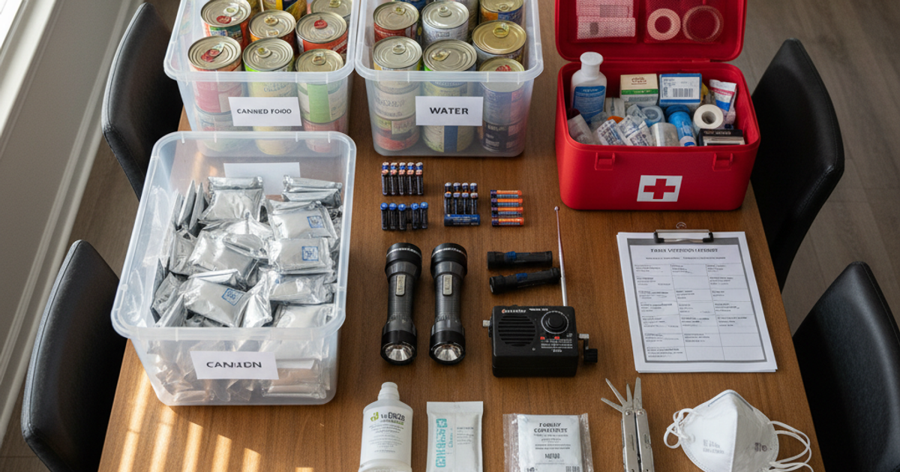
The standard emergency preparedness guidance from FEMA recommends one gallon of water per person per day minimum — and that's for drinking and basic sanitation only. For cooking, hygiene, and medical needs, realistic consumption runs closer to three gallons per person per day. A family of four needs 84 gallons for a two-week shelter-in-place scenario at minimum use.
Fill your bathtub the moment you know a crisis is imminent — a standard tub holds 80–100 gallons. WaterBOB liners are even better, keeping tub water clean for up to four weeks. For ongoing water purification when tap water becomes unreliable, the LifeStraw home water filter pitcher is a practical countertop solution that removes 99.9999% of bacteria and parasites without electricity — critical during a grid-down event. Supplement with water purification tablets for redundancy.
Maintaining Situational Awareness Without the Internet or Cell Service
One of the most disorienting aspects of a serious grid-down or SHTF event is the information blackout. Social media, news sites, and weather apps vanish. Your ability to make intelligent decisions — stay or go, respond or wait — depends entirely on the quality of information you can gather.
A battery-powered or hand-crank Midland emergency weather alert radio is one of the most underrated pieces of survival gear in any prepper's kit. NOAA Weather Radio broadcasts continuous updates on hazardous weather and, during declared emergencies, official government communications. Keep it charged and accessible at all times. Beyond official channels, neighborhood intelligence matters — designate a trusted contact who can safely relay information about what's happening in surrounding areas. Maintaining situational awareness isn't just a tactical skill; it's your early warning system for when shelter-in-place is no longer the right call.
Power Management During a Grid-Down Shelter-in-Place Event
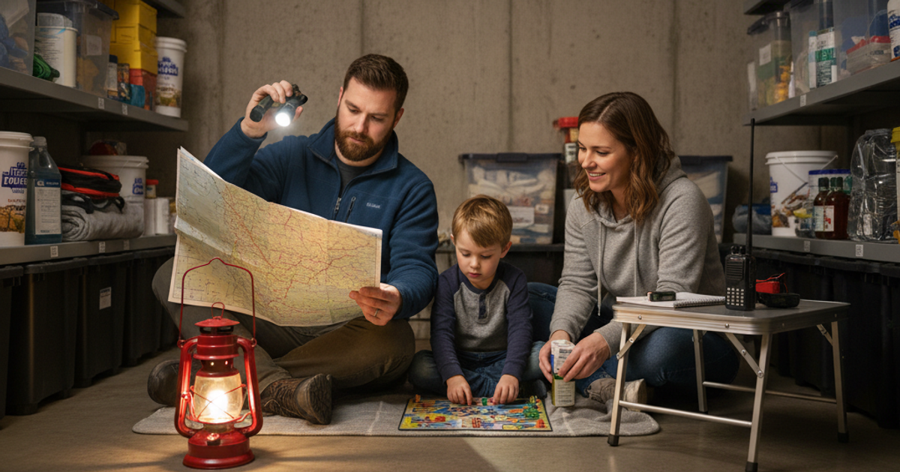
Losing power during an extended confinement means losing refrigeration, lighting, device charging, and potentially heat or cooling. Prioritize your power budget ruthlessly. LED lighting is 75% more efficient than incandescent. A portable power station bridges the gap between grid power and full darkness.
The Goal Zero Yeti portable power station is a versatile solution for indoor use — unlike generators, it produces no carbon monoxide and can safely run indoors. It can power CPAP machines, recharge radios and phones, run LED lights, and keep critical communications equipment alive. Pair it with solar panels for renewable recharging capability. Apartment dwellers and urban preppers who can't run a generator will find a quality power station indispensable.
How to Maintain Family Morale and Mental Health During Weeks of Home Confinement
Research from pandemic lockdowns — real-world data from 2020–2021 — showed that mental health deterioration began meaningfully around day 10 of home confinement for adults, and even sooner for children. Anxiety, depression, interpersonal conflict, and decision-making impairment all increase with isolation and uncertainty. This isn't weakness — it's neuroscience. And it's a survival threat as real as food or water shortage.
Structure is your most powerful psychological tool. Establish a daily routine that includes wake and sleep times, meals at consistent hours, designated work or task periods, physical activity (even bodyweight exercises in a hallway), and social time. Routines reduce cognitive load and create the psychological experience of normalcy even in abnormal circumstances.
Analog entertainment becomes critical when screens go dark. Family strategy board games serve double duty: they provide genuine entertainment and reinforce family bonding through shared activity. Stock a variety of card games, puzzles, books, and drawing supplies. For children especially, maintaining play and learning prevents the behavioral dysregulation that compounds adult stress during confinement.
Address psychological pressure directly and proactively. Denial and suppression of fear or grief during a crisis leads to later breakdown. Designate a daily 15-minute "worry window" — a set time when anyone can voice concerns, fears, or frustrations — then close it and move on. This structured acknowledgment prevents anxiety from leaching into all other hours. For deeper strategies on maintaining mental resilience under sustained pressure, read our guide on stress, fear, and panic: how to build mental resilience before and after SHTF.
Medical Readiness When Emergency Services Are Unavailable
During extended shelter-in-place events, EMS response times can stretch from minutes to never. Chronic conditions, injuries, and infections that would normally require a clinic visit become life-threatening without preparation. Your home must be capable of managing moderate medical emergencies independently.
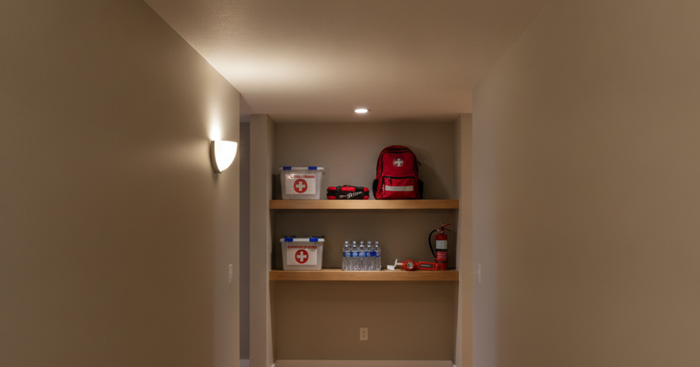
A well-stocked First Aid Only all-purpose emergency kit is a starting baseline — expand it with prescription medications (a 90-day supply minimum), wound closure strips, tourniquets, SAM splints, and a blood pressure cuff. Ensure at least one household member has current first aid and CPR certification. Know the specific medical vulnerabilities of every person in your household and plan accordingly.
Step-by-Step Instructions
Step 1: Secure and Harden All Entry Points in Your Home
Inspect every exterior door and window for vulnerabilities before a crisis begins. Install reinforced strike plates with 3-inch screws on all exterior doors, add a door security bar as a secondary barrier, and apply security film to ground-floor windows. Rural homeowners should also address outbuildings and barn doors that could provide cover for intruders.
Step 2: Inventory and Organize Your Emergency Food Storage Supply
Conduct a full household inventory of all food on hand, noting quantities and expiration dates. Calculate how many days of food you have at 1,800–2,000 calories per person per day, then identify gaps. Organize stock using first-in, first-out rotation and create a written daily consumption log to track your timeline accurately throughout confinement.
Step 3: Establish Your Water Supply and Purification System
Immediately fill every available clean container — including bathtubs with a liner — when a crisis becomes apparent. Set up your water filter pitcher for ongoing purification of tap water of uncertain quality. Identify secondary water sources (rainwater, nearby streams for rural preppers) and ensure you have the purification supplies to make them safe.
Step 4: Set Up Communications and Situational Awareness Monitoring
Activate your emergency weather radio and identify the local NOAA frequency. Establish a daily information-gathering routine: monitor official broadcasts at set times, check in with trusted neighbors via agreed-upon signals or short-range radio, and log any intelligence in a written journal. Avoid unnecessary exterior exposure that could reveal your presence or resources.
Step 5: Implement a Power Budget and Prioritize Critical Devices
List every device you need powered during confinement in order of priority: medical equipment first, communications second, lighting third, and comfort devices last. Calculate your power station's capacity against daily consumption and set hard limits. Charge critical devices during solar input hours if using renewable charging, and shut down non-essential draws after dark.
Step 6: Establish a Daily Household Routine and Assign Roles
Call a family meeting within the first 24 hours of confirmed shelter-in-place and establish a structured daily schedule. Assign age-appropriate roles and responsibilities to every household member — children as young as six can handle basic tasks like water tracking, food preparation assistance, and morale duties. Shared responsibility reduces helplessness and prevents resentment from building.
Step 7: Conduct Daily Security Checks and Perimeter Assessments
At consistent times each day — typically dawn and dusk — perform a systematic check of all security measures: test your door bars and window locks, review camera footage if power allows, and walk your interior perimeter looking for signs of tampering. Rural preppers should check fence lines and any perimeter alarms. Urban and suburban dwellers should note changes in neighborhood activity from a concealed position without drawing attention to themselves.
Step 8: Monitor and Address Mental Health Throughout the Confinement Period
Schedule daily check-ins with every household member — brief, honest conversations about emotional state, fears, and needs. Watch for warning signs of psychological deterioration: withdrawal, aggression, inability to sleep, or refusal to eat. Maintain the daily worry window and ensure physical activity, play, and social connection remain non-negotiable parts of the schedule even as other comforts are rationed.
Frequently Asked Questions
How long should I be prepared to shelter in place at home?
The honest answer is: at least 30 days, and ideally 90 days or more. Most natural disasters and localized civil unrest events resolve within two weeks, but infrastructure failures — particularly grid-down events caused by cyberattack, EMP, or cascading equipment failure — can extend for months. FEMA officially recommends two weeks of supplies as a minimum; serious preppers treat that as a starting point, not a goal. Your specific location, population density, and the nature of the triggering event all affect how long home confinement may be necessary.
What's the biggest mistake people make when sheltering in place during a disaster?
Underestimating the psychological dimension — by a wide margin. Most people prepare for physical survival: food, water, security. Very few prepare for the mental grinding that comes with weeks of confinement, uncertainty, and fear. Without deliberate structure, routine, and interpersonal management, families can fall apart internally even when their physical supplies are adequate. The second most common mistake is breaking OPSEC — talking openly about supplies or allowing light and noise signatures that advertise your situation to desperate people in the area.
How do I shelter in place effectively in an apartment with limited storage space?
Apartment shelter-in-place is entirely achievable with creative storage strategies. Under-bed storage containers, ottomans with interior storage, and repurposed closet space can hold a 30-day supply for one or two people without requiring a dedicated pantry. Prioritize calorie-dense, compact foods: freeze-dried meals, rice, beans, and nut butters offer maximum nutrition per cubic foot. For water, a WaterBOB bathtub liner and a countertop water filter pitcher solve the storage problem without tanks. Security in apartments means hardening your unit door, knowing your building's layout for secondary exits, and establishing quiet relationships with trustworthy neighbors for mutual awareness. Our full guide on apartment prepping and building a serious emergency stockpile in a small space covers this topic in depth.
Affiliate Disclosure: SHTFPlan.net participates in the Amazon Services LLC Associates Program. Some links are affiliate links — we may earn a small commission at no extra cost to you.