Stress, Fear, and Panic: How to Build Mental Resilience Before and After SHTF
When disaster strikes, your mind is your most critical survival tool. Here's how to train it before crisis hits.
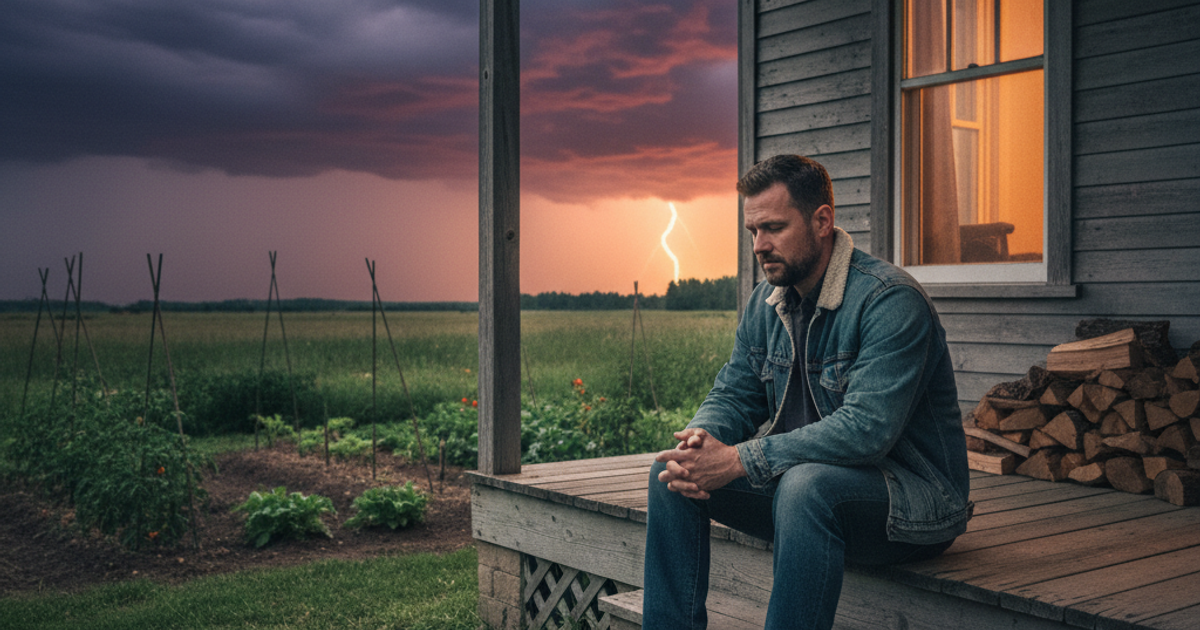
When most people think about emergency preparedness, they think about gear — the survival kit in the closet, the bug out bag by the door, the emergency food storage in the basement. And all of that matters. But there's a critical layer of preparedness that even experienced preppers routinely overlook: what happens inside your head when things go sideways.
Research on disaster survivors consistently reveals that technical skills and equipment matter far less than most people assume. According to a study published in the Journal of Nervous and Mental Disease, acute stress responses — including panic, denial, and cognitive paralysis — are among the leading causes of preventable deaths in emergency scenarios. The gear doesn't save you if you freeze. The plan doesn't work if you can't execute it under pressure. Mental resilience isn't a soft skill. In a SHTF scenario, it's the hardest skill you'll ever need.
Why the Human Brain Fails Under Extreme Stress
Understanding how stress hijacks your brain is the first step toward managing it. When you perceive a threat, your amygdala — the brain's alarm system — fires before your rational prefrontal cortex has a chance to weigh in. Adrenaline floods your system. Your heart rate spikes. Your vision narrows. Blood flows away from complex thinking and toward your muscles. This is the fight-or-flight response, and it evolved to help you survive.
The problem is that in modern emergencies — a grid-down event, a civil collapse, a natural disaster, a prolonged crisis — raw physical reaction isn't enough. You need to think. You need to plan, communicate, navigate, and lead. And under acute stress, all of those higher-order functions get throttled.
Amanda Ripley explored this phenomenon in depth in her landmark work The Unthinkable: Who Survives When Disaster Strikes — and Why. Ripley interviewed hundreds of disaster survivors and found a repeating pattern: survivors weren't necessarily the strongest or the most equipped. They were the ones who had mentally rehearsed, who had confronted the possibility of disaster before it happened, and who could override the brain's instinct to deny, freeze, or panic.
The Three Stages of Panic — and How to Interrupt Them
Panic doesn't hit all at once. It typically unfolds in stages, and recognizing each stage gives you a window to intervene before the spiral completes.
- Denial: "This can't be happening." People in this stage delay action, often fatally. They watch smoke fill a building and wait for someone else to react.
- Deliberation: Paralysis sets in. The brain is overloaded with choices and defaults to inaction or follows the crowd — even when the crowd is wrong.
- Decisive Action: The brain finally commits — but in a panic state, that action is often irrational, impulsive, or counterproductive.
The goal of psychological preparedness is to compress stages one and two and ensure that stage three produces a rational, trained response rather than a reactive one. You do this through deliberate pre-crisis conditioning — not just reading about it, but actually rehearsing it.
How to Build a Survival Mindset Before a Crisis Hits
Mental Rehearsal and Scenario Planning
Elite military units, surgeons, and first responders use mental rehearsal — also called visualization or stress inoculation training — to pre-load effective responses to high-stakes situations. You can do the same. Spend 10–15 minutes several times a week running through specific emergency scenarios in your mind. Walk yourself through the steps: What do you grab first? Which route do you take? What do you say to your family? The more detail you include, the more your brain treats the scenario as familiar territory during a real event.
This applies equally whether you're in a downtown apartment or a rural homestead. An urban survival scenario might involve a power outage, civil unrest, or a building fire. A rural scenario might involve a prolonged grid failure, road washouts, or a medical emergency with no quick access to care. Tailor your rehearsals to your actual environment.
Stress Exposure Training
Controlled exposure to stress — physical discomfort, time pressure, simulated emergencies — builds what psychologists call stress tolerance. Start small: practice setting up your shelter with cold hands, or navigate your neighborhood at night without a phone. Execute your 72-hour walking evacuation plan on a weekend, fully loaded bug out bag and all, before you ever need to do it for real. Your body and brain will remember.
Breathing and Physiological Control
Tactical breathing — a technique taught to law enforcement and military personnel — can physically slow your heart rate and restore prefrontal function in under 60 seconds. The pattern is simple: inhale for 4 counts, hold for 4, exhale for 4, hold for 4. Repeat four to five cycles. This activates the parasympathetic nervous system and pulls you back from the edge of panic. Practice it now, when you're calm, so it's automatic when you need it.
Mindfulness training has also shown measurable effects on stress resilience. Studies published in Psychiatry Research found that eight weeks of mindfulness practice produced structural changes in the brain's stress response centers. Apps like Headspace offer guided programs specifically designed to reduce anxiety and build mental clarity — tools worth developing now, before the crisis demands them. Similarly, a Calm app subscription provides sleep meditations, breathing exercises, and anxiety management techniques that are genuinely useful for preppers who struggle with baseline stress and poor sleep — which is the majority of the population during extended emergencies.
Situational Awareness as a Stress Management Tool
One of the most effective ways to reduce panic in a crisis is to eliminate surprise. This is what situational awareness is really about — not paranoia, but the steady, calm habit of knowing your environment well enough that nothing catches you completely off guard. Review our guide to situational awareness and detecting threats before they become dangerous for a full breakdown of how to build this habit into your daily life.
The grey man concept extends this principle. In a post-collapse environment, drawing attention to yourself creates unpredictable social stress — being a target is its own psychological burden. Blending in reduces that threat load and preserves mental energy for the decisions that matter.
Managing Fear and Stress During a Prolonged Crisis
Short-term emergencies are psychologically different from prolonged ones. A 72-hour power outage is manageable. A multi-week grid-down scenario, a collapse of supply chains, or an extended period of civil instability creates cumulative psychological strain that wears people down in ways they don't anticipate. Here's how to manage the long game.
Establish Routine Immediately
Routine is one of the most powerful anti-anxiety tools available to human beings. When the environment becomes chaotic and unpredictable, an internal structure of scheduled meals, tasks, sleep, and rest anchors the nervous system. Even something as basic as maintaining consistent wake and sleep times — as covered in our article on sleep security when SHTF — can significantly reduce psychological deterioration during extended crises.
Manage the Information Environment
In a crisis, information is both essential and toxic. Consuming constant, unfiltered threat information — even accurate information — triggers sustained cortisol release that impairs immune function, sleep, and decision-making. Designate specific windows for intelligence gathering. Outside those windows, focus on immediate tasks. This applies whether you're monitoring a scanner, a ham radio, or community reports from neighbors.
Social Connection Is Not Optional
Isolation amplifies every psychological risk factor in a crisis. Research on disaster survivors consistently identifies social support as one of the strongest predictors of psychological resilience. Build your mutual aid network now, before you need it. An apartment dweller in the city has the same access to this resource as a rural homesteader — it just requires building relationships before the emergency, not during it. Our guide to building a neighborhood mutual aid network walks through how to do this regardless of where you live.
Give People Roles and Tasks
Helplessness is psychologically devastating. In a group — whether a family, a mutual aid network, or a retreat community — assigning meaningful roles to every member combats the paralysis and hopelessness that set in when people feel like passive victims of circumstances. Even children benefit from age-appropriate responsibilities. Check out our guide on teaching kids survival skills and emergency preparedness for how to frame this positively for younger family members.
Post-Crisis Mental Health: The Work Doesn't End When the Danger Does
Psychological aftermath is something the prepper community rarely discusses openly, but it's critical. Post-Traumatic Stress Disorder affects approximately 20% of people who experience natural disasters, according to FEMA's own research summaries. Symptoms — intrusive memories, hypervigilance, emotional numbness, sleep disruption — can emerge weeks or months after the triggering event and severely impair functioning during exactly the period when you need to be rebuilding.
Awareness is the first intervention. Know the signs in yourself and in the people around you. Normalize talking about fear, grief, and anger within your group. Create structured time for processing — journaling, conversation, or whatever form your group is comfortable with. The stigma around mental health in preparedness communities is a liability, not a strength.
Recommended Reading for the Prepper's Mind
Building mental resilience is a skill that benefits from study, not just practice. Deep Survival by Laurence Gonzales is one of the most rigorously researched books ever written on why some people survive catastrophic situations and others don't. Gonzales draws on neuroscience, psychology, and firsthand survivor accounts to build a compelling portrait of what the survivor's mind actually looks like — and it's not what most people expect.
For a more personal, training-focused perspective, The Disaster Diaries by Sam Sheridan follows a journalist as he deliberately trains himself in survival, combat, and emergency medicine, and then reflects on what that training does — and doesn't — prepare a person for psychologically. It's a grounded, honest read that every serious prepper should have on their shelf alongside their emergency preparedness manuals.
Step-by-Step Instructions
Step 1: Establish a Daily Mental Training Routine
Begin building mental resilience now by dedicating 10-15 minutes each day to stress inoculation practices. Practice controlled breathing exercises, meditation, or visualization techniques that simulate high-pressure scenarios in your mind. This daily habit creates neural pathways that will activate automatically during real emergencies. Consistency is more important than duration—even five minutes daily is better than sporadic longer sessions.
Step 2: Expose Yourself to Controlled Discomfort
Deliberately place yourself in uncomfortable but safe situations to build stress tolerance. Take cold showers, skip a meal intentionally, or camp overnight in your backyard without modern conveniences. These controlled exposures teach your mind and body that discomfort is temporary and manageable. Gradually increase the difficulty as your tolerance improves, creating a mental "callus" against panic.
Step 3: Develop Decision-Making Protocols
Create simple decision-making frameworks you can rely on when stress impairs your judgment. Use the OODA loop (Observe, Orient, Decide, Act) or the "Rule of Three" to break overwhelming situations into manageable chunks. Write these protocols down and practice applying them to hypothetical scenarios until they become second nature. Having a pre-programmed mental structure prevents analysis paralysis during crisis moments.
Step 4: Build a Supportive Community Network
Identify and connect with at least three to five like-minded individuals who share your preparedness mindset. Social isolation amplifies fear and panic, while trusted relationships provide emotional anchoring during chaos. Schedule regular meetups to discuss plans, share skills, and practice scenarios together. Knowing you're not alone dramatically improves psychological resilience when SHTF.
Step 5: Practice the "Tactical Pause" Technique
Master the three-second tactical pause to interrupt panic responses before they cascade. When you feel fear rising, stop all movement, take three deep breaths, and ask yourself "What is the immediate threat right now?" This brief interruption engages your prefrontal cortex and prevents your amygdala from hijacking rational thought. Drill this technique during training exercises until it becomes an automatic circuit-breaker for panic.
Step 6: Maintain Physical Fitness and Health
Commit to a regular exercise routine that includes both cardiovascular and strength training components. Physical fitness directly correlates with mental resilience—a strong body produces confidence and stress-regulating hormones that buffer against panic. Aim for at least 30 minutes of moderate exercise five times per week. Your physical capabilities become psychological reassurance when facing uncertain threats.
Step 7: Review and Reframe Past Stressful Experiences
Regularly reflect on previous challenges you've overcome, no matter how small they seem now. Write down these experiences and identify the specific skills and mental strategies that helped you persevere. This practice builds a personal "resilience resume" you can draw upon when new threats emerge. Reframing past hardships as training experiences transforms your history into a source of confidence rather than trauma.
Frequently Asked Questions
How do I stop panicking in an emergency situation?
The most effective immediate intervention is controlled tactical breathing — inhale for 4 counts, hold for 4, exhale for 4, hold for 4. This physiologically activates your parasympathetic nervous system and reduces the cortisol and adrenaline flooding your system. Beyond that, the single best long-term solution is pre-crisis rehearsal: people who have mentally and physically practiced their responses to specific scenarios experience dramatically less panic when those scenarios occur because the brain registers the situation as partially familiar rather than completely unknown.
What is the best way to build mental toughness for SHTF scenarios?
Mental toughness is built through gradual, deliberate stress exposure — not through watching videos or reading alone. Practice physically uncomfortable activities regularly: cold water exposure, extended fasting, navigating unfamiliar terrain, or running drills with your bug out bag fully loaded. Pair that physical exposure with mindfulness practice to build recovery speed — the ability to return to calm after stress is just as important as the ability to tolerate stress in the first place. Building genuine community connections and a solid emergency plan also reduces baseline anxiety significantly, because much of what people fear is the unknown.
How does psychological preparedness fit into overall emergency preparedness planning?
Psychological preparedness should be built into every layer of your emergency preparedness planning, not treated as a separate category. When you develop your family emergency plan, include roles and decision trees that reduce cognitive load under stress. When you build your survival kit or bug out bag, include items that provide psychological comfort — a book, a journal, photos, a familiar food item. When you practice drills, debrief afterward and talk honestly about what felt stressful or confusing. Mental readiness isn't separate from physical readiness. It's the foundation everything else rests on.
Affiliate Disclosure: SHTF Plan participates in the Amazon Services LLC Associates Program. Some links are affiliate links — we may earn a small commission at no extra cost to you.