Teaching Kids Survival Skills: How to Prepare Your Children for Any Emergency
Your kids could face a disaster without you nearby. Here's how to teach them the survival skills and emergency knowledge that could save their lives.
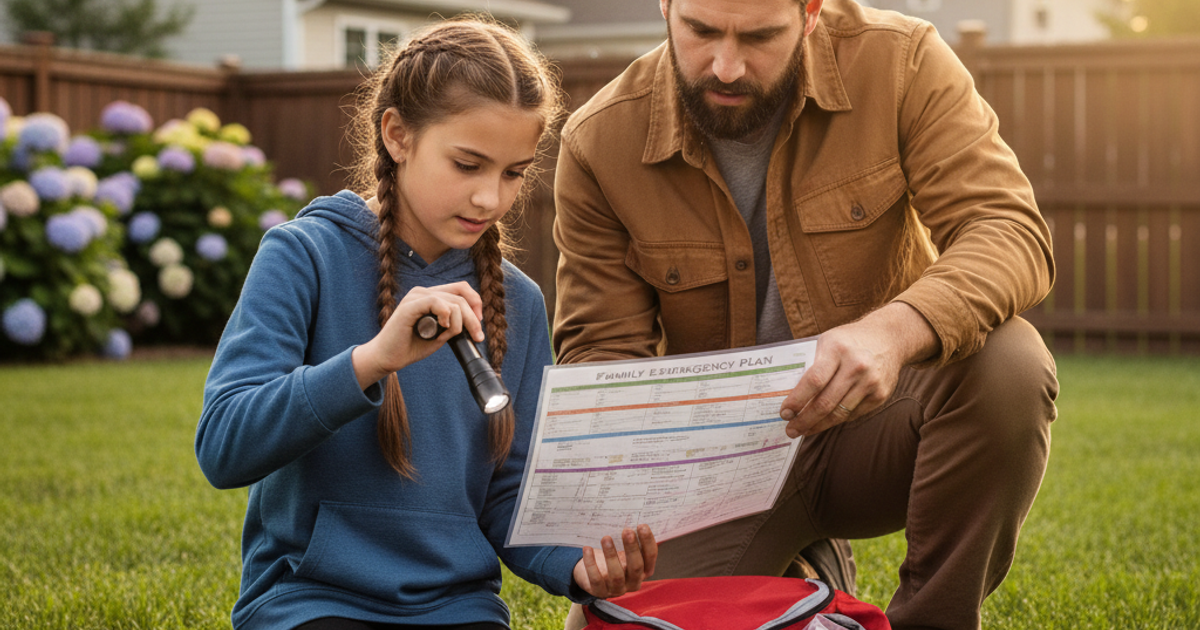
According to FEMA, only 39% of Americans have a household emergency plan — and even fewer have taken the time to train their children on what to do when disaster strikes. That's a dangerous gap. Whether you're a prepper living off grid on a rural homestead or a parent raising kids in a high-rise apartment, teaching your children emergency preparedness skills isn't optional. It's one of the most important things you can do for your family's survival.
Kids are not helpless. Given the right training and age-appropriate tools, children can become genuine assets in a crisis — not just mouths to feed and bodies to protect. The goal is to build confident, capable young people who know how to think clearly under stress, follow a plan, and take care of themselves and others when SHTF.
Why Emergency Preparedness Training for Kids Cannot Wait
Emergencies don't wait for adults to be present. House fires, earthquakes, tornadoes, and civil unrest can separate families in an instant. A child who knows their home address, a family rally point, and basic first aid has a dramatically better chance of survival than one who has never been taught anything beyond "call 911."
Research published by the International Journal of Disaster Risk Reduction found that children who participate in disaster drills and preparedness education demonstrate significantly lower panic responses and better decision-making during actual emergencies. The data is clear: training works, and it works even for young children.
Start the conversation early. Frame emergency preparedness not as something scary, but as something empowering. The prepper mindset — calm, capable, and ready — is exactly what you want to cultivate in your kids from the earliest age possible.
Age-Appropriate Survival Skills: What to Teach and When
Ages 3–6: Building Awareness and Basic Habits
Toddlers and preschoolers can absorb more than most parents realize. At this stage, focus on foundational awareness rather than complex skills:
- Memorize full name, address, and a parent's phone number
- Know when and how to call 911
- Practice stop, drop, and roll for fire emergencies
- Learn what smoke detectors and weather sirens sound like
- Identify two exits from every room in the home
For young children, books like the Prepare With Pedro emergency preparedness book for kids make the topic fun and accessible. This series uses a relatable character to introduce concepts like emergency kits, family plans, and what to do during a disaster — all in language a young child can understand and remember.
Ages 7–10: Skills, Drills, and the Family Plan
Elementary-age kids are ready for real skill-building. They can handle responsibility and begin to understand cause and effect. This is the sweet spot for introducing hands-on survival training:
- Practice the family emergency plan until it's automatic
- Learn to read a paper map and use a compass — navigation without GPS is a critical skill when technology fails
- Introduce basic first aid: wound cleaning, bandaging, and recognizing signs of shock
- Learn to identify safe water sources and understand why water purification matters
- Practice packing and carrying their own child-sized bug out bag
- Understand situational awareness — what looks out of place, who belongs, who doesn't
At this age, equip kids with their own gear. The Gerber Bear Grylls junior survival kit is designed specifically for younger users and includes age-appropriate tools alongside a survival guide. Giving a child their own kit builds ownership and reinforces that they are an active participant in family preparedness — not just a passenger.
Ages 11–14: Deeper Training and Real Responsibility
Preteens can handle adult-level knowledge delivered in an age-appropriate way. This is the time to get serious:
- Earn a basic first aid and CPR certification (Red Cross offers youth courses)
- Learn to filter and purify water using multiple methods
- Understand emergency food storage: what to eat, how to ration, how long supplies last
- Practice fire-starting with multiple methods (flint, matches, lighter)
- Understand the grey man concept — blending in, not drawing attention during urban survival situations
- Study situational awareness and threat detection as a daily habit
- Contribute to family emergency planning discussions
Ages 15–18: Near-Adult Preparedness
Teenagers should be treated as junior partners in family preparedness. They can and should take on meaningful roles:
- Lead younger siblings through drills
- Maintain and rotate emergency food storage and survival gear
- Learn vehicle emergency procedures and basic car maintenance
- Understand urban evacuation routes and bug-out planning
- Complete advanced first aid training, including wilderness medicine skills for treating serious injuries when no help is available
- Learn responsible firearm safety (where appropriate and legal)
Building Your Child's Bug Out Bag: What Every Kid Needs
Every child old enough to carry a backpack should have their own age-appropriate bug out bag. Don't overload a small child — a 10-pound pack is realistic for a 10-year-old, scaling up with age and fitness. Core items for a child's emergency kit include:
- Water and a personal water filter or purification tablets
- High-calorie snack foods they'll actually eat
- Emergency mylar blanket
- Whistle and small flashlight
- A laminated card with family emergency contacts, rally points, and their home address
- Basic first aid supplies
- Comfort item for younger children (reduces panic)
For longer-distance bug-outs or outdoor emergencies, consider a Nathan kids hydration vest for emergency outdoor use. These vests distribute weight ergonomically across a child's frame and include hydration bladders that keep kids drinking — critical during any high-stress evacuation scenario where dehydration can quickly become dangerous.
For a complete list of what should go into any family member's pack, see our complete 72-hour bug out bag checklist for urban survival.
Teaching First Aid Skills Kids Can Actually Use
A child who knows basic first aid is worth their weight in gold during a crisis. Focus on practical, high-value skills:
- Wound care: Cleaning cuts, applying pressure, and proper bandaging technique
- Choking response: Heimlich maneuver and back blows
- CPR basics: Even young children can learn compression-only CPR
- Recognizing emergencies: When to call for help vs. handle it themselves
- Allergic reactions: How to use an EpiPen if a family member carries one
Stock a dedicated kit for your child's use. The American Red Cross first aid kit designed for children includes child-appropriate supplies along with instruction guides that reinforce what they've learned in hands-on training. Pair the kit with regular practice so using it becomes second nature.
Conducting Family Emergency Drills That Actually Prepare Kids
Reading about emergencies is not the same as practicing them. Schedule regular drills — at least twice a year, more if possible. Drills should cover:
- Fire evacuation: Practice from different rooms, including at night when kids are disoriented
- Shelter-in-place: Tornadoes, severe weather, or hazmat events require kids to know exactly where to go
- Communications failure: What do they do if they can't reach you? Practice the meet-up plan
- Bug-out drill: Time how fast the family can pack, load, and be ready to move
Don't make drills feel like punishment. Treat them like team training. Debrief afterward — ask kids what they did well and what they'd do differently. This builds the critical thinking skills that matter when a real SHTF scenario unfolds.
For broader household planning beyond just the kids, see our comprehensive family emergency plan guide for preparing your entire household.
Recommended Gear for Family Emergency Preparedness
Building a family preparedness system doesn't have to happen overnight or break the bank. One of the smartest starting points for families new to emergency preparedness is an all-in-one kit. The Ready America 72 Hour Emergency Kit for families provides a solid baseline of survival gear including food, water, first aid supplies, and essentials for multiple people — giving you a foundation to build on rather than starting from scratch. It's an excellent option for apartment dwellers and suburban families who want to get prepared quickly without extensive research into individual components.
Supplement any kit with additional water purification capacity, emergency food storage tailored to your family's dietary needs, and communication tools like a hand-crank weather radio. Browse our recommended survival gear and equipment page for vetted options across all budget levels.
What You'll Need
- Emergency contact cards
- Whistle for each child
- Flashlight with extra batteries
- First aid kit with child-friendly supplies
- Emergency food and water samples
- Maps of your local area
- Fire extinguisher for demonstrations
- Notebook for emergency planning
Step-by-Step Instructions
Step 1: Teach Basic Emergency Communication Skills
Start by helping your children memorize essential information including full names, home address, and parent phone numbers. Practice having them recite this information regularly until it becomes second nature. Create laminated emergency contact cards they can keep in their backpack or pocket. Role-play scenarios where they need to call 911 and teach them what information to provide to emergency operators.
Step 2: Create and Practice a Family Emergency Plan
Sit down with your children and develop a comprehensive family emergency plan together, making them active participants in the process. Designate meeting spots both inside and outside your home, and identify evacuation routes from each room. Assign age-appropriate responsibilities to each child so they feel empowered and useful. Conduct practice drills at least twice a year, treating them seriously while keeping the atmosphere calm and educational.
Step 3: Demonstrate Fire Safety and Prevention Techniques
Teach children to identify fire hazards in the home and explain how fires start and spread. Show them how to safely exit a smoke-filled room by staying low to the ground and testing doors for heat. Practice the "stop, drop, and roll" technique until they can perform it automatically. Ensure they understand never to hide during a fire and to get out immediately, then call for help from a safe location outside.
Step 4: Build a Child-Friendly Emergency Kit Together
Involve your children in assembling their own emergency kit, explaining the purpose of each item as you pack it. Include comfort items like a small stuffed animal or family photos alongside practical supplies like water, non-perishable snacks, and a small flashlight. Store the kit in an accessible location and teach them when and how to use it. Review and update the contents together every six months, replacing expired items and adjusting for growing needs.
Step 5: Teach Basic First Aid and Injury Response
Start with simple concepts like cleaning and bandaging small cuts, applying pressure to stop bleeding, and recognizing when adult help is needed. Use dolls or stuffed animals to practice bandaging techniques in a non-threatening way. Teach them how to identify allergic reactions and where you keep important medications like EpiPens. Make it clear that their primary job is to get help from an adult, but these skills can help in situations where immediate action is needed.
Step 6: Introduce Navigation and Outdoor Survival Basics
Teach children how to use landmarks to find their way and the importance of staying put if they get lost. Show them how to follow trails and recognize trail markers in parks or hiking areas. Introduce the concept of using the sun for basic direction finding and teach them the "hug-a-tree" principle: stay in one place, make noise, and wait for help. Practice these skills during family outdoor activities so they become familiar and less intimidating.
Step 7: Review and Reinforce Skills Through Regular Practice
Schedule monthly review sessions where you quiz children on emergency procedures and practice key skills in a fun, game-like format. Use different scenarios each time to keep them engaged and test their ability to adapt what they've learned. Praise their progress and adjust your teaching approach based on their age, maturity level, and retention. Keep the tone positive and empowering rather than fear-based, emphasizing that being prepared helps everyone stay safe and confident.
Frequently Asked Questions
What age should I start teaching my child survival skills?
You can begin basic emergency preparedness as early as age three. Young children can memorize their address, recognize alarm sounds, and learn simple rules like "stay low in smoke" or "go to our meeting spot." The key is keeping it age-appropriate and framing it as empowering rather than frightening. As children grow, you layer in increasingly complex skills — first aid, navigation, water purification, and eventually full bug-out planning. Starting early means by the time your child is a teenager, emergency preparedness is simply part of how your family thinks and operates.
What should go in a child's bug out bag?
A child's bug out bag should be light enough for them to carry but contain everything they'd need to survive 72 hours independently if separated from adults. Essentials include water (or a filtration device), calorie-dense food they'll eat without complaint, a whistle, a mylar emergency blanket, a small flashlight with extra batteries, basic first aid supplies, a laminated card with emergency contacts and family rally points, and — for younger children — a small comfort item. Scale weight to the child's size and fitness level. A 10-year-old should carry no more than 10–15% of their body weight. As kids grow and gain strength, increase the pack's capability accordingly.
How do I teach my kids about emergency preparedness without scaring them?
The most effective approach is to frame preparedness as a skill and a source of confidence — not as a response to fear. Tell your children that prepared people are calm and capable people. Use stories, books, games, and hands-on practice rather than worst-case-scenario lectures. Run fire drills like team training exercises. Let kids pack their own bug out bag and choose some items for it. Give them real roles and real responsibilities. Children who feel competent and included in the family preparedness plan are far less anxious about emergencies than children who are simply told "something bad might happen." Knowledge and practice replace fear with confidence every time.
Affiliate Disclosure: SHTF Plan participates in the Amazon Services LLC Associates Program. Some links are affiliate links — we may earn a small commission at no extra cost to you.