Long-Term Food Stockpile: How to Build a Supply That Actually Keeps You Alive
Most preppers stockpile the wrong foods. Here's how to build a grid-down food storage system that feeds your family for months — not just days.
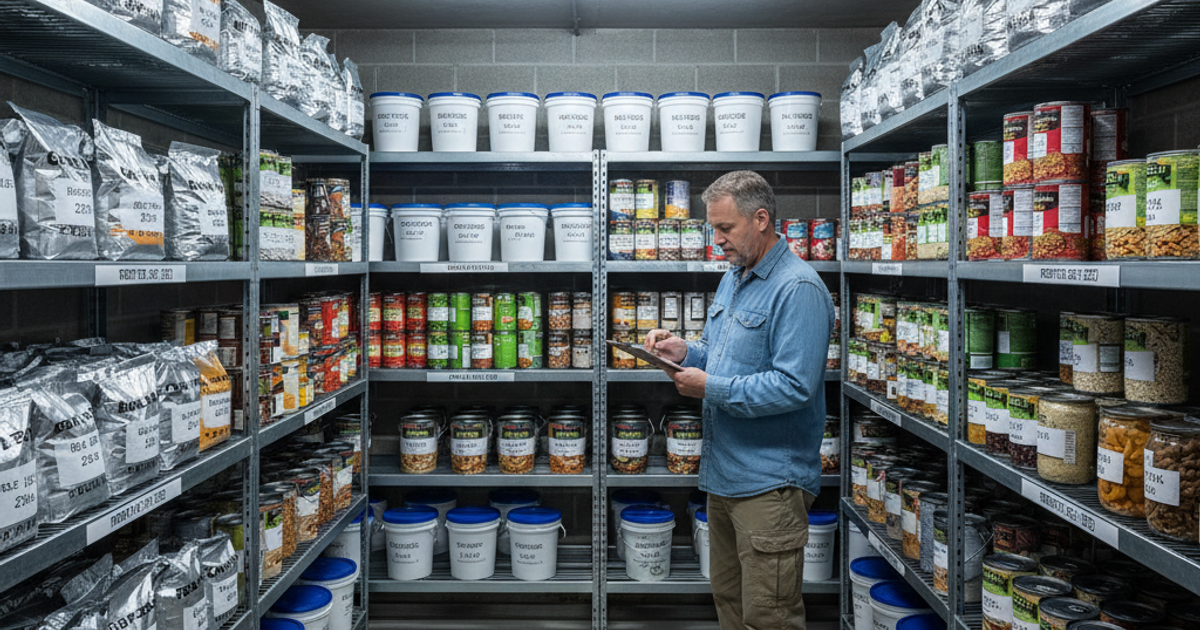
When the grid goes down and stays down, the people who survive the first few weeks are rarely the ones who were toughest or most tactically prepared. More often, they're the ones who had food. Not just a few cans of soup and a box of crackers — but a deep, organized, carefully calculated emergency food storage system that could sustain their household for months without a single trip to a store.
The average American household has roughly three days of food on hand at any given time. FEMA recommends a minimum of two weeks. Serious preppers think in terms of three months, six months, or longer. That gap between what most people have and what a real grid-down scenario demands is exactly where people die — not from violence or exposure, but from starvation and malnutrition.
This guide will walk you through every layer of building a long-term food stockpile that actually works — whether you're in a studio apartment in Chicago, a suburban home in Phoenix, or a rural property in Montana.
Why Most Emergency Food Storage Plans Fail Before the Crisis Even Starts
The most common mistake preppers make isn't buying the wrong food — it's buying food with no system behind it. Cases of canned goods get stacked in a closet, forgotten, and eventually expire. Freeze-dried meals sit in a bucket that never gets opened for rotation checks. Bulk grains get stored in containers that weren't properly sealed, inviting moisture and pests.
A food storage plan that fails silently is worse than no plan at all, because it creates a false sense of security. The goal isn't just to have food — it's to have food that will still be there, in edible condition, when you need it most.
The second major failure is storing food your family won't eat. Under stress, people revert to comfort. If your stockpile is full of unfamiliar textures and flavors your kids refuse to touch, morale collapses fast. Your emergency food storage should mirror what your household actually consumes, scaled and extended for long-term use.
How to Calculate Caloric Needs for a Grid-Down Emergency
Before you buy a single can, you need to do the math. Caloric requirements vary by age, sex, body weight, and activity level — but in a true SHTF scenario, physical activity typically increases dramatically. Manual labor, stress responses, and the absence of sedentary entertainment all push caloric demands higher than normal.
A reasonable baseline for emergency planning purposes:
- Adult male (moderately active): 2,500–3,000 calories per day
- Adult female (moderately active): 2,000–2,500 calories per day
- Children ages 6–12: 1,600–2,200 calories per day
- Children under 6: 1,200–1,600 calories per day
- Elderly or sedentary adults: 1,800–2,200 calories per day
Multiply each person's daily calorie target by the number of days you're planning for. A family of four planning for six months needs to store somewhere in the range of 1.4 to 1.8 million calories. That sounds overwhelming until you break it down into food categories and start building systematically.
Don't just think calories. Macronutrient balance matters for long-term health. Diets that are heavy in carbohydrates but deficient in protein and fat lead to muscle wasting, immune suppression, and cognitive decline over weeks and months. Aim for a rough daily breakdown of 50–55% carbohydrates, 20–25% protein, and 20–25% fat.
The Core Pillars of a Long-Term Prepper Pantry
Bulk Staples: The Foundation Layer
The backbone of any serious prepper pantry is bulk dry goods. These foods have exceptional shelf lives when stored properly and provide the caloric density needed to sustain a household over months.
- White rice: 25–30 year shelf life in sealed containers; approximately 1,700 calories per pound
- Hard red or white wheat berries: 25+ years sealed; requires a grain mill but provides flour for bread and baking
- Rolled oats: 30 years in sealed containers; versatile and nutritionally balanced
- Dried beans and legumes: 25–30 years sealed; critical protein and fiber source
- Pasta: 25–30 years in oxygen-free storage
- Sugar and honey: Indefinite shelf life when stored dry; honey never spoils
- Salt: Indefinite shelf life; essential for cooking, preservation, and electrolyte replacement
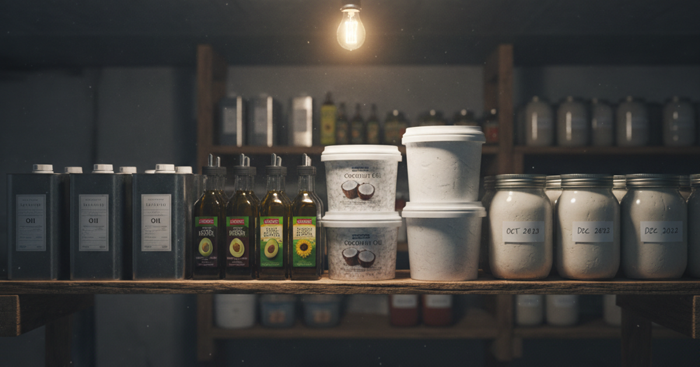
- Cooking oils: 1–4 years depending on type; coconut oil and ghee have the best longevity
For apartment dwellers and urban preppers, the challenge isn't variety — it's volume and storage space. Think vertically. Under-bed storage containers, repurposed closet space, and furniture that doubles as storage (ottomans, bed frames with drawers) can accommodate a surprisingly substantial stockpile even in tight quarters.
Freeze-Dried and Dehydrated Foods: Your Insurance Policy
Freeze-dried and dehydrated foods are the highest-value addition to any emergency food storage plan for one reason: caloric density combined with extreme shelf life and minimal preparation requirements. These foods shine during genuine grid-down emergencies when cooking fuel is limited and water may already be strained.
For serious long-term planning, Mountain House freeze dried food buckets are among the most trusted options on the market, with a verified 30-year shelf life and meals that actually taste like food. These are ideal for both everyday rotation and as a sealed reserve you don't touch until you need it.
For broader variety and bulk caloric coverage, the Augason Farms emergency food storage kit offers a comprehensive all-in-one solution with breakfast, lunch, and dinner options across a multi-month supply. It's a practical starting point for households that want a structured kit before building out their custom bulk pantry.
Another strong option for families looking for complete meal systems is the Wise Company long term food supply, which packages easy-to-prepare entrees with long shelf lives — well-suited for suburban and urban preppers who have limited cooking infrastructure in a grid-down situation.
Canned Goods: The Middle Tier
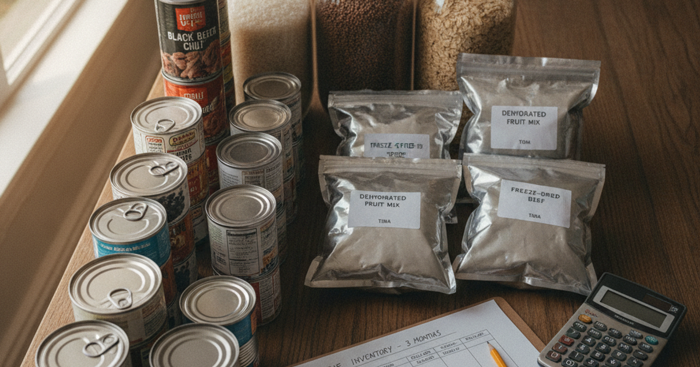
Commercial canned goods form the critical middle layer of your stockpile — they're affordable, widely available, and require zero preparation if necessary. Stock a diverse range: meats (tuna, chicken, salmon, sardines), vegetables (corn, green beans, tomatoes, peas), fruits (peaches, pears, mandarin oranges), and soups.
Most commercially canned foods have a best by date of 2–5 years, but the USDA notes that many remain safe and nutritionally adequate well beyond that window when stored in cool, stable conditions. High-acid canned goods (tomatoes, fruits) degrade faster than low-acid options (meats, beans).
For urban preppers especially, canned goods are the most accessible and budget-friendly way to start building depth into your emergency food storage quickly. Buy what you eat, eat what you buy, and replace as you rotate.
How to Properly Store Bulk Food to Maximize Shelf Life
The four enemies of stored food are oxygen, moisture, light, and heat. Defeat all four and your food will last decades. Let any one of them win and you'll lose your investment within months.
Containers That Actually Protect Your Food
Food-grade five-gallon buckets with properly sealed lids are the workhorse of the prepper pantry. For bulk grains, rice, and beans, pack with oxygen absorbers (300–2,000cc depending on volume and food type) before sealing. Mylar bags inside buckets provide an additional moisture and light barrier.
One of the most underrated upgrades you can make to your bucket storage system is replacing standard snap lids with Gamma Seal lids for food storage buckets. These spin-off lids maintain an airtight seal while allowing easy, repeated access — critical for your rotation pantry where you're opening containers regularly without destroying the seal each time.
For vacuum-packing smaller portions of dried goods, jerky, nuts, and other shorter-shelf-life items, a FoodSaver vacuum sealer for food storage dramatically extends shelf life by removing nearly all oxygen from the package. This is an invaluable tool for preppers who process their own dried foods or want to portion out bulk supplies into more manageable quantities.
Temperature and Location
Every 10°F increase in storage temperature roughly cuts shelf life in half. The ideal storage temperature for long-term food is 40–70°F with as little variation as possible. Basements and interior closets away from exterior walls are generally best. Garages are typically among the worst locations — temperature extremes in summer and winter accelerate degradation significantly.
If you're in an apartment without a basement, prioritize interior walls, lower-level storage, and climate-controlled spaces. Even a well-insulated interior closet can maintain more stable temperatures than an uninsulated garage or attic.
Pair your food storage plan with a solid grid-down water purification strategy — food is useless without safe water to cook it, and most stored foods require water for preparation.
Building a Food Rotation System That Works on Autopilot
Rotation is the discipline that separates serious preppers from people who waste money on food that quietly spoils. The principle is simple: first in, first out (FIFO). The oldest food gets used first; new purchases go behind or beneath it.
Setting Up a Physical Rotation System
- Label everything with the purchase date and best-by date using a permanent marker or label maker. This is non-negotiable.
- Organize by date on shelves, with oldest items at the front and newest at the back.
- Conduct quarterly audits — pull everything out, check dates, inspect for damage, and reorganize. This takes an afternoon but protects your entire investment.
- Maintain a master inventory spreadsheet (backed up on paper for grid-down reference) that tracks quantities, purchase dates, and expiration dates for your entire stockpile.
- Integrate your emergency pantry into your daily cooking wherever possible. If you're regularly eating from your stockpile and replacing what you use, rotation happens naturally.
The 3-Layer Rotation Model
Think of your food storage in three distinct layers:
- Layer 1 (Active Pantry): 1–3 months of food you rotate through regularly; standard canned goods, dry staples, condiments
- Layer 2 (Extended Reserve): 3–12 months of food accessed occasionally for rotation; bulk grains, beans, freeze-dried meals
- Layer 3 (Deep Storage): 1–25+ years; sealed mylar bags, commercial freeze-dried buckets, pure staples like white rice and salt that rarely need rotation
You can check out our more detailed breakdown in Building a 6-Month Food Storage System on Any Budget for a phase-by-phase approach to reaching that critical six-month threshold without overwhelming your budget.
What to Store Beyond Calories: Nutrients, Comfort, and Function
Vitamins and Nutritional Supplements
Long-term grid-down scenarios almost inevitably produce some degree of nutritional deficiency. Fresh produce disappears from stores within days of a major disruption, and cooking methods that rely on prolonged heat destroy many vitamins. Store a multi-year supply of quality multivitamins, Vitamin C (scurvy is a real historical threat in extended food emergencies), Vitamin D (critical if sun exposure is limited), and omega-3 supplements.
Comfort and Morale Foods
This sounds trivial until it isn't. Coffee, tea, chocolate, hard candies, spices, hot sauce, and comfort snacks have an outsized psychological value during prolonged stress. A cup of real coffee in the morning when everything else has gone sideways does more for mental resilience than most people expect. Don't neglect this category.
Cooking Without the Grid
Your food storage is worthless if you can't cook it. Plan your off-grid cooking capacity in parallel with your food stores. Propane camp stoves with a deep fuel reserve, rocket stoves, wood-burning camp stoves, and solar cookers each have their place. Urban and apartment preppers should prioritize small propane or butane stoves with a supply of fuel canisters stored safely. Rural preppers with wood access have more options but should still maintain backup fuel systems.
For ideas on generating energy to support your food prep and broader household needs, see our guides on budget solar setup and fuel storage for preppers.
OPSEC: Protecting Your Food Supply
A well-stocked prepper pantry is a target in a grid-down scenario. Neighbors, extended family, and strangers who didn't prepare will notice if you're eating well when everyone else isn't. Operational security around your food stores isn't paranoia — it's basic survival logic.
Don't discuss your stockpile with people outside your immediate household. Dispose of bulk food packaging discreetly. Consider split storage locations if you have the option — keeping some reserves at a secondary location reduces single-point-of-failure risk. For a comprehensive approach to protecting everything you've built, read our dedicated guide on OPSEC for preppers.
Recommended Gear for Your Emergency Food Storage Setup
To recap the essential products that belong in every serious prepper's food storage system: Mountain House freeze dried food buckets for deep storage reserves, Augason Farms emergency food storage kits for comprehensive variety, Wise Company long term food supply for ready-to-prepare meal systems, FoodSaver vacuum sealers for extending the life of your portioned supplies, and Gamma Seal lids for keeping your bulk storage buckets accessible and airtight through years of use.
Pair these with quality mylar bags, oxygen absorbers, and a systematic labeling and inventory process, and you have the infrastructure of a food storage system that can genuinely sustain your household through a months-long grid-down emergency.
What You'll Need
- Food-grade buckets with gamma seal lids (5-gallon capacity)
- Mylar bags (5-7 mil thickness)
- Oxygen absorbers (2000cc for 5-gallon buckets)
- Impulse sealer or iron for sealing Mylar bags
- Permanent marker and labels
- Thermometer and hygrometer for monitoring storage conditions
- Shelving units rated for heavy loads
Step-by-Step Instructions
Step 1: Calculate Your Caloric Needs and Storage Duration
Determine how many people you're feeding and multiply by 2,000 calories per person per day as a baseline. For a family of four planning a one-year stockpile, you'll need approximately 2.92 million calories total. Create a spreadsheet tracking calories per pound for each food type, as this will guide your purchasing decisions and help you avoid wasting money on low-calorie bulk items.
Step 2: Select Shelf-Stable Foods with 20+ Year Longevity
Focus on white rice, hard wheat berries, dried beans, pasta, rolled oats, white sugar, salt, honey, and powdered milk as your foundation foods. These items store for 20-30 years when properly sealed and provide the macronutrients necessary for survival. Avoid brown rice and whole wheat flour, as their higher oil content causes rancidity within 6-12 months even in ideal conditions.
Step 3: Package Foods in Oxygen-Free Mylar Containers
Line each food-grade bucket with a Mylar bag, fill it to within 2 inches of the top with your chosen food item, then add the appropriate oxygen absorber. Seal the Mylar bag with your impulse sealer or household iron, leaving no gaps, then immediately close the bucket lid. The oxygen absorbers will create a vacuum seal within 24 hours, preventing insect eggs from hatching and stopping oxidation that causes nutrient loss.
Step 4: Establish a Climate-Controlled Storage Location
Store your buckets in a dark area that maintains 50-70°F year-round, as every 10-degree temperature increase above 70°F cuts your food's shelf life in half. Basements are ideal if they're dry; avoid garages, attics, and outdoor sheds where temperature fluctuations are extreme. Use pallets or shelving to keep buckets off concrete floors, which can transmit moisture and cold.
Step 5: Supplement with Canned Goods and Rotating Supplies
Add commercially canned meats, vegetables, and fruits to provide variety and fill nutritional gaps that staple grains can't address. Implement a first-in, first-out rotation system where you consume and replace items before their expiration dates. Store at least 50 cans per person, focusing on high-protein options like tuna, chicken, and salmon that provide essential amino acids missing from grain-heavy diets.
Step 6: Store Essential Vitamins and Dietary Supplements
Stockpile multivitamins, vitamin C tablets, and salt tablets to prevent deficiency diseases during extended grid-down scenarios. A grain-based survival diet lacks vitamin A, vitamin C, and several B vitamins that can lead to scurvy, beriberi, and night blindness within months. Vacuum-seal vitamin bottles in Mylar with oxygen absorbers to extend their potency beyond the manufacturer's expiration date.
Step 7: Test and Rotate Your System Quarterly
Every three months, cook a meal exclusively from your stockpile to verify everything is edible, practice preparation methods without modern conveniences, and identify gaps in your supplies. Check storage areas for signs of pest intrusion, bucket integrity, and temperature/humidity problems. Replace any compromised items immediately and adjust your stockpile based on what your family actually consumed versus what remained untouched.
Frequently Asked Questions
How much food should I stockpile for a long-term grid-down emergency?
Most serious preppers target a minimum of three months of food for their entire household, with six months to one year as the more resilient goal. Start with two weeks, build to a month, then extend from there. Use the caloric calculation method described above — multiply each person's daily calorie needs by the number of days you're targeting, and build your stockpile to hit that number across a balanced mix of bulk staples, canned goods, and freeze-dried reserves.
What emergency food has the longest shelf life?
Pure white rice, hard wheat berries, rolled oats, dried beans, honey, salt, and sugar all have shelf lives of 25 to 30 years or more when stored in sealed containers with oxygen absorbers at stable temperatures. Commercial freeze-dried products like Mountain House are rated at 25–30 years as well. Properly vacuum-sealed dried goods in mylar bags with oxygen absorbers come close to matching these figures. Avoid storing oils, whole grain flours, and brown rice as deep storage items — their higher fat content causes rancidity within 1–5 years.
How do I build a prepper food stockpile on a tight budget?
Start with what's on sale. Grocery store case-lot sales and warehouse clubs like Costco and Sam's Club offer the best price-per-calorie ratios on canned goods, rice, and dried beans. Add one or two extra cans or bags to your cart every shopping trip — a "can a week" approach adds up to 52 extra cans per year without straining a budget. Prioritize white rice, dried beans, rolled oats, and canned meats first — these give you the most calories per dollar. Build your freeze-dried reserve gradually once your bulk staples are in place. Proper containers, gamma seal lids, and oxygen absorbers are a one-time investment that protects everything else you buy.
Affiliate Disclosure: SHTF Plan participates in the Amazon Services LLC Associates Program. Some links are affiliate links — we may earn a small commission at no extra cost to you.