Stockpiling Antibiotics and First Aid Supplies: What to Hoard Before a Medical Crisis Hits
When pharmacies close and hospitals are overwhelmed, your medicine cabinet could mean the difference between life and death.
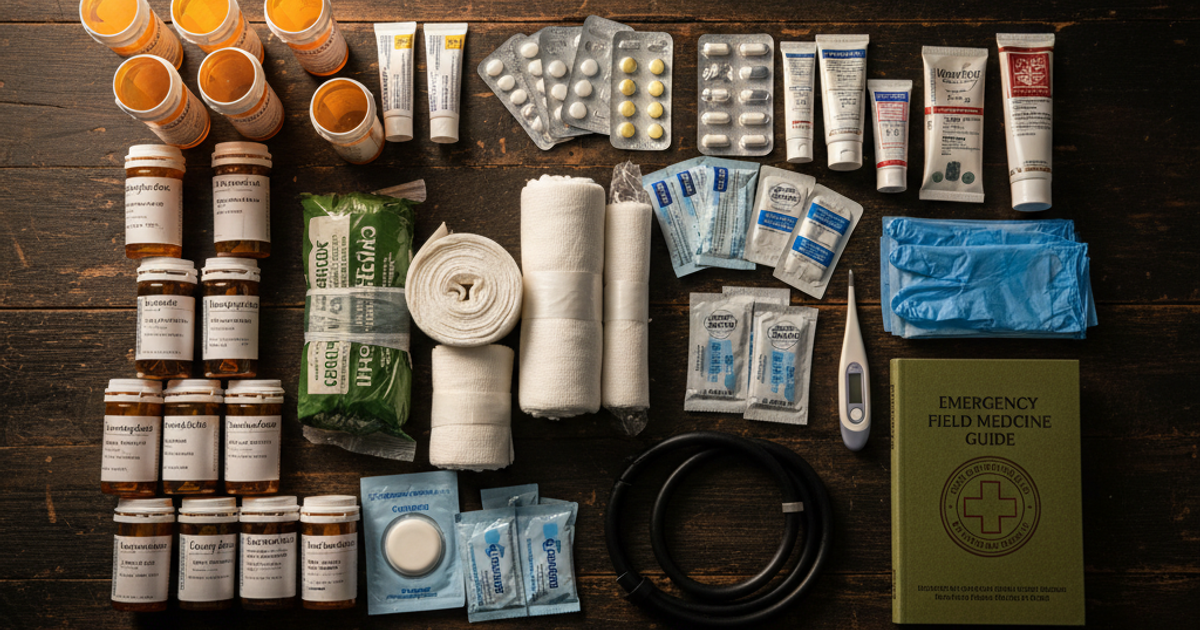
When the grid goes down, when roads are blocked, when hospitals are overwhelmed or simply unreachable — your medicine cabinet becomes your emergency room. According to the American College of Emergency Physicians, natural disasters regularly cause hospital closures and supply chain disruptions that leave communities without access to basic medical care for days, sometimes weeks. In a true SHTF scenario, that window could stretch into months. Every serious prepper needs to treat medical preparedness with the same urgency as food and water storage — and that means stockpiling antibiotics, prescription medications, over-the-counter drugs, and first aid supplies before the crisis hits.
Whether you're in a high-rise apartment in Chicago, a suburban tract home in Phoenix, or a rural homestead in Montana, the principles are the same: build your medical stockpile now, rotate it regularly, and learn how to use what you're storing. This guide will walk you through exactly how to do that.
Why Medical Preparedness Is the Most Overlooked Survival Priority
Most preppers spend considerable time and money on emergency food storage, water purification, and security — but medical preparedness consistently falls to the bottom of the list. This is a potentially fatal mistake. The Centers for Disease Control and Prevention (CDC) reports that in the aftermath of major disasters, infectious disease outbreaks, infected wounds, and untreated chronic conditions become leading causes of preventable death — not the disaster itself.
In a grid-down scenario, even a minor cut that becomes infected can kill you without access to antibiotics. A person with diabetes who runs out of insulin faces a life-threatening emergency within days. The most critical question every prepper must answer is: what happens to my family's health when the pharmacy closes and the ambulance doesn't come?
For urban and suburban preppers who may not have the space or budget for a full-scale homestead medical setup, the good news is that a meaningful medical stockpile can be built incrementally, stored compactly, and maintained without a medical degree. Our detailed guide on First Aid Without a Doctor: Building a Trauma Kit for Long-Term Emergencies is an excellent companion resource as you build your overall medical preparedness strategy.
What You'll Need
Supplies
- Surviveware large first aid kit (200-piece survival kit)
- QuikClot Advanced Clotting Gauze hemostatic bandage
- Dynarex bulk gauze bandage rolls
- Medi-First antibiotic ointment bulk pack
- Medique Pain-Off ibuprofen bulk OTC tablets
Building Your Antibiotic Stockpile: What Every Prepper Needs to Know
Antibiotics are the single most important medical supply you can stockpile for a long-term emergency. Bacterial infections — from wound contamination, foodborne illness, respiratory infections, and urinary tract infections — are ubiquitous in disaster environments where sanitation collapses and medical care disappears. Without antibiotics, conditions that are trivially treatable today become life-threatening.
The challenge is legal access. In the United States, prescription antibiotics cannot be dispensed without a doctor's order. However, there are several legitimate strategies preppers use to build an antibiotic reserve:
- Ask your doctor directly. Many physicians, particularly those sympathetic to preparedness, will prescribe a course of broad-spectrum antibiotics for travel or emergency use. Be honest about your intent.
- Telehealth services. Online telehealth platforms have made it significantly easier to consult with a physician and obtain prescriptions without leaving home. Some physicians specializing in wilderness and travel medicine are particularly receptive.
- Fish antibiotics. This is a controversial but widely practiced prepper strategy. Certain antibiotics marketed for aquarium fish — such as amoxicillin and ciprofloxacin — are chemically identical to human-grade versions and are sold without a prescription. A 2016 study published in the Journal of the American Veterinary Medical Association confirmed that many fish antibiotics contain the same active pharmaceutical ingredients as their human counterparts. Products like Fishermyn Fish Mox (amoxicillin 500mg) are widely used in the prepper community as a stockpile option for when no medical care is available. Similarly, Thomas Labs Fish Flex (ciprofloxacin capsules) provides a broad-spectrum option effective against a wide range of gram-negative bacteria. Important: Fish antibiotics should only be used in a true SHTF scenario when no medical care is available. Dosing guidance requires research from medical references like the Sanford Guide to Antimicrobial Therapy.
- International travel pharmacies. In some countries, antibiotics are available over the counter. Travelers sometimes return with small supplies. Know your local laws before pursuing this route.
Core Antibiotics Worth Stockpiling
No single antibiotic covers everything. A well-rounded medical stockpile should include coverage across several categories of infection:
- Amoxicillin — respiratory infections, ear infections, dental infections, skin infections
- Ciprofloxacin — urinary tract infections, gastrointestinal infections, some wound infections
- Doxycycline — Lyme disease (critical for rural preppers), respiratory infections, tick-borne illness, malaria prophylaxis
- Metronidazole — anaerobic bacterial infections, giardia, dental abscesses
- Cephalexin — skin and soft tissue infections, wound infections
Pair any antibiotic stockpile with a quality medical reference. The Survival Medicine Handbook by Dr. Joseph Alton and Amy Alton is considered essential reading in the prepper community for exactly this scenario. You can also explore our related article on Lifesaving Meds Without a Pharmacy: How to Build a Long-Term Drug Supply for more in-depth guidance on accessing and storing prescription medications.
Over-the-Counter Medications: The Foundation of Your Medical Stockpile
While antibiotics get the headlines, OTC medications form the backbone of daily medical management in a crisis. Stock up on all of the following:
- Ibuprofen and acetaminophen — pain, fever, inflammation. Buying in bulk is cost-effective; Medique Pain-Off ibuprofen in bulk tablet form gives you a cost-effective, high-volume option that stores well and covers everything from headaches to post-injury pain management.
- Antihistamines (diphenhydramine) — allergic reactions, insomnia, motion sickness
- Loperamide (Imodium) — diarrhea control, critical in sanitation-compromised environments
- Antacids — stress-induced GI issues are extremely common in crisis situations
- Electrolyte packets — dehydration from diarrhea, vomiting, or exertion
- Antibiotic ointment — topical infection prevention for cuts and wounds. Stocking Medi-First antibiotic ointment in bulk ensures you have enough to treat wounds consistently over months, not just days.
- Antifungal cream — fungal infections increase dramatically in hygiene-compromised environments
- Aspirin (81mg) — cardiac events, pain relief, fever
Building a Trauma Kit That Goes Beyond the Standard First Aid Box
A $12 first aid kit from the drugstore is not a survival medical kit. In a grid-down scenario, you need supplies capable of managing serious trauma — lacerations, puncture wounds, fractures, burns, and hemorrhage control — without any professional support.
The Adventure Medical Kits professional trauma first aid kit is a step up from consumer-grade kits — it's designed for backcountry use where evacuation is delayed and contains supplies for serious wound management including irrigation syringes, wound closure strips, and comprehensive trauma supplies. This is the caliber of kit every serious prepper should have at home, in the car, and in their bug out bag.
For wound care consumables, Dynarex bulk gauze bandage rolls should be a staple in any serious medical stockpile. Gauze is one of the most rapidly consumed supplies in any trauma situation — you'll burn through your supply faster than you think when treating daily wounds in a grid-down environment.
Hemorrhage control is a specific and critical skill set. Uncontrolled bleeding is the number one cause of preventable death in trauma situations, according to the American College of Surgeons' Stop the Bleed campaign. QuikClot Advanced Clotting Gauze is the civilian equivalent of what military medics carry — it contains kaolin, a mineral that accelerates clotting and can stop life-threatening arterial bleeds. This is non-negotiable for any serious trauma kit.
For a comprehensive all-in-one option, particularly for preppers who are just starting to build their medical stockpile, the Surviveware large first aid kit (200-piece survival kit) provides an organized, weatherproof foundation that covers basic to intermediate first aid needs and is suitable for both home storage and the bug out bag.
Our companion article on When EMS Is Gone: How to Build a Trauma Kit That Keeps Your Family Alive goes deeper into trauma-specific supplies and techniques.
Prescription Medications and Chronic Condition Management
For the estimated 133 million Americans living with chronic conditions — diabetes, hypertension, heart disease, asthma — stockpiling prescription medications is not optional. It's a survival imperative. Work with your physician to build a 90-day supply of any critical maintenance medication. Strategies include:
- Requesting 90-day supplies instead of 30-day fills
- Using mail-order pharmacies that often allow larger fills
- Rotating your supply so medications never expire before use
- Researching generic equivalents that may be available through alternative channels in an emergency
- Consulting your doctor about which medications can be safely stretched and which cannot
Insulin-dependent diabetics face a particular challenge — refrigeration requirements and short shelf life. Research Regular insulin, which is available without a prescription at some pharmacies (Walmart's ReliOn brand) and has different storage requirements than modern analogs.
Step-by-Step Instructions
Step 1: Conduct a Full Medical Needs Assessment for Your Household
Before purchasing a single supply, document every household member's medical conditions, current medications, allergies, and known health vulnerabilities. Include children's weights for dosing calculations, note any individuals with special needs (diabetics, cardiac patients, those with severe allergies), and identify the top five most likely medical emergencies your family could face based on your location, age, and health status.
Step 2: Build Your OTC Medication Foundation First
Start with over-the-counter medications since they're immediately accessible, affordable, and cover the majority of everyday medical needs. Aim for a 90-day supply minimum of ibuprofen, acetaminophen, antihistamines, loperamide, antacids, and electrolyte packets. Buy in bulk quantities and store in a cool, dark, dry location to maximize shelf life — most OTC medications remain effective well past their printed expiration dates according to FDA shelf-life extension research.
Step 3: Pursue Legitimate Antibiotic Acquisition Channels
Schedule an appointment with your physician or a telehealth provider and be direct about your desire to maintain an emergency antibiotic supply. Ask specifically about amoxicillin, doxycycline, and ciprofloxacin. If you travel internationally for any reason, research which antibiotics are available OTC at your destination. Simultaneously research fish antibiotic options as a backup-only supply for true grid-down emergencies.
Step 4: Assemble a Tiered Trauma Kit System
Build three levels of trauma kit: a personal everyday carry (EDC) kit (tourniquet, compression bandage, nitrile gloves), a home base kit with full wound management capability, and a vehicle/bug out bag kit in between. Ensure every adult in your household knows where each kit is located and can access it in under 60 seconds. Practice locating and opening your kits in low-light conditions.
Step 5: Store All Medical Supplies Correctly to Maximize Shelf Life
Temperature is the primary enemy of medication potency. Store all medications in a cool (below 77°F), dry, dark environment — never in a bathroom medicine cabinet where heat and humidity accelerate degradation. Use sealed containers or vacuum-sealed bags for long-term storage. Label everything clearly with purchase date, expiration date, and dosing information. Mylar bags with oxygen absorbers can significantly extend the shelf life of many medications and first aid supplies.
Step 6: Acquire Medical Reference Materials and Get Trained
Supplies without knowledge are only marginally useful. Purchase physical copies (not digital) of the Survival Medicine Handbook (Alton), the Sanford Guide to Antimicrobial Therapy, and a standard wilderness first aid manual. Enroll in a Stop the Bleed course (free through most hospitals), a basic wilderness first aid course, and if possible, an EMT-Basic course. Knowledge is the one prep that cannot be looted or lost in a fire.
Step 7: Establish a Rotation Schedule to Prevent Expiration Waste
Create a simple spreadsheet or physical log tracking every item in your medical stockpile with its expiration date. Set calendar reminders 6 months before expiration for each item. Use a "first in, first out" rotation system — newest supplies go to the back, oldest to the front. Donate near-expiration supplies to community organizations or use them before they expire, then replace with fresh stock immediately.
Step 8: Secure Your Medical Stockpile Against Theft and Discovery
A well-stocked medical supply is a high-value target in a crisis. Store your medical stockpile in a location that is not immediately obvious — not a labeled box by the front door. Consider splitting your supply between multiple locations in your home. Practice OPSEC (operational security) by not broadcasting your medical preparedness to neighbors or on social media. Read our guide on OPSEC for Preppers: How to Keep Your Stockpile and Plans Secret When SHTF for more on protecting your preps.
Special Considerations for Urban and Apartment Preppers
If you're prepping in a small space, medical supplies are actually one of the easiest categories to stockpile compactly. A comprehensive 6-month medical supply for a family of four can fit in two standard plastic storage bins. Prioritize density — liquid medications take up more space than tablets; buy tablets where possible. Use under-bed storage containers, closet shelf space, and vacuum storage bags to compress bulky bandage supplies. Our article on Apartment Prepping: How to Build a Serious Emergency Stockpile in a Small Space offers additional strategies for maximizing limited square footage.
Frequently Asked Questions
How long do antibiotics last after their expiration date?
Research from the FDA's Shelf Life Extension Program (SLEP), originally conducted for the military, found that many medications — including several common antibiotics — retain 80-90% of their potency for years beyond their printed expiration date when stored correctly in cool, dark, dry conditions. Tetracyclines (including doxycycline) are an important exception — degraded tetracyclines can cause kidney damage and should not be used past expiration. Amoxicillin and ciprofloxacin, however, have shown good stability well past expiration in studies. The expiration date reflects the manufacturer's guarantee of full potency, not the point at which a drug becomes ineffective or dangerous for most medications.
What antibiotics should I stockpile for a long-term SHTF scenario?
A core prepper antibiotic stockpile should ideally include amoxicillin (covers respiratory, dental, and skin infections), ciprofloxacin (covers urinary tract and GI infections), doxycycline (covers tick-borne illness, Lyme disease, respiratory infections, and serves as a malaria prophylactic), metronidazole (covers anaerobic and parasitic infections), and cephalexin (covers skin and soft tissue infections). No single antibiotic covers all bacterial threats — the goal is broad-spectrum coverage across the most likely infection types in a grid-down environment. Always pair antibiotic stockpiling with proper reference materials for dosing guidance.
How do I build a medical stockpile if I'm on a tight budget?
Start small and build consistently. Spend $20-$30 per month adding to your medical supplies rather than trying to build everything at once. Prioritize in this order: basic wound care supplies (gauze, bandages, antibiotic ointment), OTC medications (ibuprofen, acetaminophen, antihistamines, loperamide), a quality comprehensive first aid kit, hemostatic gauze and tourniquet, and finally prescription/antibiotic stockpile. Buying store-brand generics for OTC medications dramatically reduces cost with no reduction in efficacy. Many community health centers and clinics offer free Stop the Bleed training, which costs you nothing but time.
Affiliate Disclosure: SHTFPlan.net participates in the Amazon Services LLC Associates Program. Some links are affiliate links — we may earn a small commission at no extra cost to you.