Hidden Rooms and Concealed Storage: How to Build Secret Spaces to Protect Your Stockpile
Discover how to build hidden rooms and concealed storage spaces that keep your preps invisible to thieves, looters, and nosy neighbors.
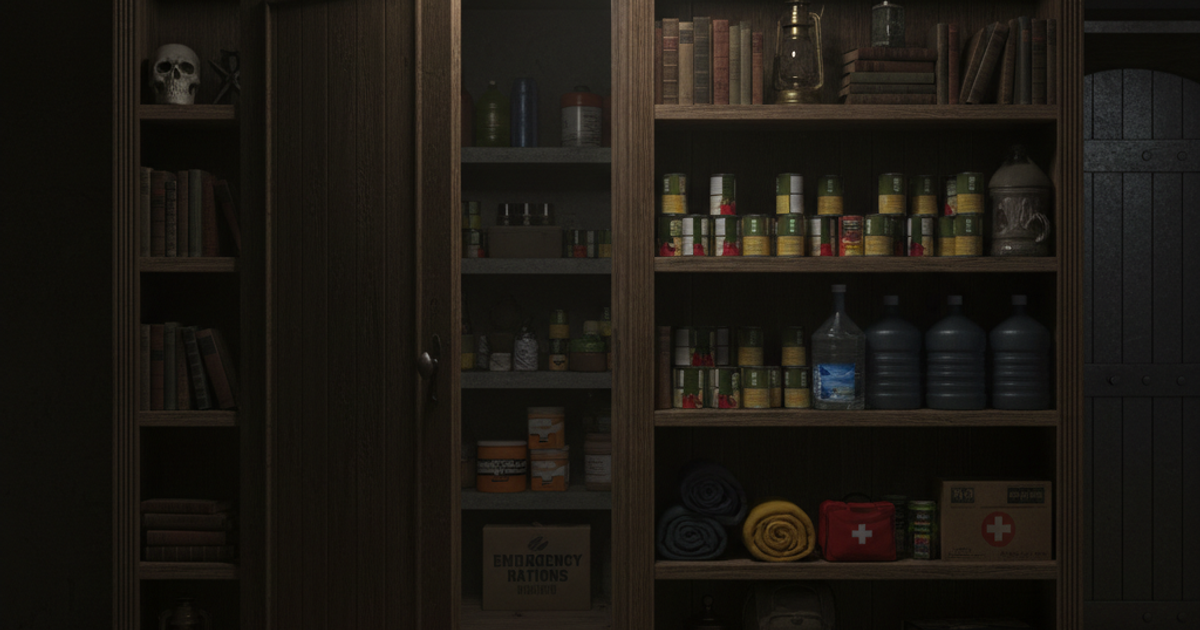
When the grid goes down, the stores close, and desperation sets in, your neighbors will remember that you were the one talking about emergency preparedness. According to the FBI, property crimes spike significantly during economic downturns and natural disasters — and your carefully built stockpile becomes a target. The solution isn't just having supplies; it's making sure no one knows you have them. Concealed storage, false walls, and hidden rooms are tools that have been used by everyone from medieval nobility to Cold War-era operatives, and they remain one of the most effective ways to protect your prepper stockpile when SHTF.
This guide covers practical concealment strategies for apartment dwellers, suburban homeowners, and rural preppers alike. Whether you have 400 square feet or 4 acres, there are options here that will work for your situation. Pair this knowledge with solid OPSEC practices and you'll dramatically reduce your vulnerability. Remember: the best survival gear in the world is worthless if someone takes it before you need it.
Why Concealment Is a Core Emergency Preparedness Strategy
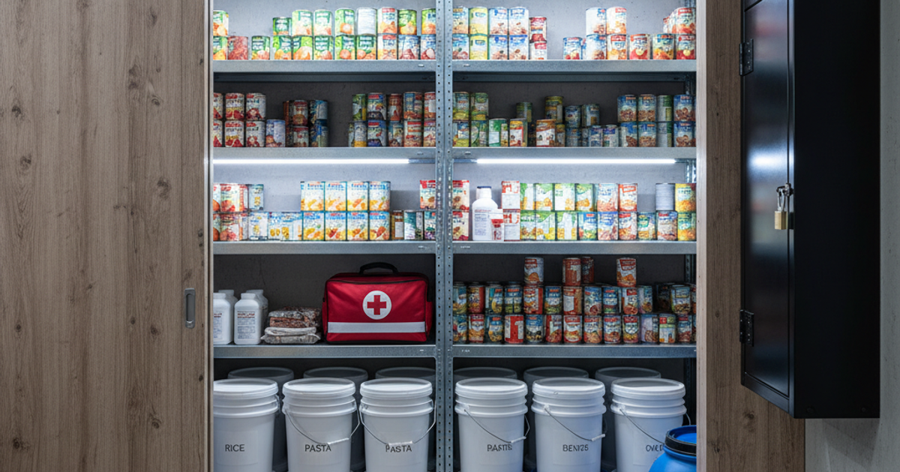
Most preppers spend thousands of dollars on food, water purification equipment, medical supplies, and survival gear — then store it all in a clearly labeled shelving unit in the garage. This is a critical mistake. During a crisis, even people you trust can become threats when their families are hungry. A 2020 study by the Pew Research Center found that over 70% of Americans have fewer than three days of food stored at home. That means your well-stocked pantry makes you an outlier — and a target.
Concealment works on two levels. First, it prevents casual discovery — the neighbor who borrows a tool and wanders into your garage, or a contractor who sees your shelves and talks. Second, it prevents targeted theft during a crisis, where someone who already knows about your stockpile comes looking. Good concealment addresses both threats simultaneously. Combined with reinforced doors and windows, hidden storage creates layered security that significantly raises the cost of intrusion.
The grey man principle applies to your home just as much as it does to your personal appearance. A house that looks average, unremarkable, and unprepared on the inside is one that gets passed over. Think like a burglar: they want quick, easy access to obvious valuables. Hidden storage makes your home the hard target they skip in favor of something easier.
Concealment Options for Every Living Situation
Apartment and Small Space Solutions
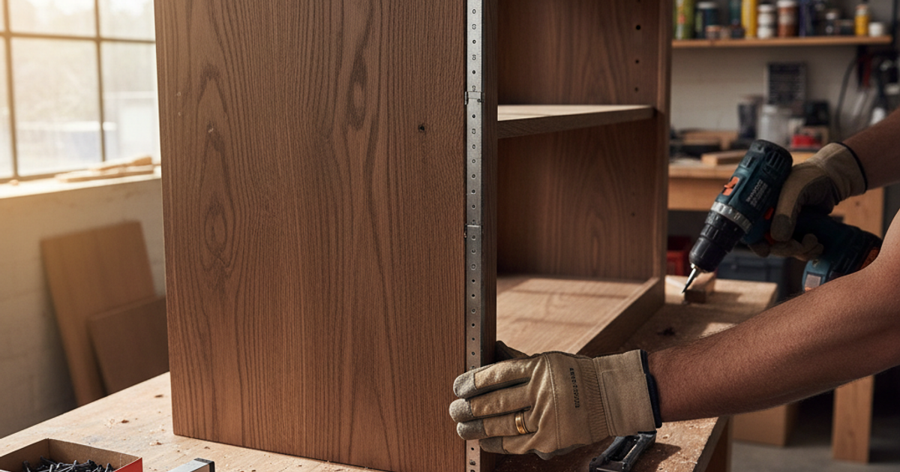
If you're an apartment prepper, you can't knock down walls or build hidden rooms — but you have more options than you might think. Furniture-based concealment is your primary tool. Ottoman storage benches, bed risers with hollow platforms, bookshelf walls, and false-bottomed drawers can conceal a surprising amount of supplies. A full-length mirror cabinet on a hollow-core interior wall can be converted into a shallow storage cavity accessible only from behind. For deeper reference on maximizing a small space, check out our guide on apartment prepping for emergency stockpiles.
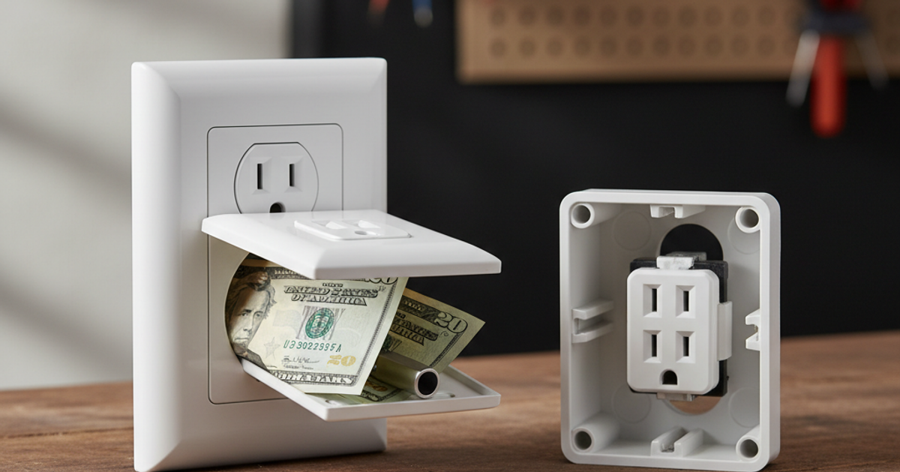
One of the most effective small-space tools is a Master Lock hidden wall safe, which installs between studs in a standard wall and is concealed behind a wall outlet cover or a picture. These are inexpensive, require no structural modification, and can hold cash, documents, medications, or small valuables that you absolutely cannot afford to lose in a crisis.
For furniture-based concealed drawers, Accuride full extension drawer slides allow you to build hidden drawers into existing furniture — under beds, inside cabinets, or beneath workbenches — that extend fully for complete access but disappear completely when closed. These are a favorite among furniture builders creating concealment pieces.
Suburban Home Solutions
The suburban home is the sweet spot for concealment construction. You have structural walls, basements, garages, attics, and closets to work with. The most effective suburban concealment combines multiple layers: a decoy storage area that looks full but holds only common household goods, and a hidden primary stockpile elsewhere.
The bookcase door is perhaps the most iconic hidden room entrance, and modern hardware makes it achievable for anyone with basic carpentry skills. A Murphy Door bookcase hidden door kit provides a complete, engineered solution — a full-size bookshelf that swings open to reveal a hidden space behind it. These kits are designed to look completely natural and bear real books or decor, making them essentially undetectable to a casual observer. They can be installed in front of a converted closet, a utility space, or even a room carved out of a large basement.
The hardware matters as much as the door itself. Soss concealed door hinges are mortised into the door and frame so that no hinge is visible from the outside — a critical detail that makes the difference between a hidden door and one that just looks suspicious. When paired with a touch-latch or magnetic release system, these hinges make a door that appears to be a solid wall.
Rural and Homestead Solutions
Rural preppers have the greatest freedom and the most options: underground bunkers, hidden outbuildings, buried caches, and extensive hidden room construction. The challenge in rural settings is that distances mean response times — both for help and for threats — are extended. Your hidden spaces need to be more robust and more self-contained.
For larger hidden spaces like converted root cellars or basement rooms, soundproofing the concealed area prevents sound from giving it away — generator noise, voices, or stored equipment. Fiberglass insulation panels serve double duty here: they provide thermal insulation to protect temperature-sensitive supplies and act as acoustic damping to keep your hidden room quiet. Line the walls, ceiling, and door frame of any hidden space with these panels as part of your construction.
Once you've built your hidden space, securing the door from inside is critical. A Fortress Security door barricade bar can be deployed from inside a hidden room to prevent forced entry even if the concealed entrance is discovered. This transforms your storage space into a defensible position — a consideration that matters when combined with a broader safe room strategy.
What You'll Need
Tools
- Circular saw or jigsaw
- Wolfcraft pocket hole jig for false wall construction
- Stud finder and level
- Drill/driver with bits
- Tape measure and carpenter's square
Supplies
- Soss concealed door hinges
- RV Designer push latch cabinet locks
- 2x4 or 2x6 lumber for framing
- Drywall or plywood for finishing
- Paint matched to existing walls
Step-by-Step Instructions
Step 1: Assess Your Space and Identify Concealment Opportunities
Walk through your home with fresh eyes — look for dead spaces, unused closets, awkward corners, spaces under staircases, and areas behind load-bearing walls that might conceal a deeper cavity. Measure every suspicious space: a closet that appears 24 inches deep but the exterior wall suggests 36 inches means there are 12 hidden inches available. Apartments should focus on furniture and within-wall spaces; homeowners should map the full structure including attic and basement access points.
Step 2: Plan Your False Wall or Hidden Door Frame
Sketch your concealment build before cutting anything. A false wall needs a frame set 4-6 inches in front of the real wall, finished with drywall and paint to match the surrounding surfaces. A hidden door frame must be plumb, level, and square — any deviation will be visually obvious or cause the door to bind. Use a stud finder to locate load-bearing elements and plan your framing around them. The Wolfcraft pocket hole jig is invaluable here for creating strong, invisible joinery in the frame without exposed fasteners.
Step 3: Build and Install the Concealed Door or False Wall Framing
Frame your hidden door opening or false wall cavity using standard 2x4 construction. For a bookcase door, build the opening to the exact dimensions of your Murphy Door kit, ensuring the header is properly supported. For a false wall, run horizontal blocking every 16 inches for rigidity and attach the frame securely to the floor and ceiling. Install Soss concealed hinges by mortising them precisely into both the door edge and the frame jamb — this requires careful chiseling for a flush fit that leaves no visible hardware.
Step 4: Install Concealed Latches and Release Mechanisms
A hidden door is only as good as its release mechanism. RV Designer push latch cabinet locks work on a push-to-open, push-to-close mechanism with no visible handle — ideal for hidden panels and cabinet doors where a handle would give away the concealment. For larger doors, consider a magnetic release triggered by touching a specific book on the shelf, or a concealed keyhole hidden behind a removable decorative element. Test the release mechanism dozens of times before finishing the surface.
Step 5: Finish Surfaces to Match the Surrounding Area
The finish work is what separates a detectable hidden space from a truly invisible one. Apply joint compound to all seams around false walls, feathering it out at least 8 inches on each side. Sand smooth and prime before painting with paint color-matched to your existing walls. On a bookcase door, add the same baseboard trim as the rest of the room, maintaining visual continuity. The goal is that someone standing in the room should have no visual cue that anything is behind that wall.
Step 6: Organize and Stockpile Your Hidden Space Efficiently
Once built, organize your hidden storage with the same discipline you'd apply to your main emergency food storage or bug out bag. Use labeled bins, FIFO rotation for food, and a written inventory stored separately. Install shelving optimized for your specific supplies — tall shelving for water containers, shallow shelving for canned goods, secure mounting for firearms. Maximize every cubic inch; a 4x6 foot hidden room can store 6-12 months of supplies for one person if organized efficiently.
Step 7: Test Security and Soundproofing of the Hidden Space
Have someone unfamiliar with the construction enter the room and try to identify the hidden space — their fresh eyes will catch details you've become blind to. Check for light leaks around door edges (seal with black foam weatherstripping), sound transmission (add fiberglass insulation panels if needed), and structural integrity of the door under simulated force. Install a barricade bar on the interior if the space will also serve as a shelter position. Adjust and refinish as needed until the concealment is genuinely undetectable.
Step 8: Maintain Operational Security Around Your Hidden Spaces
The best-built hidden room can be compromised by a single careless conversation. Limit knowledge of your concealed storage to your immediate household — even trusted friends and extended family represent a security risk during a crisis, when desperation changes people's calculations. Never discuss your hidden storage online, and be cautious even with tradespeople working in your home. Pair your physical concealment with the broader OPSEC discipline of keeping your preparedness plans private.
Advanced Concealment Techniques Worth Considering
For those ready to go further, several advanced techniques dramatically increase the security of your hidden spaces. Decoy caches — a small, easily discoverable storage area with modest supplies — satisfy a searcher's curiosity and often cause them to stop looking. A burglar who finds 30 cans of food in your visible pantry may conclude that's all there is and leave without discovering your primary cache behind the false wall.
Perimeter security paired with concealed storage creates a comprehensive defense. If you know someone is approaching before they arrive, you have time to access your hidden room and secure yourself inside rather than being caught off guard. Review our detailed guide on perimeter alarms and trip wires to understand how early warning integrates with your concealment strategy.
For rural preppers with the space, buried caches using PVC pipe sealed with end caps provide off-property storage that is essentially undetectable without metal detection equipment. These work well for long-term food storage in mylar bags, ammunition, and backup survival gear. Buried caches should never be your only storage option — access can be blocked by weather or injury — but they serve as an excellent redundant cache if your primary location is compromised.
Frequently Asked Questions
How do I build a hidden room in my house without hiring a contractor?
Most hidden room projects are well within the capability of a confident DIYer with basic carpentry skills. The key components — framing a false wall, installing a bookcase door kit, and finishing the surfaces — are standard construction techniques. Murphy Door kits in particular are designed for home installation with detailed instructions. Focus on precision in your hinge installation and finishing work, as those are the areas where amateur builds most commonly fail to look convincing. Always check local building codes before making structural modifications, particularly if your hidden room requires electrical work or ventilation.
What is the best way to hide a stockpile in an apartment?
Apartment preppers should focus on furniture-based concealment and within-wall cavities accessed through outlet boxes or picture frames. A Murphy bed with deep storage in the wall cavity, under-bed drawers with Accuride slides, and hollow ottoman benches can collectively conceal weeks of supplies. Distribute your stockpile across multiple concealed locations rather than centralizing it — this reduces your exposure if one cache is discovered. Avoid storing large quantities in obvious locations like coat closets, which are the first place any visitor (or intruder) will look.
How do I keep my hidden room from being discovered during a home search or robbery?
The three keys are visual continuity, acoustic concealment, and a convincing decoy. Visual continuity means your hidden door or false wall should have matching trim, paint, texture, and wear patterns as the surrounding surfaces — fresh paint on one section of wall is a red flag. Acoustic concealment means using fiberglass insulation to prevent sounds from inside the hidden space from transmitting outside. A convincing decoy means having an obvious, easily found storage area with modest supplies that satisfies a searcher's expectations. Combined with strong OPSEC — limiting who knows about your preparedness activities — these measures make discovery extremely unlikely.
Affiliate Disclosure: SHTFPlan.net participates in the Amazon Services LLC Associates Program. Some links are affiliate links — we may earn a small commission at no extra cost to you.