Financial Preparedness: Building a Cash Reserve and Barter Economy for SHTF
When the grid goes down or the economy collapses, your bank account means nothing. Here's how to build real financial resilience before it's too late.
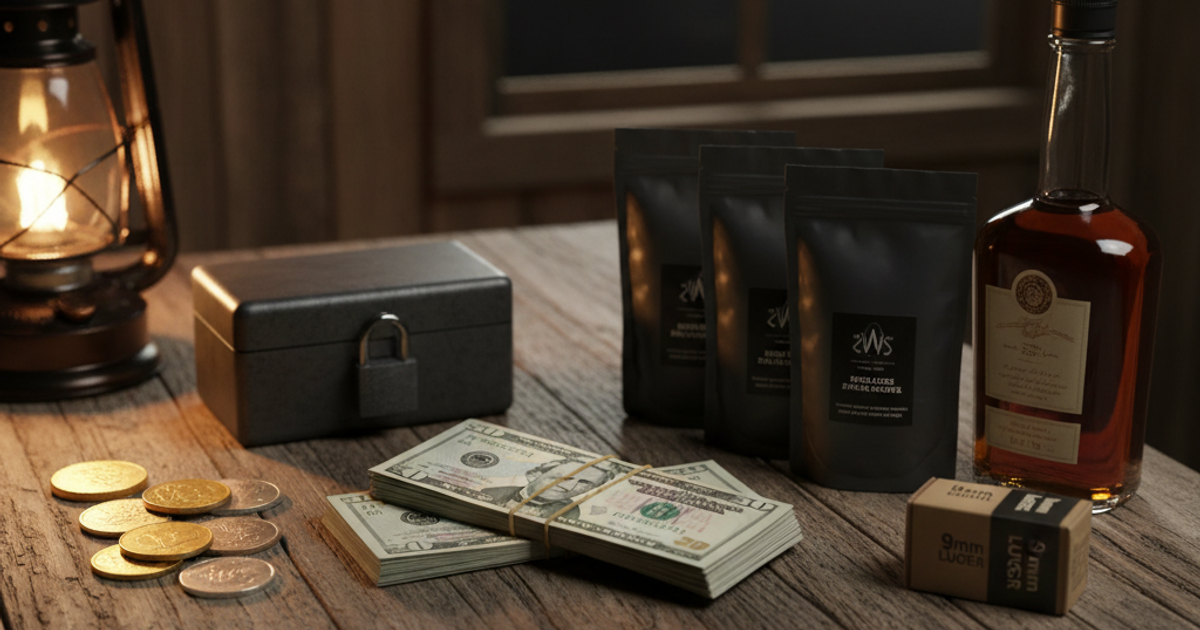
When most preppers think about emergency preparedness, they picture water purification tablets, emergency food storage, and a fully loaded bug out bag. Financial preparedness rarely makes the top of the list — until the ATMs stop working, the card readers go dark, and the digital economy evaporates overnight. Whether you're facing a regional grid-down event, hyperinflation, or a full-scale SHTF economic collapse, your ability to transact, trade, and protect your wealth may determine whether you thrive or barely survive.
The hard truth is that most Americans are financially unprepared for even a 72-hour disruption. According to a 2023 Federal Reserve report, nearly 37% of Americans couldn't cover an unexpected $400 expense without borrowing. If a cyber attack, natural disaster, or financial system failure locks people out of their bank accounts for even a week, the social consequences would be immediate and severe. For the serious prepper, building a layered financial preparedness strategy isn't paranoia — it's prudent planning.
Why Digital Money Fails First in a SHTF Scenario
Modern economies run on digital infrastructure. Credit cards, debit cards, electronic transfers, and even mobile payments all depend on functioning power grids, internet connectivity, and banking system servers. In a grid-down scenario, every one of those systems goes offline simultaneously. Point-of-sale terminals fail. ATMs run out of cash or stop working entirely. Online banking becomes inaccessible.
We've seen this play out in real-world events. During Hurricane Katrina in 2005, electronic payment systems failed across affected areas for days to weeks. In Puerto Rico after Hurricane Maria in 2017, many communities operated on cash and barter for months. Even brief regional outages — ice storms, wildfires, flooding — routinely knock out card payment infrastructure for days. In every one of these scenarios, physical cash became king almost immediately.
Understanding this vulnerability is step one. Building a response strategy is step two.
How to Build a Physical Cash Reserve for Emergency Preparedness
The first layer of your financial preparedness plan is a physical cash reserve stored at home, outside the banking system. This isn't about distrust of banks under normal circumstances — it's about having liquidity when normal circumstances no longer apply.
How much cash should you keep on hand? A commonly recommended starting point is $500–$1,000 in small bills for a single person or couple, scaling up to $2,000–$3,000 for a family. The emphasis on small bills is critical. In a cash-only economy, no one will have change for a $100 bill at a roadside stand or informal market. Stock up on $1s, $5s, $10s, and $20s.
Store your cash reserve in a secure, fireproof, and preferably waterproof container. A Vaultz locking cash box money organizer is an affordable and practical solution for keeping your emergency cash organized, secured, and quickly accessible without advertising its contents to anyone who enters your home. Keep a portion of your cash in your everyday carry (EDC) setup and a larger reserve secured at your primary shelter location.
Build your cash reserve gradually if budget is a concern. Pull $20–$50 per paycheck and set it aside. Over six months, this builds into a meaningful liquidity buffer without straining your finances.
Precious Metals: Your Long-Term Wealth Protection Strategy
Cash serves the short-term gap — days to weeks after a disruption. But if the crisis extends beyond that, or if inflation erodes the purchasing power of paper currency (as happens in every historical hyperinflation event), you need a second layer: precious metals.
Gold and silver have served as stores of value for thousands of years across every culture and civilization on Earth. They don't rely on counterparty trust, government backing, or digital infrastructure. In a prolonged SHTF scenario, silver in particular tends to function as a transactional medium because of its lower per-unit value compared to gold.
Silver: The Everyday Transaction Metal
For most preppers, silver should form the bulk of their precious metals holdings. One-ounce silver rounds are the standard unit for barter and trade. APMEX silver rounds 1 oz are widely recognized, consistently priced close to spot value, and accepted by buyers and traders across the country. Aim to accumulate at least 20–50 one-ounce rounds as a starting position, adding more over time as budget allows.
For preppers who want flexibility in smaller denominations, consider a Valcambi silver CombiBar 50 gram, which is a 50-gram silver bar divided into individual one-gram segments that can be broken apart for smaller transactions. This is an innovative solution for urban survival situations where you need fractional silver for everyday trade without carrying loose coins.
Gold: Concentrated Wealth Storage
Gold is best suited for larger wealth storage and significant transactions — think purchasing a vehicle, paying for a month's worth of supplies, or negotiating land or shelter access in a long-term collapse. American Eagle gold coins are among the most recognizable and trusted gold coins in the U.S. market. Proper storage is essential; explore American Eagle gold coin safe storage options to keep your holdings secure, organized, and protected from moisture and damage.
A practical allocation framework for most preppers: 70–80% silver, 20–30% gold by dollar value. Silver handles day-to-day transactions; gold holds concentrated wealth.
Building a Barter Economy Inventory
In a true SHTF collapse scenario — one that extends weeks, months, or longer — physical goods often become more valuable than any currency. The barter economy rewards those who stockpile high-demand consumables and practical skills. This applies equally whether you live in a city apartment, a suburban neighborhood, or a rural homestead.
High-Value Barter Goods to Stockpile
- Alcohol: Sealed bottles of liquor (whiskey, vodka) hold value indefinitely and have secondary uses as antiseptic and trade currency
- Tobacco and cigarettes: Consistently high demand even among non-smokers who use them for trade
- Coffee and tea: Vacuum-sealed or freeze-dried; morale items command premium barter value
- Ammunition: Extremely high demand in collapse scenarios; store popular calibers (.22 LR, 9mm, .223/5.56, 12 gauge)
- Medications and first aid supplies: Over-the-counter painkillers, antibiotics (fish antibiotics), bandages, and antiseptics
- Lighters and fire starters: Inexpensive to stockpile, consistently valuable in any survival scenario
- Seeds: Open-pollinated, heirloom vegetable seeds represent long-term food security and trade value
- Fuel: Properly stored gasoline, propane, and kerosene are extremely valuable early in a collapse
- Personal hygiene items: Soap, toothpaste, feminine hygiene products, and toilet paper disappear from shelves in hours during any crisis
- Water purification supplies: Filters, purification tablets, and bleach will be in constant demand
Barter Skills Are Also Currency
Don't overlook skills as barter currency. Medical knowledge, mechanical repair, food preservation, electrical work, and security expertise all command significant trade value when the formal economy collapses. Investing in skills training now is an investment in your post-collapse earning potential. Those who can provide medical care without a doctor or maintain off-grid systems will be community assets rather than liabilities.
Protecting and Concealing Your Financial Assets
Situational awareness and the grey man philosophy apply directly to financial preparedness. You never want to advertise your wealth holdings — not your cash, not your precious metals, not your barter stockpile. This is true in normal times and becomes critically important during a SHTF scenario when desperate people make dangerous decisions.
Diversify storage locations. Never keep all your cash, precious metals, and valuables in a single location. Consider a combination of a home safe, a buried cache (in a waterproof container), and a trusted off-site location with a family member or trusted friend. For transporting valuables during a bug-out, a Pelican 1510 waterproof case for valuables provides rugged, waterproof, and discreet protection for your most critical financial assets and documents during evacuation or transit. These cases are airline carry-on compliant, making them ideal for both bugging out and everyday high-security transport.
Review the grey man methodology principles as they apply to financial discretion. Don't discuss your preps, your precious metals holdings, or your cash reserves with anyone outside your immediate trusted circle. Operational security is as important for your wealth as it is for your location and survival gear.
Protecting Wealth from Economic Collapse Before It Happens
Financial preparedness isn't only about the post-collapse world. The lead-up to a collapse is often when the most wealth destruction occurs — through inflation, currency devaluation, bank failures, and stock market crashes. Historical examples include Weimar Germany (1921–1923), Zimbabwe (2008), Venezuela (2016–present), and Argentina's repeated currency crises.
Practical pre-collapse financial hardening steps include:
- Reduce debt aggressively. In a hyperinflationary environment, debt in fixed nominal dollars can theoretically be easier to repay — but variable-rate debt and the stress of any financial crisis make debt dangerous. Reduce exposure wherever possible.
- Diversify out of purely digital assets. Balance digital holdings with physical assets: precious metals, real property, tangible goods.
- Spread across multiple financial institutions. FDIC insurance covers $250,000 per depositor per bank. Multiple accounts at multiple institutions reduce single-point-of-failure risk.
- Invest in tangible preparedness infrastructure. A 6-month food storage system, water security, energy independence, and medical supplies are assets that hold real-world value regardless of what the dollar does.
- Consider I-bonds and Treasury securities as inflation hedges within the conventional financial system, alongside your physical hedges outside of it.
Financial Preparedness for Urban and Apartment Dwellers
Financial preparedness is one area where urban and suburban preppers have equal footing with rural homesteaders. You don't need land or a bug-out location to build a cash reserve and precious metals holdings. A city apartment dweller can hold the same silver rounds, maintain the same barter inventory (scaled appropriately to space), and implement the same grey man financial discretion as someone on a 50-acre rural property.
For urban preppers, focus on portability and concealability. A compact, well-organized financial preparedness kit — cash, silver rounds, critical documents, and a small barter supply — can fit in a single backpack alongside your urban survival essentials. Know your bug-out plan and ensure your financial assets are part of what you can carry if you need to move quickly.
What You'll Need
- Fireproof safe or lockbox
- Small denomination bills ($1, $5, $10, $20)
- Precious metals (silver coins, gold if budget allows)
- Barter goods inventory list
- Waterproof containers for storage
- Multiple hiding locations in your home
Step-by-Step Instructions
Step 1: Calculate Your Target Cash Reserve Amount
Determine how much cash you need to cover 3-6 months of essential expenses including food, utilities, medication, and fuel. Break down your monthly budget and multiply by your target timeframe. Aim for a minimum of $3,000-$5,000 in physical cash as a baseline, adjusting upward based on family size and local cost of living. Remember that in a grid-down scenario, electronic banking and ATMs will be unavailable.
Step 2: Accumulate Small Denomination Bills Systematically
Begin setting aside cash from each paycheck, focusing on bills $20 and under since making change will be difficult during a crisis. Request small bills when withdrawing cash from banks or converting larger denominations. Avoid $50 and $100 bills as most people won't be able to break them during SHTF situations. Store your growing reserve in a fireproof safe hidden in your primary residence.
Step 3: Diversify with Precious Metals for Long-Term Value
Invest 10-20% of your preparedness budget in physical silver coins, particularly junk silver (pre-1965 US coins) and one-ounce rounds. Silver is more practical than gold for everyday barter transactions due to lower per-unit value. Purchase from reputable dealers and verify authenticity before storing in a secure, climate-controlled location. Precious metals serve as inflation-proof wealth preservation when paper currency loses value.
Step 4: Stockpile High-Value Barter Goods
Acquire tradeable items that will be in high demand during emergencies: ammunition, alcohol (mini bottles), cigarettes, coffee, batteries, lighters, toilet paper, soap, and over-the-counter medications. Focus on shelf-stable goods that are compact, universally needed, and have long storage lives. Organize your barter inventory in a separate location from your personal supplies to avoid accidentally depleting your own reserves. Track expiration dates and rotate stock to maintain freshness.
Step 5: Create Multiple Secure Storage Locations
Divide your cash and precious metals among 3-4 hidden locations to minimize loss from theft, fire, or discovery. Use creative hiding spots like false-bottom drawers, inside PVC pipes buried in your yard, or hollowed-out books. Never store all resources in a single safe or location. Document your hiding spots in a secure method that only trusted family members can access.
Step 6: Develop Barter Skills and Community Networks
Learn negotiation techniques and fair-value assessment for common goods to avoid being taken advantage of during trades. Identify neighbors and community members with complementary skills who might trade services (medical care, mechanical work, food preservation). Practice bartering now at flea markets, swap meets, or online trading groups to build confidence. Maintain discretion about your preparedness supplies to avoid becoming a target.
Step 7: Establish a Regular Review and Replenishment Schedule
Set quarterly reminders to audit your cash reserves, verify precious metals are secure, and inspect barter goods for damage or expiration. Replace any depleted items and adjust your stockpile based on changing family needs or economic conditions. Update your inventory lists and inform trusted family members of any changes to storage locations. Continuously add to your reserves during stable times to build depth for extended crisis scenarios.
Frequently Asked Questions
How much cash should I keep at home for emergencies?
Most financial preparedness experts recommend keeping at least $500–$1,000 in small bills ($1s, $5s, $10s, $20s) at home for a single person, and $1,500–$3,000 for a family. This covers short-term disruptions of one to two weeks when card payment systems fail. Store it in a secure, fireproof container and keep a smaller portion — $50–$100 — in your everyday carry wallet or go-bag for immediate access during a bug-out situation.
Is silver or gold better for SHTF bartering and survival?
Silver is generally more practical for day-to-day barter transactions because its lower per-unit value (typically $25–$35 per ounce versus $1,900–$2,400 per ounce for gold) makes it usable for smaller purchases. Gold is better suited for storing large amounts of concentrated wealth and making major transactions. A balanced approach — holding primarily silver for trade liquidity with some gold for wealth preservation — is the strategy most experienced preppers recommend. Start with silver rounds in standard one-ounce sizes, as these are widely recognized and easy to trade.
What are the best barter items to stockpile for economic collapse?
The best barter items combine high demand, long shelf life, and practical utility. Top categories include alcohol (whiskey, vodka), tobacco products, ammunition in common calibers, coffee and tea, over-the-counter medications, lighters and fire starters, water purification supplies, personal hygiene products, and heirloom seeds. Prioritize items that are legal to stockpile, widely consumed, and difficult to produce locally during a collapse. Skills — medical, mechanical, and agricultural — are equally valuable barter currency that requires no physical storage space.
Affiliate Disclosure: SHTF Plan participates in the Amazon Services LLC Associates Program. Some links are affiliate links — we may earn a small commission at no extra cost to you.