Hunting and Fishing for Survival: How to Feed Your Family When Store Shelves Are Empty
When supply chains collapse, knowing how to hunt and fish could be the difference between starvation and survival. Here's how to build those skills now.
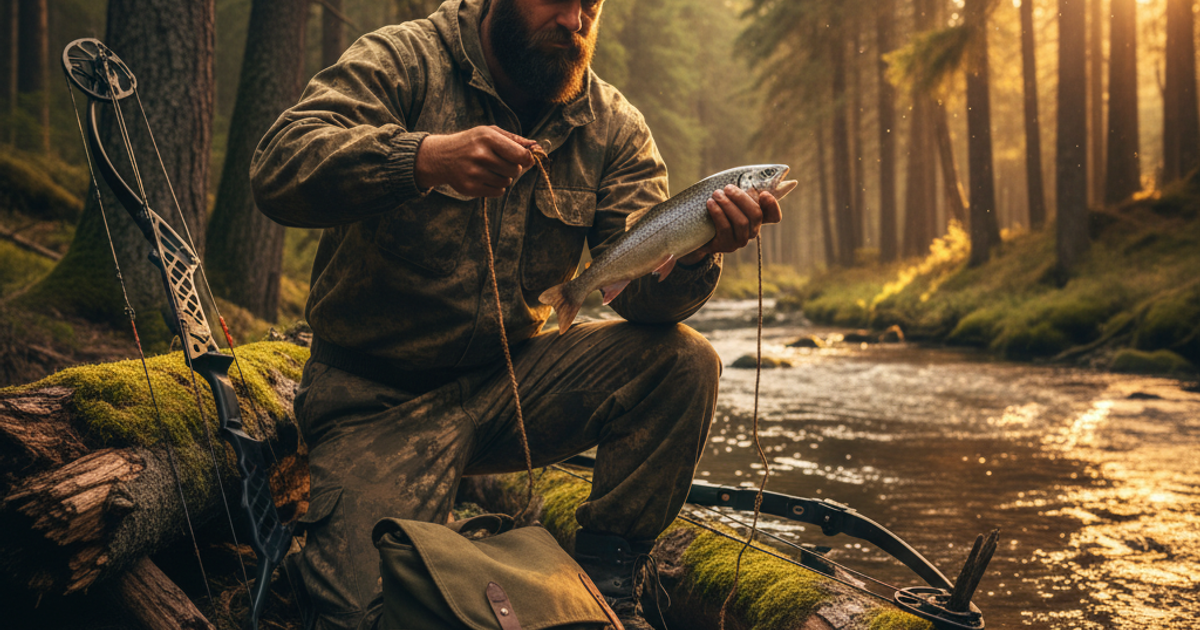
When supply chains collapse, grocery store shelves empty out faster than most people expect. During Hurricane Katrina, stores in New Orleans were stripped bare within 24 hours. During COVID-19 lockdowns, meat sections sat empty for weeks. In a true long-term SHTF scenario — grid failure, economic collapse, or societal breakdown — those shelves may never restock. Your emergency food storage will eventually run out, no matter how well-stocked your long-term food stockpile is. That's when hunting and fishing stop being hobbies and start being survival skills.
According to the U.S. Fish and Wildlife Service, over 38 million Americans fished in 2022, and more than 15 million hunted. But recreational skill and survival skill are different animals entirely. Fishing for fun on a summer afternoon is nothing like methodically harvesting protein to keep your family alive through winter. This guide bridges that gap — whether you live in a rural area with access to wilderness, a suburb near a watershed, or even a city with parks and waterways nearby.
Why Hunting and Fishing Must Be Part of Your SHTF Food Strategy
No emergency preparedness plan is complete without renewable food sources. Stored calories are finite. Gardens take months and can fail. But fish, game, and small animals exist almost everywhere in North America — even in and around major cities. Urban and suburban preppers are often surprised to learn that deer populations thrive in subdivisions, catfish live in city drainage canals, and crayfish populate almost every freshwater creek. Situational awareness about your local ecosystem is just as important as knowing your neighborhood's threat profile.
Protein is the hardest macronutrient to maintain in a prolonged crisis. Carbohydrates can be stored or grown relatively easily, but animal protein requires either livestock — as covered in our guide to raising goats for long-term food security — or active hunting and fishing. Most preppers need both strategies running in parallel.
What You'll Need
Tools
- Gerber Vital pocket folding hunting knife
- Morakniv Companion fixed blade hunting skinning knife
- Zebco 33 spincast fishing reel survival kit
- Plano tackle box fishing gear organizer
Supplies
- Berkley PowerBait fishing lures assortment pack
- Coghlans survival fishing kit pocket emergency
- American Fishing Wire braided snare wire survival trapping
- Primos hunting game calls for deer and elk
Survival Fishing Techniques That Work Without Modern Equipment
Recreational fishing relies on finesse and sport. Survival fishing is about yield per hour of effort. The fundamental shift is moving from single-line fishing to passive, multi-line systems that work while you're doing other tasks.
Trotlines and limb lines are among the most effective passive fishing methods. A trotline is a main line strung across a waterway with multiple baited hooks hanging at intervals. Limb lines tie a single baited hook to a flexible tree branch overhanging water — the branch acts as a shock absorber when a fish strikes. Both methods let you run dozens of baited hooks simultaneously with minimal ongoing effort.
For urban and suburban preppers near rivers, creeks, or retention ponds, a compact spincast reel like the Zebco 33 spincast fishing reel is an excellent choice — it's reliable, easy to use under stress, and durable enough for long-term use. Pair it with an assortment like Berkley PowerBait fishing lures, which include scented baits proven to attract bass, trout, and catfish — common species throughout North America's urban waterways.
A well-organized Plano tackle box keeps all your hooks, weights, swivels, and lures sorted and protected from moisture — critical in a long-term survival scenario where losing small gear to rust or disorganization can compromise your whole fishing operation.
If space is limited or you're building out your bug out bag, the compact Coghlan's survival fishing kit packs hooks, line, weights, swivels, and lures into a pocket-sized container that can be stored in any survival kit or emergency bag. Every prepper should have one in their vehicle or bug-out bag regardless of skill level.
Trapping: The Most Overlooked Survival Food Skill
Trapping produces more calories per hour of labor than almost any other wild-food harvesting method. Small game — rabbits, squirrels, raccoons, and groundhogs — are present in virtually every environment in North America, including city parks, golf courses, and suburban green spaces. A dozen simple snare traps set along game trails can passively generate protein every single day.
The most basic survival snare is a wire loop set along an animal trail at head height for the target species. American Fishing Wire braided snare wire is an ideal multi-use supply — it's strong enough for snaring small game, flexible enough to shape into loops, and compact enough to store in bulk. A 100-foot spool weighs almost nothing and can deploy 20–30 snares.
Box traps (live traps) are another excellent option because they don't require as precise a set as wire snares. Many preppers keep a couple of wire cage traps stored in their garage. In a crisis, these can be deployed in a backyard, woodline, or park perimeter and checked daily. Combine trapping with your fishing operation and you create a passive protein-harvesting system that requires only a few hours of daily checking and processing.
Hunting Skills for When SHTF and Game Laws No Longer Apply
In a true long-term collapse scenario, the calculus around hunting changes. For now, practicing legally within your state's season and licensing framework is both lawful and smart — it builds the skills you'll need when rules are gone. Situational awareness and patience are the foundation of effective hunting.
Deer are the single most calorie-dense wild animal most North Americans can realistically harvest. A single mature whitetail deer can yield 50–80 pounds of dressed meat — enough to feed a family of four for several weeks when combined with other food sources. Learning deer behavior, reading sign (tracks, rubs, scrapes), and using tools like Primos hunting game calls can dramatically increase your odds of a successful harvest. Game calls mimic the vocalizations deer and elk make during feeding and breeding — attracting animals into range without requiring you to close the distance.
Even in suburban settings, deer hunting is possible. Many suburban communities permit archery hunting of deer within city limits during overpopulation events. Learn where deer bed, feed, and water in your area before you need to harvest them. That pre-crisis reconnaissance is part of genuine emergency preparedness.
Once an animal is harvested, field dressing must happen quickly — within an hour in warm weather — to prevent spoilage. A reliable blade is non-negotiable. The Gerber Vital pocket folding hunting knife features replaceable blades specifically designed for field dressing, meaning you always have a razor-sharp edge available even when you can't sharpen in the field. For heavier skinning and butchering work, the Morakniv Companion fixed blade knife is a legendary budget-friendly option trusted by Scandinavian hunters for generations — exceptionally sharp out of the box and easy to maintain.
Preserving What You Catch: Connecting Harvest to Storage
Harvesting game and fish is only half the equation. In a grid-down scenario, you can't throw meat in the freezer. You need to process and preserve everything you take, immediately. Smoking, salt-curing, and drying are the three primary methods available without electricity. Our detailed guide on the DIY smokehouse for long-term meat preservation covers how to build and operate a functional smoker from salvaged materials. Combined with the techniques in our guide to canning meat at home for long-term protein storage, you can convert a single large harvest into months of shelf-stable food.
Fish are among the easiest proteins to preserve. Small fish can be dried whole in the sun on racks within 24–48 hours in warm, dry weather. Larger fish can be fileted and either smoked or salt-packed. Never waste a harvest — even fish scraps and bones can be boiled into a nutrient-dense broth that supplements calories and adds minerals to your diet.
Step-by-Step Instructions
Step 1: Scout and Map Your Local Water and Wildlife Resources
Before any crisis, identify every fishable waterway within five miles of your home — rivers, creeks, retention ponds, drainage canals, and lakes. Note deer trails, feeding areas, and bedding zones in nearby parks, woodlines, or green spaces. This pre-crisis reconnaissance is free, legal, and gives you a massive advantage when food becomes scarce.
Step 2: Build a Compact Survival Fishing Kit and Keep It Ready
Assemble a dedicated fishing kit stored in your bug out bag or vehicle emergency kit. At minimum, include 50–100 feet of 10–20 lb monofilament line, a dozen hooks in sizes 6, 4, and 2, split-shot sinkers, a few swivels, and several artificial lures. A pre-packed option like the Coghlan's survival fishing kit covers all of these in a single pocket-sized container.
Step 3: Set Passive Fishing Systems Across Multiple Locations
Rather than sitting with a single rod, deploy 5–10 baited hooks across a waterway using trotlines or limb lines. Check them every 4–6 hours, remove any catch, re-bait hooks, and reset. Running multiple passive systems simultaneously multiplies your yield without multiplying your labor.
Step 4: Deploy Snare Wire Along Active Game Trails
Identify animal trails by looking for compressed vegetation, tracks, and droppings. Set wire snare loops approximately 4 inches in diameter for rabbits and squirrels, secured to a fixed anchor and positioned at the animal's head height. Set a minimum of 10 snares to ensure daily catch probability — small game trapping is a numbers game.
Step 5: Practice Field Dressing and Butchering Before You Need the Skill
Field dressing is a hands-on skill that deteriorates quickly without practice. Process at least a few animals per year during legal hunting seasons — squirrels and rabbits are ideal practice animals. Learn to remove internal organs cleanly, avoid contaminating the meat with gut contents, and quarter larger animals for transport. This skill must be automatic, not learned under stress.
Step 6: Process and Preserve All Harvested Protein Immediately
In warm weather, meat begins spoiling within two hours. Have a preservation plan in place before you harvest. Salt, smoke, or begin drying meat as soon as it's butchered. Fish can be gutted and dried on a rack the same day they're caught. Never harvest more than you can process before spoilage — wasted food in a survival scenario is a serious strategic error.
Step 7: Rotate and Diversify Your Harvesting Methods Continuously
Fishing pressure depletes local populations. Over-trapping a small area exhausts the game. Rotate your snare locations every few days, rest waterway sections periodically, and diversify protein sources — combining fish, small game, and larger game into a sustainable rotation. Think of your local ecosystem as a managed resource, not an infinite supply.
Frequently Asked Questions
Can you really catch enough fish to survive in an urban or suburban area?
Yes, in many cases. Urban waterways are often surprisingly productive because they receive less fishing pressure than recreational areas. Catfish, carp, bass, and panfish are found in city rivers, drainage canals, and retention ponds across the United States. A passive trotline system with 10–20 hooks can realistically yield several pounds of fish per day in a well-populated waterway. The key is switching from recreational single-rod fishing to high-yield passive methods.
What's the best survival fishing gear for a bug out bag?
The most important items are compact and multi-use: monofilament fishing line (which also works for snares and cordage), a variety of hooks in multiple sizes, small split-shot sinkers, a few swivels, and compact lures. Pre-packaged survival fishing kits like the Coghlan's pocket emergency kit are ideal because they pack all the essentials in a waterproof container smaller than a deck of cards. A basic spincast combo rod and reel is worth the weight if your bug-out bag allows for it.
How do you preserve fish and game without a refrigerator or freezer?
The three primary methods available off-grid are smoking, salt-curing, and solar drying. Smoking coats meat in antimicrobial compounds while reducing moisture content. Salt-curing draws moisture from meat and creates an inhospitable environment for bacteria. Solar drying works well in low-humidity climates for fish and thinly sliced meat. Any of these methods, properly executed, can preserve protein for weeks to months without electricity. Combining methods — smoking and then salt-packing — extends shelf life further.
Affiliate Disclosure: SHTFPlan.net participates in the Amazon Services LLC Associates Program. Some links are affiliate links — we may earn a small commission at no extra cost to you.