Knife Selection for Preppers: How to Choose the Best Survival Knife for Any Scenario
The right survival knife can mean the difference between life and death. Here's how to choose the best blade for your specific needs.
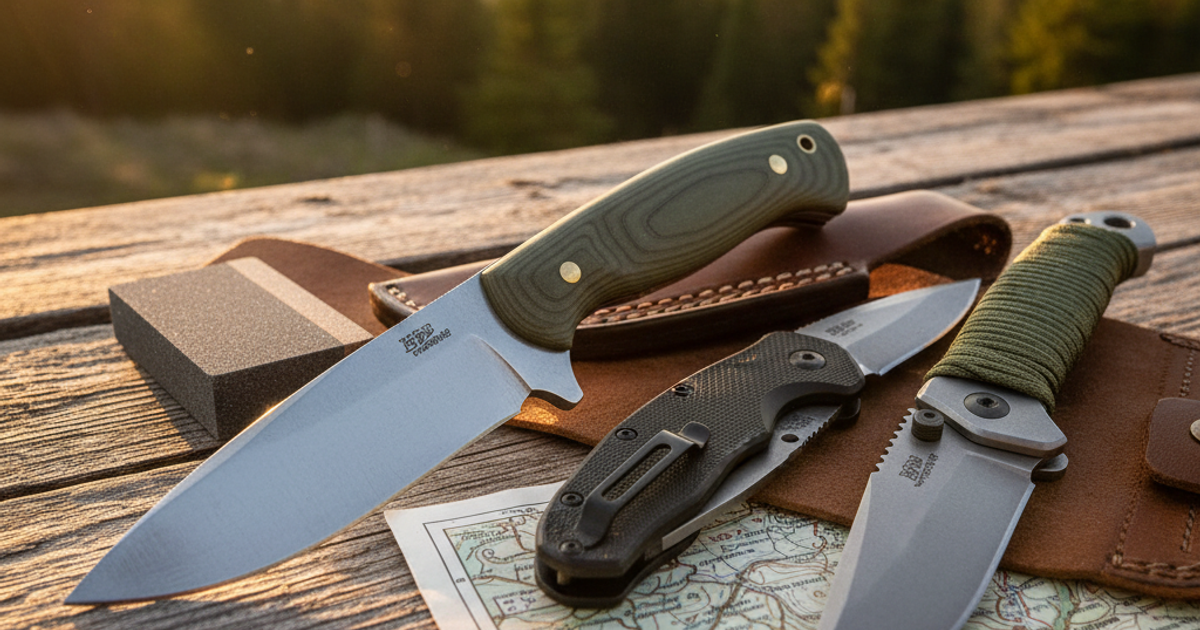
A knife is the one piece of survival gear that has never gone out of style. From the earliest human hunters to modern preppers building their bug out bag, a reliable blade remains the cornerstone of any serious emergency preparedness kit. But walk into any sporting goods store — or scroll through Amazon for ten minutes — and the sheer volume of options becomes paralyzing. Drop points, tanto blades, full tang, partial tang, G10 handles, Micarta, 1095 steel, S30V... the terminology alone can send a new prepper running.
This guide cuts through the noise. Whether you're an apartment dweller in Chicago building an urban survival kit, a suburbanite assembling a 72-hour bag, or a rural homesteader who needs a working blade for daily chores and worst-case scenarios alike, the principles for selecting the right survival knife are the same. Let's break them down.
Why Every Prepper Needs at Least One Fixed-Blade Survival Knife
Folding knives are convenient and discreet — ideal for everyday carry in an urban environment where grey man tactics matter. But when SHTF, a fixed-blade knife is almost always the stronger choice for serious work. Fixed blades have no moving parts to fail, no locking mechanisms to seize up with debris, and no hinge to introduce weakness under lateral stress.
A 2021 survey by the American Preppers Network found that a fixed-blade knife ranked in the top three most-carried survival tools among experienced preppers, behind only a fire-starting method and a water purification device. That's not a coincidence. A good fixed blade can process firewood, prepare food, construct shelter, provide self-defense, perform first aid tasks, and even assist with water purification by crafting primitive filtration systems from natural materials.
The bottom line: don't let a folding knife be your only blade. Carry both if possible.
Blade Geometry: Choosing the Right Shape for Survival Tasks
Blade shape dramatically affects what a knife does well. Here are the most relevant profiles for preppers:
- Drop Point: The most versatile design. The spine of the blade curves gently down to meet the edge at the tip. Excellent for skinning, food prep, and general utility. The safest tip geometry for controlled work.
- Clip Point: Features a concave cutout near the tip, creating a fine, penetrating point. The classic Bowie design. Good for piercing tasks and self-defense, but the tip is more fragile than a drop point.
- Tanto: Borrowed from Japanese sword design. Extremely strong tip, excellent for penetrating hard materials. Less effective for slicing and food prep. More of a tactical or urban defensive tool than a wilderness blade.
- Spear Point: Symmetrical blade, centered tip. Often found on fighting knives and some hunting blades. Decent for thrusting and piercing, moderate utility for camp tasks.
- Scandi Grind (flat Scandinavian bevel): Not a blade shape, but a grind worth mentioning. Extremely easy to field sharpen — important when you're weeks into a grid-down scenario with no sharpening equipment beyond a flat stone.
Recommendation for most preppers: A drop-point blade with a Scandi or flat grind gives you the best all-around performance across shelter building, food processing, and emergency tasks.
Steel Selection: What Blade Material Actually Matters for SHTF Use
Knife steel is one of the most debated topics in the prepper and blade community. The core trade-off is between edge retention, toughness, and corrosion resistance. No steel excels at all three simultaneously.
High Carbon Steels
Steels like 1095 and O1 are workhorses. They take an extremely sharp edge, are easy to sharpen in the field with basic tools, and are tough enough to handle batoning through wood and hard camp tasks. The trade-off: they rust. In a survival situation, that means you need to keep the blade oiled and dry. For most non-coastal environments, this is a manageable trade-off. Many of the most trusted production survival knives use 1095 carbon steel for exactly these reasons.
Stainless Steels
Steels like 440C, AUS-8, and the premium S30V and S35VN resist rust significantly better than high carbon options. Higher-end stainless steels like S30V hold an edge longer, but they are harder to sharpen in the field without quality equipment. For urban preppers or those in wet coastal climates, stainless steel makes practical sense. For bushcraft and wilderness use where field sharpening is critical, a high carbon steel often outperforms on practicality.
Powder Metallurgy Steels
Steels like CPM-3V and M4 represent the cutting edge of blade metallurgy — exceptional toughness and edge retention. These are found in premium custom and production knives. Excellent for serious preppers willing to invest, but overkill for beginners building their first survival kit.
Bottom line: For a primary survival knife, 1095 high carbon or a quality stainless like AUS-8 or 440C hits the sweet spot of performance, field serviceability, and cost. Save premium steels for when you've mastered the basics.
Tang Construction: Why Full Tang Is Non-Negotiable for a Survival Knife
The tang is the portion of the blade steel that extends into the handle. This is arguably the most important structural feature of any survival knife, and the rule here is simple: always choose full tang for a primary survival blade.
A full tang knife has the blade steel running the full length and width of the handle. Handle scales (the grip material) are attached on either side. This creates a single, continuous piece of steel from tip to pommel — the strongest possible construction.
Partial tang, rat-tail tang, and hidden tang designs are found on many low-cost knives. Under hard use — batoning firewood, prying, heavy chopping — these designs can fail catastrophically. A knife that snaps at the handle in a survival situation isn't just useless; it's dangerous.
If a knife's handle is hollow (storing matches, fishing line, or other survival items inside), it is almost certainly not full tang. These "survival kit" gimmick knives are largely unsuited for actual survival use. Keep your survival kit items in your pack, not your handle.
Handle Materials: Grip When It Matters Most
Handle material affects grip, durability, weight, and performance in wet or cold conditions. Here's how the major options compare:
- G10: A fiberglass laminate. Extremely durable, impervious to moisture, and provides excellent grip texture. One of the best handle materials available. Common on quality production survival knives.
- Micarta: A linen or canvas phenolic resin composite. Extremely durable, develops a slight patina with use, and becomes more grippy when wet. Beloved by experienced users for its no-nonsense durability.
- Kraton/Rubber: Soft, shock-absorbing, and excellent in wet conditions. Less durable than G10 or Micarta over years of hard use, but excellent grip even with blood or wet hands — relevant for emergency medical use or field dressing game.
- Thermoplastic (GFN, FRN): Lightweight and inexpensive. Less premium than G10 or Micarta but serviceable. Found on many budget-friendly knives.
- Wood: Traditional and attractive, but absorbs moisture, can swell and crack under extreme conditions, and requires more maintenance. Better for homestead tools than hardcore survival blades.
- Bare Steel/Skeletonized: Found on minimalist knives. Functional but cold in winter and can transmit shock during heavy chopping. Wrap with paracord for better grip.
Blade Size: Finding the Right Length for Survival Use
Bigger isn't always better. A common mistake new preppers make is buying the largest blade they can find, assuming it will handle more tasks. In reality, a blade between 4 and 6 inches is the most versatile range for a survival knife.
Blades under 4 inches excel at fine work — food preparation, first aid, carving — but struggle with heavy tasks like batoning or constructing shelter. Blades over 7 inches transition into machete territory, sacrificing fine control for chopping power. For a single all-purpose survival blade, 4.5 to 5.5 inches hits the sweet spot.
For urban preppers concerned about legal carry restrictions, always check your local laws. Many jurisdictions limit blade length for carry outside the home.
Top Survival Knife Recommendations for Preppers
Best Budget Pick: Morakniv Companion
No survival knife guide is complete without mentioning the Mora. The Morakniv Companion fixed blade bushcraft knife is arguably the best value in survival knives, period. For under $20, you get a high carbon or stainless steel blade with a Scandi grind (dead easy to field sharpen), a comfortable thermoplastic handle, and a reputation built over decades of use by hunters, bushcrafters, and military personnel across Scandinavia. Every prepper should own at least one. Toss one in your bug out bag as a backup blade even if you carry something more premium as your primary.
Best Mid-Range Fixed Blade: Gerber StrongArm
Designed with direct input from military personnel, the Gerber StrongArm fixed blade survival knife features a full tang construction, 420HC stainless steel, a rubberized handle for wet-weather grip, and a 4.8-inch drop-point blade with a partial serration option. It's an excellent choice for preppers who want a proven, purpose-built survival blade without spending premium dollars. The multi-mount sheath system allows carry in multiple orientations — useful for both urban evacuation scenarios and wilderness bug-outs.
Best Battle-Tested Classic: Ka-Bar USMC
Few knives have a more proven track record than the Ka-Bar. The Ka-Bar USMC full tang fixed blade knife has been carried by U.S. Marines since World War II. With a 7-inch 1095 Cro-Van steel blade, leather or Kraton handle, and full tang construction, it's a capable all-around survival knife that handles camp tasks, food prep, and defensive use with equal competence. If you want a knife with decades of real-world combat and field validation behind it, the Ka-Bar is hard to argue against.
Best Premium Survival Knife: ESEE Knives
For preppers ready to invest in a true lifetime blade, look no further than ESEE. The ESEE Knives fixed blade survival knife line is built in the USA to military and survival instructor specifications. ESEE blades are made from 1095 high carbon steel, finished with a powder coat to reduce corrosion, and come with a lifetime warranty — they will replace or repair a broken ESEE knife, no questions asked. Models like the ESEE-4 and ESEE-5 are used by military SERE instructors and serious preppers worldwide. If you're building a long-term emergency preparedness kit and want one knife that will outlast you, ESEE deserves serious consideration.
Best EDC Folding Knife: Benchmade Griptilian
Not every situation calls for a fixed blade on your hip. For daily carry — particularly for urban and suburban preppers practicing grey man situational awareness — a quality folding knife belongs in your pocket. The Benchmade Griptilian folding EDC pocket knife is one of the best production folders available. With CPM-S30V or 154CM steel, Benchmade's AXIS locking mechanism (one of the strongest folder locks ever designed), and an ergonomic Noryl GTX handle, the Griptilian handles everyday cutting tasks with precision and can serve as a backup defensive tool in a pinch. Benchmade's Lifesharp program means they'll professionally sharpen and service your knife for free. Check out our guide to Everyday Carry (EDC) Essentials for more on building a complete daily carry loadout.
Knife Roles by Scenario: Matching Your Blade to the Situation
Urban and Suburban Preppers
Urban preppers face unique constraints: legal blade length restrictions, the need for discretion, and scenarios more likely to involve evacuation through populated areas than wilderness survival. For this context, a compact fixed blade (4–5 inches) or quality folder for EDC makes sense, supplemented by a more capable fixed blade stored in your bug out bag. A Gerber StrongArm or ESEE-4 in the bag, a Benchmade Griptilian in the pocket — that's a solid urban setup. For more on building a complete urban bug-out kit, see our Complete 72-Hour Bug Out Bag Checklist for Urban Survival.
Bug-Out and Wilderness Scenarios
If you're bugging out on foot through rural terrain, your knife needs to handle fire prep, shelter construction, food processing, and potentially defensive use. A 5–6 inch full-tang fixed blade in 1095 carbon steel with a Scandi or flat grind is your best friend here. Carry a compact folding knife as backup. Always pair your knife with a quality fire-starting method and water purification tablets — a knife alone won't keep you alive.
Homestead and Off-Grid Use
For off grid homesteaders, knives take on additional roles: processing game, working with leather and rope, food preparation, and general tool use. A larger fixed blade in the 5–7 inch range handles most tasks, and a quality hatchet or machete supplements where blade length falls short. For those integrating knives into a broader homestead defense plan, also see our article on Self-Defense for Preppers: How to Choose the Right Firearm — a knife and a firearm work best as complementary tools, not substitutes.
Knife Maintenance: Keeping Your Edge When It Matters
The best survival knife in the world is useless if it's dull. Sharpening a blade is a learnable skill, and every prepper should practice it before they need it. Here's a quick maintenance protocol:
- Clean your blade after every use. Carbon steel knives require drying and a light coat of mineral oil or food-safe oil to prevent rust.
- Use a quality whetstone to maintain your edge. A 400/1000 grit combination stone handles most resharpening tasks. A strop loaded with compound polishes the edge to razor sharpness.
- Touch up the edge with a ceramic rod or leather strop between full sharpenings.
- Inspect the handle and sheath regularly for wear, cracks, or looseness.
- Store knives in sheaths with the blade protected, but avoid leather sheaths for long-term storage on carbon steel — leather retains moisture and can cause rust.
In a grid-down or long-term SHTF scenario, your knife may need to be sharpened with improvised tools — flat river stones, ceramic mug bottoms, or sandpaper. Practice these methods now, before you need them. For more on building comprehensive field medical and tool skills, our guide to Wilderness Medicine for Preppers covers how a sharp, clean blade is often part of emergency field care.
Step-by-Step Instructions
Step 1: Determine Your Primary Survival Scenarios
Identify the environments and situations where you'll most likely use your survival knife, such as wilderness camping, urban emergencies, or bug-out situations. Consider factors like climate, terrain, and whether you'll be in wooded areas requiring shelter building or urban settings needing prying and breaching capabilities. Your primary scenarios will dictate blade length, steel type, and handle design. Make a list of your top three most probable survival situations to guide your selection process.
Step 2: Choose the Appropriate Blade Length and Style
Select a blade length between 4 to 6 inches for optimal versatility in most survival tasks, as this range handles both fine work and heavy-duty cutting. Fixed-blade knives offer superior strength and reliability compared to folding knives, making them the preferred choice for survival situations. Consider a drop point or clip point blade style for general use, or a tanto point if you need enhanced piercing capability. Avoid overly large blades beyond 7 inches, as they become cumbersome for detailed tasks like food preparation or first aid.
Step 3: Evaluate Steel Types and Blade Materials
Research carbon steel options like 1095 for easy field sharpening and excellent edge retention, though they require more maintenance to prevent rust. Stainless steel varieties such as 440C or AUS-8 offer corrosion resistance with moderate edge retention, ideal for humid or marine environments. High-end options like D2 or CPM-3V provide superior toughness and edge retention but cost significantly more. Match your steel choice to your maintenance capabilities and environmental conditions, prioritizing carbon steel for traditional survivalists and stainless for low-maintenance needs.
Step 4: Assess Tang Construction and Handle Design
Examine the tang construction, ensuring you select a full-tang knife where the blade steel extends completely through the handle for maximum strength and durability. Test handle materials for comfort and grip security, with options like Micarta, G10, or textured rubber providing excellent traction in wet conditions. Verify the handle length fits your hand comfortably with room for gloved use in cold weather scenarios. Check that the handle design includes a proper guard to prevent hand slippage onto the blade during heavy use.
Step 5: Test Weight Distribution and Balance
Hold potential knife candidates to evaluate their balance point, which should rest near where the handle meets the blade for optimal control during various tasks. A well-balanced knife weighing between 6 to 12 ounces reduces fatigue during extended use while maintaining enough mass for effective chopping. Perform simulated cutting motions to ensure the knife feels natural and doesn't cause wrist strain. Remember that a heavier blade offers more chopping power, while lighter knives excel at precision work and reduce pack weight.
Step 6: Verify Sheath Quality and Carry Options
Inspect the included sheath for robust construction using materials like Kydex or thick leather that protect the blade and provide secure retention. Ensure the sheath offers multiple mounting options such as belt loops, MOLLE compatibility, and lanyard holes for versatile carry configurations. Test the retention system to confirm the knife stays secure during vigorous movement but can still be drawn quickly in emergencies. A quality sheath with a firestarter loop or sharpening stone pocket adds valuable functionality to your survival setup.
Step 7: Establish Your Budget and Purchase From Reputable Brands
Set a realistic budget between $50 to $150 for a quality survival knife that will perform reliably when your life depends on it. Research established brands like Mora, ESEE, Ka-Bar, Benchmade, and Cold Steel that stand behind their products with solid warranties. Read user reviews from actual survival situations rather than casual reviews to understand real-world performance. Avoid cheap imported knives with unknown steel and poor construction, as they often fail during critical moments and cannot be trusted in genuine survival scenarios.
Frequently Asked Questions
What is the best survival knife for a bug out bag?
For a bug out bag, the best survival knife is a full-tang fixed blade with a 4.5–6 inch drop-point blade in a tough, field-sharpenable steel like 1095 high carbon. The ESEE-4, Gerber StrongArm, and Ka-Bar USMC are all proven choices at different price points. Avoid hollow-handle "survival kit" knives — they sacrifice structural integrity for gimmick storage. Pair your fixed blade with a quality folding knife as a backup EDC option.
What's the difference between a survival knife and a bushcraft knife, and which do I need?
The terms overlap significantly, but in general: a survival knife emphasizes durability, defensive capability, and multi-tasking under extreme conditions — often with a slightly heavier build and clip or drop point. A bushcraft knife prioritizes wood-working, fire prep, and field craft — typically featuring a Scandi grind and thinner blade for precise carving. For most preppers, a high-quality drop-point knife with a flat or Scandi grind does both jobs well. If you had to choose one, a bushcraft-oriented fixed blade like the Morakniv Companion or ESEE-4 serves survival purposes effectively.
Can I carry a survival knife in the city for everyday carry?
This depends entirely on your local and state laws, which vary widely. Many jurisdictions restrict blade length for carry (commonly 3–4 inches), prohibit fixed blades carried openly or concealed, or regulate assisted-opening folders. Always research your specific city and state knife laws before carrying any blade outside your home. For urban EDC, a compact folding knife under 3.5 inches — like the Benchmade Griptilian — is legal in most U.S. jurisdictions and provides meaningful utility without drawing attention. Practice good situational awareness and know your legal boundaries.
Affiliate Disclosure: SHTF Plan participates in the Amazon Services LLC Associates Program. Some links are affiliate links — we may earn a small commission at no extra cost to you.