Off-Grid Communication: Building a Reliable Network When the Internet Goes Down
When digital infrastructure fails, your ability to communicate could mean life or death. Learn how to build a resilient off-grid comms network.
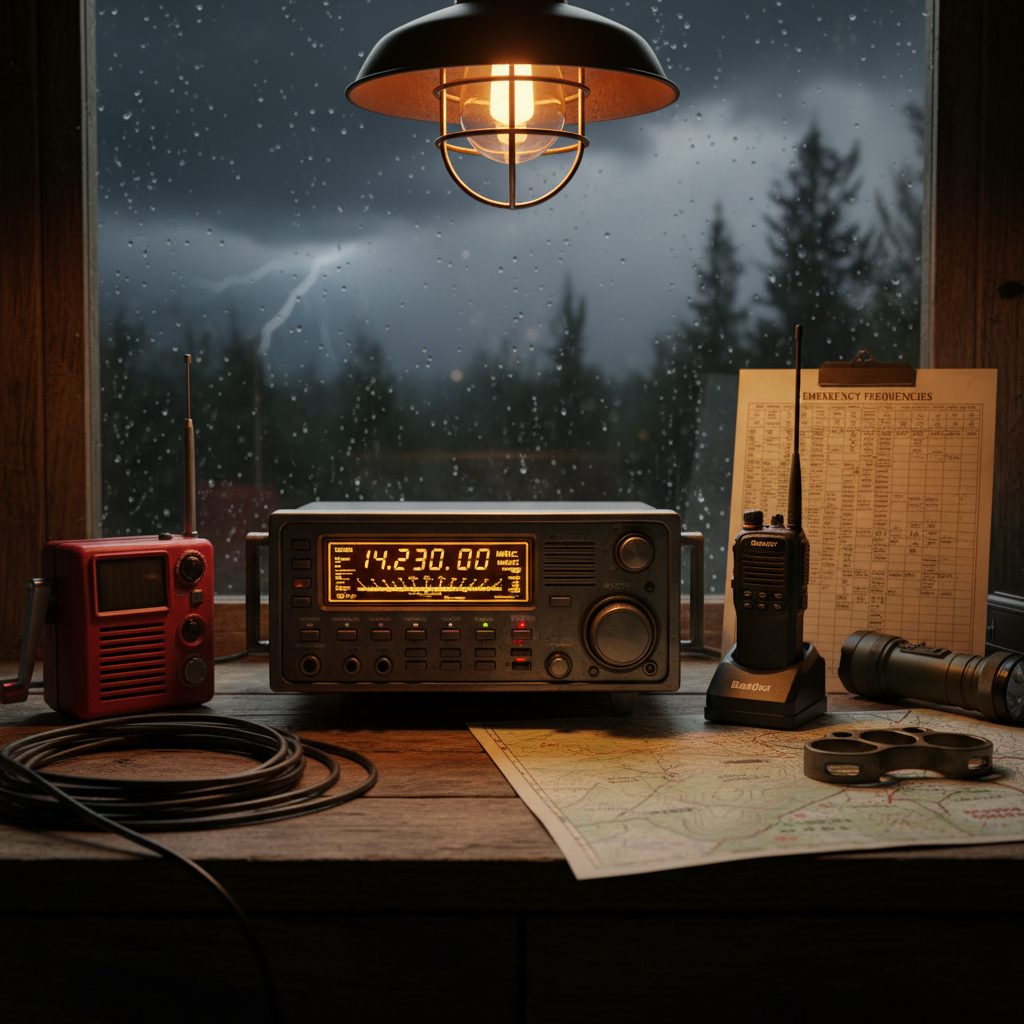
Why Your Communication Plan Is Your Most Overlooked Survival Asset
When the grid goes down, most preppers have food, water, and security covered. But communication — the ability to receive critical information, coordinate with family, and connect with your community — is often the last thing on the list. That's a dangerous oversight. During Hurricane Katrina, the entire cellular infrastructure in New Orleans collapsed within hours. During the 2003 Northeast blackout, 911 systems were overwhelmed and non-functional across multiple states. When infrastructure fails, the people who survive and adapt fastest are the ones who can still talk to each other.
Building a layered, redundant off-grid communication network isn't complicated or prohibitively expensive. It does require understanding your options, knowing their limitations, and having a plan before you need it. This guide breaks down the essential tools, how they work, and how to build a system that keeps you informed and connected no matter what.
Layer One: Receiving Emergency Alerts
Before you worry about transmitting, you need to be able to receive. The National Oceanic and Atmospheric Administration (NOAA) operates a nationwide network of weather radio stations broadcasting 24 hours a day on dedicated frequencies. These broadcasts cover severe weather, natural disasters, hazardous material incidents, and national emergencies. NOAA Weather Radio reaches approximately 97% of the U.S. population and requires no internet connection whatsoever.
A dedicated weather alert radio is not optional — it's foundational. The Midland WR400 Deluxe NOAA Emergency Weather Alert Radio is one of the most reliable units on the market. It features SAME (Specific Area Message Encoding) technology, which lets you program alerts for your specific county so you're not woken up at 3 a.m. by a tornado warning 200 miles away. It also includes a battery backup and alarm system that activates automatically when a threat is detected — even if the unit is turned off. Place one in your home, one in your bug-out location, and treat it like a smoke detector. It stays on, always.
Layer Two: Short-Range Communication with FRS/GMRS Radios
For neighborhood-level and family coordination, Family Radio Service (FRS) and General Mobile Radio Service (GMRS) handheld radios are your workhorses. They require no license for FRS use, are affordable, and can keep your group coordinated across several miles in open terrain. Real-world range in suburban and wooded environments typically runs between half a mile and two miles — manufacturer claims of "36 miles" assume flat, open desert conditions.
The Midland GXT1000VP4 Two-Way Radio Pair offers up to 50 channels including GMRS frequencies, has a weather scan feature, and comes with rechargeable batteries and a drop-in charger. These are solid, purpose-built units that hold up to field use. For groups or families with multiple members spread across a neighborhood, buy enough units so every household has at least one.
If you want something slightly more rugged with Bluetooth integration and smartphone compatibility for when networks are still partially functional, the Motorola T800 Talkabout Two-Way Radio is worth considering. It pairs with an app that allows location sharing over Wi-Fi when available, and falls back to standard radio when it's not. The dual functionality makes it a smart bridge between the connected world and full off-grid operation.
Key practice tip: Establish pre-designated channels and backup channels with your group now. Write them down on laminated cards and keep them with each radio. Under stress, no one should be fumbling through menus.
Layer Three: Ham Radio for Long-Range and Serious Preparedness
If short-range radios are your neighborhood tool, ham radio is your regional and national lifeline. Amateur radio operators played a critical role in disaster response during 9/11, Hurricane Harvey, and countless other emergencies where commercial infrastructure failed. According to the American Radio Relay League (ARRL), there are over 750,000 licensed amateur radio operators in the United States — a ready-made communication network that activates during disasters.
Getting licensed is easier than most people think. The Technician license — the entry level — requires passing a 35-question multiple choice exam with no Morse code requirement. Study materials are free online, and most people pass after two to three weeks of casual studying.
For entry-level ham radio, the Baofeng UV-5R Ham Radio Transceiver is the starting point for millions of preppers. It's dual-band (VHF/UHF), programmable, and remarkably affordable. Its limitations are real — the stock antenna is mediocre, the interface is not intuitive, and audio quality is basic — but for the price, it gives you access to local repeater networks and emergency frequencies. Pair it with a better aftermarket antenna and free programming software (CHIRP) and you have a capable tool.
For those ready to invest in a more capable and durable platform, the Yaesu FT-60R Dual Band Handheld Ham Radio represents a significant step up. Built to military spec 810 standards for dust and water resistance, with superior audio clarity and a more robust receiver that performs better in congested RF environments, the FT-60R is the radio serious operators trust in the field. It covers wide-band receive as well, meaning you can monitor aviation, marine, weather, and public safety frequencies — making it an intelligence-gathering tool, not just a radio.
Layer Four: Mesh Networking for Data and GPS When Everything Else Fails
Modern emergency communication isn't just voice. Sharing location data and text messages — without any cellular or internet infrastructure — has become possible through peer-to-peer mesh networking devices. These tools create their own encrypted network between units, allowing small groups to communicate by text and share GPS coordinates over several miles.
The goTenna Mesh Off-Grid Text and GPS Device pairs with your smartphone via Bluetooth and uses long-range radio frequencies to send encrypted messages and location data without any towers or internet. Range is approximately 1-4 miles peer-to-peer, but the mesh capability means messages can hop between devices — extending range significantly as more nodes are added. For a group of 6-10 people spread across a rural area or small town, a set of these devices creates a private, encrypted digital communication layer that no infrastructure failure can touch.
Building Your Communication Plan: Putting It All Together
Technology is only as useful as the plan behind it. Consider structuring your communication network in tiers:
- Alert Reception: NOAA weather radio, always on, always monitoring
- Local Coordination (0-5 miles): FRS/GMRS handheld radios with pre-programmed channels
- Regional Communication (5-100+ miles): Licensed ham radio with access to local repeater networks
- Data and Location Sharing: Mesh network devices for text and GPS without infrastructure
Beyond the gear, establish these practices now:
- Schedule regular radio check-ins with your group — weekly if possible
- Know your local ham radio repeater frequencies and emergency nets (find them at repeaterbook.com)
- Keep all radios charged or stocked with fresh batteries on a rotating schedule
- Store backup batteries in a cool, dry location — alkaline batteries can last 5-7 years in proper storage
- Laminate and post frequency reference cards at each radio station in your home
What You'll Need
Tools
- NOAA weather alert radio (e.g. Midland WR400)
- FRS/GMRS handheld radios (e.g. Midland GXT1000VP4 or Motorola T800)
- Ham radio transceiver — handheld (e.g. Baofeng UV-5R or Yaesu FT-60R)
- Mesh networking device (e.g. goTenna Mesh)
- Computer or laptop with USB port (for programming radios with CHIRP software)
- Programming cable compatible with your ham radio model
- Aftermarket antenna for improved ham radio range
- Smartphone (for CHIRP setup and goTenna app pairing)
Supplies
- Rechargeable AA or AAA batteries and a dedicated charger
- Backup alkaline batteries (stored in a cool, dry location)
- Laminating pouches and a laminator (or access to a print shop)
- Waterproof markers and index cards for frequency reference drafts
- Small waterproof storage cases or pouches for each radio
- Printed copy of local ham radio repeater frequencies from repeaterbook.com
- Printed copy of NOAA weather radio frequencies for your region
- Ham radio Technician license study guide (free at HamStudy.org)
Step-by-Step Instructions
Step 1: Acquire and Configure Your NOAA Weather Alert Radio
Purchase a dedicated NOAA weather alert radio and place it in your home's primary living area. Power it on and use the SAME programming menu to enter your specific county FIPS code — available at weather.gov — so you only receive alerts relevant to your location. Test the alarm function manually, confirm the battery backup is installed and charged, and set the unit to remain on continuously. This is your always-on foundation layer and should be treated as non-negotiable infrastructure.
Step 2: Purchase and Distribute FRS/GMRS Radios to Every Household in Your Group
Buy enough handheld radios so that every family member or household in your preparedness group has at least one unit. Keep all radios on the same brand and model where possible to ensure full channel and tone compatibility. Charge all units fully out of the box and confirm that each one transmits and receives clearly before storing them. This baseline check prevents discovering dead or defective radios during an actual emergency.
Step 3: Program and Document Your Channel Plan for FRS/GMRS Radios
Assign a primary channel, a secondary backup channel, and a designated emergency channel for your group — avoid default channel 1,