Rope, Knots, and Rigging: How to Master Essential Knot-Tying Skills for Every Survival Scenario
From securing shelters to building traps, the right knot can save your life. Master these essential survival knots before SHTF.
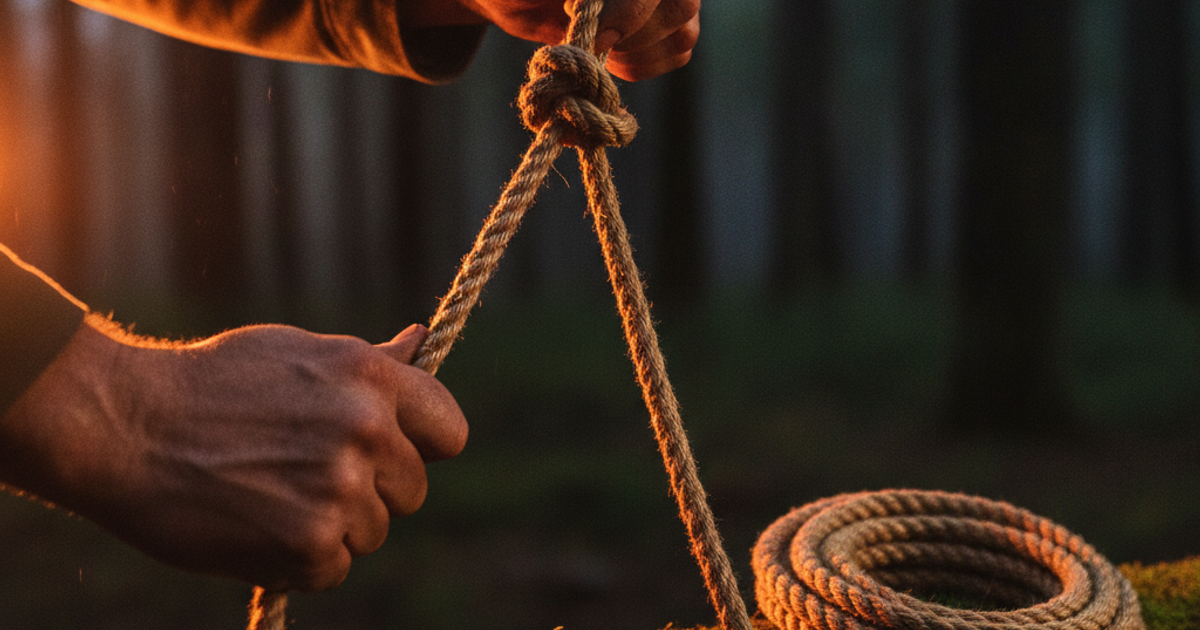
A coil of rope in trained hands is a force multiplier. It builds shelters, secures loads, enables rescues, fashions snares, and even saves lives when the window between safety and catastrophe is measured in seconds. Yet most preppers who carry paracord in their bug out bag or toss a coil of utility rope in the trunk have never systematically studied the skill of tying and rigging. They know one or two knots — usually a square knot tied wrong — and stop there. That's a dangerous gap.
Rope skills are not glamorous. They don't trend on social media the way firearms or freeze-dried food do. But in a real SHTF scenario — whether you're an apartment dweller rappelling from a burning building, a suburban prepper lashing a tarp over a broken window after a hurricane, or a rural homesteader hoisting a deer carcass — your knot knowledge will determine how fast, how safely, and how effectively you act. This guide will close that gap.
According to data compiled by search-and-rescue teams, improper or failed rigging is a contributing factor in a significant percentage of preventable wilderness fatalities involving falls, improper load securing, and failed improvised rescues. The skills outlined here apply whether you live on twenty acres or in a studio apartment — rope doesn't care where you sleep.
For an excellent reference to keep in your kit, the Morrow Knots survival knot tying book is one of the most practical field references available, covering dozens of essential knots with step-by-step illustrations you can actually follow under stress. It belongs in your preparedness library alongside your first aid manuals.
What You'll Need
Tools
- Fixed-blade or folding knife (for cutting cordage cleanly)
- Lighter or matches (for heat-sealing synthetic rope ends)
- Carabiner or rescue hook (for load-bearing rigging applications)
Supplies
- TOUGH-GRID 750lb Paracord rope survival — rated for serious load-bearing tasks beyond standard 550 paracord
- Atwood Rope MFG 550 paracord 100 feet — mil-spec paracord for general-purpose survival and field use
- Rothco utility rope polypropylene 100 feet — lightweight, weather-resistant utility rope for lashing, securing, and camp rigging
- Petzl prusik cord climbing rescue loop — purpose-built for friction-hitch applications in rescue and vertical scenarios
- Knot Right knot tying practice cards waterproof — field-portable, laminated reference cards you can practice with anywhere
Why Most Preppers Underestimate Rope Skills
The prepper community invests heavily in survival gear, firearms, and emergency food storage, but rope skills are often treated as an afterthought — something you'll "figure out when the time comes." That's a flawed assumption. Under stress, your hands default to what they've practiced. If you've never built a bowline under pressure, you won't build one correctly when your adrenaline is dumping and visibility is failing.
Rope and cordage appear in nearly every serious preparedness scenario:
- Urban survival: Rappelling from upper floors during fires or building collapses, securing improvised barricades on doors and windows, lashing damaged structures temporarily, or lowering supplies between floors when stairwells are compromised.
- Suburban preparedness: Tarping a damaged roof, securing a vehicle load after a grid-down supply run, constructing a perimeter trip-line system, or setting up an improvised clothesline for hygiene management during extended outages.
- Rural and off-grid: Hoisting game, building field-expedient shelters, rigging block-and-tackle systems for vehicle recovery, constructing animal pens, or setting up improvised tarp shelters with structural integrity.
The key insight is that rope skills are universal. A bowline tied correctly works the same whether you're in a high-rise apartment or a hardwood forest. Learn the knots once — use them everywhere.
Understanding Your Cordage: Choosing the Right Rope for the Job
Not all rope is created equal, and using the wrong cordage for a load-bearing application can be lethal. Before you tie your first knot, understand what you're working with.
Paracord (Type III and Type IV)
Standard 550 paracord — named for its 550-pound minimum breaking strength — is the most versatile cordage in a prepper's toolkit. Its inner strands can be removed for use as sutures, fishing line, or snare wire. It's lightweight, compact, and UV-resistant. For heavier applications, 750lb-rated paracord provides additional margin. Always verify that paracord is genuine mil-spec, not cheap knockoffs that fail at a fraction of rated load.
A UST paracord bracelet survival kit wristband is a smart way to keep usable cordage on your person at all times. These wearable survival tools unravel into several feet of functional paracord and often integrate additional tools like a fire striker, compass, or whistle — making them an excellent addition to any everyday carry setup.
Utility and Static Rope
For load-bearing rescue applications, dynamic kernmantle climbing rope is the professional standard. However, most preppers won't carry specialized climbing rope. Polypropylene utility rope is an accessible alternative for non-life-safety tasks: lashing, bundling, and light rigging. It floats on water — a significant advantage in flood scenarios — and holds up to moisture well.
Natural Cordage
In a long-term grid-down situation, manufactured rope will eventually run out or become unavailable. Learning to make cordage from plant fibers — dogbane, stinging nettle, inner bark of basswood — is a true force-multiplier skill. For deep dives into this topic, our article on Bushcraft Rope and Cordage: How to Make and Use Natural Cordage When You Run Out of Paracord covers the techniques in detail.
The Essential Knot Library Every Prepper Must Master
You don't need to memorize forty knots. You need to master ten thoroughly. The following knots cover the vast majority of survival and field-rigging scenarios you'll encounter across urban, suburban, and rural settings.
1. The Bowline — The King of Loop Knots
The bowline creates a fixed, non-slip loop that holds under load and remains easy to untie afterward. It is the single most important knot for rescue work, life safety lines, and securing a load to an anchor point. The classic mnemonic — "the rabbit comes out of the hole, runs around the tree, and goes back in the hole" — makes it teachable to children and memorable under stress. Practice until you can tie it one-handed in the dark.
2. The Square Knot — Binding, Not Load-Bearing
Widely known, widely misused. The square knot is a binding knot ideal for closing bandages, bundling gear, or tying off bag tops. It is not a load-bearing or joining knot. Under lateral load it can roll and slip. Know what it's for — and what it isn't for.
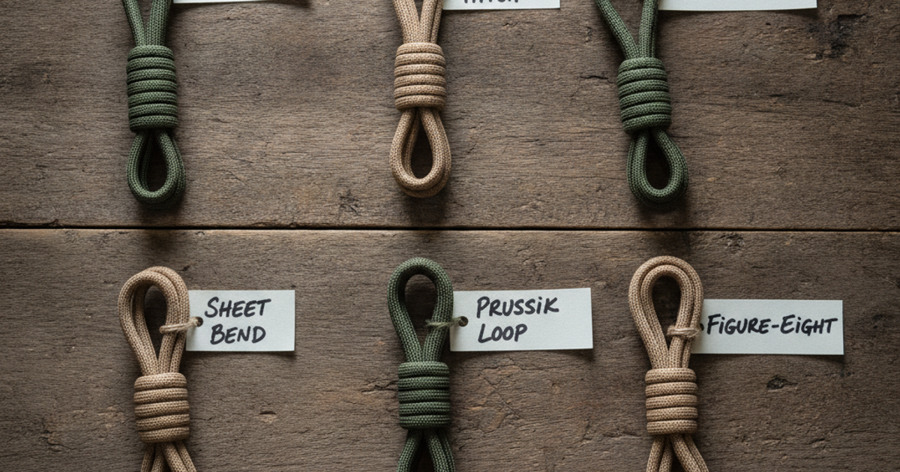
3. The Sheet Bend — Joining Two Ropes
When you need to join two ropes of equal or different diameters, the sheet bend outperforms the square knot in every load-bearing scenario. The double sheet bend adds a second wrap for additional security when joining ropes of significantly different thickness.
4. The Clove Hitch — Attaching to Posts and Anchors
Quick to tie, easy to adjust, the clove hitch is the go-to knot for lashing rope to a post, branch, railing, or ring. It can be tied with one hand once mastered — valuable in rescue scenarios where one hand is occupied. Note: the clove hitch can slip under heavy unidirectional load without a backup half-hitch.
5. The Trucker's Hitch — Mechanical Advantage for Tensioning
The trucker's hitch creates a simple 3:1 mechanical advantage system in a single rope, allowing you to tension a ridgeline, secure a tarp, or tie down a load on a vehicle with significantly more force than your hands alone could generate. It's one of the most practical knots in field use and criminally underused in the prepper community.
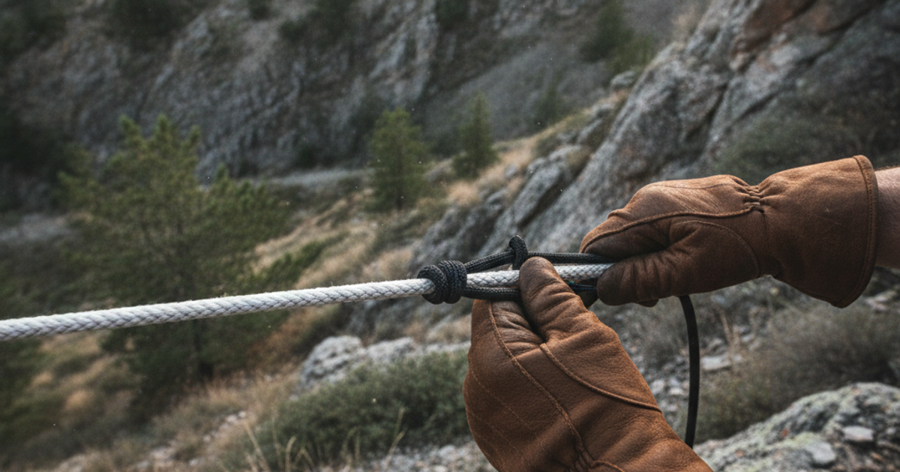
6. The Prusik Hitch — Ascending Rope and Load Control
The prusik is a friction hitch that grips under load but slides when pressure is released. It's used by climbers and rescue professionals for ascending rope, acting as a progress-capture device, and controlling descent in improvised rappel systems. With a purpose-built Petzl prusik cord climbing rescue loop, you have a ready-made tool for this application that integrates with standard carabiners and belay devices in rescue rigs.
7. The Figure-Eight and Figure-Eight on a Bight
The figure-eight family of knots is the foundation of climbing and rescue rigging. The figure-eight on a bight creates a strong, easily inspectable fixed loop that can clip directly into a carabiner. It's stronger than the bowline in pure tensile load, though harder to untie after weighting. Learn both, understand the tradeoffs.
8. The Taut-Line Hitch — Adjustable Tension
This adjustable hitch slides along the standing line when unweighted but grips when loaded. It's perfect for tent guy-lines, ridgeline tensioning, and any application requiring an adjustable loop that can be repositioned without untying the whole system.
9. The Half-Hitch and Two Half-Hitches — Securing a Running End
These simple hitches are the "finishing moves" that lock off and secure the working ends of more complex lashings and rigs. Two half-hitches around the standing line creates a reliable backup that prevents slippage in clove hitches and other knots prone to walking under oscillating load.
10. The Square Lashing — Joining Poles for Structural Rigs
When building improvised shelters, stretchers, or structural frameworks from branches, PVC pipe, or found materials, the square lashing joins two poles at right angles with disciplined wrapping and frapping turns. It's a critical knot for anyone serious about field shelter construction.
For reference during practice, the Marlinspike Seamanship knot tying handbook field guide is a comprehensive manual drawn from maritime tradition — the most demanding rope-working culture in history. Many of the knots in everyday use by rescue professionals and military units trace directly to seamanship, and this reference explains the why behind each configuration, not just the how.
Field Rigging Applications: Putting Knots to Work
Improvised Rescue and Lowering Systems
In an urban high-rise scenario — a fire, structural collapse, or grid-down building emergency — rappelling and lowering systems can mean the difference between life and death. A basic rescue lowering system requires: a bombproof anchor (tied to a structural element like a load-bearing column, not a curtain rod), a figure-eight or munter hitch for friction, and a prusik backup on the brake strand. This is not a skill to improvise on the spot. Practice it now, in your apartment stairwell or backyard, so your hands know the movements.
Being able to move injured people is equally critical — pair your rope skills with the techniques covered in our guide on Improvised Stretchers and Casualty Carries: How to Move an Injured Person When No Ambulance Is Coming.
Shelter Construction and Tarp Rigging
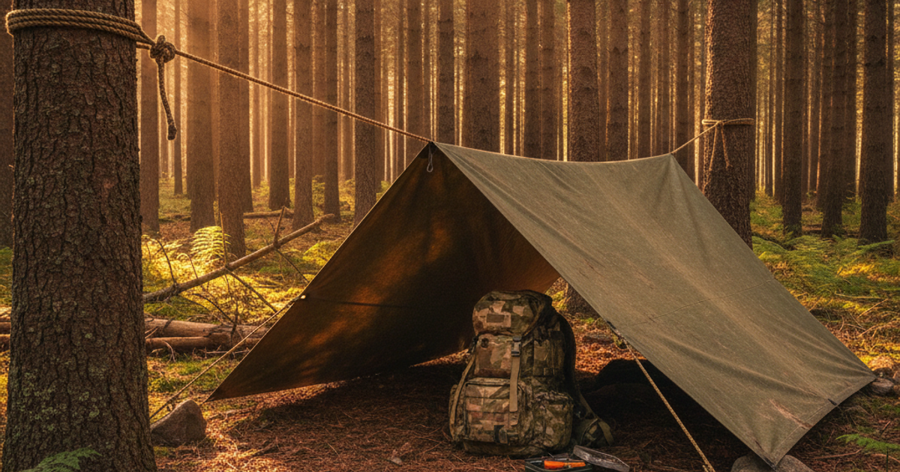
A single tarp and 50 feet of paracord, combined with a solid understanding of ridgeline rigging, clove hitches, and taut-line hitches, can produce a weatherproof shelter in under ten minutes. For suburban preppers dealing with storm damage, a properly rigged tarp over a damaged roof or broken window can prevent water intrusion that would otherwise render a home uninhabitable. The trucker's hitch is your best friend for getting a ridgeline drum-tight without mechanical pulleys.
Tactical Perimeter and Trip-Wire Systems
Rope can serve situational awareness functions as well. A simple trip-line rigged with tin cans or other noise-makers around a campsite perimeter or across a door threshold provides early warning of intrusion — relevant whether you're sheltering in place in an apartment or securing a rural property. The key is using dark or naturally colored cordage that blends into the environment, secured with simple hitches that allow rapid disassembly when you need to move.
Step-by-Step Instructions
Step 1: Gather Your Cordage and Identify the Application
Before tying any knot, identify what you need the rope to do: join two lines, create a loop, apply tension, or form a hitch to an anchor. Select cordage appropriate to the load — paracord for light-to-medium applications, heavier utility rope or static line for load-bearing rescue work. Never guess at a rope's rating; when in doubt, use multiple strands or double the rope.
Step 2: Seal and Prepare Your Rope Ends
Raw-cut synthetic rope ends fray immediately, making knot-tying slippery and inaccurate. Use a lighter to melt and seal the ends of paracord and polypropylene rope cleanly. For natural fiber rope, whip the ends with a few wraps of thin cord or tape. This 30-second step prevents hours of frustration in the field and ensures your knots seat correctly.
Step 3: Practice the Bowline Until It's Automatic
The bowline is your primary life-safety knot — practice it until you can tie it correctly in under 10 seconds with eyes closed. Start slowly, confirming the rabbit-hole structure each time. Move to timed repetitions, then practice with gloves, in low light, and with one hand. Set a benchmark of 50 correct repetitions before considering this knot ready for field use.
Step 4: Build a Tensioned Ridgeline Using a Trucker's Hitch
Tie one end of your rope to an anchor using two half-hitches or a clove hitch backed by a half-hitch. About two-thirds of the way along the rope toward your second anchor, form a slip loop in the standing part of the rope. Run the working end around the second anchor point and back through the slip loop, then pull down to tension the system. Lock it off with two half-hitches on the standing line below the loop. This creates a taught, adjustable ridgeline capable of supporting a tarp or heavy tarp shelter.
Step 5: Rig an Improvised Prusik Safety Backup
Take a loop of 5–6mm cord (or purpose-built prusik loop) and wrap it around the main line three times, threading the loop back through itself. The resulting friction hitch grips under load but slides when pressure is relieved. Position it above your primary attachment point as a progress-capture device or below as a safety backup. Test it by loading progressively — it should grip firmly and hold your body weight without slipping.
Step 6: Practice Square Lashing to Build a Structural Frame
Cross two poles or branches at right angles. Start with a clove hitch on the vertical pole below the junction. Wrap over the horizontal pole and under the vertical, rotating around the junction point four times in each direction. Finish with two frapping turns (wraps between the poles, pulling the lashing tight) and a closing clove hitch. A properly executed square lashing should feel completely rigid — no play between the poles whatsoever.
Step 7: Assemble and Test Your Complete Rope Kit
Organize your rope kit into a consistent loadout: 50–100 feet of 550 or 750lb paracord, 50 feet of heavier utility rope, two to three prusik loops, and a set of laminated reference cards. Seal everything in a dry bag or zip-lock. Test the complete system by building a tarp shelter or mock rescue rig from scratch, without consulting notes, within 15 minutes. This benchmarks your readiness and identifies gaps before a real emergency surfaces them.
Step 8: Conduct Monthly Knot-Tying Drills to Maintain Proficiency
Rope skills degrade without repetition. Schedule a 15-minute drill session monthly where you tie your core ten knots from memory, including at least two in low-light or gloved conditions. Rotate through all knots systematically, spending extra time on those you found difficult or hesitated on. Consider drilling with family members or your survival group so everyone shares baseline proficiency.
Recommended Gear for Your Rope and Rigging Kit
Beyond the core cordage already covered, a few additional items round out a serious rope kit. The Knot Right knot tying practice cards waterproof are laminated field cards you can keep in your kit and use to practice or refresh specific knots on the go — waterproof, compact, and genuinely useful during training sessions. For anyone building a complete emergency preparedness loadout, the Marlinspike Seamanship knot tying handbook field guide provides the deepest reference available for rope-working technique, covering rigging, splicing, and advanced lashing systems that go well beyond basic knots.
For urban and suburban preppers who want knot references without carrying a full book, the Morrow Knots survival knot tying book is a slim, illustrated guide focused specifically on survival applications. Keep a copy in your bug out bag, your vehicle emergency kit, and at your primary prep location. Knowledge stored in a book is redundant knowledge — and redundancy is a core prepper principle. Pair your rope kit with Atwood Rope MFG 550 paracord 100 feet for reliable, mil-spec cordage that you can trust when it counts. For non-life-safety utility tasks around a camp or suburban shelter-in-place situation, Rothco utility rope polypropylene 100 feet is a cost-effective, durable option worth having in quantity.
Frequently Asked Questions
What is the most important survival knot to learn first?
The bowline is widely considered the single most important knot for survival and emergency preparedness. It creates a strong, non-slip fixed loop that holds under extreme load and remains relatively easy to untie afterward — making it essential for rescue, load bearing, and shelter construction. If you only have time to master one knot before an emergency, make it the bowline. Once that's solid, add the trucker's hitch and the prusik for a core three-knot system that covers most field scenarios.
Is paracord strong enough for emergency rappelling or rescue use?
Standard 550 paracord is rated at 550 pounds minimum breaking strength — but breaking strength is not working load limit. In rescue applications, a safety factor of 10:1 is the professional standard, which means 550 paracord should only support a working load of about 55 pounds. It is not appropriate as a solo life-safety rappel line. For life-safety applications, use static kernmantle rope rated at 9mm or larger, or double and triple your paracord strands and use multiple independent anchor points to distribute load. 750lb paracord provides additional margin. In a true emergency, improvised systems should be constructed with maximum redundancy and tested before committing full body weight.