
Vehicle Bug-Out Mechanic: How to Keep Your Bug-Out Vehicle Running When There Are No Repair Shops
When SHTF, a broken-down vehicle could cost you everything. Learn the essential mechanical skills and parts to keep your bug-out vehicle running.

When the grid goes down, roads clog with panicked traffic, and society fractures at the seams, your bug-out vehicle isn't just transportation — it's a survival platform. According to the Federal Highway Administration, the average American drives more than 13,000 miles per year, and most drivers have never changed their own oil, let alone diagnosed a failing fuel pump in the dark. That dependency on professional mechanics and auto parts stores is a critical vulnerability in any emergency preparedness plan.
In a true SHTF scenario — grid collapse, civil unrest, natural disaster, or a regional evacuation — the nearest AutoZone may be looted, closed, or simply unreachable. Your survival depends on your ability to keep your vehicle running with what you have, using skills you've built before everything went sideways. Whether you're bugging out of a dense urban apartment complex, a suburb, or a rural homestead, the mechanical realities are the same: the vehicle either runs or it doesn't, and nobody is coming to help.
This guide is about closing that gap. It covers the spare parts, tools, skills, and mindset you need to become your own roadside mechanic when there are no roads left to call for help on. For a broader look at keeping your vehicle low-profile while on the move, see our guide on Gray Man Vehicle: How to Make Your Bug-Out Vehicle Blend In When SHTF.
What You'll Need
Tools
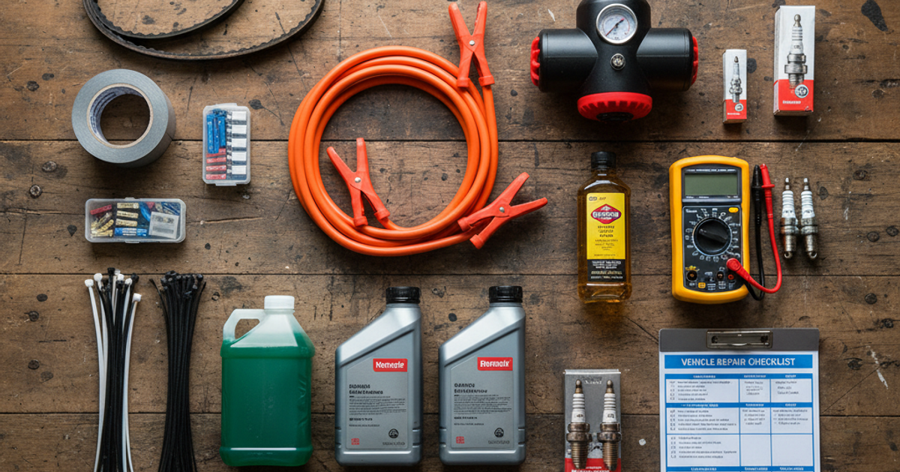
- Stanley mechanics tool set with socket wrench
- Lisle Tools automotive emergency repair tool kit
- NOCO Boost portable jump starter battery pack
- Multimeter (for diagnosing electrical faults)
- Breaker bar and torque wrench
Supplies
- Slime tire repair kit tubeless plug kit
- Prestone radiator stop leak emergency repair
- Dorman universal spare parts assortment (fuses and relays)
- 2 quarts engine oil (correct weight for your vehicle)
- Spare serpentine belt and fuel filters
- Electrical tape, zip ties, and JB Weld epoxy
Why Most Bug-Out Vehicles Will Fail Within 72 Hours
The uncomfortable truth is that most preppers who have a bug-out vehicle haven't practiced maintaining it under stress, let alone without access to a parts store. A 2019 AAA survey found that more than one in three American drivers couldn't change a flat tire. That's a devastating statistic when you're sitting on the shoulder of a rural highway at 2 a.m. with hostiles on the road behind you and your destination still 200 miles ahead.
The most common vehicle failures in emergency scenarios are predictable and preventable: flat tires, dead batteries, overheating, fuel starvation, broken belts, and blown fuses. None of these require a master mechanic to fix — they require preparation, practice, and the right parts on hand before the emergency begins.
Know Your Vehicle Before You Need to Fix It
Situational awareness doesn't stop at scanning crowds for threats. It applies directly to your mechanical environment. You should know your vehicle's tire pressure by feel, recognize the smell of burning coolant versus burning oil, and understand what every warning light on your dash actually means — before it lights up during a nighttime evacuation.
Pull your owner's manual and read it cover to cover. Then buy a Haynes or Chilton repair manual specific to your vehicle's year, make, and model. These are worth their weight in gold when you're diagnosing a problem without a diagnostic computer. Keep a printed copy in the vehicle — digital files are useless when your phone is dead or destroyed.
Urban and suburban preppers who live in apartments or HOA communities can still develop these skills. Community college automotive programs, YouTube tutorials, and weekend mechanic courses are widely available. Practice oil changes and tire rotations in a parking garage if that's your only workspace. The skill is portable — the knowledge lives in your hands.
The Spare Parts Kit Every Bug-Out Vehicle Needs

Your spare parts inventory should be built around the most statistically likely failure points of your specific vehicle. That said, there are universal categories that apply to nearly every bug-out rig:
- Tires: Carry a full-size matching spare, not a donut. A plug and patch kit like the Slime tubeless tire repair kit can seal a puncture in minutes without removing the wheel — critical when you're on the move and can't afford to stop for long.
- Belts and Hoses: A snapped serpentine belt will strand you as effectively as an empty gas tank. Carry a replacement belt and radiator hoses specific to your vehicle, along with hose clamps in multiple sizes.
- Fuses and Relays: Electrical failures are the most misdiagnosed roadside problems. A Dorman universal spare parts assortment with fuses and relays gives you the components to troubleshoot and repair the most common electrical gremlins without a parts store.
- Fluids: Engine oil, coolant, brake fluid, power steering fluid, and transmission fluid. Minimum two quarts of oil, one gallon of 50/50 coolant mix.
- Fuel Filters: A clogged fuel filter starves the engine. They're cheap, lightweight, and often overlooked until it's too late.
For cooling system failures, Prestone radiator stop leak is a field-expedient solution for small leaks that can buy you the miles you need to reach your destination. It's not a permanent fix — it's a bridge. More serious head gasket failures may require a product like Permatex head gasket repair kit, which can temporarily seal compromised gaskets and keep your engine from cooking itself on the road.
The Essential Field Mechanic's Toolbox
You don't need a full shop — you need the right compact toolkit that covers 80% of field repairs. A Stanley mechanics tool set with socket wrench gives you the torque and versatility to handle most engine bay and undercarriage work in a compact package. Supplement it with a dedicated Lisle Tools automotive emergency repair kit, which includes specialty items like oil filter pliers, spark plug gappers, and vacuum line tools that a standard socket set won't cover.
Don't overlook lubrication as a maintenance tool. Squealing belts, stiff linkages, and binding components can be addressed in the field with a WD-40 specialist belt dressing and multi-use lubricant kit. Belt dressing restores grip to a slipping serpentine belt and can extend its operational life long enough to reach your bug-out location.
For electrical failures that leave your battery dead, a NOCO Boost portable jump starter is one of the single most important pieces of survival gear you can carry in any vehicle. Unlike jumper cables, it requires no second vehicle — you can self-rescue a dead battery at 3 a.m. in a rural ditch with zero assistance.
For more on vehicle preparation, our Vehicle Emergency Kit guide covers additional supplies every driver should carry before disaster strikes.
Step-by-Step Instructions

Step 1: Audit Your Vehicle's Most Likely Failure Points Now
Pull your vehicle's service history and identify anything overdue: belts, filters, hoses, spark plugs, and battery age. A battery older than three years in a hot climate is a liability. Address deferred maintenance before an emergency occurs — every unresolved issue is a ticking clock. Note the mileage and service intervals for each component and build a calendar.
Step 2: Build a Vehicle-Specific Spare Parts Inventory
Cross-reference your owner's manual and repair manual against the universal spare parts list above, then add vehicle-specific components: the correct serpentine belt part number, the right fuse amperage ratings for your fuse box, and the exact oil viscosity your engine requires. Store everything in a labeled, waterproof container — a hard-sided Pelican-style case works well for parts that can be damaged by moisture.
Step 3: Assemble and Organize Your Field Mechanic Toolkit
Gather your socket set, combination wrenches, screwdrivers, pliers, tire plug kit, jump starter, multimeter, electrical tape, wire crimpers, zip ties, and specialty tools into a single organized bag or toolbox. Organize by task category (electrical, engine, tires) so you can find what you need under stress in low light. Practice locating each tool blind.
Step 4: Learn to Diagnose the Five Most Common Field Failures
Study and practice diagnosing flat tires, dead batteries, overheating, broken belts, and blown fuses. Each has a distinct symptom signature: a flat pulls to one side, an overheating engine shows temperature gauge spikes and steam, a broken belt kills power steering and charging simultaneously. Knowing the symptom-to-cause chain means you don't waste time guessing when minutes matter.
Step 5: Practice Repairs Under Realistic Conditions
Schedule quarterly practice sessions where you perform actual repairs: change a tire, swap a fuse, replace a serpentine belt. Do at least one session in low light conditions using a headlamp only. Urban preppers can practice in a parking garage; suburban and rural preppers can use their driveway. The goal is muscle memory, not conceptual knowledge.
Step 6: Establish a Pre-Departure Inspection Checklist
Before any bug-out departure, run a 10-point inspection: tire pressure and condition, engine oil level, coolant level, brake fluid, fuel level, battery terminal condition, belt tension, all lights functional, spare tire present and inflated, and toolkit accounted for. This takes four minutes and eliminates the most common departure-stage failures. Keep a laminated checklist in the glove box.
Step 7: Store Fuel Strategically and Treat It for Long-Term Use
Stale fuel is a silent bug-out killer. Gasoline begins to degrade in as little as 30 days without a stabilizer. Store rotated fuel in approved containers with a quality fuel stabilizer added, and keep at least a quarter-tank surplus in treated cans at all times. Our detailed Fuel Storage for Preppers guide covers safe long-term storage protocols for gasoline, diesel, and propane in detail.
Step 8: Document Repairs and Build a Vehicle Service Log
Keep a waterproof notebook in the vehicle documenting every repair, fluid change, and parts replacement with dates and mileage. In a long-term grid-down scenario, this log tells you when the next oil change is due, when the tire plugs were installed, and how long ago the belt was replaced. Written records are your maintenance computer when electronics fail.
Frequently Asked Questions
What are the most important spare parts to carry in a bug-out vehicle?
The highest-priority spares are a full-size matching spare tire, a serpentine belt, fuses and relays matching your vehicle's fuse box, engine oil, coolant, a fuel filter, and radiator hoses with clamps. These address the failures most likely to strand you in a crisis. Beyond that, tailor your spare parts to your specific vehicle's known weak points as identified in your repair manual and service history.
Can I really fix my own vehicle without professional training when SHTF?
Yes — for the most common field failures, absolutely. Changing a tire, jumping a battery, replacing a fuse, swapping a serpentine belt, plugging a tire, and adding fluids are all within the capability of any motivated person who has practiced the skills beforehand. A quality repair manual, the right tools, and prior rehearsal eliminate most of the mystery. The key phrase is "beforehand" — the middle of a crisis evacuation is not the time to learn from scratch.
How do I keep my bug-out vehicle maintained if I live in an apartment or don't have a garage?
Apartment and urban preppers face real constraints, but not insurmountable ones. Many cities have self-service auto repair bays you can rent by the hour, complete with lifts and tools. Community college automotive programs often allow public use of their facilities. At minimum, learn to perform parking lot-level maintenance: oil checks, tire inflation, fuse swaps, belt inspections, and fluid top-offs. Schedule annual professional inspections to catch issues you can't diagnose yourself, and keep your spare parts kit and toolkit current and ready in your vehicle at all times.
Affiliate Disclosure: SHTFPlan.net participates in the Amazon Services LLC Associates Program. Some links are affiliate links — we may earn a small commission at no extra cost to you.