Multi-Tool Mastery: How to Choose the Best Multi-Tool for Survival and Everyday Carry
The right multi-tool can replace a bag full of gear. Here's how to pick the one that could save your life.
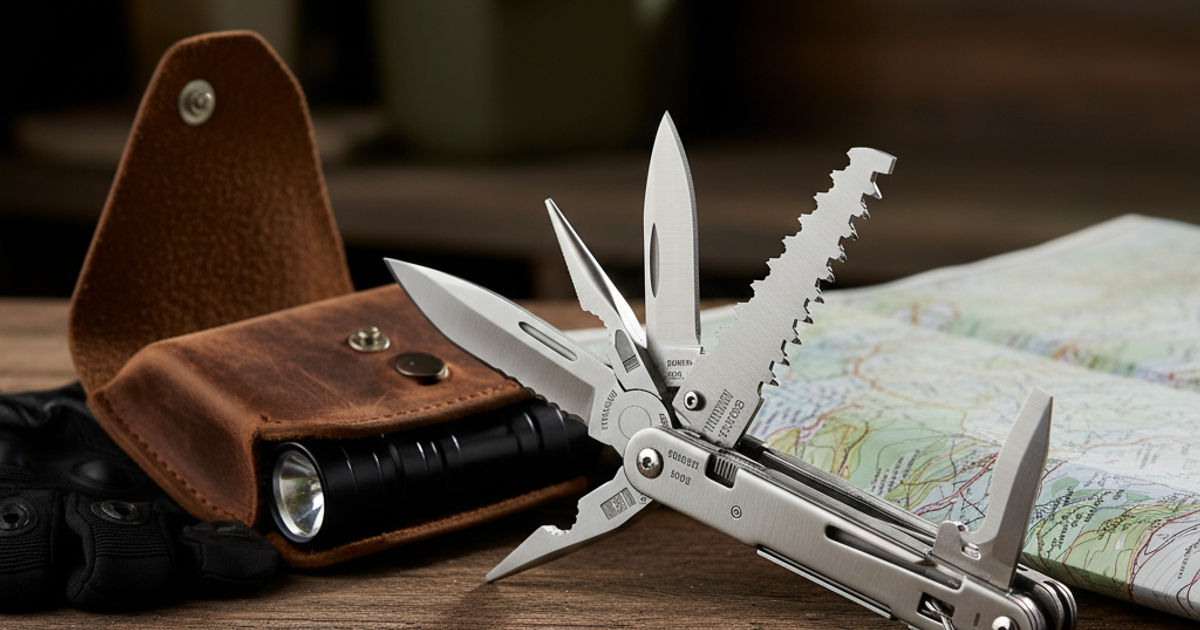
When the grid goes down, supply chains collapse, or you find yourself navigating an urban evacuation on foot, the tools you carry become extensions of your survival capability. Among all the items a serious prepper can add to a survival kit or bug out bag, the multi-tool stands out as one of the highest-value investments per ounce. A quality multi-tool consolidates a screwdriver set, knife, saw, wire cutters, can opener, and more into a package that fits in your pocket or clips to your belt — and in a crisis, that versatility can be the difference between adapting and failing.
Whether you're sheltering in a suburban home, navigating urban survival scenarios in a high-rise apartment, or working a rural homestead when help is hours away, the right multi-tool earns its place in your everyday carry (EDC) rotation. But not all multi-tools are created equal. Choosing the wrong one means carrying dead weight. Choosing the right one means having a force multiplier strapped to your hip every single day.
Why Every Prepper Needs a Multi-Tool in Their EDC and Bug Out Bag
The average person owns over a dozen individual hand tools scattered across a garage, toolbox, or junk drawer. A multi-tool consolidates the most commonly used of those tools into a unit weighing between 5 and 12 ounces. According to a 2022 survey by the American Preppers Network, 72% of respondents ranked a multi-tool among their top five EDC items — second only to a fixed-blade or folding knife.
The reason is simple: real-world emergencies rarely call for one specific tool. A car breakdown on a flooded road, a structural failure in a shelter, a gear malfunction on a bug-out route — these situations demand improvisation, and improvisation demands variety. The multi-tool is the physical embodiment of adaptive problem-solving, which is the core mindset of emergency preparedness.
For apartment and urban preppers especially, a multi-tool compensates for the limited workspace and tool storage that comes with city living. You can't store a full workshop in a studio apartment, but you absolutely can keep a premium multi-tool on your person or in your bug out bag at all times. For a complete overview of what else deserves a spot in your daily carry, see our guide on Everyday Carry (EDC) Essentials: What Every Prepper Should Have on Them at All Times.
Key Selection Criteria: What to Look for in a Survival Multi-Tool
Tool Complement and Real-World Utility
More tools is not always better. The best multi-tools prioritize the tools you'll actually use in a crisis: pliers with wire cutters, a partially serrated blade, multiple flathead and Phillips screwdrivers, a saw, a can opener, and a file. Secondary features like scissors, rulers, and awls add value without adding much weight. Avoid models that pad their tool count with redundant or impractical implements just to hit a high number on the marketing copy.
One-Handed Accessibility
In a true SHTF scenario, you may need to deploy a tool with one hand while the other is occupied. Look for multi-tools with tools that deploy from the outside of the handle — sometimes called "outside-opening" or "one-hand accessible" tools — rather than requiring you to open the plier frame first. This is one of the most overlooked features in standard reviews, but it matters enormously under stress.
Build Quality and Materials
The frame and tools should be constructed from 154CM, 420HC, or S30V stainless steel for corrosion resistance and edge retention. Handle materials matter too — textured stainless or aluminum handles outperform smooth finishes in wet conditions. Check for full-size pliers with replaceable wire cutter inserts, a feature found on premium models that dramatically extends the tool's service life.
Weight and Form Factor
A multi-tool you leave at home because it's too heavy or bulky is worthless. The sweet spot for most preppers is 8–10 ounces with a closed length of 4–5 inches. Anything heavier starts competing with carrying a compact fixed blade, and anything lighter usually sacrifices the plier jaw strength you need for real mechanical work. Grey man considerations also apply here — a discreet belt pouch or pocket carry keeps your EDC from drawing unwanted attention in public settings.
Warranty and Repairability
Premium manufacturers offer lifetime warranties with no-questions-asked repair or replacement. In a long-term grid-down scenario, that warranty means little, but it tells you something about the manufacturer's confidence in their product. Brands that back their tools unconditionally are generally the same brands that machine to tighter tolerances and use better materials.
Top Multi-Tool Models for Survival and EDC
Leatherman Wave Plus: The Gold Standard
The Leatherman Wave Plus multi-tool is consistently the best-selling multi-tool in the world, and for good reason. It features 18 tools including outside-accessible blades and a saw, premium 420HC stainless steel construction, and a 25-year warranty. The Wave Plus weighs just 8.5 ounces and fits comfortably in a standard belt pouch. For preppers building their first EDC kit or veteran survivalists looking for a reliable daily driver, this is the model most instructors and veterans reach for first.
Victorinox SwissTool Spirit: Precision Engineered Excellence
Swiss manufacturing has a reputation for precision that holds up under scrutiny. The Victorinox SwissTool Spirit multi-tool brings that precision to a full-size multi-tool format with 27 functions in a stainless steel body. The tool locking mechanism is particularly refined — every implement locks solidly open, reducing the risk of accidental closure under load. For preppers who prioritize precision work and smooth operation over brute strength, the SwissTool Spirit earns serious consideration.
Gerber Center-Drive: The Mechanic's Choice
For preppers who anticipate heavy mechanical work — vehicle repairs, structural modifications, gear fabrication — the Gerber Center-Drive multi-tool survival edition is the standout option. Its centerline bit driver applies true torque the way a full-size screwdriver does, which is a genuine engineering achievement in a folding multi-tool. The full-size, single-sided bit driver combined with the magnetic bit holder gives you mechanical leverage that most multi-tools simply can't match. If your survival gear includes a vehicle kit or if you're maintaining off-grid infrastructure, this tool belongs on your shortlist.
Leatherman MUT: Built for Tactical Applications
Designed in collaboration with military personnel, the Leatherman MUT military multi-tool includes a bronze carbon scraper, disassembly punch, and bolt override tool specifically designed for firearm maintenance. If your emergency preparedness plan includes a defensive firearm — which for most serious preppers it does — the MUT lets you field-strip, clean, and repair your weapon with the same tool you're using for everything else. It's heavier than the Wave Plus at 11.2 ounces, but the specialized capability justifies the extra weight for armed preppers. Pair it with solid firearm knowledge from our guide on Self-Defense for Preppers: How to Choose the Right Firearm for Home and Bug-Out Survival.
SOG PowerAccess: Budget-Friendly Performance
Not every prepper has the budget for a $100+ premium tool, and the SOG PowerAccess multi-tool EDC delivers serious capability at a fraction of the price. SOG's proprietary Compound Leverage technology multiplies plier jaw force, making it punch well above its price point for wire cutting and gripping tasks. With 21 tools and a comfortable handle geometry, the PowerAccess is a strong first multi-tool for newer preppers or a solid backup unit to keep in a vehicle emergency kit.
How to Integrate a Multi-Tool Into Your Preparedness System
EDC Carry: On Your Person Every Day
The multi-tool only works if it's with you. Commit to belt, pocket, or bag carry every single day — not just when you think you might need it. Situational awareness means being mentally prepared for scenarios before they develop; your gear loadout should reflect that same forward-thinking approach. A belt pouch carry is the most accessible option and keeps the tool from getting buried in a bag when seconds count.
Bug Out Bag Integration
Your bug out bag multi-tool doesn't have to be the same unit as your EDC tool. Consider dedicating a heavier, more capable model — like the Gerber Center-Drive or Leatherman MUT — to your bag while carrying the lighter Wave Plus daily. This gives you specialized capability in the pack without compromising everyday carry comfort. For a full packing framework, review our Complete 72-Hour Bug Out Bag Checklist for Urban Survival.
Vehicle and Home Staging
Stage multi-tools in every major location: one on your person, one in your vehicle glove box or center console, and one in your home emergency kit. A budget model like the SOG PowerAccess works perfectly as a vehicle or staged tool, keeping your premium EDC unit dedicated to daily carry without risking it getting lost or left behind during an emergency evacuation.
Urban-Specific Applications
Urban preppers face unique scenarios that test multi-tool utility: cutting seatbelts after accidents, breaking glass with the tool body, manipulating breaker panels and utility shutoffs, opening emergency food storage cans, or repairing gear during an unexpected evacuation. The wire cutters and screwdrivers see the most use in city environments, making plier jaw strength and driver precision priority features for urban preppers. Maintaining a grey man profile means your tool should look like ordinary EDC — not tactical gear — in everyday urban settings.
Multi-Tool Maintenance for Long-Term Reliability
A neglected multi-tool will fail when you need it most. Every 3–6 months, open all tools, clean the pivot joints with a dry brush, apply a drop of lightweight oil (Ballistol or Sentry Solutions TUF-GLIDE work well), and work each tool through its full range of motion. Check blade edges and touch them up with a compact ceramic rod or diamond stone. Replace wire cutter inserts on models that support it before they're fully worn rather than after they fail. A properly maintained quality multi-tool should outlast its owner — and in a long-term off grid scenario, that longevity isn't a figure of speech.
Step-by-Step Instructions
Step 1: Assess Your Primary Use Case and Environment
Determine whether you need a multi-tool primarily for urban everyday carry, wilderness survival, or a balance of both. Consider the environments you frequent most—urban settings may require more precision tools like scissors and drivers, while backcountry use demands robust pliers, saw blades, and fire-starting capabilities. Make a list of the three most common tasks you perform daily or anticipate needing in emergency situations. This assessment will guide every subsequent decision in your selection process.
Step 2: Evaluate Essential Tool Components
Identify the core tools that must be present on your multi-tool, starting with needle-nose pliers, a sharp knife blade, and multiple screwdriver heads. Check for locking mechanisms on blades and tools to prevent accidental closure during use, which is critical for safety. Examine the quality of each individual component—a multi-tool is only as good as its weakest tool. Prioritize tools you'll actually use over novelty features that add weight without practical value.
Step 3: Compare Build Quality and Materials
Inspect the multi-tool's construction material, with stainless steel being the minimum standard and premium options featuring titanium or coated steel for corrosion resistance. Test the tool's heft and balance in your hand—it should feel solid without excessive weight that makes daily carry burdensome. Examine pivot points and joints for smooth operation and minimal play, as loose components indicate poor manufacturing quality. Research the manufacturer's warranty and reputation for durability, as a quality multi-tool should last decades with proper care.
Step 4: Test Size, Weight, and Carry Options
Physically handle different sizes to find the balance between capability and portability—full-size tools (4-5 inches closed) offer more leverage but may be too bulky for pocket carry. Consider whether you'll carry the tool in a pocket, on a belt sheath, or in a pack, as this affects the ideal size and attachment options. Weigh the tool if possible, aiming for under 8 ounces for everyday carry or up to 12 ounces if it will live in a pack. Verify that the tool's profile is smooth enough to avoid snagging on fabric or causing discomfort during extended carry.
Step 5: Verify One-Handed Operation Capability
Test whether you can deploy the primary blade and most-used tools with a single hand, as survival situations often leave one hand occupied or injured. Look for external-access tools that don't require opening the entire multi-tool, saving time in urgent scenarios. Practice opening and closing the tool several times to ensure the mechanisms are intuitive and don't require excessive force. Consider models with thumb studs, flipper tabs, or assisted-opening mechanisms if local laws permit them.
Step 6: Research Maintenance Requirements and Spare Parts
Investigate how easy it is to clean, oil, and maintain the multi-tool, with preference given to designs that allow disassembly without special tools. Check whether the manufacturer offers replacement parts for high-wear components like blade edges, wire cutters, and springs. Read user reviews specifically about long-term durability and common failure points for your chosen models. Ensure you can easily sharpen or replace the knife blade, as this will be your most frequently used component.
Step 7: Set a Realistic Budget and Make Your Purchase
Establish a budget between $60-150 for quality multi-tools that will perform reliably, avoiding cheap options under $40 that typically fail when needed most. Consider that premium brands like Leatherman, Victorinox, and Gerber offer proven track records and superior warranties worth the investment. Compare prices across multiple retailers and watch for sales, but prioritize buying from authorized dealers to ensure warranty coverage. Once purchased, immediately test all functions, break in stiff joints through repeated use, and add the tool to your daily carry rotation to build familiarity before any emergency arises.
Frequently Asked Questions
What is the best multi-tool for a bug out bag?
The best multi-tool for a bug out bag depends on your specific scenario, but the Leatherman Wave Plus is the most universally recommended option due to its balance of tool variety, one-hand accessibility, weight, and long-term reliability. If your plan involves firearm maintenance on the move, upgrade to the Leatherman MUT. For preppers on a budget, the SOG PowerAccess delivers strong performance without breaking the bank. Whatever you choose, prioritize quality pliers with wire cutters, at least one lockable blade, and multiple driver options.
Can I carry a multi-tool in an urban environment without drawing attention?
Yes. Most multi-tools carried in a belt pouch or pocket are entirely legal in urban environments and attract no attention. Many city workers, technicians, and tradespeople carry them daily. For true grey man carry, choose a subdued pouch in black or dark brown rather than a tactical MOLLE-covered carrier. Check local laws regarding blade length restrictions — in some jurisdictions, blades over 3 inches may require a concealed carry permit, though most multi-tool blades fall within legal limits. Carrying it clipped inside a waistband pocket or inside a messenger bag keeps it completely discreet.
How does a multi-tool fit into a broader emergency preparedness kit?
A multi-tool is a mechanical force multiplier — it expands your ability to improvise, repair, and adapt during a crisis, but it doesn't replace dedicated tools for specialized tasks. Think of it as the connective tissue of your survival gear system: it bridges gaps between purpose-built tools and enables field repairs when nothing else is available. Pair it with a quality fixed blade, a reliable tactical flashlight, a means of fire-starting, and a first aid kit for a well-rounded EDC and emergency preparedness foundation. For a deeper look at blade selection that complements your multi-tool, see our guide on Knife Selection for Preppers: How to Choose the Best Survival Knife for Any Scenario.
Affiliate Disclosure: SHTF Plan participates in the Amazon Services LLC Associates Program. Some links are affiliate links — we may earn a small commission at no extra cost to you.