Poison Control When SHTF: How to Identify and Treat Toxic Exposures Without Emergency Services
When 911 is down and Poison Control is unreachable, knowing how to identify and treat toxic exposures could be the difference between life and death.
Every year in the United States, the American Association of Poison Control Centers responds to more than 2 million calls involving toxic exposures. In a functioning society, those calls connect frightened families to expert guidance within seconds. When SHTF and emergency services are overwhelmed, offline, or simply gone, that lifeline disappears. Whether you're in an apartment building where cleaning chemicals were mixed accidentally, a suburban home where a child got into prescription medications, or a rural homestead where someone brushed against a poisonous plant, your ability to identify and respond to toxic exposure could mean the difference between life and death.
This guide is not a replacement for professional medical care — always seek it when available. But when it isn't, knowledge and preparation become your first line of defense. Your emergency preparedness plans should include poison management protocols alongside food, water, and security. This article will walk you through the most common toxic exposure scenarios and give you a field-practical framework to respond when you're on your own.
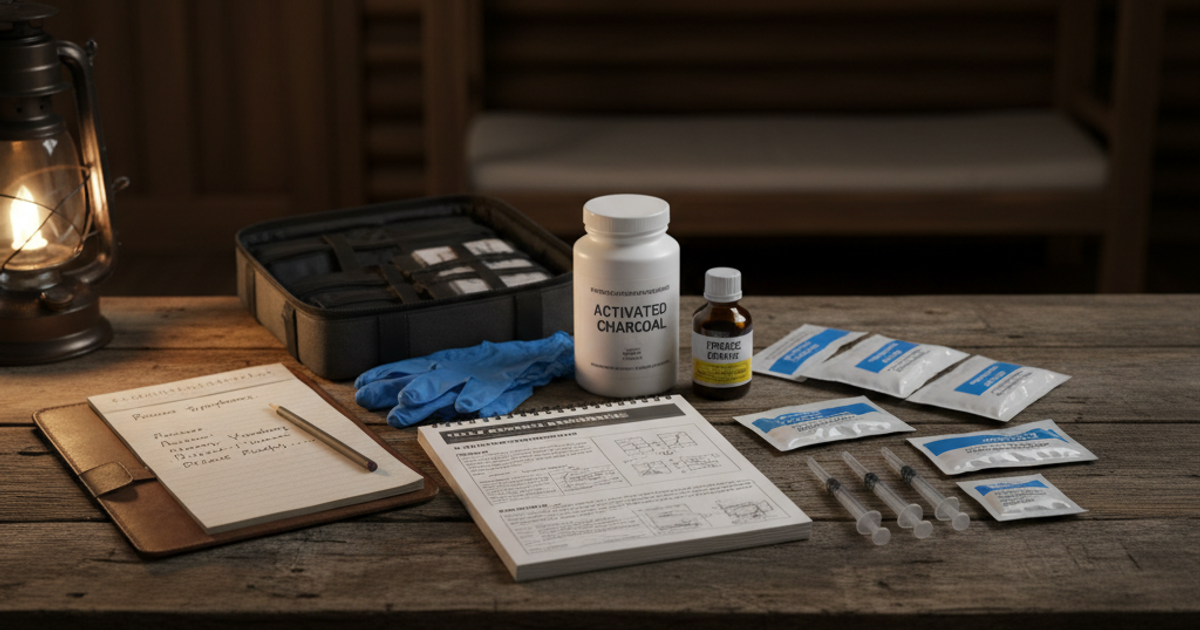
What You'll Need
Supplies
- Activated charcoal capsules (poison antidote)
- Diphenhydramine (Benadryl) antihistamine tablets
- Eye wash saline solution with emergency eyecup
- Nitrile exam gloves (chemical resistant)
- Tecnu skin decontamination wash
- Zanfel poison ivy, oak, and sumac wash
Understanding the Four Categories of Toxic Exposure
Before you can treat a poisoning, you need to understand what you're dealing with. Toxic exposures fall into four broad categories, each requiring a different response approach. Misidentifying the category — or worse, applying the wrong treatment — can accelerate harm.
1. Ingested Poisons (Swallowed)
This includes medications (intentional or accidental overdose), household chemicals, toxic plants, contaminated food, and alcohol poisoning. Ingested toxins are the most common category, accounting for the vast majority of poison center calls. Symptoms vary widely but often include nausea, vomiting, altered consciousness, seizures, and respiratory distress.
2. Inhaled Toxins
Carbon monoxide, chlorine gas, hydrogen sulfide, paint fumes, and smoke inhalation fall here. Urban preppers are particularly vulnerable during grid-down scenarios when people run generators indoors or improvise heating. Symptoms include headache, dizziness, confusion, and in severe cases, loss of consciousness.
3. Skin and Eye Contact
Chemical burns, plant contact (poison ivy, poison oak, water hemlock sap), pesticide exposure, and caustic household products cause topical poisoning. Eyes are especially vulnerable — even brief chemical contact can cause permanent damage.
4. Injected or Envenomated
Snakebite, spider bites, and stinging insect envenomation belong here. Anaphylaxis is a life-threatening complication of envenomation and severe allergic reaction that requires immediate intervention.
How to Identify Poisoning Without a Lab or Doctor
In a crisis, your diagnostic tools are observation, logic, and reference materials. A good wilderness medicine handbook with poison control reference sections should be in every prepper's library — not on your phone, where battery life is finite, but in a waterproof physical copy you can reference at any time. Similarly, the Merck Manual home medical reference book is an exceptional resource that covers toxicology, drug interactions, and symptomatic diagnosis in plain language — a critical addition to any long-term survival kit or bug-out cache.
When evaluating a potential poisoning, ask and observe:
- What was the person exposed to, and how? (Inhaled, swallowed, touched, injected?)
- How long ago did exposure occur?
- What are the symptoms, and are they progressing or stabilizing?
- Is the victim conscious and breathing normally?
- Are there containers, plants, or substances nearby that identify the toxin?
Toxidrome recognition — identifying clusters of symptoms that point to a specific class of poison — is a critical skill. For example: pinpoint pupils, slow breathing, and extreme sedation suggests opioid overdose. Dilated pupils, rapid heart rate, dry skin, and confusion suggest anticholinergic poisoning (from plants like jimsonweed or medications like antihistamines in overdose). Drooling, muscle twitching, and seizures suggest organophosphate poisoning from pesticides or nerve agents.
Toxic Plant Exposure: Rural and Urban Threats
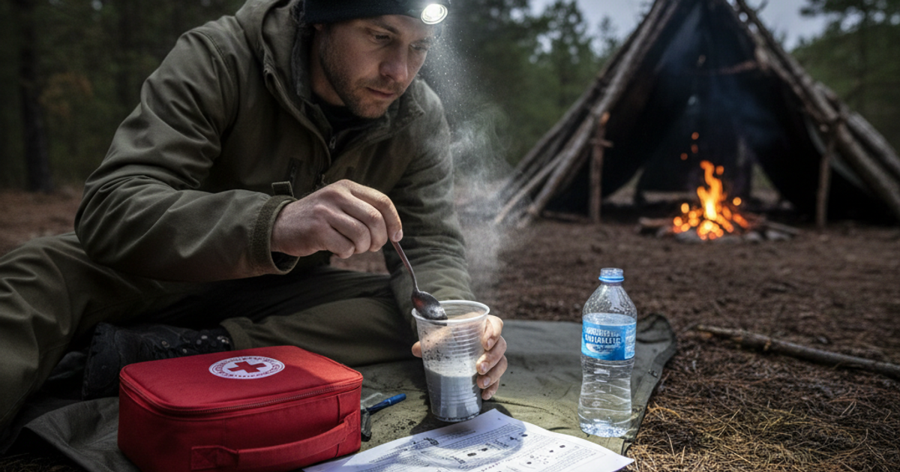
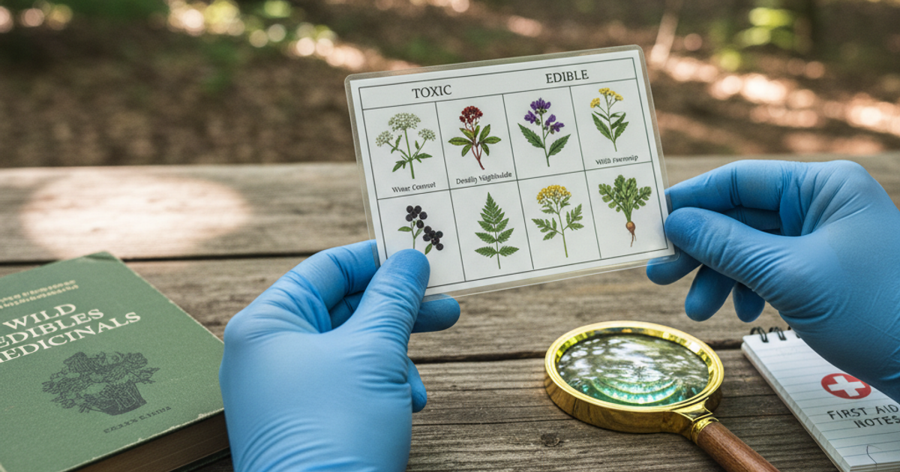
Toxic plants aren't just a rural problem. Urban foraging, community gardens, and decorative landscaping all harbor dangerous species. Common threats include:
- Poison ivy, oak, and sumac — cause urushiol-induced contact dermatitis; not life-threatening but debilitating
- Nightshade (Atropa belladonna) — berries cause anticholinergic toxidrome; potentially fatal
- Water hemlock — one of North America's most violently toxic plants; causes rapid-onset seizures
- Jimsonweed — common in disturbed urban soil; all parts are toxic
- Pokeweed — roots and berries can cause severe gastrointestinal distress and cardiac effects
- Wild parsnip and giant hogweed — cause phototoxic chemical burns on skin contact
For urushiol exposure (poison ivy, oak, sumac), speed of decontamination is everything. Urushiol bonds to skin within 10–30 minutes. Zanfel poison ivy, oak, and sumac wash is clinically proven to bind urushiol and remove it even after the rash has begun — making it worth its premium price in any bug out bag or home medical kit. For immediate field decontamination before a rash develops, Tecnu skin decontamination wash is a proven first-line treatment that can neutralize urushiol oil within two hours of contact — an essential item for anyone spending time outdoors, whether in a rural homestead or an urban park.
Chemical Exposure and Household Toxins in a Crisis
During SHTF scenarios, chemical exposure risk spikes dramatically. People mix bleach and ammonia trying to make stronger cleaners. Generators run indoors. Improvised heating creates combustion byproducts. Industrial facilities near urban areas may release toxins during disasters. Situational awareness — knowing what chemicals are stored in your building or neighborhood — is foundational to urban survival.
Before touching any victim of chemical exposure, protect yourself. Always don nitrile exam gloves rated for chemical resistance before handling a contaminated person or surface. A rescuer who becomes a second victim helps no one — this is a principle stressed in every hazmat and emergency medicine protocol.
For chemical splashes to the eyes — one of the most common and serious workplace and household injuries — you have a narrow window to prevent permanent damage. Flush immediately and continuously with clean water or saline. An eye wash saline solution kit with emergency eyecup delivers the consistent, gentle flow needed for effective decontamination — far superior to splashing water from a bottle. Flush for a minimum of 15–20 minutes without interruption.
Overdose Management Without Emergency Services
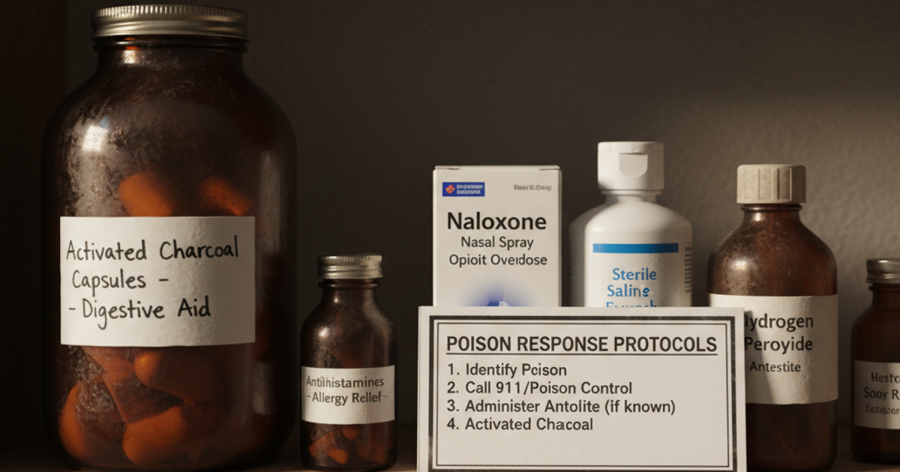
Medication overdose — both accidental and intentional — is one of the most challenging poisoning scenarios to manage without professional support. In a prolonged grid-down situation, access to prescription medications becomes irregular, creating increased risk of both stockpiling and accidental ingestion, particularly among children.
If available and appropriate, activated charcoal capsules can significantly reduce absorption of many ingested poisons when given within one to two hours of ingestion. Activated charcoal works by adsorbing (binding) toxic molecules in the gut before they enter the bloodstream. The standard adult dose is 25–100 grams. Do not give activated charcoal if the victim is unconscious, seizing, or has ingested caustic substances (acids, alkalis, or petroleum products) — it will not help and can cause aspiration.
For allergic reactions and mild anaphylaxis, diphenhydramine (Benadryl) antihistamine tablets are a frontline treatment. For severe anaphylaxis, antihistamines alone are not enough — epinephrine (an EpiPen) is required, and this is why stocking injectable epinephrine is strongly recommended in any serious long-term medical preparedness kit. For guidance on building a comprehensive medical supply, see our article on stockpiling antibiotics and first aid supplies before a medical crisis.
Step-by-Step Instructions
Step 1: Ensure Rescuer Safety Before Approaching
Before touching the victim, assess the scene for ongoing hazards — chemical odors, visible fumes, contaminated surfaces, or dangerous substances. Don nitrile gloves and improvised respiratory protection if inhalation risk exists. A rescuer who becomes a second victim compounds the crisis and cannot help anyone.
Step 2: Identify the Toxin and Route of Exposure
Gather every piece of evidence available — pill bottles, plant matter, containers, bystander accounts. Note time of exposure, estimated quantity, and the route (swallowed, inhaled, skin contact, injected). This information drives every subsequent decision and is critical if you reach medical help later.
Step 3: Assess Consciousness, Breathing, and Vital Signs
Check responsiveness, airway, breathing, and pulse in that order. An unconscious victim with adequate breathing should be placed in the recovery position (on their side) to prevent aspiration if vomiting occurs. An unconscious victim who is not breathing requires rescue breathing and CPR immediately.
Step 4: Decontaminate Skin and Eyes Immediately for Contact Exposures
For skin exposure, remove contaminated clothing (cut it off if needed — don't pull it over the face) and flush affected areas with large volumes of water for 15–20 minutes. For eye exposure, use saline eye wash continuously for a minimum of 15–20 minutes, holding the eyelid open. For urushiol plant contact, apply Tecnu or Zanfel wash as directed.
Step 5: Move the Victim to Fresh Air for Inhalation Exposures
For suspected carbon monoxide or chemical inhalation, immediately remove the victim to fresh air and ventilate the space before re-entry. Do not re-enter a space with suspected toxic atmosphere without respiratory protection. Position the victim semi-upright if conscious and breathing, supine if unconscious.
Step 6: Administer Activated Charcoal for Appropriate Ingested Poisons
If the victim swallowed a medication, toxic plant, or other non-caustic substance within the past one to two hours and is fully conscious and can swallow safely, administer activated charcoal according to package directions. Do not induce vomiting — current medical guidelines advise against it in nearly all cases, as it can cause additional harm.
Step 7: Manage Symptoms and Monitor Continuously
Treat accessible symptoms: administer diphenhydramine for allergic reactions, maintain warmth if the victim shows signs of shock, and keep them calm and still. Monitor breathing, pulse, and consciousness every five minutes. Document changes — if evacuation to medical care becomes possible, this record is invaluable for providers. Our article on field medicine for treating injuries without a hospital covers shock management and vital sign monitoring in greater depth.
Step 8: Seek or Signal for Professional Help as Soon as Possible
Poisoning management in the field is stabilization, not definitive treatment. As soon as any form of professional medical assistance becomes accessible — even a community medic, nurse, or ham radio connection to a medical professional — pursue it. Document everything you've done and observed to hand off to whoever can help. For communication options when infrastructure fails, see our guide on building a family emergency communication plan.
What Never to Do in a Poisoning Emergency
- Never induce vomiting unless explicitly directed by a medical professional with full knowledge of the substance. Vomiting corrosives causes additional chemical burns; vomiting in an altered mental state causes aspiration.
- Never give activated charcoal to an unconscious, seizing, or vomiting patient.
- Never re-enter a chemically contaminated space without protection.
- Never assume "natural" means safe — many deadly poisons are entirely plant-based.
- Never treat a snakebite with a tourniquet, incision, or suction. Modern guidelines universally condemn these practices. Immobilize the limb below heart level and evacuate.
Building Your Poison Response Kit
Whether you're prepping an apartment in Chicago or a rural homestead in Montana, a dedicated poison response kit belongs in your emergency preparedness supplies. At minimum, it should include: activated charcoal (multiple doses), diphenhydramine tablets, epinephrine auto-injector if obtainable, saline eye wash with eyecup, chemical-resistant nitrile gloves, Tecnu and/or Zanfel for plant exposure, and physical reference materials.
Speaking of reference materials — this is one area where digital simply isn't reliable enough in a prolonged crisis. A quality wilderness medicine handbook with integrated poison reference content gives you toxidrome charts, plant identification guides, and treatment protocols in a waterproof, battery-free format. Pair it with the Merck Manual home edition for a comprehensive medical reference library that covers everything from drug overdose to envenomation — both belong in your long-term preparedness library alongside your survival gear. For a broader look at building your off-grid medical capability, our guide to building a trauma kit when EMS is gone is essential reading.
Frequently Asked Questions
What should I do if someone swallows poison and I have no way to call 911?
First, identify the substance and route of exposure. If the victim is conscious, breathing, and the substance was not a caustic chemical or petroleum product, activated charcoal given within one to two hours can reduce absorption significantly. Do not induce vomiting. Position the victim in the recovery position if they become drowsy. Monitor breathing and pulse continuously. If you have any form of communication — ham radio, satellite messenger, or a community network — attempt to reach medical guidance. Document everything and pursue professional medical care at the earliest possible opportunity.
How do I identify a poisonous plant before someone eats or touches it?
The safest approach is to carry a regional plant identification guide and apply the rule: "when in doubt, don't." Key warning signs include milky or colored sap, umbrella-shaped flower clusters (Apiaceae family contains several deadly species), berries that are bright red, white, or black and growing in clusters, and plants with a strong unpleasant odor when crushed. Never eat any wild plant based on a single identifying characteristic — require multiple confirmed features before consuming. Urban foragers should be especially cautious, as ornamental plantings frequently include toxic species that mimic edible ones.
Is activated charcoal safe to keep in a home emergency kit, and how long does it last?
Yes — activated charcoal is widely recommended by emergency medicine professionals and poison control centers for home and field use. It is generally safe, non-toxic, and causes minimal side effects (primarily temporary black stools). Most activated charcoal products have a shelf life of two to three years when stored in a cool, dry location in sealed packaging. Check expiration dates during your regular emergency preparedness kit rotation. Keep it out of reach of children and always read label directions before use. It is not effective against all poisons — refer to your reference materials for specific guidance.
Affiliate Disclosure: SHTFPlan.net participates in the Amazon Services LLC Associates Program. Some links are affiliate links — we may earn a small commission at no extra cost to you.