Canine Early Warning: How to Train Your Dog as a Survival Alarm and Threat Detection Asset
Your dog can be your best early warning system — if you know how to train and read them correctly when SHTF.
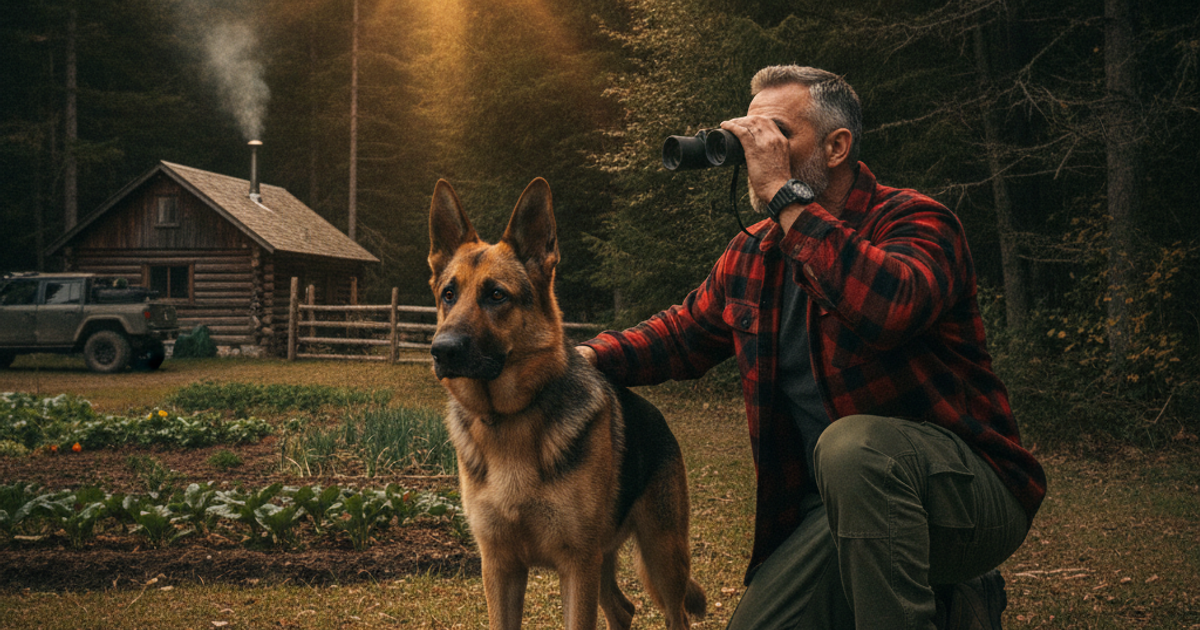
Your dog already knows something is wrong before you do. That low growl at 2 a.m., the sudden alert posture when a stranger approaches the fence line, the fixed stare toward a treeline that looks empty to you — these are not random behaviors. They are the product of millions of years of evolution working in your favor. In a grid-down scenario, a civil emergency, or a home invasion situation, a well-trained dog can be the most reliable early warning system you have. Unlike electronic perimeter alarms, a dog doesn't lose power, can't be jammed, and reacts to scent, sound, and movement simultaneously. For urban preppers in apartments, suburban homeowners, and rural survivalists alike, understanding how to develop your dog's natural alerting instincts into a deliberate threat detection asset could be one of the highest-return investments in your emergency preparedness plan.
Why Dogs Outperform Electronic Security Systems in SHTF Scenarios
Research from the University of Portsmouth found that dogs can detect human scent at concentrations roughly 100,000 times lower than humans can perceive. Their hearing range extends to approximately 65,000 Hz — more than double the upper limit of human hearing — and they can pinpoint a sound's origin with extraordinary precision. In practical terms, this means a trained dog can alert you to an intruder approaching through dense cover, downwind, and in near-total darkness, long before any camera or motion sensor would trigger. According to a study published in Applied Animal Behaviour Science, dogs can distinguish between a familiar person and a stranger at distances exceeding 400 meters under favorable scenting conditions.
In a SHTF scenario where power infrastructure fails and your electronic systems go dark, your dog's capabilities remain fully operational. This makes canine early warning a critical layer in any situational awareness and home defense strategy. For more on building layered security systems, see our guide on how to choose the best personal alarm and alert system for home security when SHTF.
Choosing the Right Dog Breed and Temperament for Security Work
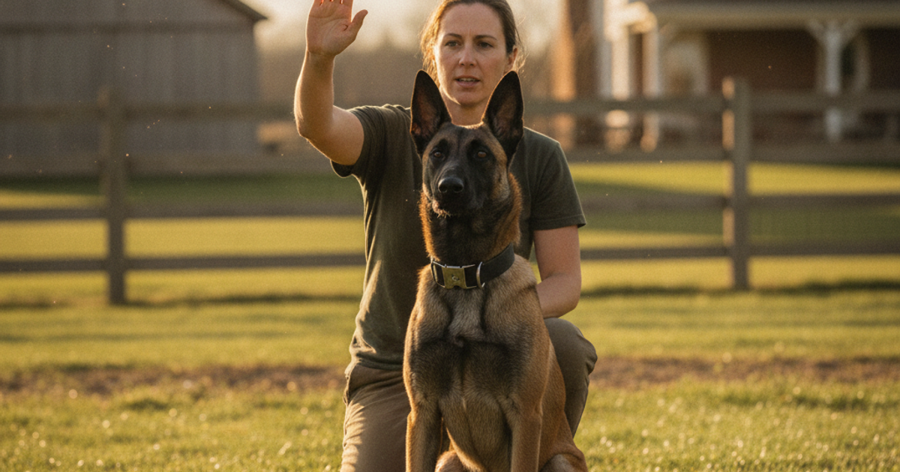
Not every dog is suited to threat detection work. However, almost any dog with reasonable confidence, a strong alert drive, and a solid bond with its owner can be developed into a useful early warning asset — even if it never becomes a full protection dog. The most important traits to look for are: alertness to environmental changes, a willingness to vocalize, a stable temperament that avoids false alarms, and trainability.
Breeds historically developed for guarding and detection work — German Shepherds, Belgian Malinois, Doberman Pinschers, Rottweilers, and Giant Schnauzers — tend to excel. But don't overlook working-class mixed breeds, which often combine strong alerting instincts with resilient health profiles. For urban survival situations such as apartment living, medium-sized, highly alert dogs like Australian Shepherds or Standard Poodles can be equally effective without the space demands of larger breeds. The critical factor is temperament, not size. A well-trained 40-pound dog that reliably alerts to perimeter intrusion is worth more than an untrained 100-pound dog that barks at squirrels.
What You'll Need
Tools
- SportDOG Brand 425X remote training collar
- Educator E-Collar Technologies remote trainer
- OneMind Dogs clicker training kit
- Garmin Alpha 100 dog tracking GPS system
Supplies
- Virbac C.E.T. enzymatic dog training treats
- Ruffwear Front Range dog harness
- KONG Classic dog toy treat dispenser
Understanding the Alert Hierarchy: Watch, Warn, and Respond
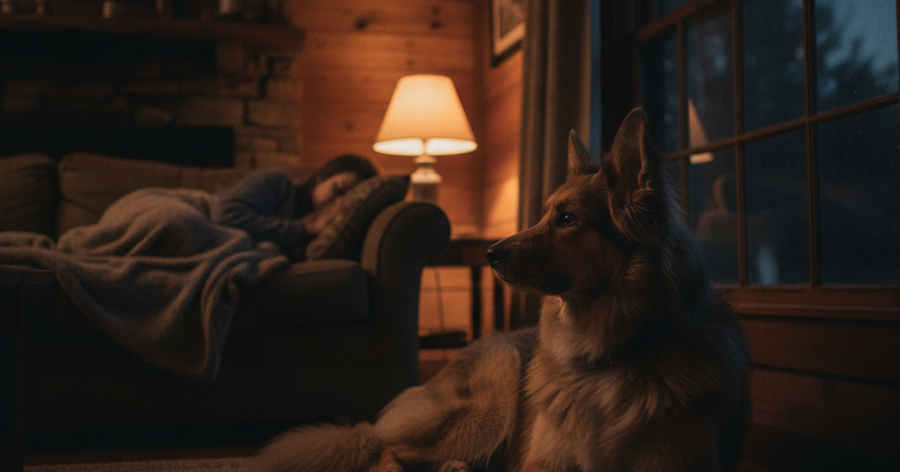
Before you begin training, you need to understand the three-stage alert model used in professional security dog programs. Watch refers to the dog visually or sensorially acquiring a stimulus — a scent, a sound, or movement. Warn is the dog communicating the alert to its handler through body language, a controlled bark, or a trained signal behavior. Respond is the handler's action based on that alert — either confirming the threat is neutralized, repositioning, or initiating a defensive protocol.
Your training goal for most prepper and home defense applications is to maximize the reliability of the Warn stage. You want a dog that communicates clearly and consistently without escalating to aggression unless directed. This is especially important in suburban and urban environments where uncontrolled aggression creates legal liability and tactical exposure. A dog that growls or gives a single sharp bark, then looks to you for direction, is far more tactically valuable than one that charges uncontrollably.
This principle aligns closely with the layered approach described in our article on perimeter alarms and trip wires for detecting intruders before they reach your door — your dog is simply the most sophisticated and adaptive layer in that system.
Step-by-Step Instructions
Step 1: Establish a Reliable Obedience Foundation Before Security Training
Security training built on a shaky obedience foundation will fail under stress. Before working on alert behaviors, your dog must reliably execute sit, down, stay, come, and quiet on the first command in high-distraction environments. Spend at least four to eight weeks reinforcing these commands with a high-value reward system before introducing security-specific exercises. Use a quality OneMind Dogs clicker training kit to create precise, consistent marker training that communicates exactly which behavior earned the reward — this clarity accelerates learning significantly and builds the kind of bombproof responses you need under pressure.
Step 2: Identify and Reinforce Your Dog's Natural Alert Threshold
Every dog has a natural alert threshold — the level of stimulus that causes it to react. Spend one week simply observing and documenting what causes your dog to alert naturally: a knock at the door, footsteps on gravel, a car door slamming, movement at the fence line. Mark and reward every genuine alert with a treat and verbal praise immediately when it occurs. High-value training rewards like Virbac C.E.T. enzymatic dog training treats work exceptionally well here because their strong scent and palatability maintain the dog's motivation across long training sessions. This phase teaches the dog that alerting to genuine environmental stimuli earns reward.
Step 3: Introduce a Controlled "Alert" Command on Cue
Once your dog consistently self-alerts to genuine stimuli, begin pairing a verbal cue — "Alert," "Watch," or "What is it?" — with the natural alerting behavior just before it occurs. Use controlled approach scenarios with a helper approaching the perimeter while you cue the dog and immediately reinforce the alert bark or growl with a high-value reward and enthusiastic praise. Repeat this across multiple environments and approach angles. After twenty to thirty repetitions, the dog will begin alerting on the verbal cue alone, giving you the ability to direct its attention to a specific sector.
Step 4: Train the "Quiet" Command to Prevent Alert Fatigue and Tactical Exposure
An uncontrolled barking dog is a tactical liability — it announces your position, creates noise discipline problems, and generates neighbor complaints that could compromise your operational security. Train "Quiet" by waiting for a natural pause in barking, immediately marking and rewarding silence, then gradually extending the duration of required silence before reward. A dog that can alert on command, then go quiet on command, gives you complete control over your early warning system without sacrificing sensitivity.
Step 5: Expand Training Across Multiple Threat Scenarios and Environments
A dog trained only in daylight, in your backyard, with familiar helpers will fail when you need it most. Systematically expose your dog to night approach scenarios, wind-shifted scent trails, vehicle approaches, and strangers in different clothing and carrying different equipment. For dogs working rural properties, include training scenarios involving treelines, creek beds, and varied terrain. For urban and suburban dogs, practice in parking structures, stairwells, and hallways. The Ruffwear Front Range dog harness provides excellent control during high-movement training scenarios without restricting the dog's natural gait or breathing — critical when you need to move quickly with your dog during a simulated threat response.
Step 6: Integrate Remote Training Tools for Off-Lead Distance Work
Once foundational alerting is solid on-leash, extend training to off-lead distance scenarios where the dog can patrol a defined area and alert from a distance. The SportDOG Brand 425X remote training collar offers a reliable, weather-resistant solution for reinforcing commands at distances up to 500 yards — essential for rural property patrol training. Use stimulation levels conservatively and always pair remote collar communication with positive reinforcement to maintain a dog that works enthusiastically rather than defensively.
Step 7: Establish a Consistent Watch Rotation and Rest Protocol
Dogs are not machines. A dog that is expected to maintain alertness for twelve hours straight will habituate to background stimuli and miss genuine threats — the same principle applies to human security watch rotations. Structure your dog's security role in two-to-four-hour active watch periods followed by enforced rest. Use a KONG Classic dog toy treat dispenser loaded with frozen high-value food during rest periods to provide mental decompression and prevent hypervigilance, which paradoxically reduces alert reliability over time.
Step 8: Build a Dog Bug-Out and Field Deployment Kit
If a crisis requires evacuation, your dog needs to be a functional, mobile asset — not a liability. Equip your dog with a Kurgo tactical dog pack backpack that allows it to carry its own food, a compact first aid kit, and a collapsible water bowl as part of your bug out bag system. Introduce the pack during training so the dog is fully comfortable working in it before you need it in an emergency. A properly fitted pack distributes weight without restricting shoulder movement, allowing the dog to maintain its full sensory awareness while contributing to the group's load.
GPS Tracking and Field Coordination for Rural Deployments
For preppers operating on rural properties or planning scenarios where the dog may need to work at extended range from the handler, a dedicated tracking system is essential. The Garmin Alpha 100 dog tracking GPS system provides real-time location data for up to 20 dogs at ranges up to nine miles — an extraordinary force multiplier for a small survival group managing a large rural perimeter. In a grid-down scenario, this system's standalone GPS functionality means it operates independently of cellular infrastructure, which is exactly what you need when the cell network is down.
For those who want a more hands-on precision training tool, the Educator E-Collar Technologies remote trainer is widely respected among professional trainers for its precise, low-level stimulation control and durable construction. Its "Boost" feature allows instant escalation to a higher stimulation level when needed without fumbling with controls — a genuine tactical advantage in a dynamic situation.
Canine security work pairs naturally with other situational awareness tools. For a comprehensive approach to nighttime threat detection, review our article on how to choose and use night vision optics for home defense and perimeter security — combining a dog's scent and hearing capabilities with your own enhanced night vision creates a threat detection system that is genuinely difficult to evade.
Frequently Asked Questions
Can I train my apartment dog to be a useful early warning system?
Absolutely. Apartment dogs often have highly developed sensitivity to hallway sounds, elevator movement, and stairwell activity because those are the primary vectors of approach in their environment. Focus training on reinforcing controlled alerting to door knocks, footsteps outside the unit door, and elevator sounds. A small dog that reliably alerts with a single controlled bark when someone approaches the door is genuinely useful for urban survival security — especially during nighttime hours when your own sensory awareness is diminished by sleep.
How long does it take to train a dog for basic threat detection?
A dog with solid basic obedience and natural alert drive can develop reliable early warning behaviors within eight to twelve weeks of structured daily training sessions of fifteen to twenty minutes. Professional-level protection work takes significantly longer — typically twelve to eighteen months — but basic controlled alerting, perimeter awareness, and quiet-on-command reliability are achievable for most dogs within two to three months of consistent work. Consistency and handler discipline matter more than total training hours.
What should I include in a dog survival kit for emergency preparedness?
Your dog's survival gear should mirror the structure of your own kit in miniature. Include a minimum seven-day supply of the dog's regular food in a sealed waterproof container, a collapsible water bowl, a compact canine first aid kit including wound closure strips and antiseptic, any required medications, copies of vaccination records and ownership documentation, a spare leash and collar, and the dog's training tools. If your dog wears a GPS tracker or working harness, include spare batteries and a backup collar. Store everything in a dedicated bag that can be grabbed in seconds as part of your overall bug out bag protocol.
Affiliate Disclosure: SHTFPlan.net participates in the Amazon Services LLC Associates Program. Some links are affiliate links — we may earn a small commission at no extra cost to you.