Two-Way Radios for Preppers: How to Choose the Best Handheld Radio for Emergency Communication
When cell networks fail, two-way radios keep your group connected. Here's how to choose, program, and use the right handheld radio for any disaster.
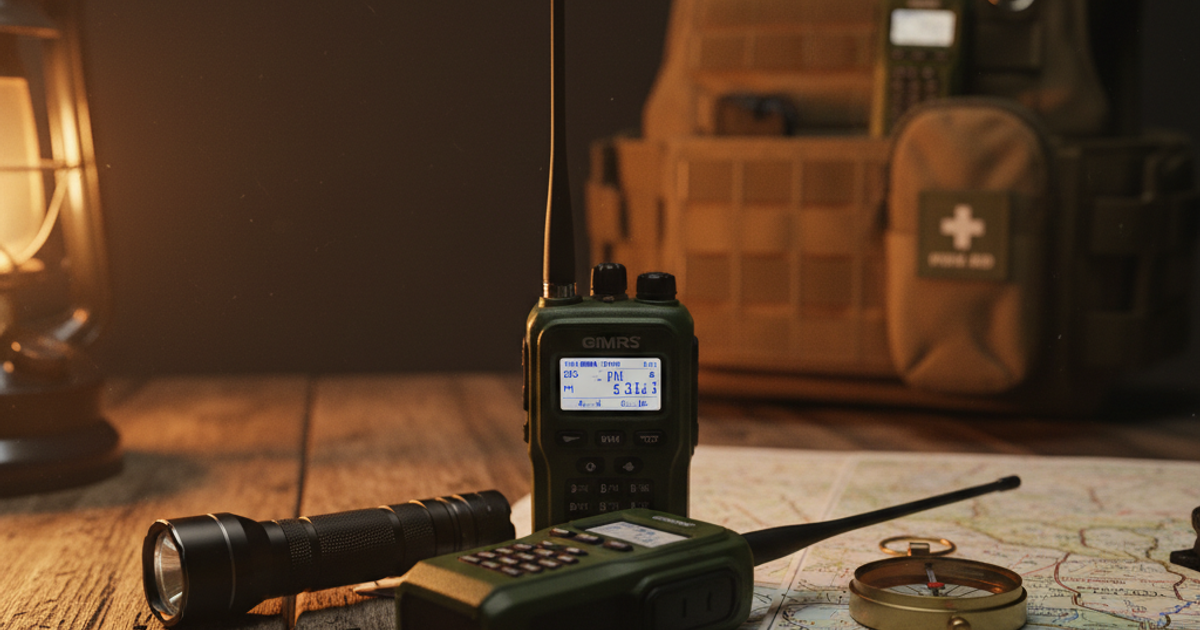
When the grid goes down and cell towers fail, the preppers who survive aren't always the ones with the most food or the biggest bug out bag — they're often the ones who can still communicate. Whether you're coordinating a family evacuation from an urban apartment complex, relaying information across a suburban neighborhood mutual aid network, or checking in with a retreat team miles away in the backcountry, two-way radios are one of the most critical and overlooked pieces of survival gear you can own.
According to FEMA, communication infrastructure is one of the first systems to fail during major disasters. During Hurricane Katrina, roughly 90% of the region's communications infrastructure was knocked out. During the 2017 California wildfires, thousands of residents had no way to receive evacuation warnings because cell networks were overwhelmed or destroyed. A handheld two-way radio doesn't rely on cell towers, internet connections, or subscription services — and that independence can be the difference between life and death.
This guide breaks down everything a prepper needs to know about choosing, programming, and using two-way radios for emergency communication — whether you live in a high-rise apartment, a suburban neighborhood, or a rural homestead miles from the nearest town.
Understanding the Radio Spectrum: FRS, GMRS, and Ham Radio Explained
Before you spend a dime on emergency communication gear, you need to understand the three main radio types used in the prepper community. Each has different capabilities, legal requirements, and use cases.
FRS: Family Radio Service
FRS (Family Radio Service) radios operate on 22 shared channels in the UHF band and require no license to use. They're the walkie-talkies you find at big box stores, and they're a solid starting point for families in urban and suburban environments. However, FRS radios are legally limited to 2 watts of power and fixed antennas, which caps their real-world range at roughly 1–2 miles in built-up areas — often less in cities full of concrete and steel.
GMRS: General Mobile Radio Service
GMRS (General Mobile Radio Service) operates on overlapping channels with FRS but allows up to 50 watts of power through mobile units and 5 watts through handhelds. A single GMRS license from the FCC covers your entire immediate family, costs $35, and is valid for 10 years. GMRS handhelds can realistically reach 5 miles or more in open terrain, making them ideal for suburban and rural preppers who need reliable group communication. The Midland GXT1000VP4 GMRS two-way radio is one of the most popular and capable options in this category, offering up to 36 miles of range in ideal conditions, 50 GMRS/FRS channels, weather alert capability, and a rugged build that holds up under real-world conditions.
Ham Radio: The Gold Standard for Emergency Communication
Amateur (ham) radio offers the widest range of frequencies, the highest legal power limits, and access to repeater networks that can extend your reach by dozens or even hundreds of miles. Ham radio does require a license — the Technician class exam is a 35-question test that most dedicated preppers pass with a few weeks of study — but it's worth it. For a deep dive into building a full ham radio emergency communication network, check out our article on HAM Radio for Preppers: How to Build a Reliable Emergency Communication Network.
The Baofeng UV-5R handheld ham radio has become nearly synonymous with budget prepper radio for good reason. It's a dual-band VHF/UHF radio that costs under $30, can transmit on ham frequencies with a license, and can receive weather alerts, NOAA broadcasts, and even local police and fire scanner frequencies. Its limitations are real — cheap build quality, confusing programming without software — but as a backup or entry-level radio, it's hard to beat the value.
How to Choose the Best Handheld Radio for Your Situation
The "best" emergency radio depends heavily on your living situation and your communication goals. Here's how to think through the decision.
Urban Preppers: Apartments and Dense Cities
In an urban environment, situational awareness and grey man tactics matter as much as raw radio power. A giant antenna and high-powered radio screams "I have gear" to everyone around you. For apartment dwellers and urban preppers, a compact GMRS or FRS radio is often the right call for short-range family coordination — reaching across an apartment building, coordinating with neighbors on your floor, or maintaining contact during an urban evacuation.
Pair your radio use with a solid understanding of your city's emergency radio stations. Our article on Office of Emergency Management and Emergency Radio Stations in the United States can help you identify the official broadcast channels you should be monitoring before and during a disaster.
Suburban Preppers: Neighborhoods and Communities
Suburban preppers benefit most from GMRS radios with weather alert capability. Being able to quickly communicate across a neighborhood survival network, coordinate with a community response team, or relay information from one end of a subdivision to another is where GMRS truly shines. If you're involved in building a neighborhood mutual aid network, standardizing on a single GMRS channel and license-covered family group radios is the smartest move you can make.
Rural Preppers: Distance, Terrain, and Repeaters
For rural preppers, distance is the defining challenge. Handheld radios are limited by line-of-sight physics — hills, forests, and valleys eat signal. Ham radio with access to repeaters is the only reliable solution for long-distance communication in rural terrain. The Yaesu FT-60R dual band handheld radio is a step up in build quality and performance from budget options like the Baofeng, offering military-grade durability, excellent receiver performance, and reliable operation in extreme conditions. It's a legitimate workhorse for preppers who take their off grid communication seriously and need a radio that will perform when it counts.
Waterproofing, Durability, and Power: What Specs Actually Matter
Don't buy a radio based on the claimed "range" printed on the box. That number is calculated under ideal, open-sky conditions and has almost nothing to do with real-world performance in a city, forest, or during a storm. Instead, focus on these specs:
- IP or JIS water resistance rating — Look for IPX4 or higher if you live in a flood-prone or high-humidity environment
- Battery life and charging options — Can it run on AA/AAA batteries as a backup? Does it have USB charging?
- NOAA weather alert capability — Automatic weather alerts can give you critical minutes of warning
- Dual band capability — Access to both VHF and UHF extends your options
- Output wattage — Higher wattage generally means better range in real-world conditions
The Motorola T600 H2O waterproof two-way radio deserves special mention for preppers in flood zones, coastal areas, or anywhere wet weather is a concern. It's rated waterproof and floats if dropped in water — a genuinely useful feature during flood evacuations or water-based emergency scenarios. It operates on FRS/GMRS channels, includes weather alerts, and is built to Motorola's solid quality standards. It's an excellent choice to keep in a vehicle emergency kit or bug out bag where it might be exposed to rain and rough handling.
Programming Your Radio: Don't Skip This Step
An unprogrammed radio is a paperweight in an emergency. Most preppers make the mistake of buying radios and never setting them up properly before a crisis. Programming a Baofeng or similar radio manually through the keypad is genuinely painful — the interface is cryptic and error-prone. The solution is CHIRP software, a free, open-source program that lets you program channels, names, frequencies, and tone codes from your computer and upload them to your radio in minutes.
To use CHIRP, you'll need a programming cable. A CHIRP programming cable for Baofeng radios typically costs less than $15 and is one of the highest-value purchases you can make for your radio setup. Once connected, you can download repeater directories, pre-program emergency frequencies like NOAA weather channels, GMRS calling channels, and local ham repeaters, then upload everything to your radio with a few clicks. Do this before SHTF — not during.
At minimum, every prepper's radio should be pre-programmed with:
- Local NOAA weather channels
- GMRS calling channel (462.675 MHz)
- FRS channel 1 (for communicating with unprepared civilians)
- Local ham repeater frequencies (find these at repeaterbook.com)
- A private family/group channel with a privacy tone (CTCSS/DCS code)
Integrating Two-Way Radios Into Your Broader Emergency Preparedness Plan
A radio is only as useful as the people on the other end of it. Radios work best when your family or group has a communication plan established in advance. Your Family Emergency Plan: How to Prepare Your Household for Any Disaster should specify which channels you'll use, what check-in times you'll maintain, and what code words or brevity codes you'll use to keep transmissions short and secure.
From an operational security standpoint, remember that radio transmissions are not private. Anyone with a scanner or another radio on the same frequency can hear you. Practice good radio discipline: keep transmissions short, avoid sharing specific location details over the air when operational security matters, and consider using pre-agreed phrases or reference to a shared code sheet rather than speaking in plain text about sensitive plans.
For those interested in expanding their off-grid communication capabilities beyond voice radio, our article on Off-Grid Communication: Building a Reliable Network When the Internet Goes Down covers digital modes, mesh networking, and other advanced options.
Recommended Gear Summary
To recap the top handheld radio options for preppers at every level: the Baofeng UV-5R is the best entry-level budget pick for ham radio experimentation and receive-only use. The Midland GXT1000VP4 is the top choice for family GMRS communication in suburban and rural environments. The Motorola T600 H2O is the best waterproof option for flood-prone areas or bug out bags. The Yaesu FT-60R is the premium durable choice for serious preppers who want a reliable long-term ham radio investment. And a CHIRP programming cable is non-negotiable for anyone running a Baofeng or compatible radio — get one, learn the software, and program your radios before you need them.
All of these items belong in a comprehensive emergency preparedness toolkit alongside your survival kit basics, emergency food storage, and water purification supplies. You can browse additional vetted options on our Recommended Survival Gear & Equipment page.
Step-by-Step Instructions
Step 1: Determine Your Communication Range Requirements
Assess the distances you need to cover based on your property size, group locations, and evacuation routes. For most preppers, handheld radios with 2-5 watt power output provide 1-3 miles in urban areas and up to 25-35 miles in open terrain with line-of-sight. Consider whether you need neighborhood-level communication (FRS/GMRS), regional reach (HAM radio), or just family coordination within a few miles. Document your specific scenarios—bugging out, perimeter security, or coordinating with a mutual assistance group—to guide your selection.
Step 2: Choose Between FRS, GMRS, and HAM Radio Frequencies
Select FRS (Family Radio Service) radios if you want license-free operation with 0.5-2 watt power for basic short-range communication up to 2 miles. Opt for GMRS (General Mobile Radio Service) radios if you need more power (up to 5 watts handheld, 50 watts mobile) and are willing to obtain an inexpensive FCC license ($35 for 10 years, no test required) for 5-20 mile range. Choose HAM radio if you want maximum flexibility, long-distance capability, and access to repeater networks, but be prepared to study for and pass a Technician Class license exam.
Step 3: Evaluate Battery Options and Power Backup
Prioritize radios that accept multiple battery types—rechargeable lithium-ion packs for daily use, and AA battery trays for emergency backup when grid power fails. Calculate that standard alkaline AAs provide 8-12 hours of typical use, while rechargeable packs offer 10-18 hours depending on transmission frequency. Invest in solar charging panels or hand-crank chargers compatible with your radio batteries, and stockpile at least 50-100 AA batteries per radio for extended grid-down scenarios.
Step 4: Assess Durability and Weather Resistance Features
Look for radios with IP67 or higher waterproof ratings, meaning they can withstand submersion in 1 meter of water for 30 minutes and are completely dust-proof. Test the radio's construction by checking for rubberized casings, reinforced antenna connections, and metal belt clips rather than plastic. Verify the operating temperature range covers your climate extremes—quality models function from -22°F to 140°F—and read reviews specifically mentioning drop tests and real-world abuse scenarios.
Step 5: Verify Essential Communication Features
Ensure your selected radio includes VOX (voice-activated transmission) for hands-free operation, privacy codes or CTCSS/DCS tones to filter out other users, and a scanning function to monitor multiple channels. Confirm it has a built-in flashlight, emergency weather alert channels (NOAA frequencies), and a clear display readable in bright sunlight. Avoid gimmicky features like Bluetooth connectivity that drain batteries; instead focus on simplicity, reliability, and channels that match your team's needs.
Step 6: Test Interoperability With Your Group
Purchase at least two radios initially and conduct real-world range tests in your actual environment—not just open fields—including inside buildings, through forests, and across hills. Program identical channels, privacy codes, and power settings across all units, and create a laminated reference card listing your group's primary, secondary, and emergency channels. Establish communication protocols including radio check schedules, emergency codes, and which family members or team members will carry radios at all times.
Step 7: Build Your Complete Communication Kit
Assemble a waterproof case containing your radios, spare batteries, charging cables, solar charger, external speaker-mic for tactical use, and printed frequency guides. Include a signal booster antenna (for HAM setups), headset for covert communication, and weatherproof paper with your communication plan and contact schedule. Store this kit in your bug-out bag or vehicle emergency supplies, and rotate batteries every 6-12 months while conducting quarterly radio drills with all family or group members to maintain proficiency.
Frequently Asked Questions
Do I need a license to use a two-way radio for emergency preparedness?
It depends on the radio type. FRS radios require no license and are legal for anyone to use. GMRS radios require a $35 FCC license that covers your entire immediate family for 10 years — it's a no-exam license, just a fee. Ham radio requires passing a written exam (the Technician class test), but during a genuine life-safety emergency, FCC rules allow unlicensed use of any available frequency to call for help. That said, you should get licensed before disaster strikes so you know how to operate your gear effectively under stress.
What is the best two-way radio for a bug out bag?
For a bug out bag, you want a radio that is compact, durable, waterproof or water-resistant, capable of running on standard AA or AAA batteries as a backup power source, and pre-programmed before you need it. The Motorola T600 H2O is an excellent choice for its waterproof construction and float capability. The Baofeng UV-5R is a popular lightweight option that can be paired with a spare battery and fits easily in any survival kit. Whichever radio you choose, include a laminated frequency reference card in your bag so you can find the right channel under stress.
How far can a handheld two-way radio actually reach in a real emergency?
Ignore the marketing numbers on the box — claims of 25 or 36 miles assume flat, open terrain with no obstructions, which almost never describes real-world conditions. In a typical suburban environment, expect 1–3 miles from a handheld GMRS radio. In a dense urban area with buildings blocking signal, realistic range may drop to under a mile. In open rural terrain or from elevated positions, GMRS handhelds can reach 5–8 miles. Ham radio connected to a repeater can extend your range by 50 miles or more. The key takeaway: plan your communication strategy around realistic range expectations, not best-case marketing claims.
Affiliate Disclosure: SHTF Plan participates in the Amazon Services LLC Associates Program. Some links are affiliate links — we may earn a small commission at no extra cost to you.