Cryptocurrency for Preppers: How to Use Digital Assets When the Financial System Fails
When banks freeze and fiat currency collapses, crypto could be your financial lifeline — if you know how to use it without the internet.
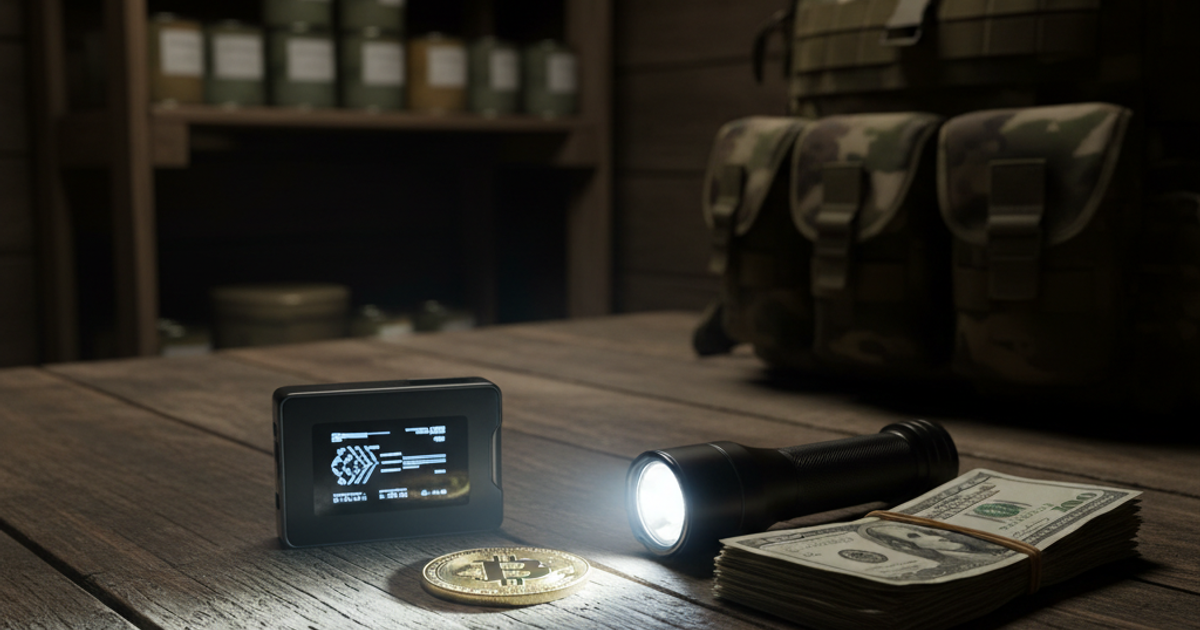
When most preppers think about financial collapse preparedness, their minds go straight to gold coins, silver rounds, and stockpiles of barter goods. Those are smart moves — and we've covered them extensively in our guide to Precious Metals and Barter Goods: What to Stockpile When Paper Money Fails. But there's another asset class that serious preppers are increasingly adding to their financial resilience strategy: cryptocurrency.
Before you dismiss digital assets as tech-bro speculation, hear this out. Cryptocurrency — when properly stored and managed — offers something that neither cash nor precious metals can fully replicate: portable, borderless, seizure-resistant wealth that doesn't require a functioning bank to access. In an era of bank runs, capital controls, hyperinflation, and government asset freezes, that matters.
This isn't investment advice. It's preparedness strategy. Here's what every prepper — urban apartment dweller, suburban homeowner, and rural off-gridder alike — needs to know about cryptocurrency as part of a layered SHTF financial plan.
Why Cryptocurrency Belongs in a SHTF Financial Plan
The global financial system is more fragile than most people realize. According to the World Bank, more than 1.4 billion adults worldwide remain unbanked, and even in the United States, bank failures, wire transfer freezes, and government asset seizures have occurred within living memory. During the 2013 Cyprus banking crisis, the government froze accounts and seized up to 47.5% of deposits over €100,000. Argentina has experienced multiple currency collapses. In Canada, in 2022, the government froze bank accounts of protesters without court orders.
Cryptocurrency — specifically decentralized assets like Bitcoin — operates outside the traditional banking system. Your funds can't be frozen by a bank. They can't be seized without access to your private keys. They can be transmitted globally in minutes, without intermediaries, and they can be carried across any border without declaration, stored in your head as a memorized seed phrase.
That said, crypto is not a replacement for physical preps. It's one layer of a diversified financial survival kit — alongside cash, precious metals, food, and barter goods. It excels in specific scenarios: prolonged financial system disruption, hyperinflation, capital controls, and bugging out across borders. It fails completely when there's no electricity, no internet, and no one willing to accept it. Know the limits, and plan accordingly.
Cold Storage Wallets: The Foundation of Crypto Preparedness
If you hold cryptocurrency on an exchange — Coinbase, Kraken, Binance — you don't actually hold cryptocurrency. You hold an IOU from a company that can freeze your account, go bankrupt, or be ordered by the government to lock you out. The prepper mantra applies here: if you don't hold the keys, you don't hold the coins.
Cold storage means keeping your private keys on a device that is never connected to the internet. Hardware wallets are the gold standard. The Ledger Nano X hardware cryptocurrency wallet is one of the most widely used cold storage devices available, supporting over 5,500 cryptocurrencies and featuring Bluetooth connectivity for mobile use when needed — while keeping your private keys completely offline and air-gapped during storage.
An alternative with a different security architecture is the Trezor Model T bitcoin hardware wallet, which features an open-source firmware that security researchers can audit — a major trust advantage for privacy-conscious preppers. Both devices require physical confirmation of transactions, meaning a remote attacker can never drain your wallet without physical access to the device and your PIN.
For urban preppers living in apartments, a hardware wallet is especially practical — it takes up almost no space, can be hidden easily, and requires no land or infrastructure to maintain. Rural and suburban preppers should store hardware wallets in a secure location separate from their main residence when possible, such as a quality safe or buried cache container.
Protecting Your Seed Phrase: The Most Critical Step Most Preppers Skip
Every hardware wallet generates a seed phrase — a series of 12 to 24 common English words that serve as the master key to your entire wallet. Lose the seed phrase, and your crypto is gone forever. If someone else finds it, they own everything. This is the single most important security consideration in all of crypto preparedness.
Paper seed phrase storage is a catastrophic mistake in a SHTF context. Fire, flood, and moisture destroy paper. Instead, store your seed phrase on indestructible metal. The Cryptosteel Capsule seed phrase backup is a stainless steel capsule system that allows you to encode your seed words using letter tiles, surviving temperatures up to 1,400°C, water immersion, and physical crushing — the kinds of conditions that destroy paper records in house fires or flooding scenarios.
Another excellent option is the Bilodeau Cryptotag Zeus seed phrase metal backup, which uses titanium plates and a hammer punch system to permanently stamp your seed phrase — making it one of the most durable and tamper-evident backup solutions available. Titanium is lighter than steel and equally fireproof, making it an excellent fit for a bug out bag or underground cache.
Store metal seed phrase backups in geographically separate locations. A prepper living in an apartment might keep one copy in a home safe and a second copy in a trusted family member's possession in another city. Rural preppers have the advantage of buried cache options on their property. Whatever your situation, never store your seed phrase digitally — not in email, cloud storage, photos, or text files.
EMP and Physical Threat Protection for Your Crypto Gear
A properly executed EMP event could fry unshielded electronics — including hardware wallets. While modern hardware wallets are relatively small and can survive moderate EMP exposure when powered off, adding a layer of protection costs almost nothing and eliminates the risk entirely.
Storing your hardware wallet in a Faraday bag electronics EMP protection wallet shields your device from electromagnetic pulses, RFID skimming, and electromagnetic interference. These compact bags are inexpensive, lightweight, and can fit in a drawer, safe, or bug out bag without any trouble. Even if your hardware wallet is destroyed, remember: as long as your seed phrase metal backup survives, your funds are fully recoverable on any new compatible device.
Offline Access Methods: How to Use Crypto When the Internet Is Down
Here's the hard truth: in a true SHTF scenario with grid collapse and no internet, you cannot transact with cryptocurrency in real time. Blockchain networks require internet connectivity to broadcast transactions. This is crypto's biggest weakness as a collapse-ready asset.
However, there are partial solutions worth knowing:
- Mesh network transactions: Projects like goTenna Mesh allow Bitcoin transactions to be broadcast over low-power radio mesh networks without internet access. This is experimental but functional in tested scenarios.
- SMS-based transactions: In some regions, services allow Bitcoin to be sent via text message on basic cellular networks — relevant if cell towers remain operational but internet infrastructure fails.
- Pre-signed transactions: Advanced users can pre-sign transactions offline and have trusted parties broadcast them when connectivity is available.
- Satellite internet: Starlink and similar services can maintain crypto access in rural areas even during terrestrial internet failure. This pairs well with off-grid power setups like those described in our guide to Wind Turbines for Preppers.
The realistic use case for crypto in most SHTF scenarios isn't daily small transactions — it's preserving and later accessing wealth after a crisis stabilizes, moving value across borders during evacuation, or trading with tech-savvy counterparties in an early recovery economy.
Situational Awareness and Grey Man Principles for Crypto Preppers
Holding significant cryptocurrency wealth requires the same situational awareness and grey man discipline as any other high-value prep. Don't advertise your holdings. Don't discuss your seed phrase locations with anyone who doesn't need to know. If you're bugging out with a hardware wallet, it should be invisible among your other gear — no crypto-branded cases or obvious packaging.
Practicing good grey man methodology applies directly to your digital financial security. Social engineering — getting you to reveal your seed phrase through manipulation — is the number one attack vector in crypto theft. Train yourself and family members to treat seed phrase information with the same secrecy as a safe combination.
For a complete financial preparedness picture, pair your crypto strategy with the physical and cash-based planning covered in our Financial Preparedness: Building a Cash Reserve and Barter Economy for SHTF guide. No single asset class covers every scenario.
Building Your Crypto Preparedness Stack: A Practical Starting Point
Whether you're in a studio apartment or on a 40-acre homestead, here's a basic framework to start:
- Purchase a hardware wallet (Ledger Nano X or Trezor Model T) and transfer any crypto off exchanges immediately.
- Back up your seed phrase on metal (Cryptosteel Capsule or Cryptotag Zeus) and store copies in two separate secure locations.
- Store your hardware wallet in a Faraday bag when not in use to protect against EMP and electronic surveillance.
- Keep crypto holdings proportional — most preparedness financial advisors suggest no more than 5-15% of your liquid emergency reserves in crypto, with the rest in cash, precious metals, and tangible goods.
- Learn basic wallet recovery — practice restoring your wallet from your seed phrase on a test device so you know the process before you need it under stress.
- Focus on Bitcoin and Ethereum — these have the deepest liquidity, longest track records, and widest acceptance. Altcoins carry significantly higher risk in a collapse scenario where counterparties may only accept well-known assets.
What You'll Need
- Hardware wallet (Ledger, Trezor, or similar cold storage device)
- Backup power source (solar charger or generator)
- Offline computer or air-gapped device
- Metal backup plates for seed phrase storage
- USB drive for wallet software
- Smartphone with cryptocurrency wallet apps
- Printed guides for wallet recovery procedures
Step-by-Step Instructions
Step 1: Acquire Cryptocurrency Before Crisis Conditions
Purchase Bitcoin, Ethereum, and stablecoins through reputable exchanges while the traditional financial system is still operational. Diversify your digital assets across multiple cryptocurrencies to hedge against individual coin failures. Focus on established cryptocurrencies with proven track records rather than speculative altcoins. Complete all verification and account setup processes now, as these services may become unavailable during a crisis.
Step 2: Transfer Assets to Cold Storage Immediately
Move all cryptocurrency holdings from exchanges to your hardware wallet within 24 hours of purchase. Never leave significant amounts on exchanges, as these centralized platforms are vulnerable to shutdowns, hacks, and government seizures. Initialize your hardware wallet in a secure location without internet-connected cameras or devices nearby. Verify that all transfers completed successfully before disconnecting from the exchange.
Step 3: Secure Your Seed Phrase with Multiple Redundancies
Write your 12-24 word recovery seed phrase on metal backup plates using stamping tools to protect against fire and water damage. Create at least three copies and store them in geographically separate locations such as a home safe, buried cache, and trusted family member's secure location. Never store seed phrases digitally, in cloud services, or take photographs of them. Test your recovery process once to ensure your backups work before storing them permanently.
Step 4: Establish Offline Transaction Capabilities
Download and save wallet software, blockchain explorers, and transaction signing tools to USB drives for offline use. Practice creating and signing transactions on your air-gapped computer, then broadcasting them through a separate online device. Learn to manually construct transactions and calculate appropriate fees for different urgency levels. Keep printed documentation of these procedures as digital devices may fail or lose power.
Step 5: Build a Local Peer-to-Peer Trading Network
Identify and connect with other cryptocurrency users in your community before a crisis emerges. Establish trust relationships and agree on exchange rates and verification methods for face-to-face transactions. Create a communication plan using encrypted messaging apps or radio frequencies to coordinate trades when internet access is unreliable. Practice conducting small peer-to-peer transactions to familiarize everyone with the process.
Step 6: Prepare Alternative Internet Access Methods
Research and test satellite internet services, mesh networks, or amateur radio-based transaction broadcasting methods. Keep a list of public WiFi locations, libraries, and community centers that may maintain connectivity during partial infrastructure failures. Understand how to use SMS-based cryptocurrency services that work with basic cell phone networks. Store enough battery power and charging equipment to access your wallets and broadcast transactions when grid power is unavailable.
Step 7: Maintain Operational Security and Privacy Practices
Never disclose the amount of cryptocurrency you hold or show your hardware wallet to others outside your immediate survival group. Use different wallet addresses for each transaction to prevent tracking of your holdings. Memorize your most important seed phrases in addition to physical backups in case you need to flee without supplies. Regularly update your knowledge of cryptocurrency developments and alternative networks, as the technology and best practices evolve rapidly.
Frequently Asked Questions
Can I access my cryptocurrency if the internet goes down during a SHTF scenario?
Not in real time through standard methods. Cryptocurrency transactions require internet access to broadcast to the blockchain network. However, your funds remain secure and fully intact on your hardware wallet regardless of connectivity. Partial workarounds include satellite internet (like Starlink), SMS-based bitcoin services on functioning cellular networks, and experimental mesh network transaction tools. The most realistic approach is to treat crypto as a medium-term wealth preservation tool — securing your assets now so you can access and use them once connectivity is restored after a crisis, rather than relying on it for day-to-day SHTF transactions.
What happens to my cryptocurrency if my hardware wallet is lost, stolen, or destroyed?
As long as your seed phrase backup survives, your funds are completely recoverable. You simply purchase a new compatible hardware wallet, enter your seed phrase during setup, and full access is restored — no bank, no customer service, no recovery period. This is exactly why storing your seed phrase on fireproof, waterproof metal backup plates (like the Cryptosteel Capsule or Cryptotag Zeus) in multiple secure locations is the single most important step in crypto preparedness. Without the seed phrase, however, funds are permanently inaccessible to anyone — including you.
Is cryptocurrency a good alternative to gold and silver for emergency preparedness?
Cryptocurrency and precious metals serve different functions in a preparedness financial plan and work best in combination rather than as substitutes. Precious metals offer tangible, universally recognized value that requires zero technology to use in barter — gold and silver will be accepted long after any grid goes down permanently. Cryptocurrency offers portability, borderless transfer capability, and seizure resistance that precious metals can't match, particularly in scenarios involving evacuation across borders or capital controls. Most preparedness-minded financial planners recommend holding both, along with physical cash and barter goods, as part of a layered strategy. Neither asset class should represent your entire financial preparedness plan.
Affiliate Disclosure: SHTF Plan participates in the Amazon Services LLC Associates Program. Some links are affiliate links — we may earn a small commission at no extra cost to you.