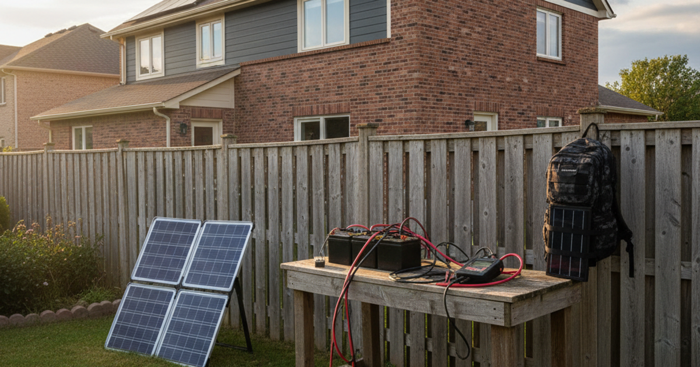
Inverter Basics for Preppers: How to Choose the Right Power Inverter for Home, Vehicle, and Off-Grid Use
Not all inverters are created equal. Learn how to match the right inverter to your power needs before the grid goes dark.
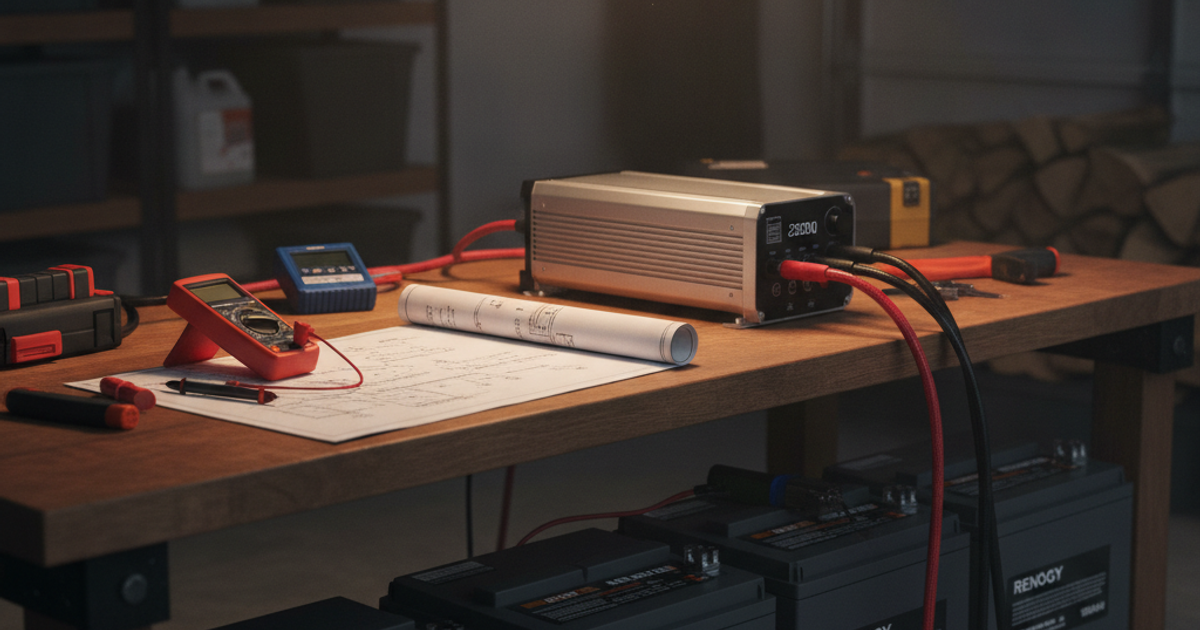
When the grid goes down, your ability to run essential electronics could mean the difference between comfort and crisis — or in extreme cases, life and death. Whether you're powering a CPAP machine during a blackout, running a refrigerator off your truck's battery during a bug-out, or feeding a solar array into your off-grid cabin, a power inverter is one of the most versatile pieces of emergency preparedness gear you can own. Yet most preppers either buy the wrong one, install it incorrectly, or don't understand the critical differences between inverter types until something fails. This guide cuts through the confusion.
According to the U.S. Energy Information Administration, the average American experiences about eight hours of power outages per year — and that number is climbing as extreme weather events become more frequent. For urban survival preppers in apartments, that might mean keeping phones charged and a fan running. For suburban homeowners, it could mean powering a sump pump or keeping a freezer full of emergency food storage from thawing. For rural and off-grid preppers, inverters are the backbone of an entire independent power system. The right inverter serves all of these roles — if you choose correctly.
What You'll Need
Tools
- Multimeter (for measuring battery voltage and checking connections)
- Wire strippers and crimping tool
- Wrench set (for terminal connections)
- Fuse holder and appropriate fuse (sized for your inverter's amperage)
Supplies
- AIMS Power pure sine wave inverter 2000 watt
- Heavy-gauge inverter cables (typically 2/0 or 4/0 AWG for larger units)
- Ring terminals rated for your cable gauge
- Heat shrink tubing or electrical tape
- Battery bank (AGM, lithium, or flooded lead-acid)
Pure Sine Wave vs. Modified Sine Wave: The Decision That Changes Everything
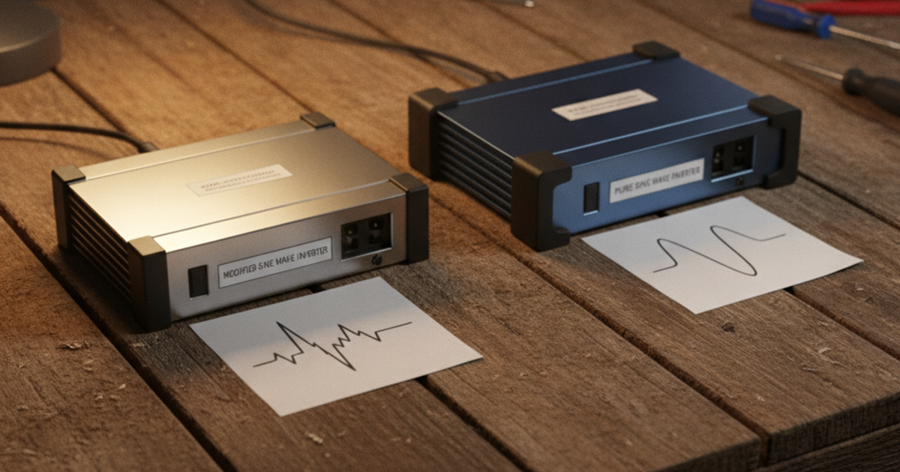
Before you spend a dime, you need to understand the single most important distinction in the inverter world: pure sine wave versus modified sine wave. Grid power delivers a smooth, continuous sine wave of alternating current. Pure sine wave inverters replicate this exactly. Modified sine wave inverters produce a stepped approximation — it works, but it's electrically "rough."
Modified sine wave inverters cost significantly less and are perfectly adequate for many loads: power tools, incandescent lights, phone chargers, and simple appliances. The Renogy 1000W modified sine wave power inverter is a solid mid-range option for preppers who need to run basic loads like fans, power tools, or simple lighting without spending top dollar. However, modified sine wave power can damage or degrade certain sensitive electronics over time — including medical devices, variable-speed motors, laser printers, and some battery chargers. If you're powering a CPAP, a modern refrigerator with an inverter compressor, or sensitive ham radio equipment, you need a pure sine wave unit.
For versatile home backup use, the GoWISE Power 1500W pure sine inverter with LCD display offers a useful middle ground — clean power output with a built-in display so you can monitor wattage draw and battery voltage in real time. That display is more valuable than it sounds when you're trying to manage limited battery capacity during an extended outage.
How to Calculate the Right Inverter Size for Your Needs
Inverter capacity is rated in watts. Your job is to figure out how many watts you'll actually need to run your priority loads simultaneously. Don't just guess — underpowered inverters will trip their overload protection, and grossly oversized inverters waste money and draw unnecessary idle current from your battery.
Start by listing every device you might run at once during an emergency. Check the wattage label on each device or look it up. Add them all together. Then add a 20-25% safety margin on top of that total. Common loads include: refrigerator (150-400W running, 600-1200W startup surge), window AC unit (500-1500W), CPAP without heat (30-60W), LED lighting (10-20W per fixture), laptop (45-100W), and power tools (300-1500W).
Pay special attention to surge wattage — motors draw two to three times their running wattage for a fraction of a second at startup. An inverter rated at 1000W continuous might handle 2000W of surge, but if that's not enough for your refrigerator compressor, you'll trip the protection repeatedly. For heavier loads, the GIANDEL 4000W heavy duty power inverter with remote switch provides serious continuous and surge capacity, making it suitable for running multiple large appliances simultaneously — a genuine SHTF workhorse for homeowners and rural preppers.
Choosing the Right Inverter for Each Use Case

Vehicle and Mobile Use
For preppers running a bug out bag vehicle or keeping an emergency kit in their daily driver, a compact car-plug inverter handles small loads efficiently. The BESTEK 300W power inverter car outlet plugs directly into your 12V accessory socket and can handle phone charging, laptops, small fans, and CPAP machines — everything you'd need to keep communications and critical devices running while mobile. It's small enough to live permanently in your vehicle emergency kit without taking up meaningful space.
For larger vehicle-based loads — powering tools at a remote campsite, running a small refrigerator in a truck bed, or supporting a serious mobile command post — you'll need a hardwired inverter connected directly to the vehicle battery with proper fusing. For this, the Ampeak 2000W power inverter 12V DC to AC offers substantial output in a hardwired format with USB ports for convenience. Always run the engine when drawing significant power from a vehicle inverter — a dead battery during a crisis is a serious tactical liability. You can read more about keeping your vehicle operational under pressure in our guide to Vehicle Bug-Out Mechanic: How to Keep Your Bug-Out Vehicle Running When There Are No Repair Shops.
Home Backup Power
For apartment dwellers and suburban preppers who need backup power during outages, the cleanest solution is often an all-in-one portable power station. The Jackery Explorer portable power station inverter built in combines a lithium battery, inverter, and charge management in one unit — no installation required. You can charge it from a wall outlet before an outage, from your car's 12V port during a bug-out, or from solar panels for sustained off-grid use. This is the ideal solution for urban survival preppers in apartments who can't hardwire anything and need a no-tools-required power backup for critical devices. See our companion article on Blackout Battery Banks: How to Choose and Use Portable Power for Any Emergency for deeper guidance on battery capacity planning.
Off-Grid Solar Systems
Off-grid and hybrid solar setups require inverters specifically designed for the job. A standard car inverter won't cut it here. You need an inverter-charger — a unit that both inverts DC battery power to AC and charges your battery bank when grid power or a generator is available. The Victron Energy MultiPlus inverter charger is the gold standard for serious off-grid systems. It handles seamless transfer switching (so your loads never lose power when sources change), intelligent multi-stage battery charging, and optional integration with solar charge controllers — all in a unit trusted by professional installers worldwide. This is the backbone of a real off-grid power system, and it pairs directly with our Prepper's Guide to Solar Panel Selection for building a complete independent power infrastructure.
If you need dependable backup power specifically for life-sustaining medical equipment, make sure you're using a pure sine wave inverter with adequate runtime. Our dedicated guide on Backup Power for Medical Devices: How to Keep Life-Saving Equipment Running When the Grid Fails covers the specific considerations for CPAP machines, oxygen concentrators, and insulin storage.
Step-by-Step Instructions
Step 1: Identify Your Critical Loads and Calculate Total Wattage
Walk through your home, vehicle, or planned off-grid setup and list every device you may need to power during an emergency. Check the wattage rating on each device's label or power adapter. Add all running watts together, then identify which devices have motors (refrigerators, fans, pumps) and note their startup surge requirements, which are typically 2-3x running wattage. Add 25% to your total running wattage to arrive at your minimum inverter size.
Step 2: Choose the Correct Inverter Type for Your Application
Decide between pure sine wave and modified sine wave based on your load list. If any device on your list is a medical device, modern appliance with variable-speed motor, or sensitive electronics, select pure sine wave only. For basic loads like simple lighting, phone chargers, and hand tools, modified sine wave is acceptable and more affordable. Match your inverter's voltage input (12V, 24V, or 48V) to your battery bank voltage.
Step 3: Select and Purchase the Correct Gauge Wiring
Inverters draw heavy DC current from batteries — far more amperage than the AC output wattage suggests. A 2000W inverter running at 12V draws approximately 167 amps at full load. Use a wire gauge chart to select appropriately sized cables: 2/0 AWG for most 1000-2000W installations, 4/0 AWG for 3000W and above. Keep cable runs as short as physically possible — every foot of undersized cable wastes energy as heat and can create a fire hazard.
Step 4: Install an Appropriately Sized Fuse Near the Battery
This is the most commonly skipped step and the most dangerous omission. Install an ANL fuse or Class T fuse within 18 inches of the positive battery terminal. Size the fuse to protect the wiring, not the inverter — consult the wire ampacity chart for your cable gauge. If the cable can handle 200 amps and your inverter draws 170 amps maximum, use a 200A fuse. A properly sized fuse prevents catastrophic wiring fires if a short circuit occurs.
Step 5: Mount the Inverter in a Ventilated Location
Inverters generate significant heat under load. Mount yours in a location with at least 6 inches of clearance on all sides, away from combustibles, and never in a sealed enclosure without dedicated ventilation. For vehicle installations, under-seat or in-cargo-area mounting is common — avoid the engine compartment due to heat and moisture. For home battery backup systems, a basement or utility room works well. Secure the inverter firmly so vibration (especially in vehicles) doesn't damage connections.
Step 6: Connect the Battery Terminals Correctly and Securely
Connect the negative cable first when installing, and disconnect negative first when removing — this prevents accidental sparks near battery terminals. Use ring terminals crimped and heat-shrink sealed on both ends. Torque terminal bolts to manufacturer specification: loose connections create resistance, heat, and eventual failure. Double-check polarity before connecting — reverse polarity will immediately destroy most inverters.
Step 7: Test the Inverter Under Load Before an Emergency
Never wait for a real emergency to discover a wiring problem. Power on the inverter, plug in a known load (a lamp is ideal), and confirm clean AC output with a multimeter or plug-in outlet tester. Then test with progressively larger loads up to your anticipated maximum. Check that the inverter's cooling fans engage under load and that all connections remain cool to the touch after 15-20 minutes of operation.
Step 8: Establish a Battery Monitoring and Runtime Estimate Routine
Know how long your battery bank will last at your typical load. Divide usable battery capacity in watt-hours by your load wattage for a rough runtime estimate — then cut that number in half for lead-acid batteries (which should not be discharged below 50%) or by 20% for lithium. Check battery voltage regularly during use and establish a cutoff discipline: running a battery completely flat shortens its life dramatically and may leave you stranded without any backup power at a critical moment.
Recommended Gear Summary
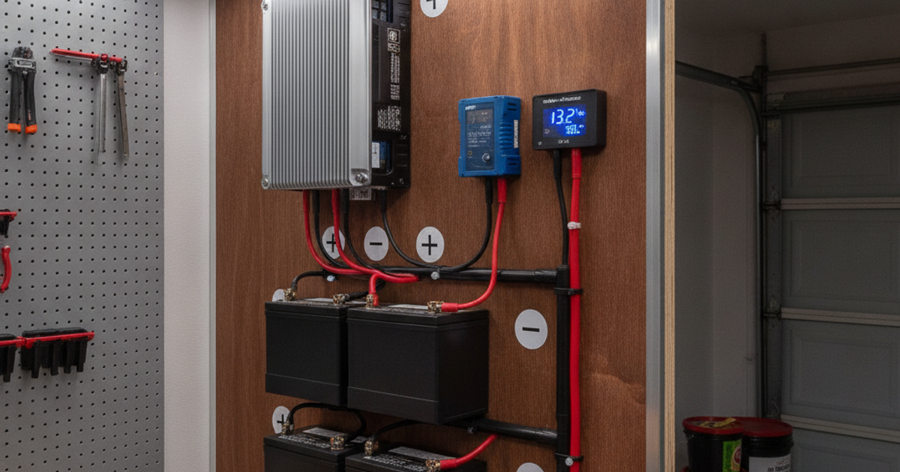
To summarize the hardware discussed throughout this article: for compact vehicle use, the BESTEK 300W power inverter handles light loads from your accessory socket. For mid-range modified sine wave needs on a budget, consider the Renogy 1000W modified sine wave inverter. For clean power output with real-time monitoring, the GoWISE Power 1500W pure sine inverter delivers reliability with visibility. For serious hardwired mobile or home backup use, the Ampeak 2000W 12V inverter and the AIMS Power 2000W pure sine wave inverter are both proven performers. For high-capacity whole-home backup, the GIANDEL 4000W inverter with remote switch handles heavy appliance loads. For off-grid solar integration, nothing touches the Victron Energy MultiPlus inverter-charger for professional-grade performance. And for apartment preppers or anyone who needs zero-installation backup power, the Jackery Explorer portable power station remains the most accessible entry point into backup power for any prepper at any skill level.
Frequently Asked Questions
What size power inverter do I need for a home emergency backup system?
For most suburban preppers running a refrigerator, some lighting, phone chargers, and a CPAP or fan, a 2000-2500W pure sine wave inverter covers the majority of scenarios. If you want to run a window air conditioner or multiple large appliances simultaneously, size up to 3000-4000W. Always account for motor surge wattage — your inverter's peak surge rating must comfortably exceed the highest startup draw of any single device you'll run.
Can I run a power inverter off my car battery without damaging it?
Yes, but with important caveats. Running a significant load (anything over a few hundred watts) will drain a standard automotive starting battery quickly — often in under an hour at moderate loads. Starting batteries are not designed for deep cycling and will degrade rapidly if regularly discharged below 50%. For sustained use, run your engine to keep the alternator replenishing the battery, or upgrade to a dedicated deep-cycle battery (AGM or lithium) for the inverter load. A dual-battery setup with an isolator is the proper long-term solution for vehicle-based emergency preparedness power.
What's the difference between an inverter and an inverter-charger, and do I need both?
A standard inverter only converts DC battery power to AC. An inverter-charger does that plus charges your battery bank from an AC source (grid power, generator) when available — automatically switching between modes. For simple emergency backup where you pre-charge a battery and use it during an outage, a standalone inverter is sufficient. For off-grid solar systems or any setup where you want seamless power transfer and automatic battery management, an inverter-charger is essential. If you're building a serious off grid preparedness power system, spend the extra money on a quality inverter-charger from the start — retrofitting later is more expensive and disruptive.
Affiliate Disclosure: SHTFPlan.net participates in the Amazon Services LLC Associates Program. Some links are affiliate links — we may earn a small commission at no extra cost to you.